
The modern automobile has transitioned from a purely mechanical beast into a sophisticated, mobile data center. At the heart of this digital transformation lies the charging system, a silent workhorse that ensures every sensor, microprocessor, and infotainment screen remains powered. The centerpiece of this system is the alternator. While it may seem like a legacy component, the contemporary alternator is a marvel of electrical engineering, now more integrated with vehicle software than ever before.
Understanding what causes an alternator to go bad requires a deep dive into the intersection of hardware physics and digital management. As we push vehicles toward higher levels of autonomy and connectivity, the strain on these components has reached an all-time high. This article explores the technical nuances of alternator failure, focusing on the hardware vulnerabilities and the digital complexities that define modern automotive power generation.

1. The Evolution of Power Generation: From Simple Dynamos to Smart Alternators
To understand failure, one must first understand the tech. The traditional alternator functioned on a relatively simple principle: electromagnetic induction. However, in today’s tech-driven landscape, we have moved into the era of the “Smart Alternator.” These devices do not merely spin and produce a constant voltage; they are managed by the vehicle’s Electronic Control Unit (ECU) via complex communication protocols.
Software-Controlled Charging Systems
In older vehicles, the voltage regulator was a standalone analog component. In modern tech-heavy vehicles, the ECU monitors battery temperature, engine load, and even driving habits to determine how much power the alternator should produce. This is often handled through Pulse Width Modulation (PWM) or Local Interconnect Network (LIN) bus communications. When an alternator “goes bad” today, it is often not a mechanical failure but a communication breakdown. If the software handshake between the ECU and the alternator’s internal regulator fails, the system may default to a “limp mode” or stop charging entirely, even if the internal coils are perfectly functional.
The Role of the Voltage Regulator in Digital Circuits
The voltage regulator is the brain of the alternator. Its job is to ensure that the varying RPMs of the engine do not result in a voltage spike that would fry the car’s delicate microchips. In the tech niche, we view the regulator as a surge protector. Over time, the semiconductor materials within these regulators can degrade due to thermal cycling—the constant heating and cooling of the engine bay. When these silicon components fail, the alternator can either “under-charge,” leading to system brownouts, or “over-charge,” which can catastrophically damage the vehicle’s central processing modules.
2. Environmental and Mechanical Stressors in the Tech Ecosystem
While the control systems are digital, the execution is physical. An alternator is a high-speed rotating machine operating in an incredibly hostile environment. The hardware must withstand vibration, extreme temperatures, and debris, all while maintaining precise electrical tolerances.
Heat Dissipation and Circuit Overload
Heat is the primary enemy of all electronics, and the alternator is no exception. Modern engine bays are packed tighter than ever to improve aerodynamics and fuel efficiency, which restricts airflow. An alternator generates significant heat through internal resistance and the action of its internal cooling fans.
When a vehicle is loaded with aftermarket tech—such as high-end audio processors, dash cams, or mobile hotspots—the current demand increases. This forces the alternator to work at its maximum duty cycle for extended periods. This sustained high-amperage output generates “hot spots” within the copper windings. Eventually, the enamel insulation on the wires can melt or crack, leading to an internal short circuit that kills the unit.
Bearing Failure and Mechanical Friction
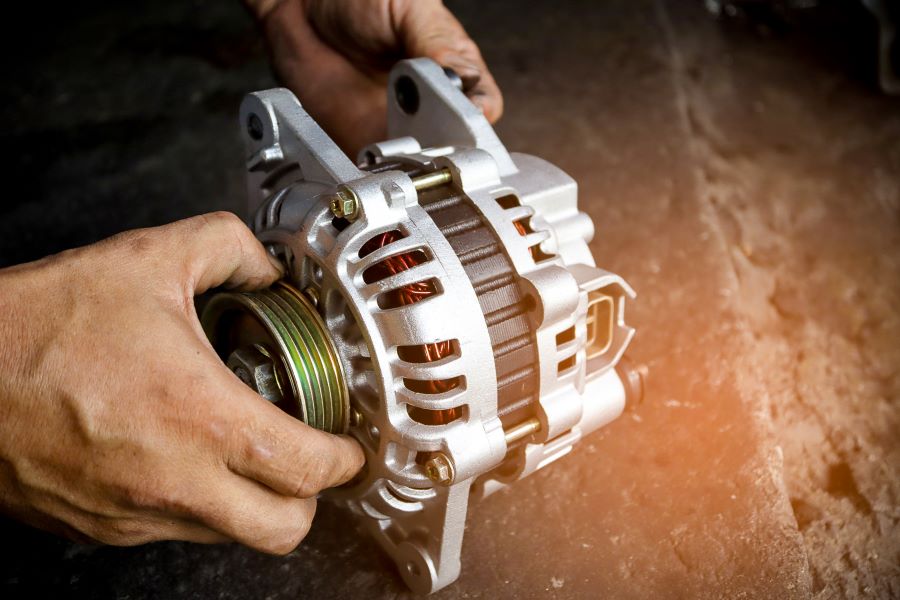
The alternator’s rotor spins on a set of precision bearings at speeds that can exceed 15,000 RPM. From a mechanical engineering perspective, these bearings are high-wear items. They are shielded and packed with synthetic grease designed to last the life of the component. However, the introduction of “Stop-Start” technology—a fuel-saving feature in modern tech-heavy cars—puts additional strain on the mechanical assembly. Every time the engine restarts, the belt tensioner applies a sudden torque load to the alternator pulley. Over time, this can lead to bearing race pitting or grease dry-out, resulting in the characteristic “whine” or “grind” of a failing mechanical component.
3. Electrical Interference and Modern Sensor Failure
In a world where vehicles rely on LIDAR, radar, and high-speed CAN bus data lines, “dirty” power can be as detrimental as no power at all. A failing alternator doesn’t always just stop working; sometimes, it begins to produce “electrical noise” that wreaks havoc on the vehicle’s digital nervous system.
Rectifier Bridge and Diode Degradation
The alternator produces Alternating Current (AC), but the car’s tech runs on Direct Current (DC). The rectifier bridge, consisting of a series of silicon diodes, acts as a “one-way valve” to convert that current. If a single diode fails—often due to a voltage spike or “back-feeding” from a faulty battery—it can leak AC current into the DC system.
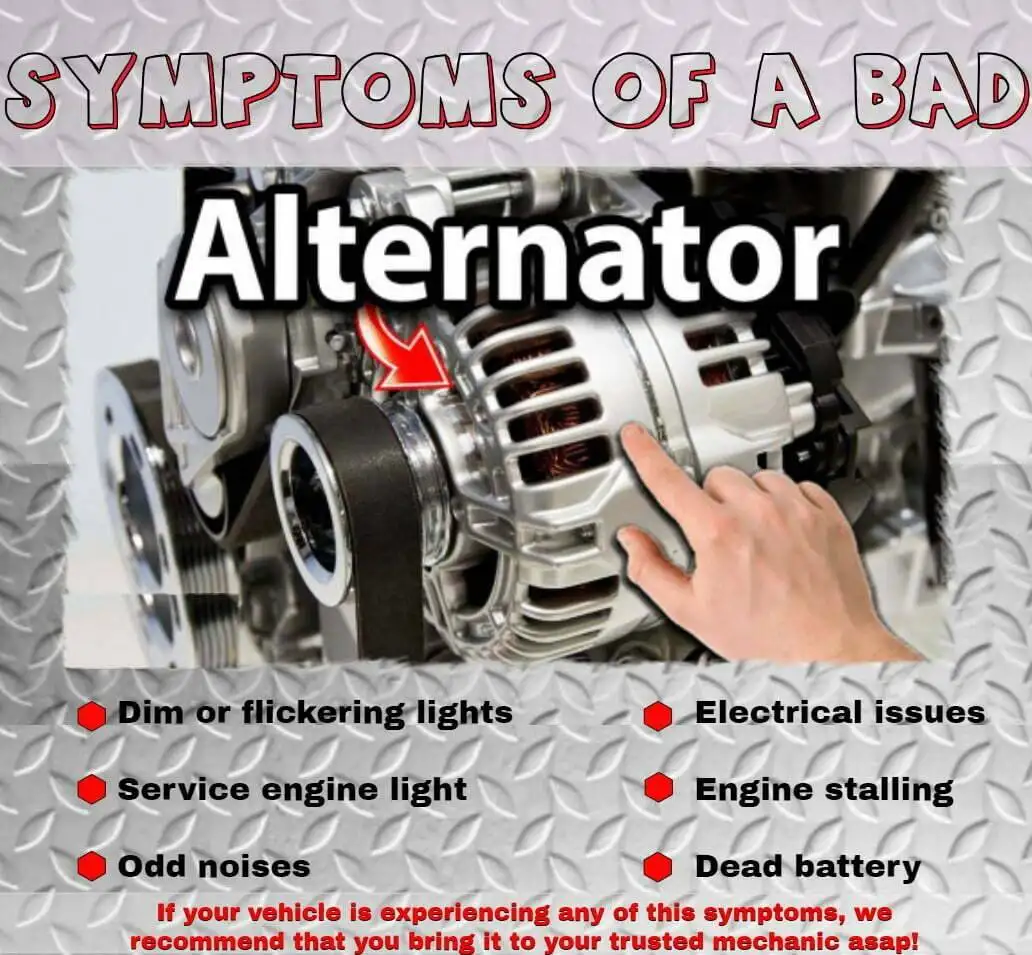
This is known as “AC Ripple.” While a standard light bulb might not notice, sensitive sensors and AI-driven ADAS (Advanced Driver Assistance Systems) certainly do. AC ripple can cause “ghost” error codes in the computer, flickering screens, and even erratic behavior in automated braking systems. In this context, the alternator hasn’t just “gone bad”; it has become a source of digital corruption.
Impact of High-Draw Gadgets and Aftermarket Tech
The rise of the “connected car” means that the alternator is now powering much more than just headlights and a radio. We are seeing an influx of high-draw peripherals: integrated tablets, 5G modems, and even refrigerated consoles. When users add these gadgets to a system that wasn’t designed for that specific load, they accelerate the aging process of the alternator’s internal components. The diodes in the rectifier bridge are rated for specific thermal and current limits; exceeding these limits even slightly but consistently causes “electromigration,” a process where the internal structure of the semiconductor literally shifts, leading to eventual failure.
4. Diagnostic Tools and AI-Driven Predictive Maintenance
As alternators have become more complex, the tools we use to diagnose them have evolved from simple voltmeters to sophisticated digital oscilloscopes and cloud-based diagnostic platforms.
Using OBD-II Scanners and Telematics
The first line of defense in identifying a failing alternator is the On-Board Diagnostics (OBD-II) system. Modern tech allows us to pull real-time data streams from the alternator. Technicians (and savvy DIYers using smartphone apps) can monitor “Field Circuit Duty Cycle” or “Battery Current Sensor” data. If the ECU is requesting 90% output but the battery voltage is only 12.8V, the software knows there is a hardware inefficiency. This digital oversight allows for the detection of a failing alternator long before the driver is stranded on the side of the road.
Predictive Analytics for Hardware Longevity
We are entering an era where AI and machine learning are used to predict hardware failure. Telematics companies are now collecting data from millions of vehicles to identify the specific patterns that precede an alternator failure. For instance, a subtle increase in the frequency of voltage fluctuations over a three-month period might trigger a “preventative maintenance” alert on the owner’s smartphone. By analyzing the “digital signature” of the charging system, manufacturers can identify batch defects or environmental stressors that lead to premature wear, effectively using tech to solve the problems created by high-tech demands.
Conclusion: The Synergy of Mechanical and Digital Reliability
An alternator “going bad” is rarely the result of a single catastrophic event. Instead, it is typically the culmination of thermal stress, mechanical wear, and electrical degradation, all occurring within a highly integrated digital ecosystem. As our vehicles continue to evolve into high-performance computers on wheels, the alternator remains the critical hardware link that enables all software functionality.
For the tech enthusiast and the automotive engineer alike, the lesson is clear: the health of our digital systems is entirely dependent on the integrity of our analog power generation. By understanding the stressors—from software communication errors to the physics of heat and friction—we can better appreciate the complex engineering required to keep our modern world in motion. Whether it is a failed diode causing a sensor glitch or a worn bearing due to start-stop cycles, the failure of an alternator is a fascinating study in how the limits of physical hardware define the possibilities of digital technology.
aViewFromTheCave is a participant in the Amazon Services LLC Associates Program, an affiliate advertising program designed to provide a means for sites to earn advertising fees by advertising and linking to Amazon.com. Amazon, the Amazon logo, AmazonSupply, and the AmazonSupply logo are trademarks of Amazon.com, Inc. or its affiliates. As an Amazon Associate we earn affiliate commissions from qualifying purchases.