
The inception of a business is often portrayed as a lightning bolt of creative inspiration or the sudden discovery of a revolutionary product. However, in the realm of professional finance and sustainable entrepreneurship, the true first step is far more pragmatic: performing a rigorous financial feasibility analysis and establishing a capital foundation. Before a logo is designed or a website is launched, a founder must determine if the venture is economically viable. This initial phase—the “financial audit of an idea”—is what separates a hobby from a profitable enterprise.
In this niche of business finance, the first step is the transition from a concept to a calculated risk. It involves a deep dive into unit economics, market demand through the lens of revenue, and a clear-eyed assessment of the capital required to bridge the gap between day one and the point of profitability.

The Financial Audit: Validating Economic Viability
The most critical initial move for any entrepreneur is to validate the economic viability of their concept. This is not merely about whether people “like” an idea; it is about whether people will pay for it at a price point that covers your costs and provides a return on investment (ROI). In the world of finance, we call this analyzing the “unit economics.”
Calculating the Break-Even Point
Before spending a single dollar, you must calculate your break-even point. This is the moment where your total revenue equals your total expenses. To do this, you need to estimate your fixed costs (rent, software subscriptions, insurance) and your variable costs (materials, shipping, commissions). Understanding your break-even point allows you to see how many units of a product or hours of a service you must sell every month just to keep the lights on. If the volume required to break even is higher than the total addressable market you can realistically reach, the business is financially flawed from the start.
Analyzing Profit Margins and Scalability
A business that generates high revenue but low profit is a dangerous trap. The first step involves looking at the gross and net margins. If you are selling a product for $100, but it costs $95 to deliver, your 5% margin leaves almost no room for error, marketing, or reinvestment. Professional investors and seasoned founders look for scalability—the ability for revenue to grow at a much faster rate than expenses. If your business model requires you to hire one new person for every new client you take on, your margins will remain flat. Financial validation requires a model where profit expands as the business grows.
Capitalization Strategies: Funding the Initial Launch
Once the math proves that the idea can be profitable, the next step is determining where the money will come from. This is the “Capitalization Phase.” A business without adequate funding is like a car without fuel; it won’t matter how well the engine is built if it can’t move.
The Art of Bootstrapping and Side Hustling
For many modern entrepreneurs, the first step is “bootstrapping”—funding the business using personal savings or current income from a day job. This approach minimizes debt and allows the founder to retain 100% ownership. When starting as a side hustle, the financial goal is to use the income from the primary job to fund the initial experiments of the business. This reduces personal financial risk and allows for “low-stakes” failure. However, bootstrapping requires extreme discipline; you must be willing to reinvest every penny of early profit back into the business to fuel growth.
Navigating External Investment and Debt
If the business requires significant upfront capital—such as for manufacturing, inventory, or complex technology—the first step may involve seeking external funding. This could be through SBA (Small Business Administration) loans, angel investors, or venture capital. Each of these paths has distinct financial implications. Debt requires regular interest payments, which increases your monthly “burn rate.” Equity investment requires giving up a portion of your future profits and control. Part of the first step of starting a business is determining which capital structure aligns with your long-term financial goals and your tolerance for risk.
Establishing a Tax-Efficient Legal Structure
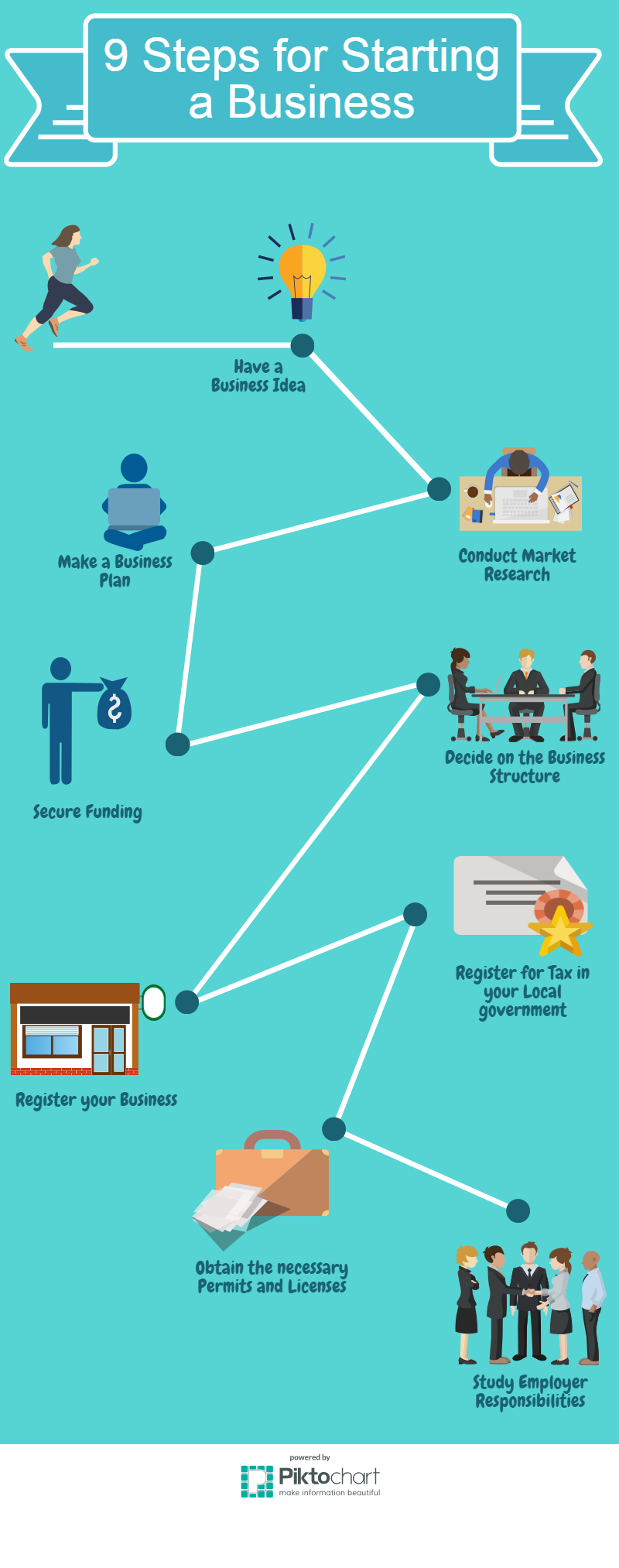
The third pillar of the first step is the legal and fiscal organization of the entity. The way a business is structured has profound implications for how much money stays in the founder’s pocket and how much goes to the government.
Choosing Between LLCs, S-Corps, and C-Corps
Financial strategy dictates the choice of entity. A Sole Proprietorship is the simplest, but it offers no protection for personal assets. An LLC (Limited Liability Company) is often the preferred first step for small business owners because it provides a “corporate veil,” protecting personal savings from business liabilities while allowing for “pass-through” taxation. For businesses that expect to generate significant profit early on, electing S-Corp status can be a brilliant financial move to reduce self-employment taxes. This level of financial planning must happen at the very beginning to avoid costly restructuring fees later.
Setting Up Professional Accounting Systems
You cannot manage what you do not measure. A non-negotiable part of the first step is setting up a dedicated business bank account and an automated accounting system. Co-mingling personal and business funds is a primary cause of financial failure for new ventures. By establishing a clean “paper trail” from day one, you ensure that you can track cash flow, claim all eligible tax deductions, and provide clean financial statements to potential lenders or investors. This infrastructure is the backbone of business finance; it transforms a vague idea into a trackable, manageable asset.
Managing Cash Flow and the “Burn Rate”
In the early stages of a business, cash flow is more important than profit. You can be profitable on paper—meaning you have sold more than you have spent—but if your clients haven’t paid their invoices yet, you can still run out of cash and go bankrupt. Understanding the “burn rate” and “runway” is a vital component of the initial financial setup.
Monitoring the Burn Rate
The burn rate is the amount of money your business is losing each month before it becomes cash-flow positive. If you have $50,000 in the bank and your expenses exceed your revenue by $5,000 a month, you have a 10-month “runway.” The first step of a savvy business owner is to constantly look for ways to extend this runway. This might involve negotiating longer payment terms with suppliers or requiring deposits from customers upfront. Cash flow management is the pulse of the business, and mastering it early prevents the “sudden death” that many startups face in their first year.
The Importance of a Cash Reserve
Just as personal finance experts recommend an emergency fund, a new business needs a cash reserve. Markets are volatile, and unexpected expenses are a certainty. A professional financial approach to starting a business involves setting aside a “rainy day” fund that can cover three to six months of operating expenses. This reserve provides the psychological and financial stability needed to make long-term strategic decisions rather than desperate, short-term choices driven by a lack of funds.
Building a Long-Term Financial Roadmap
The final element of the first step is looking toward the future. A business is an investment, and like any investment, it should have a projected “exit” or a long-term growth plan.
Reinvestment vs. Personal Income
In the beginning, a business owner must decide on their “draw”—the amount they will pay themselves. Many founders make the mistake of pulling too much money out of the business too early, starving the company of the capital it needs to grow. The first step in financial planning is deciding on a lean personal budget that allows the maximum amount of capital to be reinvested into income-producing assets within the business, such as better equipment, more inventory, or effective marketing.

Diversification and Risk Mitigation
Lastly, starting a business is an act of asset concentration. Most of your time and money are going into one “basket.” A sophisticated financial perspective involves balancing this by ensuring that your personal financial life remains diversified. This might mean continuing to contribute to a SEP-IRA or Solo 401(k) even while the business is in its infancy. By integrating your business finances with your personal financial goals, you ensure that the business serves you, rather than you becoming a slave to a failing financial model.
In conclusion, the first step of starting a business is the rigorous application of financial principles to an idea. It is the process of quantifying the dream, securing the necessary capital, and building the structural and accounting frameworks that allow for growth. When you prioritize the “Money” aspect of entrepreneurship from day one, you build a foundation that is resilient enough to withstand market fluctuations and strong enough to support long-term wealth creation.
aViewFromTheCave is a participant in the Amazon Services LLC Associates Program, an affiliate advertising program designed to provide a means for sites to earn advertising fees by advertising and linking to Amazon.com. Amazon, the Amazon logo, AmazonSupply, and the AmazonSupply logo are trademarks of Amazon.com, Inc. or its affiliates. As an Amazon Associate we earn affiliate commissions from qualifying purchases.