
The federal tax system is the bedrock of public finance in many nations, including the United States. Far more than just a mandatory payment, it represents a complex interplay between government needs, economic policy, and individual and corporate responsibilities. Understanding “what is the federal tax” is not merely about knowing how much you owe; it’s about grasping the fundamental mechanism that funds public services, shapes economic behavior, and reflects societal values. From maintaining national defense to funding infrastructure, education, and social safety nets, federal taxes are the engine that keeps the machinery of government running. This comprehensive guide delves into the intricacies of federal taxation, offering insights into its structure, purpose, collection, and impact on individuals and businesses alike.
Understanding Federal Tax: The Cornerstone of Public Finance
At its core, federal tax is the revenue collected by a national government to finance its operations and provide public goods and services. Unlike state or local taxes, federal taxes apply across the entire nation, dictated by federal law. The scope and scale of the federal tax system are vast, touching nearly every economic transaction and income stream within the country.
Defining Federal Tax
A federal tax is any levy imposed by the central government of a nation. In the United States, this refers to taxes imposed by the U.S. federal government, as opposed to taxes imposed by state, county, or municipal governments. These taxes are legally mandated contributions that individuals and corporations must pay, calculated based on various factors such as income, payroll, property, or consumption. The primary institution responsible for collecting federal taxes in the U.S. is the Internal Revenue Service (IRS). Without these revenues, the government would be unable to provide essential services, manage national debt, or respond to economic crises.
The Rationale Behind Federal Taxation
The rationale for federal taxation is multifaceted. Primarily, it’s about funding public expenditures that benefit society as a whole but cannot be efficiently provided by the private sector. These “public goods” include national defense, a justice system, regulatory bodies, and infrastructure like highways and bridges. Beyond mere funding, taxation also serves as a critical tool for economic management. Governments use tax policy to influence economic activity—stimulating growth during downturns, curbing inflation during boom times, or encouraging specific behaviors (e.g., investing in renewable energy through tax credits). Furthermore, progressive tax systems, where higher earners pay a larger percentage of their income in taxes, aim to reduce income inequality and fund social welfare programs designed to support vulnerable populations.
Key Principles of a Progressive Tax System
Many federal tax systems, including the U.S. federal income tax, operate on a progressive principle. This means that individuals and entities with higher incomes pay a higher percentage of their income in taxes compared to those with lower incomes. The underlying idea is based on the “ability to pay” principle, arguing that those with greater financial capacity can contribute more to society’s collective needs without undue burden. This is achieved through a system of tax brackets, where different portions of income are taxed at progressively higher rates. While the concept of progressivity is widely debated in terms of its ideal degree, it remains a central tenet of how many modern federal tax systems aim to achieve both revenue generation and a degree of wealth redistribution.
A Closer Look at Major Federal Tax Categories
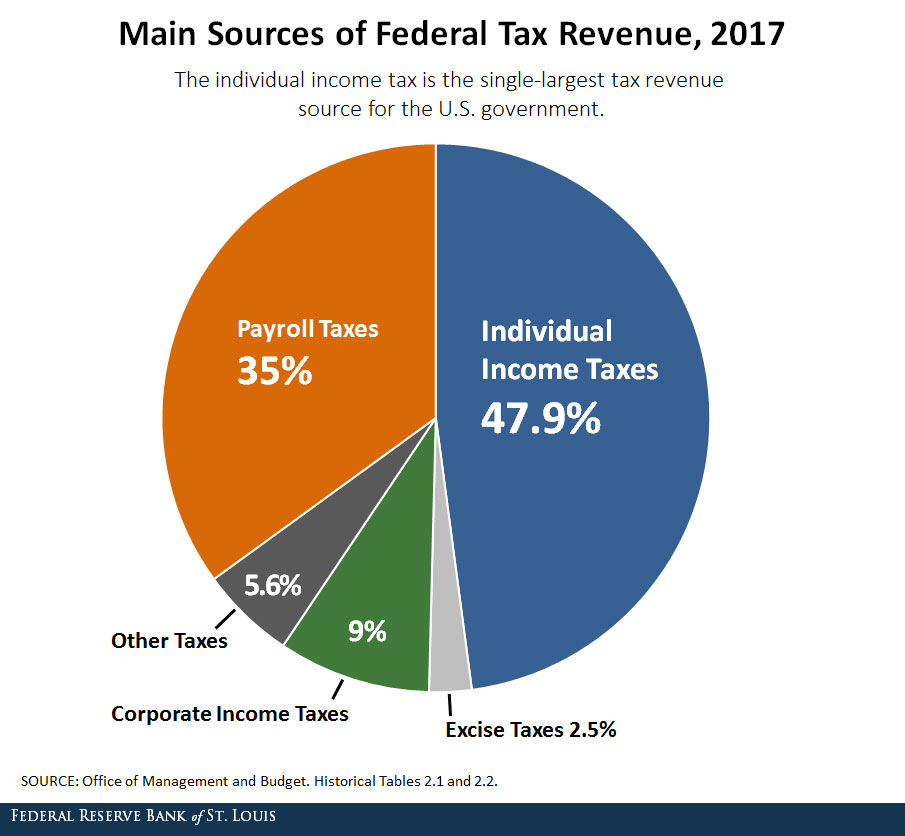
The federal tax system is not a monolithic entity; rather, it comprises several distinct categories, each designed to capture revenue from different economic activities and sources. Understanding these categories is crucial for both personal financial planning and business operations.
Federal Income Tax: Individual and Corporate
The federal income tax is arguably the most prominent and significant source of government revenue. It is levied on the taxable income of individuals, businesses, and other legal entities.
- Individual Income Tax: This is a tax on a person’s earnings, wages, salaries, investment income, and other forms of income. It is structured progressively, meaning different portions of income are taxed at increasing rates based on tax brackets. Individuals can reduce their taxable income through various deductions and credits, which further complicate the calculation but offer opportunities for tax savings.
- Corporate Income Tax: Businesses, especially corporations, are subject to federal income tax on their profits. This tax is levied on a company’s net earnings after deducting eligible expenses. The corporate tax rate has seen significant changes over the years, often influenced by economic policy goals aimed at stimulating investment or ensuring fair contributions from large enterprises.
Payroll Taxes: Funding Social Security and Medicare
Payroll taxes are distinct from income tax and are specifically dedicated to funding Social Security and Medicare, two crucial social insurance programs. These taxes are levied on wages and salaries, with both employees and employers typically contributing a share.
- Social Security Tax (OASDI): This tax funds benefits for retirees, disabled workers, and survivors. It has a wage base limit, meaning income above a certain threshold is not subject to Social Security tax.
- Medicare Tax (HI): This tax helps fund hospital insurance for the elderly and disabled. Unlike Social Security, there is no wage base limit for Medicare tax; all earned income is subject to it.
Payroll taxes are often visible on pay stubs as FICA (Federal Insurance Contributions Act) contributions, highlighting their direct link to employment.
Excise Taxes: Specific Goods and Services
Excise taxes are levied on the sale of particular goods and services, rather than on income or property. These taxes are often included in the price of the product or service and are sometimes used to discourage consumption of certain items or to fund specific programs. Common examples include taxes on gasoline, tobacco products, alcoholic beverages, airline tickets, and tanning services. While they may seem less direct to the average consumer, excise taxes contribute billions to federal coffers and can be significant for industries dealing with these specific products.
Estate and Gift Taxes: Wealth Transfer Considerations
These taxes are designed to tax the transfer of wealth, either upon death (estate tax) or during one’s lifetime (gift tax).
- Estate Tax: Sometimes referred to as the “death tax,” this is a tax on a deceased person’s right to transfer property at death. It applies only to estates exceeding a certain high exemption threshold, meaning it affects a relatively small percentage of the population.
- Gift Tax: To prevent individuals from avoiding estate tax by giving away their assets before death, the federal government also imposes a gift tax. This applies to transfers of property or money above an annual exclusion limit, without receiving full value in return. Both taxes aim to ensure that significant concentrations of wealth contribute to public revenues.
The Mechanism of Collection and Utilization
Understanding the types of federal taxes is only part of the picture; equally important is how these taxes are collected, processed, and ultimately put to use. This involves the intricate workings of the Internal Revenue Service and the federal budgeting process.
The Role of the Internal Revenue Service (IRS)

The Internal Revenue Service (IRS) is the revenue service of the United States federal government, responsible for collecting taxes and administering the Internal Revenue Code. Its duties include processing tax returns, issuing refunds, auditing taxpayers, and enforcing tax laws. The IRS plays a critical, if often maligned, role in ensuring the equitable and efficient operation of the federal tax system. It provides resources, forms, and guidance to help taxpayers understand and meet their obligations, while also pursuing those who attempt to evade their responsibilities. Its operations are vital for maintaining the integrity and funding capacity of the government.
From Tax Revenue to Public Spending: Where Does the Money Go?
Once collected by the IRS, federal tax revenues are deposited into the U.S. Treasury. From there, these funds are allocated through the federal budget process, which is overseen by Congress and the President. The vast sums collected are then channeled into a wide array of public services and programs. Major categories of federal spending include:
- Social Security and Medicare: These entitlement programs consume a significant portion of the budget, providing benefits to retirees, the disabled, and healthcare for seniors.
- National Defense: Funding for the military, including personnel, equipment, and operations.
- Interest on the National Debt: Payments made to holders of U.S. government bonds.
- Non-Defense Discretionary Spending: This category covers a broad range of areas, including education, transportation, scientific research, environmental protection, law enforcement, and veterans’ benefits.
The allocation of these funds reflects national priorities and is a constant subject of political debate and public scrutiny.
Tax Filing: Deadlines and Methods
For most individual taxpayers, the annual tax filing deadline is April 15th (or the next business day if April 15th falls on a weekend or holiday). Businesses and other entities have different deadlines depending on their structure and fiscal year. Taxpayers can file their returns using various methods:
- Electronically (e-file): The most popular and recommended method, often done through tax software or professional preparers. E-filing is generally faster, more accurate, and allows for quicker refunds.
- Mail: Traditional paper filing is still an option, though it typically takes longer for processing.
Taxpayers must accurately report all income, claim eligible deductions and credits, and remit any outstanding tax liability by the deadline to avoid penalties.
Navigating Your Federal Tax Obligations
Successfully navigating the federal tax landscape requires diligence, understanding, and often, strategic planning. Both individuals and businesses face specific challenges and opportunities when it comes to complying with tax laws and optimizing their tax situations.
For Individuals: Understanding Deductions, Credits, and Withholding
For individual taxpayers, managing federal taxes primarily involves understanding their income, eligible deductions, and credits, and how withholding works.
- Withholding: Most employees have federal income tax withheld from each paycheck based on the W-4 form they submit to their employer. This aims to ensure that tax liability is paid throughout the year, preventing a large bill at tax time.
- Deductions: These reduce your taxable income. Examples include standard deductions, itemized deductions (like mortgage interest, state and local taxes, or charitable contributions), and specific deductions like student loan interest or contributions to traditional IRAs.
- Credits: Tax credits directly reduce the amount of tax you owe, dollar for dollar, and are generally more valuable than deductions. Examples include the Child Tax Credit, Earned Income Tax Credit, and education credits. Strategic use of these can significantly lower an individual’s tax burden.
For Businesses: Compliance, Estimated Taxes, and Business Deductions
Businesses face a distinct set of federal tax obligations, which vary based on their legal structure (e.g., sole proprietorship, partnership, S-Corp, C-Corp).
- Compliance: Businesses must accurately report income and expenses, often requiring meticulous record-keeping. They are also responsible for payroll taxes for their employees and may collect and remit excise taxes.
- Estimated Taxes: Unlike employees who have taxes withheld, many self-employed individuals and businesses are required to pay estimated taxes quarterly. This ensures they meet their tax liability throughout the year, avoiding penalties for underpayment.
- Business Deductions: Businesses can deduct a wide array of ordinary and necessary business expenses to reduce their taxable income, including salaries, rent, utilities, advertising, and depreciation of assets. Understanding what is deductible is key to minimizing corporate or business-related tax liability.
Strategic Tax Planning: Minimizing Your Burden Legally
Tax planning is the process of strategically arranging your financial affairs to legally minimize your tax liability. This is an ongoing process, not just an annual event, and involves making informed decisions throughout the year. For individuals, this might include maximizing contributions to retirement accounts (401(k)s, IRAs), taking advantage of health savings accounts (HSAs), or timing large purchases to align with eligible deductions or credits. For businesses, it could involve choosing the optimal business structure, managing inventory, accelerating depreciation, or utilizing tax credits for research and development. Engaging with qualified financial advisors or tax professionals can be invaluable in developing an effective tax strategy.
Common Pitfalls and How to Avoid Them
Even with the best intentions, taxpayers can fall into common traps. These include:
- Underpayment Penalties: Not paying enough tax throughout the year, either through withholding or estimated payments.
- Filing Late: Missing deadlines can result in penalties and interest.
- Inaccurate Information: Errors on returns, whether intentional or accidental, can lead to audits or amendments.
- Ignoring Tax Law Changes: Tax laws evolve, and staying informed is crucial.
- Poor Record-Keeping: Lack of organized records makes filing difficult and can hinder a successful audit defense.
Avoiding these pitfalls requires careful attention, organization, and a willingness to seek professional help when needed.
The Broader Impact and Future of Federal Taxation
Federal taxation is not static; it is a dynamic system constantly responding to economic conditions, political philosophies, and societal needs. Its impact extends far beyond mere revenue generation, influencing economic growth, wealth distribution, and even international relations.
Economic Implications: Growth, Redistribution, and Stability
Federal tax policy is a powerful lever for economic management. Tax cuts can stimulate consumption and investment, potentially boosting economic growth, while tax increases can help control inflation or reduce budget deficits. Progressive tax systems aim to redistribute wealth, providing a safety net and reducing income inequality, which proponents argue can lead to greater social stability. However, tax policy is also a source of intense debate, with different schools of thought arguing over the optimal balance between stimulating growth, ensuring fairness, and funding government effectively. The debate often centers on how taxes affect savings, investment, labor supply, and entrepreneurship.
Historical Context and Significant Tax Reforms
The U.S. federal tax system has evolved significantly since its inception. Early federal taxes were primarily tariffs and excise taxes. The modern income tax was permanently established in 1913 with the 16th Amendment. Since then, there have been numerous major tax reforms, each leaving its mark. Notable examples include the Revenue Act of 1924, which lowered income tax rates; the Tax Reform Act of 1986, which simplified the code by reducing the number of brackets and eliminating many deductions; and the Tax Cuts and Jobs Act of 2017, which significantly reduced corporate tax rates and altered individual tax provisions. Each reform reflects changing economic realities and political priorities.

The Ongoing Debate: Tax Policy and Future Challenges
The discussion surrounding federal tax policy is perpetual and often contentious. Key debates typically revolve around:
- Tax Rates: What are the optimal rates for individual and corporate income taxes to balance revenue generation with economic incentives?
- Tax Base: Should certain types of income or wealth be taxed more heavily? What about consumption taxes?
- Fairness vs. Efficiency: How can the tax system be designed to be both equitable (fair distribution of burden) and efficient (minimizing economic distortions)?
- Simplicity: How can the complex tax code be simplified to reduce compliance costs for taxpayers?
- Addressing National Debt: How should tax policy be used to manage the growing national debt?
- Global Taxation: In an increasingly interconnected world, how should multinational corporations be taxed to prevent tax avoidance and ensure fair competition?
These challenges ensure that federal tax policy will remain a central pillar of economic and political discourse for the foreseeable future. Understanding its “what” and “why” is therefore not just a matter of financial literacy but a prerequisite for informed civic engagement.