
Need for Speed Heat, a cornerstone of arcade racing, challenges players not only with its dynamic street racing environment but also with an extensive garage of vehicles, each offering a unique performance profile. The pursuit of the “fastest car” within this digital realm isn’t merely about raw top speed; it’s a complex interplay of acceleration, handling, tuning, and even the nuances of the game’s physics engine. For tech enthusiasts and virtual gearheads alike, dissecting the performance metrics and optimal configurations of these digital machines offers a fascinating glimpse into the intricate design of modern racing simulations.
The Pursuit of Speed: Understanding Need for Speed Heat’s Performance Metrics
Identifying the absolute fastest car requires a comprehensive understanding of how performance is quantified and experienced within Need for Speed Heat. Unlike real-world track records, in-game speed is a subjective experience heavily influenced by player skill and specific race conditions. However, core technical specifications remain paramount.
Acceleration vs. Top Speed: A Balanced Approach
While top speed often grabs headlines, acceleration is arguably more critical in the context of street racing. Races in Palm City are rarely long, uninterrupted straightaways. Instead, they feature tight corners, sudden braking zones, and frequent engagements with the law, all of which demand rapid acceleration out of turns and from a standstill. A car with extreme top speed but sluggish acceleration will often be outmaneuvered by a vehicle that can quickly reach its mid-range potential and maintain momentum through technical sections. The game’s engine simulates these dynamics, meaning a balanced approach to upgrades often yields superior lap times and race finishes.
Engine Swaps and Part Tiers: The Foundation of Performance
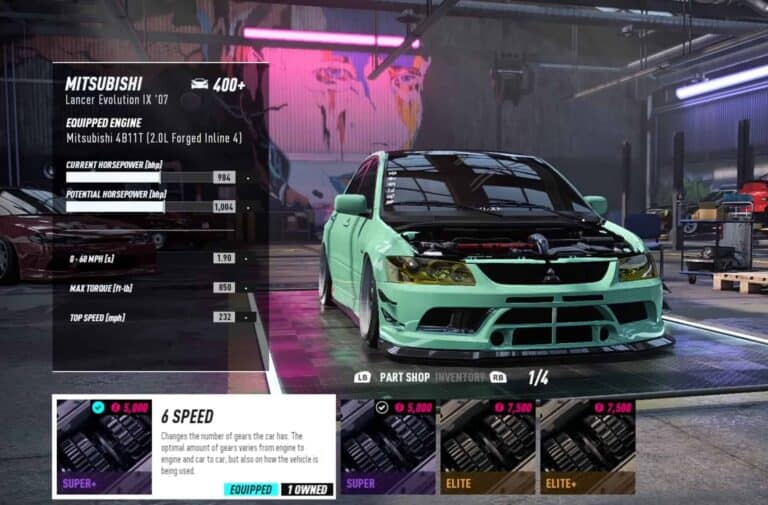
At the heart of any car’s performance in Need for Speed Heat lies its engine and the accompanying performance parts. The game offers a robust customization system where players can perform engine swaps, dramatically altering a vehicle’s base characteristics. A stock engine might be good, but swapping it for a high-tier alternative, especially one designed for a different vehicle class (e.g., a V8 or V12 into a smaller chassis), can unlock explosive new potential. Furthermore, parts are categorized by tiers (e.g., Pro, Super, Elite, Ultimate, Ultimate+). Each tier offers significant statistical boosts, impacting horsepower, torque, nitrous duration, and braking power. Maximizing these components is the first step towards building a truly fast machine. The game’s underlying algorithms calculate these performance changes in real-time, providing immediate feedback on how each upgrade impacts the car’s overall rating.
Handling and Grip: More Than Just Straight-Line Speed
A car’s ability to put power down and navigate corners efficiently is as crucial as its raw speed. Need for Speed Heat features a nuanced handling model that allows players to fine-tune their vehicle’s grip-to-drift ratio. Optimal handling ensures that the immense power generated by high-tier engines can be effectively translated into forward motion without losing control or scrubbing too much speed in corners. Tires, suspension, and differential upgrades play a pivotal role here, directly influencing how the car behaves under load and during transitions. The game’s physics engine attempts to realistically portray tire grip and suspension compression, making these upgrades vital for maintaining high average speeds across varied race layouts.
Contenders for the Crown: Top-Tier Vehicles and Their Raw Potential
While personal preference and tuning prowess can elevate many cars, a few vehicles consistently emerge as top contenders for the title of “fastest” due to their superior base statistics and upgrade potential.
The Koenigsegg Regera: Undisputed King?
For many, the Koenigsegg Regera stands out as the ultimate speed machine in Need for Speed Heat. Its unique single-gear transmission in real life is translated in-game to an incredibly smooth and relentless acceleration curve that seemingly never ends. Once fully upgraded with Ultimate+ parts and an optimized tune, the Regera can achieve astronomical top speeds and maintain them with exceptional stability. Its sheer power output, combined with excellent aerodynamic properties simulated within the game’s physics model, makes it a dominant force on any straights, often leaving competitors far behind. Its primary drawback, if any, lies in its initial acquisition cost and its somewhat unwieldy handling at extreme speeds, demanding a high level of driver skill to truly master.
McLaren P1 and Ferrari FXX-K Evo: Close Rivals
Hot on the heels of the Regera are hypercars like the McLaren P1 and the Ferrari FXX-K Evo. The McLaren P1, when fully upgraded, offers a phenomenal blend of acceleration and top speed, coupled with more responsive handling than the Regera. It’s often favored by players who prefer a slightly more agile feel without sacrificing much in terms of raw power. The Ferrari FXX-K Evo, a track-focused beast, provides blistering acceleration and exceptional cornering capabilities once tuned correctly. While it might not match the Regera’s absolute top-end speed, its ability to carry tremendous speed through corners often makes it faster on technical tracks, highlighting the importance of handling in overall performance. These vehicles showcase the diverse approaches to speed that the game supports, offering choices for different driving styles.
Other Notable Mentions and Budget Beasts
Beyond the hypercar elite, other vehicles offer incredible performance for their class or initial cost. The Ford GT (2017) and the Porsche 911 Carrera RSR 2.8 are often cited for their exceptional upgrade potential and competitive performance, especially in lower-tier races or for players who prefer a different aesthetic. The RSR, in particular, is notorious for its incredible acceleration and cornering, making it a “meta” pick for many time trials and races despite its older chassis. These cars demonstrate the depth of the game’s customization system, allowing even seemingly humble vehicles to become formidable contenders with the right investment in tech.
Beyond Raw Power: The Crucial Role of Customization and Tuning
Simply owning a top-tier car isn’t enough; maximizing its performance in Need for Speed Heat requires meticulous attention to customization and tuning. The game offers a sophisticated system that allows players to fine-tune nearly every aspect of their vehicle’s behavior.
Performance Parts: Fine-Tuning Every Component

The selection of performance parts is foundational. Beyond the engine, players must carefully choose turbos (single, twin, screw, root), nitrous types (burst, refill), ECU, fuel system, exhaust, clutch, transmission, tires (track, race, drift, road), suspension (race, track, drift, rally, road), and differential (race, track, drift, road). Each component influences specific attributes. For instance, a screw supercharger offers linear power delivery, while a twin-turbo might have a more aggressive power band. Track tires provide maximum grip but limit drift potential, while drift tires are the opposite. Understanding how these parts interact is crucial for building a cohesive performance package tailored to a specific driving style or race type.
Engine Swaps: The Heart of the Beast
The most impactful customization often comes from engine swaps. The game allows players to transplant engines from other vehicles into their chosen chassis. This not only changes the base horsepower and torque but also alters the car’s potential for further upgrades. For example, fitting a high-revving V12 into a lightweight sports car can create an unparalleled power-to-weight ratio, completely transforming its performance characteristics. This feature represents a core technological aspect of the game, simulating complex mechanical adjustments and their downstream effects on vehicle dynamics.
Live Tuning: On-the-Fly Adjustments
Need for Speed Heat’s “Live Tuning” feature allows players to make real-time adjustments to their vehicle’s handling while driving. This includes modifying steering sensitivity, downforce, traction control, and differential balance. For optimizing speed, downforce settings are particularly important. High downforce increases grip but can reduce top speed, while lower downforce allows for higher top speeds but makes the car more prone to losing traction. Mastering live tuning enables players to adapt their vehicle to different sections of a track or dynamically respond to pursuit situations, ensuring optimal performance under varying conditions.
Downforce and Diffuser Settings: Grip vs. Speed
Specific aerodynamic components like diffusers and spoilers contribute to a car’s downforce. In-game, these settings directly influence how much the car is pressed against the road at speed. While more downforce provides better stability and grip through corners, preventing wheel spin and enhancing steering response, it also increases drag, which can limit ultimate top speed on long straights. The tech behind this in-game system simulates a complex aerodynamic balance, requiring players to find the sweet spot between maximizing cornering speeds and achieving blistering straight-line performance.
Mastering the Mechanics: Driving Techniques for Optimal Performance
Even with the fastest car and the best tune, driver skill remains a critical component of achieving ultimate speed. The game’s handling model rewards precise inputs and strategic decision-making.
Nitrous Management: Strategic Boost Usage
Nitrous Oxide Systems (NOS) are not just for showing off; they are a vital strategic tool. The game features various nitrous types, some offering short, powerful bursts, others providing longer, sustained boosts. Effective nitrous management involves using boosts strategically – not just on straights, but also to accelerate out of corners, recover from a slight error, or gain an edge during intense pursuit moments. Overuse can deplete the supply at critical junctures, while judicious use can shave precious seconds off lap times.
Drifting vs. Grip Racing: Impact on Average Speed
Need for Speed Heat encourages both drifting and grip racing. While drifting looks spectacular and is integral to certain event types, true grip racing (taking corners with minimal loss of traction) is generally faster for achieving overall high average speeds in circuit races. Drifting inherently involves losing momentum, which must then be regained. Mastering the art of controlled grip through corners, braking late, and accelerating early is the hallmark of a fast driver in this game. The underlying physics engine differentiates between these styles, rewarding the efficiency of grip for speed-focused objectives.
Cornering Techniques: Maintaining Momentum
Maintaining momentum is the golden rule of fast driving. This means optimizing corner entry speed, hitting the apex perfectly, and maximizing exit speed. The game’s dynamic physics allow for subtle corrections and adjustments throughout a corner. Trail braking (maintaining light brake pressure into the corner) and throttle modulation are key techniques that allow drivers to scrub just enough speed to navigate the turn efficiently without completely killing their momentum, ensuring they can carry high speeds through and out of every bend.
The Evolving Meta: Adapting to Game Updates and Community Discoveries
Like many modern games, Need for Speed Heat is subject to updates and patches. These can sometimes rebalance car performance, alter handling models, or introduce new parts, directly impacting the “meta” – the current most effective strategies and vehicle builds.
Patch Notes and Their Impact
Developers often release patch notes detailing changes. Savvy players and tech enthusiasts pay close attention to these updates, as a seemingly minor adjustment to a tire compound or engine characteristic can shift the balance of power among vehicles. A car that was once dominant might be slightly nerfed, while a previously overlooked vehicle could receive buffs that propel it into contention. Staying informed about these technical changes is essential for maintaining a competitive edge.

Community Builds and Leaderboard Dominance
The Need for Speed Heat community is constantly experimenting and sharing “ultimate builds” – specific car, part, and tuning combinations designed to maximize performance for different race types. Online leaderboards and forums become hubs for these discoveries. Often, the absolute fastest builds are identified through extensive testing and shared by top players. While the Koenigsegg Regera frequently features at the top, creative community builds utilizing other cars demonstrate the depth and flexibility of the game’s customization system, allowing players to discover new ways to push the boundaries of speed within the digital world of Palm City. The continuous evolution of optimal strategies underscores the game’s complex technical underpinnings, making the pursuit of the “fastest car” an ongoing and engaging challenge.
aViewFromTheCave is a participant in the Amazon Services LLC Associates Program, an affiliate advertising program designed to provide a means for sites to earn advertising fees by advertising and linking to Amazon.com. Amazon, the Amazon logo, AmazonSupply, and the AmazonSupply logo are trademarks of Amazon.com, Inc. or its affiliates. As an Amazon Associate we earn affiliate commissions from qualifying purchases.