
The drivetrain is a fundamental, intricate system found in nearly every vehicle, from a compact car to a heavy-duty truck, or even industrial machinery. It is the sophisticated network of components responsible for taking the power generated by the engine or motor and transmitting it to the wheels, ultimately propelling the vehicle forward. Without a properly functioning drivetrain, a vehicle, regardless of how powerful its engine, would be little more than a static shell. Understanding the drivetrain involves delving into a complex interplay of mechanical engineering, material science, and increasingly, advanced electronics and software. It is a critical area of automotive technology that continues to evolve rapidly, driving improvements in performance, efficiency, and safety.
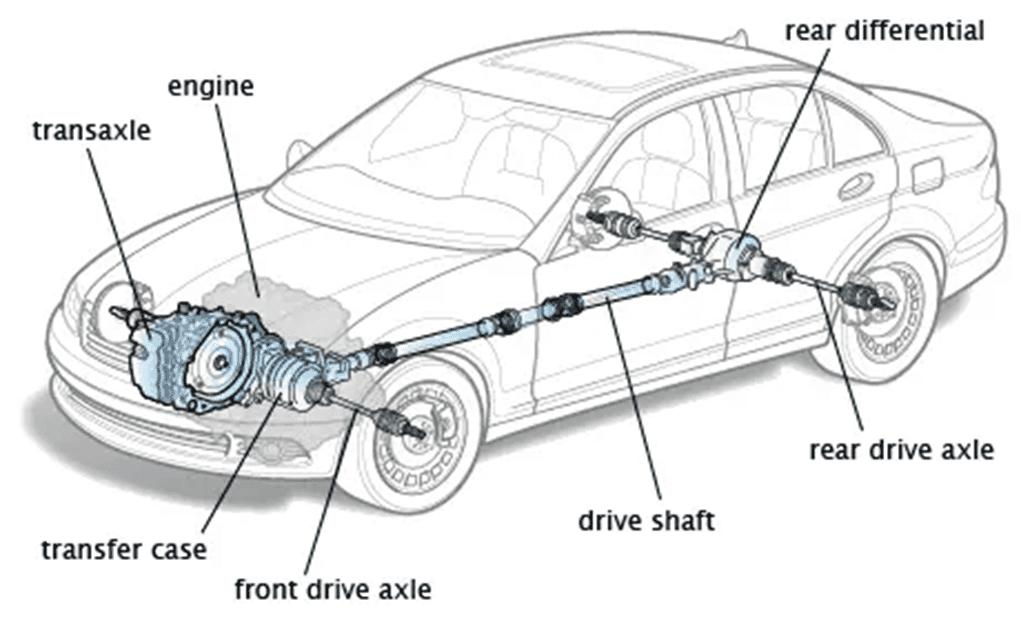
The Core Function and Components of a Drivetrain
At its heart, the drivetrain’s purpose is power delivery. It begins where the power source ends and culminates at the point of contact with the road. Each component plays a vital, interconnected role in this transmission process, converting rotational energy into motion.
Engine (Power Source)
While technically the engine (or electric motor in an EV) is the source of power rather than a drivetrain component itself, it’s essential to understand its role. The engine generates mechanical energy, typically rotational torque, which then needs to be managed and directed by the drivetrain. In internal combustion engine (ICE) vehicles, this involves the combustion of fuel to create piston movement, which rotates the crankshaft. In electric vehicles (EVs), an electric motor directly converts electrical energy from a battery pack into rotational motion. The characteristics of the power source—its torque curve, horsepower, and rotational speed—heavily influence the design and requirements of the rest of the drivetrain.
Transmission (Gearbox)
The transmission is perhaps the most critical component of the drivetrain after the power source. Its primary function is to adjust the speed and torque ratio between the engine/motor and the drive wheels. Engines operate most efficiently within specific RPM (revolutions per minute) ranges, but vehicles need a wide range of speeds and varying levels of torque for acceleration, cruising, and climbing hills. The transmission uses a series of gears to multiply torque at low speeds (for starting and accelerating) and reduce engine RPM at high speeds (for fuel efficiency).
Transmissions come in various technological forms:
- Manual Transmissions (MT): Require the driver to manually select gears using a clutch pedal and gear stick. They offer direct mechanical control and can be more engaging for some drivers.
- Automatic Transmissions (AT): Automatically shift gears using hydraulic pressure or electronic controls, providing convenience and smoother operation. Early ATs were less efficient than MTs, but modern versions often surpass them in efficiency and shift speed.
- Continuously Variable Transmissions (CVT): Utilize a belt or chain running between two variable-width pulleys to provide an infinite number of gear ratios within a range, optimizing engine RPM for all driving conditions and maximizing fuel economy.
- Dual-Clutch Transmissions (DCT): Essentially two manual transmissions working in parallel, each with its own clutch, allowing for incredibly fast and smooth gear changes, often found in performance vehicles.
Driveshaft (Propeller Shaft)
In vehicles where the transmission is separate from the driven wheels (e.g., front-engine, rear-wheel drive cars), a driveshaft is used to transmit rotational power from the transmission to the differential. This robust component, often made of steel or lighter composite materials, is designed to withstand significant torque and typically incorporates universal joints (U-joints) to accommodate changes in angle and movement between the transmission and the differential as the suspension articulates.
Differential
The differential is an ingenious piece of engineering that allows the drive wheels to rotate at different speeds. This is crucial when a vehicle turns, as the wheel on the outside of the turn must travel a greater distance than the wheel on the inside of the turn in the same amount of time. Without a differential, the wheels would be forced to spin at the same speed, leading to tire scrubbing, increased wear, and unstable handling. Differentials are housed in a sturdy casing and contain a complex arrangement of gears (spider gears and side gears) that distribute torque while accommodating these speed differences. Advanced differentials, like limited-slip differentials (LSDs) or locking differentials, can restrict the speed difference between wheels to improve traction in slippery conditions or during aggressive cornering.
Axles
Axles are the final conduits of power delivery from the differential to the wheels. These shafts connect the differential to the hub assemblies where the wheels are mounted. In front-wheel-drive vehicles, constant velocity (CV) joints are typically used on the axles to allow the wheels to steer and move up and down with the suspension while continuously transmitting power smoothly. Rear axles in RWD vehicles may also incorporate CV joints or simply be solid shafts if the differential is mounted rigidly to the chassis.
Wheels
While not strictly part of the power transmission chain in the mechanical sense, the wheels are the ultimate destination of the drivetrain’s output. They convert the rotational energy from the axles into linear motion against the road surface, propelling the vehicle. The design, material, and tire choice of the wheels significantly impact a vehicle’s performance, handling, and efficiency, making them the critical interface between the drivetrain’s output and the physical world.
Types of Drivetrain Configurations
The arrangement of these core components defines the various drivetrain configurations, each offering distinct advantages and disadvantages in terms of traction, handling, efficiency, and cost.
Front-Wheel Drive (FWD)
In FWD vehicles, the engine, transmission, and differential (often integrated into a single unit called a transaxle) are located at the front of the vehicle, and power is sent exclusively to the front wheels.
- Technology: Compact design, often transverse engine mounting. Uses CV joints on the front axles to allow for steering and suspension movement.
- Advantages: Excellent traction in light snow and wet conditions (engine weight over drive wheels), more interior space due to the lack of a driveshaft tunnel, lighter weight, and generally lower manufacturing costs.
- Disadvantages: Can exhibit “torque steer” under hard acceleration (a tendency for the steering wheel to pull to one side), less ideal weight distribution for high-performance handling, and reduced towing capacity compared to RWD.
Rear-Wheel Drive (RWD)
RWD vehicles have the engine typically in the front (though mid-engine or rear-engine configurations exist), and power is transmitted via a driveshaft to a differential that powers the rear wheels.
- Technology: Separate engine, transmission, driveshaft, and rear differential. Allows for more balanced weight distribution.
- Advantages: Superior handling characteristics and weight distribution, particularly for performance vehicles. Better traction for heavy loads and towing (weight over the rear drive wheels). No torque steer.
- Disadvantages: Can struggle for traction in slippery conditions if the rear is too light. Requires a driveshaft, adding weight and intruding into cabin space. Typically more complex and expensive to manufacture than FWD.
All-Wheel Drive (AWD)

AWD systems deliver power to all four wheels, either continuously or on demand, to maximize traction.
- Technology: More complex than FWD or RWD. Uses a central differential (or a viscous coupling/clutch pack) to distribute torque between the front and rear axles, allowing them to rotate at different speeds during turns. Many systems use electronic sensors to detect slip and adjust power distribution dynamically.
- Types:
- Full-time AWD: Power is always sent to all four wheels, often with a default torque split (e.g., 40/60 front/rear).
- Part-time/On-demand AWD: Typically operates in FWD or RWD mode and only engages the other axle when slip is detected.
- Advantages: Excellent traction and stability in adverse weather conditions (rain, snow, light off-road). Improved cornering grip.
- Disadvantages: Added weight and complexity, leading to higher cost and often slightly reduced fuel economy compared to 2WD counterparts. Not designed for extreme off-roading like traditional 4WD.
Four-Wheel Drive (4WD)
Often confused with AWD, traditional 4WD systems are designed for serious off-road use and typically offer a “low range” gearing option for maximum torque at low speeds.
- Technology: Employs a transfer case that allows the driver to select between 2WD, 4WD High (for light off-roading or slippery roads), and 4WD Low (for extreme terrain). The transfer case usually includes a center differential lock or direct coupling, meaning the front and rear axles are locked to spin at the same speed when 4WD is engaged, which is why 4WD should not be used on dry pavement.
- Advantages: Unmatched traction in challenging off-road conditions, mud, rocks, and steep inclines.
- Disadvantages: Significant added weight and complexity. Not suitable for on-road use in 4WD mode due to driveline bind. Typically less fuel-efficient.
The Evolution of Drivetrain Technology
Drivetrains have undergone continuous technological innovation, driven by demands for better performance, greater efficiency, and enhanced driver experience.
Manual to Automatic and Beyond
Early automatic transmissions, while convenient, were often less efficient and slower than manual counterparts. Modern automatics, with 6, 8, 9, or even 10 speeds, use sophisticated electronic controls and advanced hydraulics to execute shifts faster and smoother than many drivers could with a manual, often leading to better fuel economy. Continuously Variable Transmissions (CVTs) represent a departure from discrete gears, offering an infinitely variable ratio range for optimal engine efficiency across all speeds, though some drivers find their “rubber band” feel unusual. Dual-Clutch Transmissions (DCTs) fuse the efficiency of manuals with the convenience and speed of automatics, using two clutches to pre-select the next gear, resulting in lightning-fast shifts without power interruption.
Hybrid Drivetrains
The advent of hybrid technology introduced an entirely new dimension to drivetrains. Hybrid vehicles integrate an electric motor (or multiple motors) with an internal combustion engine. The drivetrain in a hybrid manages the seamless transition between electric power, engine power, or a combination of both. Complex power split devices and electronic control units determine the most efficient power source at any given moment, optimizing fuel economy and reducing emissions. Regenerative braking, a key hybrid technology, captures kinetic energy normally lost as heat during braking and converts it back into electricity to recharge the battery, further enhancing efficiency.
Electric Vehicle (EV) Drivetrains
Electric vehicles represent a significant paradigm shift in drivetrain technology. EV drivetrains are remarkably simpler than those in ICE vehicles. A typical EV has an electric motor (or motors) directly connected to the drive wheels, often through a single-speed reduction gear, eliminating the need for a multi-speed transmission, driveshaft (in many designs), and complex differentials in some cases (e.g., if each wheel has its own motor).
- Simplicity: Fewer moving parts mean less maintenance and improved reliability.
- Efficiency: Electric motors deliver instant torque from 0 RPM and are highly efficient across a broad operating range, leading to superior energy conversion from battery to wheels.
- Control: The precise and rapid control over electric motors allows for advanced torque vectoring, where individual wheel torque can be adjusted almost instantly to improve handling and traction far beyond what mechanical systems can achieve.
Advanced Control Systems
Modern drivetrains are no longer purely mechanical systems. They are deeply integrated with electronic control units (ECUs) and sophisticated software.
- Traction Control Systems (TCS): Use wheel speed sensors to detect wheelspin and automatically reduce engine power or apply individual brakes to restore traction.
- Electronic Stability Control (ESC): Monitors steering angle, wheel speed, and yaw rate to prevent skids by selectively braking individual wheels and reducing engine power.
- Torque Vectoring: Advanced differentials, often electronically controlled, can dynamically distribute torque not just between axles but also between individual wheels on the same axle. This allows for sharper turns by sending more power to the outside wheel or improving stability by subtly adjusting power delivery. These systems leverage sensors and sophisticated algorithms to make thousands of calculations per second, enhancing both safety and dynamic performance.
Performance, Efficiency, and Future Trends in Drivetrain Tech
The continuous evolution of drivetrain technology is driven by a quest for enhanced performance, greater efficiency, and a more intelligent, adaptable driving experience.
Optimizing Fuel Efficiency and Emissions
Modern drivetrain design heavily emphasizes reducing fuel consumption and emissions for ICE vehicles and extending range for EVs. Technologies like direct injection, variable valve timing, cylinder deactivation (in ICE), and advanced aerodynamic designs all contribute. On the drivetrain side, transmissions with more gears (or CVTs) keep engines operating in their most efficient RPM range. Lighter materials like aluminum and carbon fiber are increasingly used in driveshafts, axles, and transmission casings to reduce vehicle weight, which directly impacts efficiency. Electronic controls also play a pivotal role in optimizing shift points and power delivery to minimize energy waste.
Enhancing Performance and Driving Dynamics
For performance vehicles, the drivetrain is engineered to maximize power delivery, responsiveness, and handling. Technologies like launch control (optimizing wheelspin for maximum acceleration from a standstill), rapid-shifting DCTs, and advanced torque vectoring differentials are commonplace. The ability to precisely control power to each wheel, particularly evident in high-performance AWD systems and multi-motor EVs, allows for unprecedented levels of grip, agility, and stability during aggressive driving.
The Role of Software and AI in Drivetrain Management
The future of drivetrains is undeniably digital. Software algorithms are becoming increasingly sophisticated, managing everything from adaptive shift patterns based on driving style and road conditions to predictive energy management in hybrid and electric vehicles. Artificial Intelligence (AI) and machine learning are beginning to play a role in optimizing drivetrain behavior in real-time. For instance, AI could learn a driver’s preferences, anticipate terrain changes using navigation data, or even predict maintenance needs based on sensor data analysis, leading to personalized and proactive drivetrain management. Adaptive suspensions and active aerodynamic elements are also integrated with drivetrain controls to create a holistic performance system.

Future of Drivetrains: Modularity, Electrification, Autonomous Integration
Looking ahead, drivetrain technology will continue its rapid evolution.
- Increased Electrification: The trend towards battery electric vehicles (BEVs) and hydrogen fuel cell electric vehicles (FCEVs) means drivetrains will become even simpler mechanically, relying more on advanced power electronics and software for control. We may see more individual wheel motors for ultimate torque vectoring.
- Modularity: Drivetrains might become more modular, allowing manufacturers to easily configure platforms for various power sources and drive types with minimal re-engineering.
- Autonomous Integration: As autonomous driving technology matures, drivetrains will need to communicate seamlessly with self-driving systems. This could involve highly precise throttle and braking control, sophisticated traction management for evasive maneuvers, and predictive adjustments based on environmental sensor data, all managed without human intervention. The drivetrain will become a critical enabler of safe and efficient autonomous mobility.
In essence, the drivetrain, while historically a purely mechanical marvel, is transforming into a highly integrated, intelligent system where hardware, software, and artificial intelligence converge to define the future of vehicle performance, efficiency, and intelligence.
aViewFromTheCave is a participant in the Amazon Services LLC Associates Program, an affiliate advertising program designed to provide a means for sites to earn advertising fees by advertising and linking to Amazon.com. Amazon, the Amazon logo, AmazonSupply, and the AmazonSupply logo are trademarks of Amazon.com, Inc. or its affiliates. As an Amazon Associate we earn affiliate commissions from qualifying purchases.