
The Dow Jones Industrial Average (DJIA), often simply referred to as “the Dow,” stands as one of the most venerable and widely quoted stock market indices in the world. For over a century, it has served as a critical barometer of the health and direction of the American economy, encapsulating the performance of 30 large, publicly traded companies across various industrial sectors. While its methodology and representation have evolved since its inception in 1896, its ability to capture investor sentiment and highlight economic trends remains undiminished. Understanding its all-time high is not merely about identifying a peak numerical value; it’s about comprehending the underlying economic forces, corporate achievements, and investor psychology that propel markets to new stratospheric levels. This article delves into the significance of the Dow’s all-time high, exploring its historical context, the drivers behind its ascent, and what these milestones mean for investors and the broader financial landscape.

Understanding the Dow Jones Industrial Average (DJIA)
Before dissecting its all-time highs, it’s crucial to grasp the essence of the Dow Jones Industrial Average itself. Unlike broader market indices such as the S&P 500, which is market-capitalization weighted, the Dow is a price-weighted index. This unique characteristic means that stocks with higher share prices exert a greater influence on the index’s value than those with lower prices, regardless of their company’s total market value.
A Century of Market Representation
Conceived by Charles Dow, editor of The Wall Street Journal and co-founder of Dow Jones & Company, the index was initially designed to track the performance of the burgeoning industrial sector in the late 19th century. From its humble beginnings with just 12 companies, predominantly railroads, sugar, and tobacco trusts, it has expanded to include 30 of America’s most influential corporations. The selection of these companies is not formulaic; rather, a committee selects them based on their reputation, sustained growth, investor interest, and ability to represent a significant portion of the U.S. stock market and economy. Companies are added and removed periodically to maintain the index’s relevance, reflecting shifts in economic dominance and industrial composition. This dynamic nature ensures the Dow remains a relevant, albeit concentrated, snapshot of the American corporate giants.
How the Dow is Calculated
The calculation of the Dow is surprisingly straightforward, yet often misunderstood due to its price-weighted nature. It is the sum of the prices of its 30 component stocks divided by a factor known as the “Dow Divisor.” This divisor is adjusted for stock splits, spin-offs, and other structural changes to the index to ensure that such events do not distort the index’s value. A higher-priced stock in the Dow will have a larger impact on the index’s movement than a lower-priced one. For instance, a $1 increase in a $300 stock will have ten times the impact of a $1 increase in a $30 stock, even if the percentage gain for the latter is significantly higher. This methodology distinguishes it from market-cap weighted indices, where larger companies, regardless of their share price, have a greater influence.
The Blue-Chip Barometer
The Dow is often referred to as the “blue-chip barometer” because its constituents are typically well-established, financially sound companies with long track records of profitability and stability. These are household names, leaders in their respective industries, capable of weathering economic downturns and generating consistent returns. As such, the Dow’s movements are closely watched by investors, economists, and policymakers as an indicator of broader market confidence and the health of the U.S. economy. While some critics argue that its limited number of components and price-weighted methodology make it less representative than broader indices, its historical significance and psychological impact on markets remain undeniable.
Tracing the Dow’s Ascent: Historical Milestones and All-Time Highs
The journey of the Dow Jones Industrial Average is a saga of economic booms, busts, technological revolutions, and geopolitical events. Each all-time high represents a culmination of positive economic factors, robust corporate earnings, and strong investor conviction, often preceding or accompanying periods of sustained prosperity.
Early Volatility and Growth
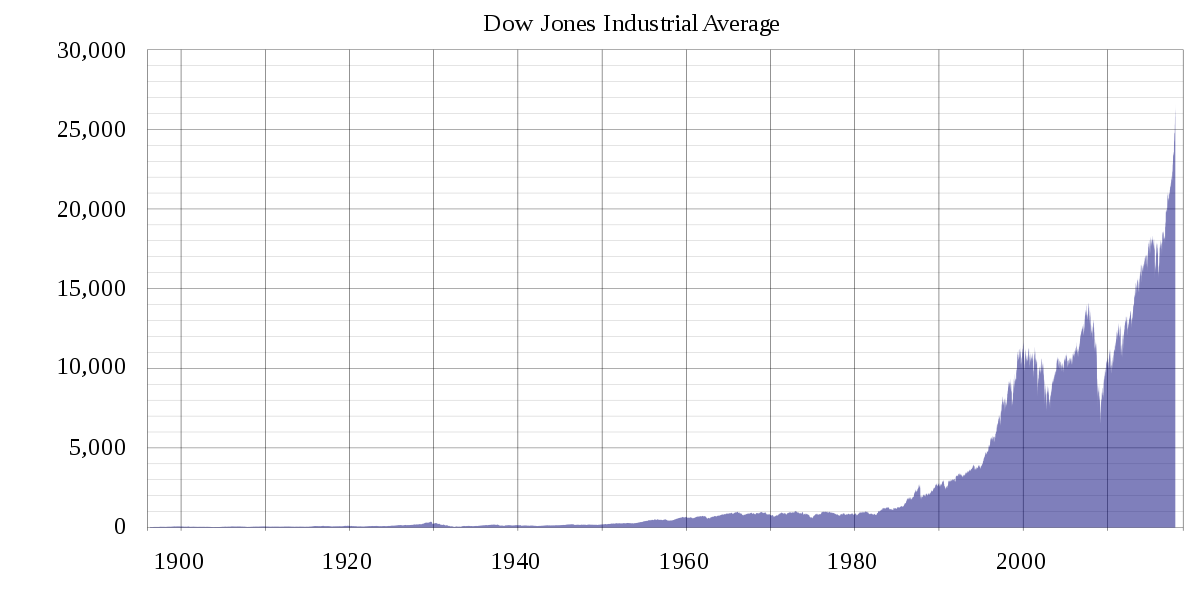
From its initial value around 40 in 1896, the Dow experienced significant volatility in its early decades, reflecting the nascent stages of industrial capitalism and frequent economic panics. It crossed 100 in 1906, signaling the growing industrial might of the U.S. The Roaring Twenties saw an unprecedented bull market, pushing the Dow past 300 before the devastating crash of 1929 and the Great Depression plunged it to new lows. This period underscored the inherent risks and cycles of market activity, demonstrating that even significant highs can be followed by precipitous declines.
Post-War Boom and Economic Shifts
The post-World War II era ushered in a long period of economic expansion and stability in the U.S. The Dow slowly but steadily recovered, crossing 1,000 for the first time in 1972. However, the 1970s and early 1980s were marked by stagflation and high interest rates, leading to choppy market performance. The late 1980s and 1990s, fueled by technological innovation (the rise of personal computing and the internet) and globalization, saw the Dow embark on a historic bull run. It breached 10,000 in 1999, a symbolic milestone that captivated the world, reflecting the dot-com boom and a new era of digital economy.
The Digital Age and New Market Frontiers
The 21st century has been characterized by accelerated technological change, increased global interconnectedness, and a series of economic challenges, including the dot-com bust, the 9/11 attacks, the 2008 financial crisis, and the COVID-19 pandemic. Despite these setbacks, the Dow has consistently demonstrated its resilience, reaching ever-higher peaks. Quantitative easing policies, low interest rates, corporate innovation, and robust earnings growth from its constituent companies have been key drivers. The index crossed 20,000 in 2017, a testament to post-crisis recovery and a period of sustained economic expansion. It then powered through 30,000 in 2020, even amidst the initial global uncertainty of the pandemic, buoyed by unprecedented fiscal and monetary stimulus and the rapid adaptation of businesses.
The Most Recent Peak: Understanding the Current All-Time High
As of late 2023 and early 2024, the Dow Jones Industrial Average has continued to push into uncharted territory, frequently setting new all-time highs. While the exact numerical value of the “current” all-time high is constantly shifting with market movements, it has recently surpassed 38,000 points. This latest surge reflects a combination of factors: resilient corporate earnings, particularly in the face of inflation, optimism around potential interest rate cuts by the Federal Reserve, easing inflation pressures, and sustained consumer spending. The market’s ability to absorb economic shocks and continue its upward trajectory underscores the long-term growth potential inherent in its blue-chip components and the broader U.S. economy. Each new high serves as a fresh psychological benchmark for investors, often fueling further optimism and capital inflows.
Factors Driving the Dow’s Peaks
The consistent upward march of the Dow, punctuated by periods of significant correction but always recovering to reach new highs, is not accidental. It is the result of a complex interplay of macroeconomic conditions, corporate performance, and market dynamics.
Economic Growth and Corporate Earnings
At its core, sustained economic growth is the primary catalyst for the Dow’s ascent. When the economy expands, companies generally experience higher sales, increased profitability, and stronger balance sheets. The blue-chip companies within the Dow, being leaders in their respective sectors, are particularly well-positioned to capitalize on economic booms. Strong corporate earnings translate into higher stock prices as investors bid up shares of companies demonstrating financial health and growth potential. Conversely, periods of recession or slow growth typically hinder the Dow’s performance.

Monetary Policy and Interest Rates
Central bank policies, particularly those of the Federal Reserve in the U.S., exert a profound influence on market valuations. Low interest rates make borrowing cheaper for companies, encouraging investment and expansion, which can boost earnings. Low rates also make fixed-income investments less attractive, prompting investors to seek higher returns in the stock market. Conversely, rising interest rates can cool an overheating economy, but they also increase borrowing costs for companies and make equities less appealing relative to bonds, potentially slowing the Dow’s climb or even triggering corrections. The anticipation and execution of interest rate changes are often major drivers of market sentiment and short-term movements.
Technological Innovation and Market Sentiment
Technological advancements have historically been powerful engines of economic growth and market expansion. From the advent of electricity and the automobile to the digital revolution and artificial intelligence, new technologies create entirely new industries, improve productivity, and open up vast new markets. Companies at the forefront of these innovations, many of which are Dow components, experience rapid growth and attract significant investment. Beyond fundamental factors, market sentiment plays a crucial role. Positive news, strong consumer confidence, geopolitical stability, and a general sense of optimism can create a “feel-good” factor that encourages buying and drives prices higher, often creating momentum that carries the index to new peaks.
Global Events and Their Impact
The globalized nature of modern economies means that events far beyond U.S. borders can impact the Dow. International trade agreements, geopolitical conflicts, global economic slowdowns, or crises like pandemics can have significant effects on supply chains, consumer demand, and corporate profits. While negative global events can trigger market pullbacks, a resolution or containment of these issues, alongside robust fiscal and monetary responses, often paves the way for market recovery and renewed upward momentum. The Dow’s ability to rebound from global shocks highlights the resilience and adaptive capacity of its constituent companies and the broader U.S. economic system.
The Significance of All-Time Highs for Investors
For investors, an all-time high in the Dow Jones Industrial Average is more than just a headline number; it carries both psychological and practical implications, shaping investment strategies and perspectives.
Psychological Impact and Market Enthusiasm
Reaching an all-time high often generates significant media attention, sparking widespread discussion about market performance and economic health. This can create a positive feedback loop: as the market continues to climb, more investors are drawn in, fearing they might miss out on further gains (the “Fear of Missing Out” or FOMO). This enthusiasm can fuel further buying, contributing to continued upward momentum. However, it can also lead to irrational exuberance, where valuations become detached from fundamentals, increasing the risk of a subsequent correction.
Not Just a Number: What a High Means for Portfolios
For long-term investors, an all-time high typically signifies growth in their portfolios. If their investments track the Dow or include many of its components, these peaks represent an increase in their wealth. It validates a long-term, buy-and-hold strategy, demonstrating the historical tendency for equity markets to trend upwards over extended periods, despite intermittent downturns. However, it’s also a time for prudent investors to re-evaluate their portfolios, ensuring they remain aligned with their risk tolerance and financial goals, and to consider rebalancing if certain assets have become overweighted due to market appreciation.
The Importance of Long-Term Perspective
While all-time highs are exciting, wise investors understand that they are part of a continuous cycle. Markets do not move in a straight line; corrections and bear markets are an inevitable part of the investment landscape. Focusing solely on short-term highs can lead to emotional decision-making. A long-term perspective, emphasizing compounding returns and weathering market volatility, is essential for successful investing. The Dow’s history, marked by numerous periods of extreme optimism and pessimism, underscores the importance of staying invested through various market cycles rather than trying to time the market.
Diversification and Risk Management in a Rising Market
Even in a bull market hitting new highs, diversification remains paramount. While the Dow represents 30 strong companies, relying solely on this index, or any single index, can expose investors to concentration risk. A well-diversified portfolio spreads investments across various asset classes (stocks, bonds, real estate), geographies, and sectors, reducing the impact of poor performance in any single area. As the market reaches new highs, it’s also a good time to review one’s risk management strategies, including setting stop-loss orders or gradually taking some profits, particularly if valuations appear stretched.
Looking Beyond the High: Future Prospects and Considerations
The Dow’s journey to successive all-time highs is a testament to innovation, resilience, and the enduring power of the free market. However, the future is never without its challenges and opportunities.
Economic Forecasts and Market Trends
Analysts continually forecast economic growth, inflation, interest rates, and corporate earnings, all of which influence the Dow’s future trajectory. Factors like technological disruption (e.g., AI integration across industries), demographic shifts, geopolitical stability, and climate change policies will undoubtedly shape the economic landscape and, consequently, the performance of Dow components. While the long-term trend for equities remains upward, short-to-medium term volatility is always a possibility.
Potential Headwinds and Opportunities
Potential headwinds include persistent inflation, aggressive monetary tightening, geopolitical conflicts, supply chain disruptions, or significant regulatory changes. Any of these could lead to market corrections. On the other hand, continued innovation, robust corporate earnings, effective government policies, and the expansion into emerging markets represent significant opportunities for further growth. The Dow’s ability to adapt its components ensures it can reflect these evolving opportunities and challenges.
The Dow’s Evolving Role in Modern Investing
In an age of sophisticated financial products and hyper-specialized indices, the Dow Jones Industrial Average maintains its unique position. While it may not be the most comprehensive or technologically advanced index, its legacy, the prominence of its constituents, and its clear articulation of “blue-chip” performance ensure its continued relevance. For many, it remains the most accessible and understood proxy for the health of the American economy and a reliable, albeit limited, indicator of broad market trends. Its all-time highs will continue to be celebrated as milestones of economic progress and investor success, serving as powerful reminders of the long-term upward bias of well-managed markets.
aViewFromTheCave is a participant in the Amazon Services LLC Associates Program, an affiliate advertising program designed to provide a means for sites to earn advertising fees by advertising and linking to Amazon.com. Amazon, the Amazon logo, AmazonSupply, and the AmazonSupply logo are trademarks of Amazon.com, Inc. or its affiliates. As an Amazon Associate we earn affiliate commissions from qualifying purchases.