
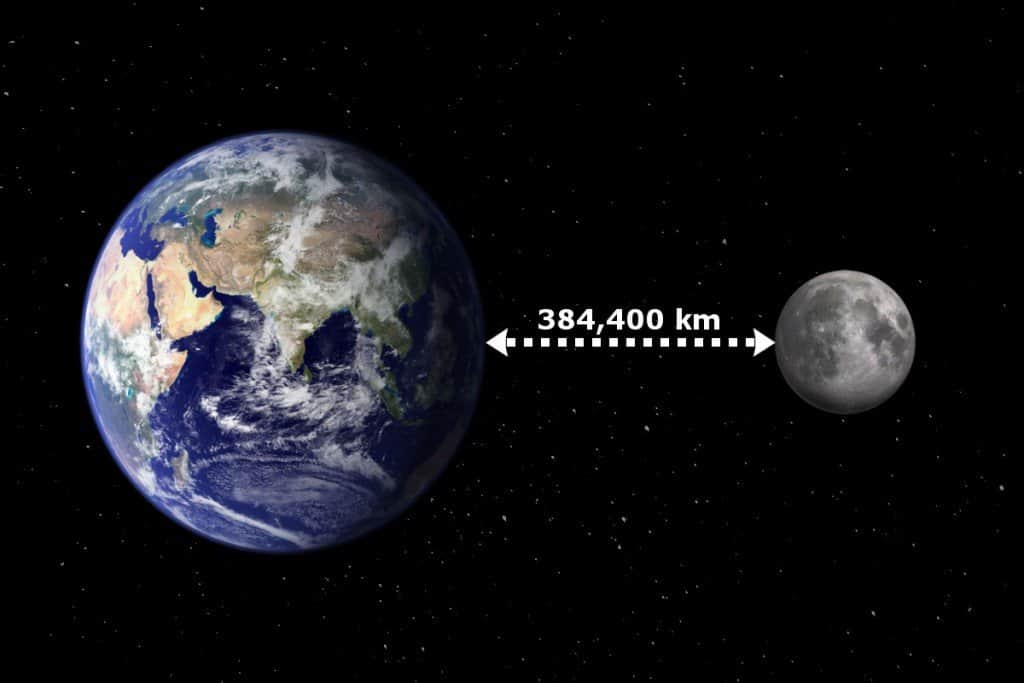
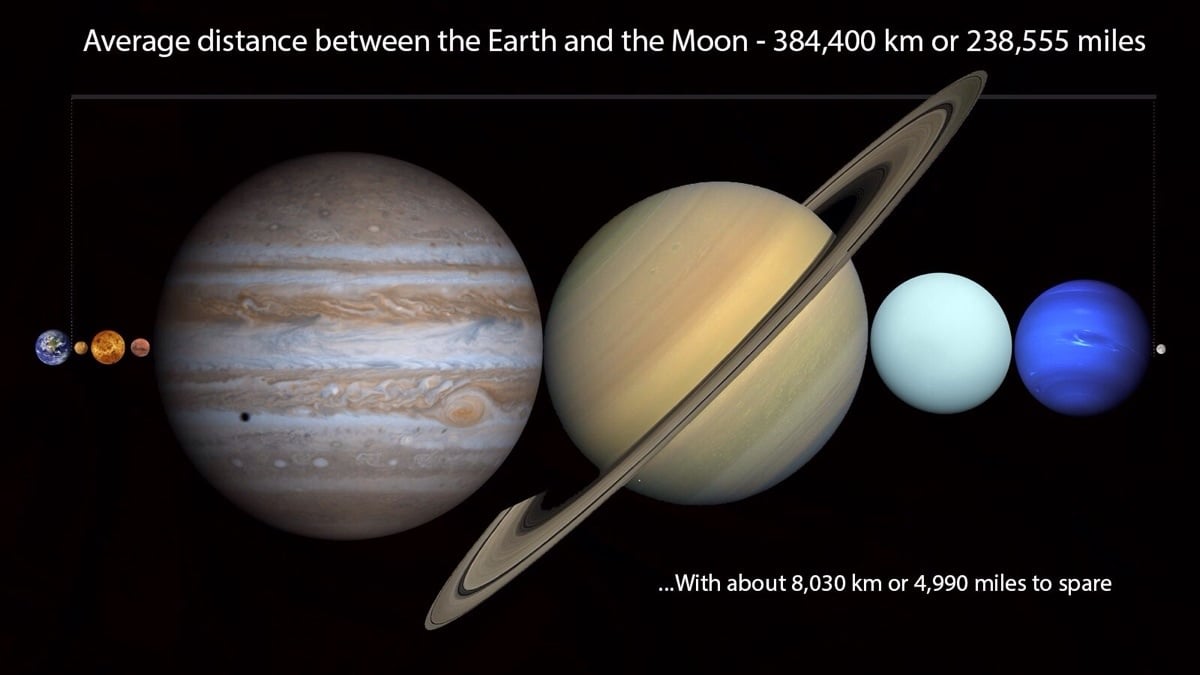
The enduring question, “What is the distance Earth to Moon?”, might seem like a straightforward query with a simple numerical answer. However, the reality is far more complex and fascinating, a testament to humanity’s relentless pursuit of knowledge driven by cutting-edge technology. The average distance is approximately 384,400 kilometers (238,855 miles), but this is merely an average. The Moon’s orbit is elliptical, causing its distance from Earth to constantly fluctuate, ranging from about 363,104 km (225,623 miles) at perigee (closest point) to 405,696 km (252,088 miles) at apogee (farthest point). This dynamic range, and our ability to measure it with astonishing accuracy, is a direct result of incredible technological innovation, from sophisticated laser systems to advanced data processing software and AI. Understanding this distance is not just a scientific curiosity; it underpins space exploration, informs our understanding of celestial mechanics, and pushes the boundaries of digital and physical engineering.
The Evolution of Lunar Distance Measurement Technology
Our understanding of the Earth-Moon distance has progressed through centuries of observation and ingenuity, each era building upon the last with increasingly sophisticated tools. The journey from crude estimations to sub-millimeter precision is a compelling narrative of technological advancement.
Early Astronomical Observations and Geometric Principles
For millennia, humans relied on naked-eye observations and basic geometric principles to estimate celestial distances. Ancient Greek astronomers, notably Hipparchus and later Ptolemy, made remarkably accurate estimations using parallax, observing the Moon’s apparent shift against the backdrop of distant stars from different locations on Earth. They also used the Earth’s shadow during lunar eclipses to infer the Moon’s size and distance. These methods, while groundbreaking for their time, were limited by the precision of human observation and the tools available, yielding accuracies within a few thousand kilometers. This foundational work, however, laid the intellectual groundwork for future technological leaps. It demonstrated the power of mathematical models and systematic observation, principles that remain central to modern astrometry.
Radar Astronomy: A Pioneering Step into Active Measurement
The mid-20th century brought a revolutionary shift with the advent of radar technology. Instead of passively observing, radar allowed scientists to actively “ping” celestial bodies. In 1946, the Hungarian physicist Zoltán Bay bounced radio signals off the Moon, marking the first successful radar detection of an extraterrestrial object. This breakthrough dramatically improved accuracy. Radar signals, traveling at the speed of light, were transmitted from Earth, reflected off the lunar surface, and received back on Earth. By precisely measuring the time delay between transmission and reception (and knowing the speed of light), scientists could calculate the distance. Early radar measurements achieved accuracy within a few hundred meters. This active measurement technique was a pivotal moment, showcasing how electromagnetic waves, a core aspect of modern communication technology, could be repurposed for astronomical discovery. It also highlighted the need for powerful transmitters, sensitive receivers, and precise timing mechanisms – all technological challenges that spurred innovation.
Lunar Laser Ranging (LLR): The Gold Standard of Precision
The true leap in precision came with Lunar Laser Ranging (LLR), a technology that transformed our ability to measure the Earth-Moon distance. This technique utilizes powerful lasers on Earth to fire pulses of light at retroreflectors strategically placed on the Moon’s surface by Apollo 11, 14, and 15 missions, as well as by the Soviet Lunokhod 1 and 2 rovers.
The process is remarkably intricate:
-
Laser Emission: Ultra-short laser pulses are fired from observatories like McDonald Observatory in Texas or the Observatoire de la Côte d’Azur in France. These lasers are incredibly powerful and precise, designed to deliver a tightly focused beam across astronomical distances.
-
Lunar Reflection: A tiny fraction of these laser photons (sometimes as few as one in several quadrillion) strike the retroreflectors. These specialized mirrors are designed to reflect incoming light directly back to its source, regardless of the angle of incidence.
-
Photon Detection: Terrestrial telescopes, equipped with highly sensitive photon detectors, capture these faint returning photons. The precise timing of their arrival is then recorded.
-
Distance Calculation: Knowing the exact speed of light and the precise round-trip travel time, scientists can calculate the Earth-Moon distance with astonishing accuracy.
LLR technology currently allows us to measure the distance to the Moon with sub-centimeter precision, sometimes even millimeter accuracy. This incredible feat is a testament to sophisticated laser engineering, advanced optics, precise timing systems (atomic clocks), and robust data acquisition hardware. The continuous operation of LLR stations over decades provides an invaluable dataset, revealing not only the dynamic distance but also subtle changes in Earth’s rotation, lunar libration, and even tests of general relativity.
Beyond Measurement: Technological Applications and Implications
The technological prowess required for LLR and similar measurements extends far beyond merely stating a number. The data derived, and the systems developed, have profound implications across various scientific and engineering disciplines.
Refining Our Understanding of Earth and Moon Dynamics
The highly precise LLR data has revolutionized our understanding of both Earth and the Moon. For Earth, it helps monitor changes in its rotation rate, which is influenced by factors like tidal friction. It contributes to understanding plate tectonics by providing a stable reference point against which crustal movements can be measured. For the Moon, LLR data reveals its internal structure, including the size and state of its core, through the analysis of its slight wobbles (libration). Furthermore, LLR provides one of the most stringent tests of Einstein’s theory of General Relativity, confirming predictions about gravity with unprecedented accuracy. These insights are only possible because of the continuous collection and analysis of high-precision technological data.
Data Processing and AI in Modern Astrometry

The sheer volume and complexity of data generated by LLR and other astronomical instruments necessitate advanced computational techniques. Raw timing data from laser pulses must be corrected for atmospheric effects, instrumental delays, and relativistic phenomena. This involves complex algorithms and robust software solutions. Modern astrometry heavily relies on:
-
High-Performance Computing (HPC): To process vast datasets and run intricate simulations of orbital mechanics.
-
Statistical Modeling Software: To filter noise, identify trends, and estimate uncertainties in measurements.
-
AI and Machine Learning (ML): Increasingly, AI algorithms are being deployed to enhance data analysis. ML can identify subtle patterns in LLR data that might be missed by traditional methods, improve the efficiency of photon detection, and even predict lunar orbital variations with greater accuracy. For instance, AI could optimize laser firing sequences or fine-tune telescope pointing to maximize photon returns. The application of these digital tools transforms raw data into meaningful scientific discoveries.
Future Missions and Advanced Instrumentation
The pursuit of even greater precision and new types of measurements continues to drive technological innovation. Future lunar missions, such as NASA’s Artemis program, plan to deploy next-generation retroreflectors that are more efficient and potentially smaller, allowing for wider deployment and multi-point measurements across the lunar surface. There are also discussions about using LLR for other celestial bodies, pushing the boundaries of laser technology and detector sensitivity. Advancements in quantum computing might offer new paradigms for processing gravitational models and refining relativistic effects, further enhancing our understanding of celestial dynamics. The development of smaller, more autonomous laser ranging systems could also enable dedicated lunar landers or rovers to conduct independent ranging experiments, adding layers of data from different lunar vantage points.
The Digital Frontier of Space Exploration
The ability to measure the Earth-Moon distance with such accuracy, and to leverage that data, is intrinsically linked to the broader digital infrastructure of space exploration. From mission planning to secure communications, technology is paramount.
Software Simulation and Mission Planning
Before a single rocket leaves the launchpad, an immense amount of planning is conducted using sophisticated software simulations. These tools model everything from orbital mechanics and spacecraft trajectories to fuel consumption, communication links, and environmental factors. For missions targeting the Moon, precise knowledge of the Earth-Moon distance and its variations is critical for calculating launch windows, insertion burns, and landing procedures. Software like NASA’s General Mission Analysis Tool (GMAT) or various commercial orbital mechanics suites allow engineers to virtually “fly” missions thousands of times, optimizing parameters and mitigating risks long before physical hardware is committed. These simulations are powered by complex algorithms that incorporate the most accurate astrometric data available, including that derived from LLR.
Cybersecurity for Space Assets
As space exploration becomes increasingly digital, the importance of cybersecurity grows exponentially. Data streams from LLR stations, orbital mechanics calculations, and mission control communications are all susceptible to cyber threats. Ensuring the integrity of telemetry data, protecting control systems from unauthorized access, and maintaining secure communication channels with lunar assets are paramount. A compromise in these systems could lead to corrupted data, failed missions, or even loss of invaluable spacecraft. Digital security measures, including advanced encryption, intrusion detection systems, and secure network architectures, are integral to the successful and reliable operation of space missions and ground-based scientific instruments. The trustworthiness of the Earth-Moon distance data, for example, relies not only on the physical instruments but also on the robust digital security surrounding its collection and processing.
Accessibility and Public Engagement Through Tech
Beyond the scientific community, technology plays a crucial role in democratizing access to astronomical knowledge and fostering public engagement with the wonders of space.
Apps and Educational Tools
The complex physics and vast distances of space are often difficult for the layperson to grasp. This is where educational technology steps in. Mobile applications, interactive websites, and virtual reality (VR) or augmented reality (AR) experiences now allow anyone with a smartphone or headset to visualize the Earth-Moon system. These tools can simulate the Moon’s elliptical orbit, demonstrate the laser ranging process, or even let users “fly” to the Moon and back, making abstract concepts tangible and engaging. By leveraging computational power and graphical interfaces, these apps translate complex scientific data into accessible and immersive learning experiences, inspiring future generations of scientists and engineers.
Open Data Initiatives and Citizen Science
Many astronomical projects, including those related to lunar ranging, embrace open data initiatives, making their raw and processed data publicly available. This transparency, facilitated by digital platforms, allows researchers worldwide to access and analyze the information. Furthermore, citizen science projects sometimes invite the public to contribute to data analysis, identifying patterns or anomalies that even AI might miss. This blend of open technology and collaborative effort harnesses collective intelligence, accelerating discovery and fostering a broader sense of ownership in scientific progress. The data derived from LLR, for instance, can be downloaded and used by students and amateur astronomers for their own investigations, furthering a global understanding of our nearest celestial neighbor.
Conclusion
The seemingly simple question, “What is the distance Earth to Moon?”, unlocks a profound story of technological triumph. From early geometric estimations to the sub-millimeter precision of Lunar Laser Ranging, our understanding has been meticulously crafted through continuous innovation in lasers, optics, radar, software, data processing, and artificial intelligence. This technological journey not only provides us with an increasingly accurate number but also deepens our understanding of fundamental physics, guides our space exploration endeavors, and enriches our educational tools. The dynamic interplay between scientific curiosity and technological capability ensures that the quest for precise measurement of the Earth-Moon distance remains a vibrant and evolving frontier, pushing the boundaries of what is possible in the digital age.
aViewFromTheCave is a participant in the Amazon Services LLC Associates Program, an affiliate advertising program designed to provide a means for sites to earn advertising fees by advertising and linking to Amazon.com. Amazon, the Amazon logo, AmazonSupply, and the AmazonSupply logo are trademarks of Amazon.com, Inc. or its affiliates. As an Amazon Associate we earn affiliate commissions from qualifying purchases.