
Understanding the Fundamentals: A Tactical Overview
Trap and skeet shooting, while both disciplines of clay pigeon shooting, offer distinct experiences and require different skill sets. At their core, these sports test a shooter’s ability to react to moving targets launched from a clay pigeon thrower. However, the nuances in target presentation, shooting positions, and scoring differentiate them significantly. Understanding these differences is crucial for both novice enthusiasts and experienced marksmen looking to refine their technique or explore new challenges within the shotgun sports realm. This exploration delves into the fundamental distinctions, providing a comprehensive overview of each discipline.
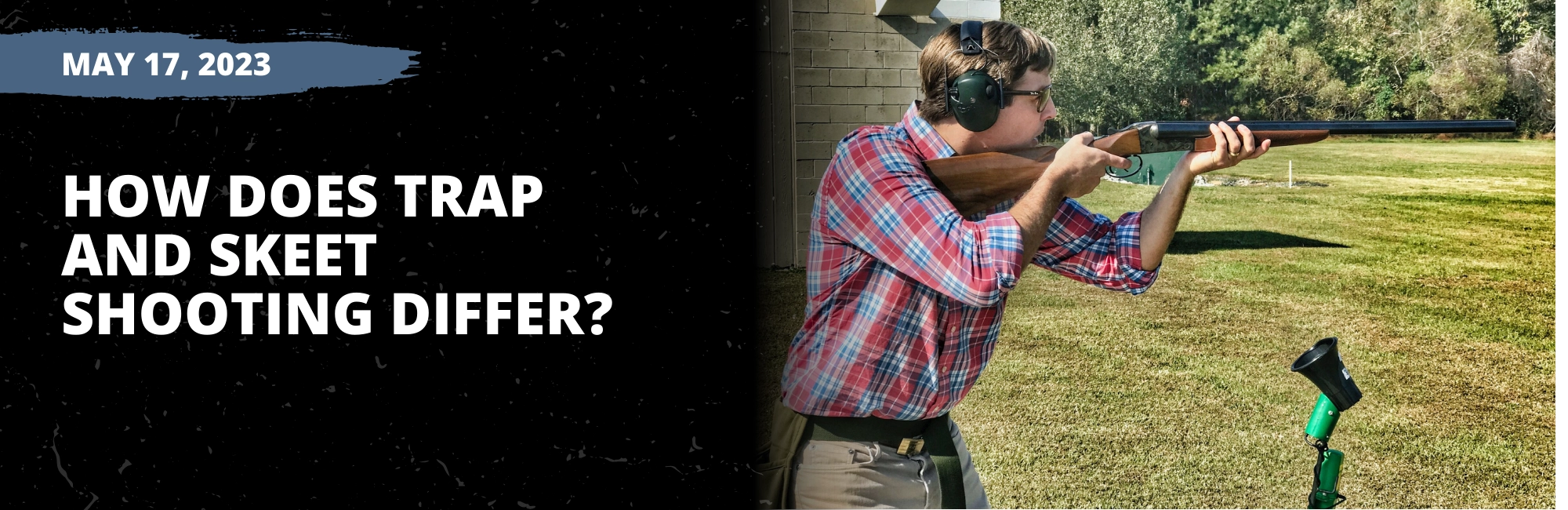
The Core Concept: Reactive Target Acquisition
Both trap and skeet shooting are predicated on the shooter’s ability to acquire and engage a moving clay target, often referred to as a “clay bird” or “clay pigeon.” This involves a complex interplay of visual tracking, anticipation, and precise trigger control. The projectile, typically a shotgun shell loaded with birdshot, must intercept the clay target in mid-air, causing it to shatter. The fundamental difference lies in how these targets are presented and how the shooter is expected to react. This reactive element is what makes clay shooting such a dynamic and engaging sport, demanding both physical coordination and mental focus.
Equipment Considerations: Uniformity and Nuance
While the fundamental equipment – a shotgun and ammunition – remains consistent across both disciplines, certain nuances exist. For competitive trap, heavier loads and tighter chokes are often preferred to maximize the effective range and pattern density needed to break targets at greater distances. Skeet, on the other hand, generally favors lighter loads and more open chokes to accommodate the closer and more varied target presentations. However, for recreational shooting or beginners, standard sporting clays loads and interchangeable chokes are perfectly suitable for both trap and skeet. The emphasis on proper fit and consistent gun mount is paramount for success in either discipline, regardless of specific equipment choices.
Trap Shooting: Precision Under Pressure
Trap shooting is characterized by its predictable yet challenging target trajectory. Shooters stand at a fixed station and engage targets that are thrown away from them at varying angles. This discipline demands a strong emphasis on pre-shot routine, consistent gun mount, and the ability to read the target’s flight path for a clean break. The challenge in trap lies not in the unpredictability of the target’s direction, but in the speed and distance at which it is presented, requiring precise timing and a confident swing.
Target Presentation: The “In-Away” Flight Path
In trap shooting, the clay targets are launched from a single trap house located in front of the shooting stands. The trap machine can be programmed to throw targets at different angles, either straight out, to the left, or to the right, within a specific horizontal arc. The key characteristic is that the targets always travel away from the shooter. This “in-away” flight path means the shooter must anticipate the target’s arc and swing their shotgun in the same direction, leading the target and firing as the gun moves. The five shooting stations are arranged in a semi-circle, and shooters rotate through them after each round of five shots. Each shooter will experience targets thrown from each of the different angles as they cycle through the stations.
Shooting Stance and Technique: The “Mount and Swing”
The shooting stance in trap is typically more static, with the shooter standing at a fixed position. The emphasis is on a stable base and a consistent gun mount. A common technique is the “pull!” command, where the shooter calls for the target, and upon seeing it emerge from the trap house, mounts the gun to their shoulder, swings through the target, and fires. The “swing through” technique is crucial, meaning the shooter continues the swing even after firing, ensuring a consistent follow-through that leads to a clean break. The focus is on a smooth, controlled motion, allowing the shooter to become one with the gun and the target’s trajectory.
Scoring: The Pursuit of Perfection
Trap shooting is scored on a round basis, with each shooter attempting to break all 25 targets presented in a round. The ultimate goal is a perfect score of 25 out of 25. For larger competitions, scores are often accumulated over multiple rounds. The simplicity of the scoring system underscores the straightforward objective: break as many targets as possible. Missed targets result in a deduction from the total score. The pressure to maintain a perfect string of breaks often intensifies as a shooter nears a perfect score, adding a psychological element to the sport.
Skeet Shooting: Versatility and Reactive Engagement
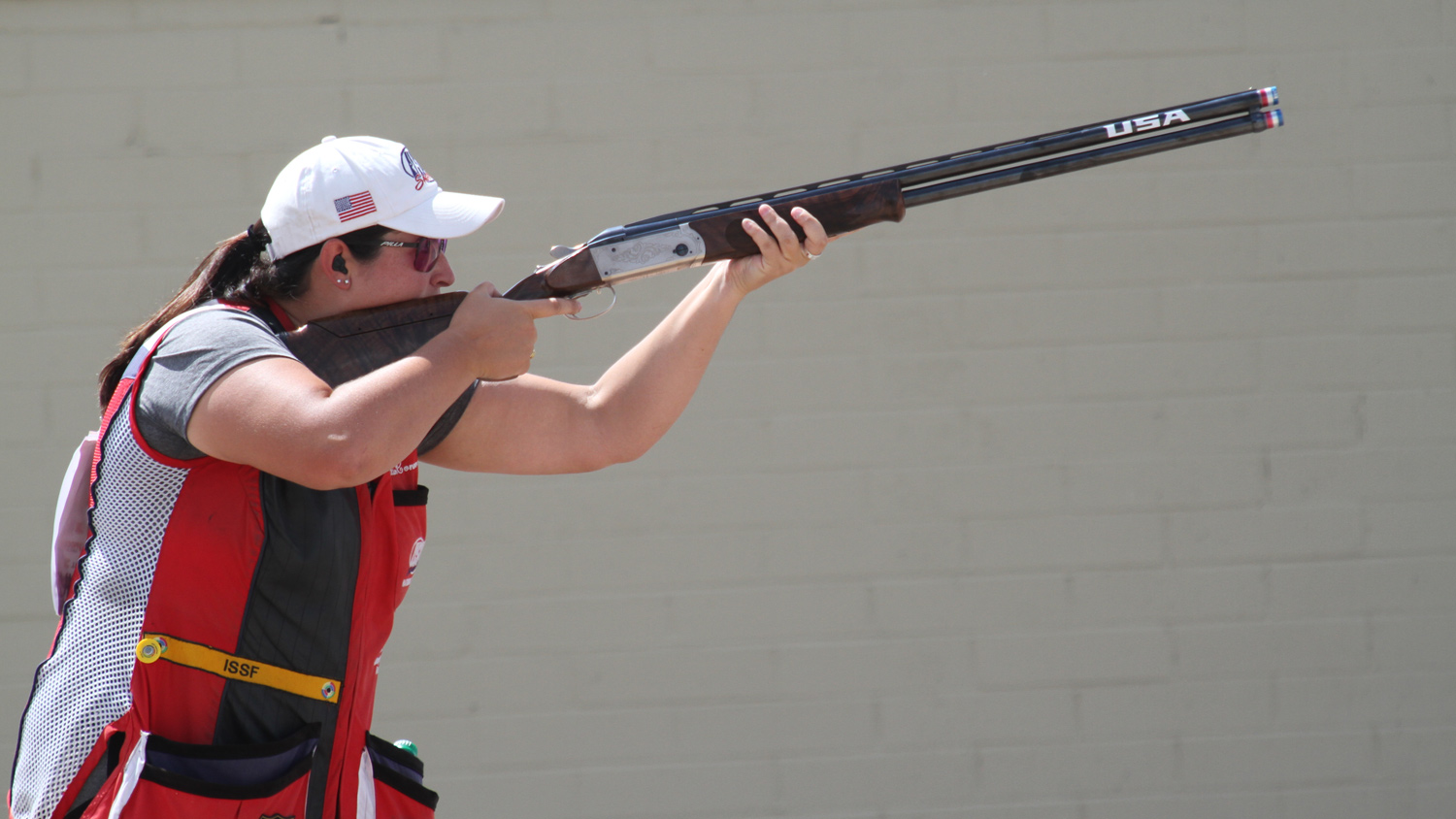
Skeet shooting offers a more dynamic and varied target presentation, designed to simulate bird hunting scenarios. With two trap houses and targets that cross the shooter’s field of vision, skeet demands quick reactions, precise timing, and the ability to engage targets from multiple angles. This discipline fosters adaptability and rewards shooters who can quickly adjust their aim and swing to meet the incoming clays.
Target Presentation: The “Crossing” Encounter
Skeet shooting utilizes two trap houses, known as “high house” and “low house,” positioned at opposite ends of a semi-circular field. The shooting stations are arranged in an arc between these houses. Targets are thrown from the high house to the low house and vice versa, crossing the shooter’s line of sight. The most distinctive aspect of skeet is that the targets are generally presented as “crossing” targets, meaning they fly across the shooter’s field of vision rather than directly away. This requires a different approach to aiming and swinging.
Shooting Stance and Technique: The “Ready and React”
The shooting stance in skeet is often more dynamic, with shooters prepared to engage targets from various angles. A key element is the “ready position,” where the shotgun is held at a lower, more relaxed position before the command to call for the target. This allows for a quicker and more reactive mount to the shoulder. Upon hearing the command, the shooter visually acquires the target and then brings the gun to their shoulder, swinging to intercept the crossing clay. The “lead” on a skeet target is critical, as the shooter must aim slightly ahead of the target’s path to ensure a hit. The emphasis is on a swift, accurate response to the target’s movement.
Scoring: Completing the Circuit
Skeet shooting is also scored out of 25 targets per round. However, the round structure is different from trap. A standard skeet round consists of 25 targets, but the sequence includes a “pair” of targets at the eighth station, where the shooter must break both targets from a single gun mount. This “double” is a significant challenge and a highlight of the skeet experience. Perfect scores in skeet are highly valued, and the variety of target presentations makes achieving a perfect 25 a testament to a shooter’s all-around skill.
Key Differentiating Factors Summarized
The fundamental differences between trap and skeet shooting can be distilled into several key areas: target presentation, shooting mechanics, and the overall strategic approach required for each discipline. While both are engaging forms of clay pigeon shooting, mastering one does not automatically translate to mastery of the other. Understanding these distinctions is essential for anyone looking to participate in or understand the nuances of these popular shotgun sports.
Target Trajectory and Origin: Away vs. Crossing
The most obvious divergence lies in how the targets are presented. Trap targets are thrown away from the shooter, originating from a single trap house. This creates an “in-away” flight path, demanding a sustained swing and lead. Skeet targets, conversely, are thrown from two trap houses and are designed to cross the shooter’s field of vision. This “crossing” trajectory necessitates a more immediate reaction and a precise lead to intercept the target mid-flight.
Shooting Approach and Reaction Time: Predictive vs. Reactive
The differing target presentations dictate distinct shooting approaches. Trap shooting often involves a more predictive approach, where shooters develop a consistent pre-shot routine and anticipate the target’s arc. The emphasis is on a smooth, deliberate swing. Skeet shooting, on the other hand, leans heavily on reactive engagement. The shooter must be prepared for a variety of angles and react quickly to acquire and engage the crossing targets, often with a more dynamic gun mount and swing.
Field Layout and Shooting Stations: Linear vs. Circular
The physical layout of the shooting fields also contributes to the differences. Trap shooting typically features a linear arrangement of five shooting stations in front of a single trap house. Shooters advance through these stations in a set order. Skeet shooting employs a circular layout with eight shooting stations surrounding the two trap houses. This circular arrangement, combined with the crossing targets, creates a more varied shooting experience from each station.

Conclusion: Choosing Your Discipline
Ultimately, the choice between trap and skeet shooting often comes down to personal preference, aptitude, and the type of challenge one seeks. Trap shooting appeals to those who enjoy refining a consistent, powerful swing and the mental discipline of predicting and executing on a predictable flight path. Skeet shooting, with its faster-paced, more varied target presentations, is ideal for individuals who thrive on quick reflexes, adaptability, and the satisfaction of engaging targets from multiple angles. Many shooters find enjoyment and improvement by participating in both disciplines, as the skills developed in one can often enhance performance in the other. Whichever path is chosen, both trap and skeet offer a rewarding and engaging experience within the world of shotgun sports, fostering marksmanship, focus, and a connection with the outdoors.
aViewFromTheCave is a participant in the Amazon Services LLC Associates Program, an affiliate advertising program designed to provide a means for sites to earn advertising fees by advertising and linking to Amazon.com. Amazon, the Amazon logo, AmazonSupply, and the AmazonSupply logo are trademarks of Amazon.com, Inc. or its affiliates. As an Amazon Associate we earn affiliate commissions from qualifying purchases.