
In the rapidly evolving landscape of technology, the terms “Project Manager” and “Program Manager” are often used interchangeably, leading to confusion among stakeholders, recruiters, and even those within the roles themselves. However, as software development cycles shorten and the complexity of digital infrastructure grows, the distinction between these two roles has become critical for organizational success. Whether a company is launching a single mobile application or orchestrating a massive digital transformation involving AI integration and cloud migration, understanding where one role ends and the other begins is the key to efficient delivery.
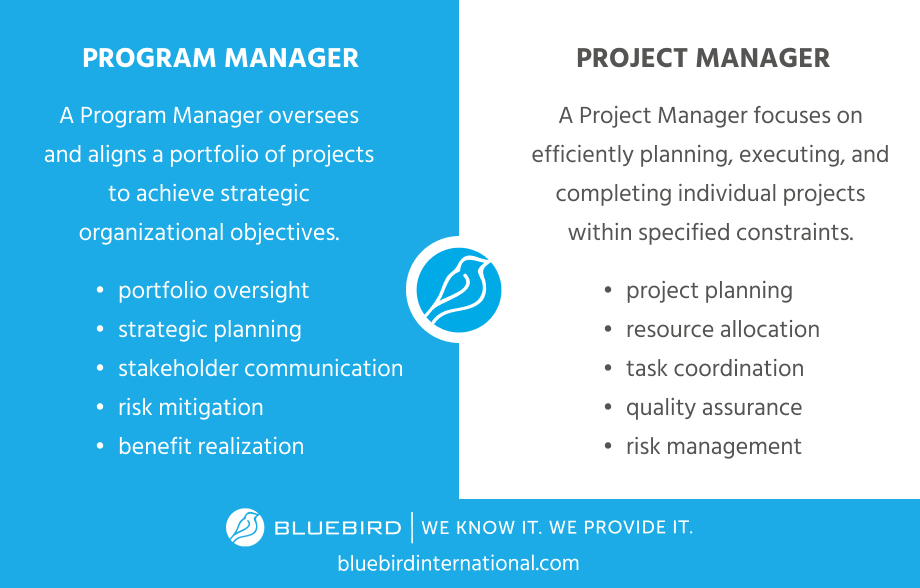
In the tech sector, these roles represent different layers of the organizational hierarchy and focus. While both are rooted in management science, their scopes, objectives, and day-to-day operations vary significantly. This article explores the nuances of Project vs. Program Management through the lens of technology, software development, and digital innovation.
Defining the Scope: Tactical Execution vs. Strategic Vision in Tech
At the most basic level, the difference between a project and a program lies in the scale and the “why” behind the work. In technology, a project is typically a temporary endeavor with a defined beginning and end, aimed at creating a unique product, service, or result. A program, conversely, is a group of related projects managed in a coordinated way to obtain benefits and control not available from managing them individually.
The Project Manager: The Architect of Delivery
In a tech environment, the Project Manager (PM) is the person on the ground. They are responsible for the tactical execution of a specific software build or feature rollout. If an engineering team is tasked with developing a new API for a fintech platform, the Project Manager ensures that the developers, QA testers, and UI/UX designers are hitting their milestones.
The Project Manager’s scope is narrow but deep. They focus on the “Triple Constraint”: time, cost, and scope. Their primary objective is to deliver a high-quality technical output within a specific timeframe. In an Agile environment, the Project Manager often overlaps with the role of a Scrum Master, ensuring that sprints are completed and blockers are removed so the team can maintain its velocity.
The Program Manager: The Orchestrator of the Tech Ecosystem
The Program Manager operates at a higher altitude. Instead of focusing on a single “app” or “feature,” they focus on a suite of related initiatives that align with the company’s long-term business goals. For example, if a tech giant is moving its entire infrastructure to a decentralized Web3 framework, that is a program. This program would consist of multiple projects: a security overhaul project, a database migration project, and a front-end redesign project.
The Program Manager doesn’t get into the weeds of a single Jira ticket. Instead, they look at the interdependencies between projects. They ensure that the “Security Project” isn’t moving at a pace that slows down the “Front-End Project.” Their focus is strategic, aiming for “Benefit Realization”—ensuring the collective output of all projects actually moves the needle for the company’s market share or technological capability.
Core Responsibilities and Daily Workflows
The daily life of these managers reflects their different levels of focus. In tech, where change is the only constant, the way these professionals handle disruption is a major differentiator.
Managing Sprints and Backlogs (Project Level)
A Project Manager in a software firm spends their day in the details of the development lifecycle. Their responsibilities include:
- Resource Allocation: Ensuring the right developers are assigned to the right tasks.
- Risk Mitigation: Identifying technical debt or bugs that might delay a release.
- Communication: Acting as the bridge between the technical team and immediate stakeholders.
- Task Management: Breaking down high-level requirements into actionable user stories and managing the product backlog.
Their success is measured by the successful deployment of code that meets the technical specifications without exceeding the budget or timeline.
Aligning Cross-Functional Initiatives (Program Level)
The Program Manager’s workflow is characterized by cross-functional coordination. They often work across different departments—marketing, legal, engineering, and sales—to ensure the technology being built actually fits the brand’s roadmap. Key responsibilities include:
- Governance: Establishing the standards and methodologies (like SAFe or LeSS) that all project teams must follow.
- Stakeholder Management: Communicating with C-suite executives about how the technical program supports the overall business strategy.
- Change Management: Navigating shifts in the market—such as a new AI breakthrough—and adjusting the program’s direction to keep the company competitive.
- Conflict Resolution: Managing competing interests between different project teams for shared resources (e.g., a shared DevOps pool).
Key Differences in Metrics and Success Factors
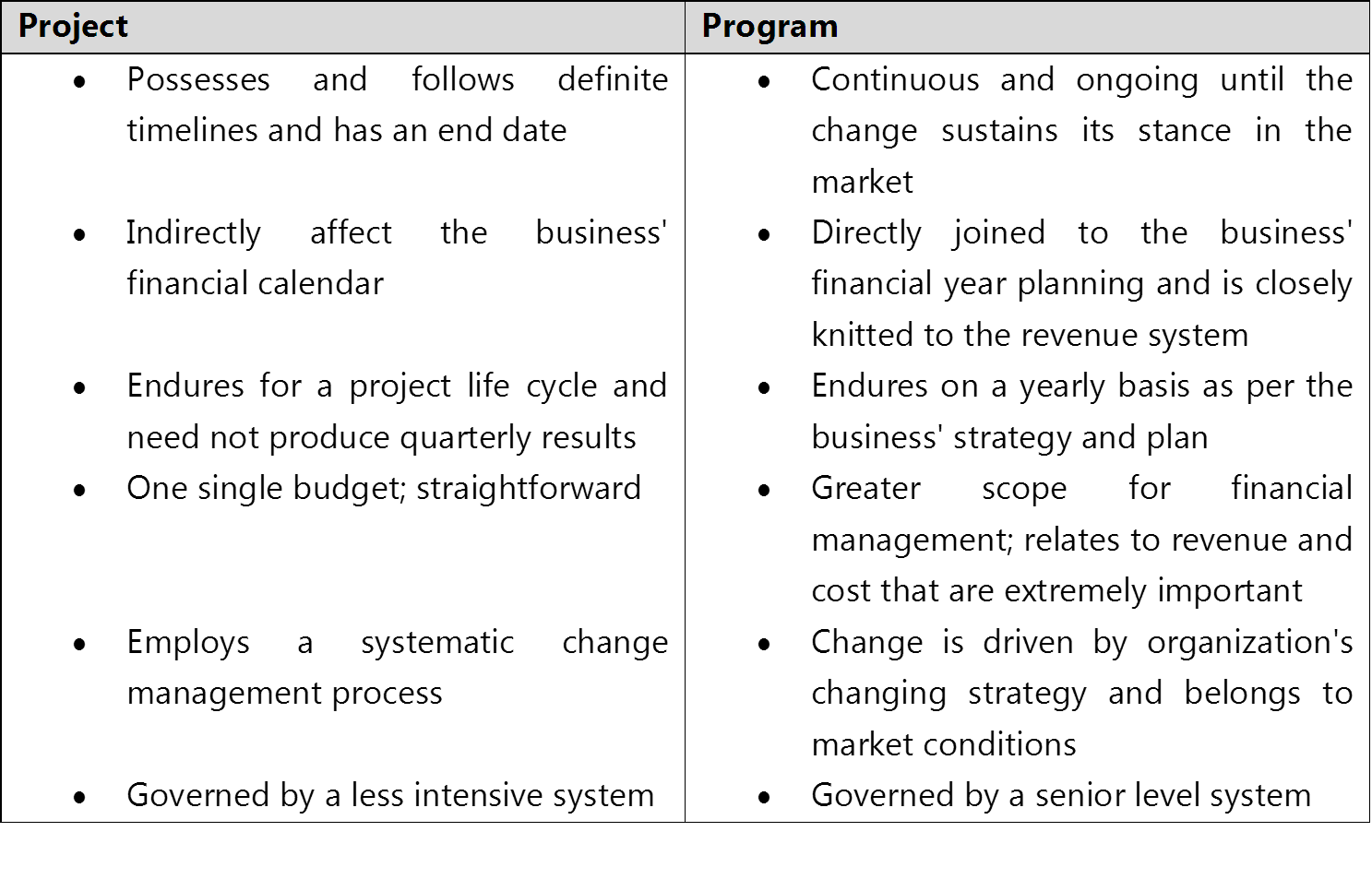
How do you know if a manager is doing a good job? In the tech industry, the metrics for success differ vastly between these two roles.
Timelines, Budgets, and KPIs
For a Project Manager, success is often quantitative. They use Key Performance Indicators (KPIs) like:
- Velocity: How many story points the team completes per sprint.
- Defect Density: The number of bugs found in the code relative to the size of the release.
- On-Time Delivery: Whether the product hit the “Go-Live” date.
- Budget Variance: How much the actual spend deviated from the initial estimate.
If the project delivers the specified software on time and under budget, the Project Manager has succeeded, even if that software doesn’t ultimately result in increased company revenue.
ROI and Strategic Alignment
A Program Manager is judged by the qualitative and strategic impact of the combined projects. Their success factors include:
- Return on Investment (ROI): Did the $5 million spent on the digital transformation program lead to a 20% increase in operational efficiency?
- Market Positioning: Has the program allowed the company to leapfrog a competitor in the AI space?
- Sustainability: Is the new technical architecture scalable for the next five years?
A Program Manager could have three projects finish late, but if the overall program delivers a revolutionary new tech stack that saves the company from obsolescence, the program is considered a resounding success.
Tools of the Trade: The Tech Stack for Management
In the modern tech industry, managers are only as good as their tools. The software used by these roles reflects their different operational needs.
Software for Task Tracking (Project Level)
Project Managers require granular control. They live in tools that allow for micro-level tracking of tasks and bugs.
- Jira: The industry standard for Agile software development, allowing PMs to track every ticket from “To Do” to “Done.”
- Trello/Asana: Used for visual task management and collaboration, especially in smaller startups or design-heavy projects.
- GitHub/GitLab Project Boards: Integrating project management directly into the version control system used by developers.
High-Level Roadmap and Resource Allocation Tools (Program Level)
Program Managers need “big picture” visibility. They use tools that aggregate data from multiple projects to show health scores and timelines.
- Aha!: A top-tier tool for product and program roadmapping that helps align strategy with development.
- Monday.com (Enterprise): Used for high-level resource management across various departments.
- Tableau/Power BI: Used to create dashboards that visualize the ROI and performance of the entire program portfolio for executive review.
Which Path Should You Choose? Career Trajectories in Technology
For tech professionals looking to move into management, deciding between these two paths depends on whether you prefer the “build” or the “vision.”
Transitioning from Project to Program Management
Most Program Managers start as Project Managers. They begin by mastering the delivery of a single application before being given the responsibility of managing a suite of products. To make this leap, a professional must move away from “how things are built” and start focusing on “how things add value.”
Certifications also play a role. A Project Manager typically seeks a PMP (Project Management Professional) or Certified Scrum Master (CSM). A Program Manager often aims for the PgMP (Program Management Professional) or specialized training in ITIL or Scaled Agile Framework (SAFe).
In the tech industry, the salary reflects the difference in responsibility. While a Senior Project Manager at a major software firm can earn a very comfortable living, Program Managers—due to their strategic influence and high-level risk management—often command higher compensation packages and have a clearer path to the C-suite (e.g., Chief Operating Officer or Chief Product Officer).
Conclusion
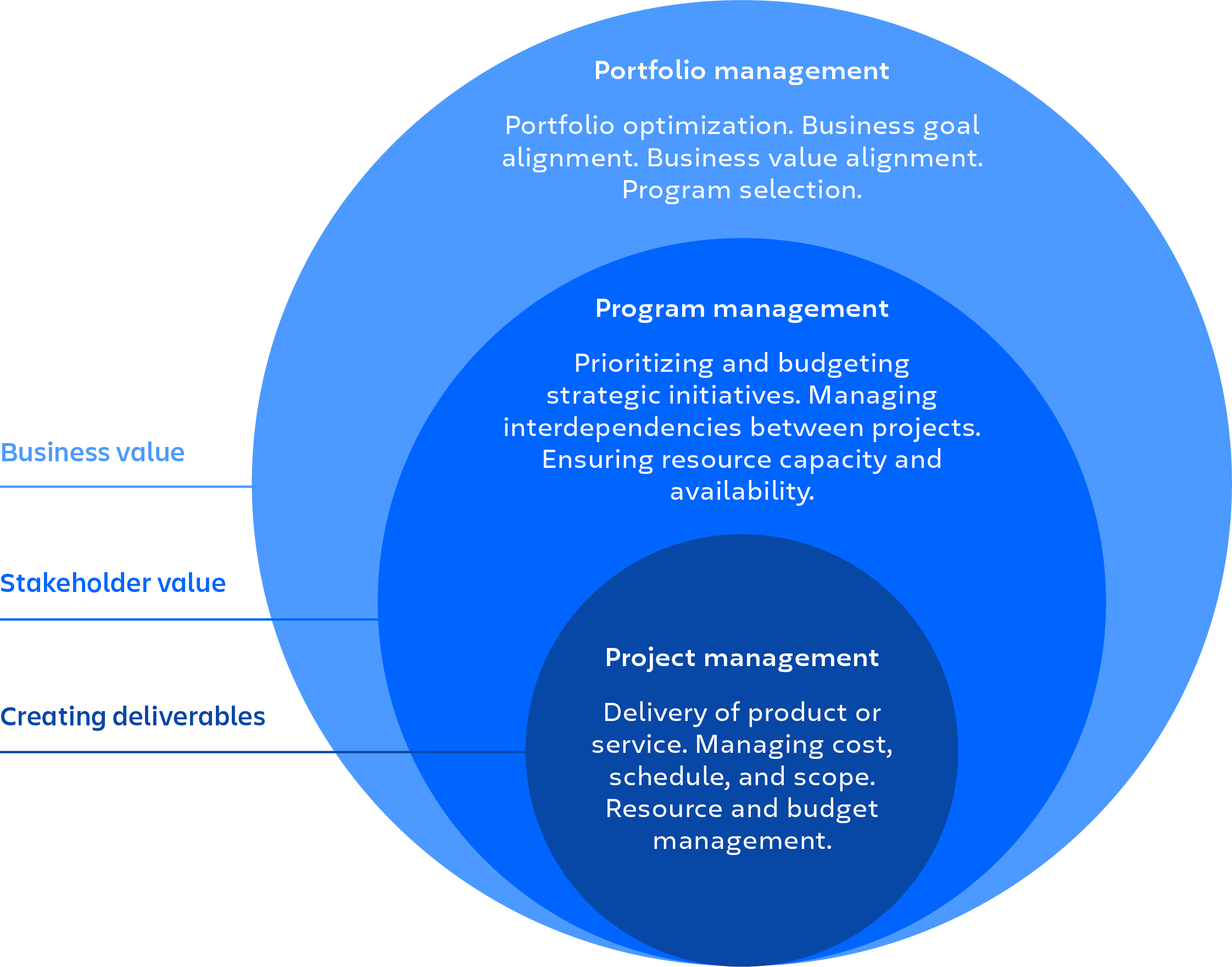
In the ecosystem of technology development, the Project Manager and Program Manager are the dual engines of progress. The Project Manager provides the precision and technical execution necessary to ship products, while the Program Manager provides the strategic oversight and coordination required to build a sustainable and profitable tech ecosystem.
For a tech organization to thrive, it cannot have one without the other. Without Project Managers, the vision never becomes reality; without Program Managers, the reality never aligns with the vision. Understanding these differences allows companies to hire the right talent and helps professionals navigate a fulfilling career path in the high-stakes world of digital innovation.
aViewFromTheCave is a participant in the Amazon Services LLC Associates Program, an affiliate advertising program designed to provide a means for sites to earn advertising fees by advertising and linking to Amazon.com. Amazon, the Amazon logo, AmazonSupply, and the AmazonSupply logo are trademarks of Amazon.com, Inc. or its affiliates. As an Amazon Associate we earn affiliate commissions from qualifying purchases.