
In the contemporary landscape of global commerce, the ability to predict the future is no longer a matter of intuition—it is a matter of computation. For decades, supply chain management relied on “demand planning,” a methodology rooted in historical sales data and retrospective analysis. However, as market volatility increases and consumer behavior becomes more erratic, the traditional models are failing. Enter demand sensing: a technological evolution that leverages Artificial Intelligence (AI), Machine Learning (ML), and real-time data to revolutionize how organizations perceive and respond to market needs.
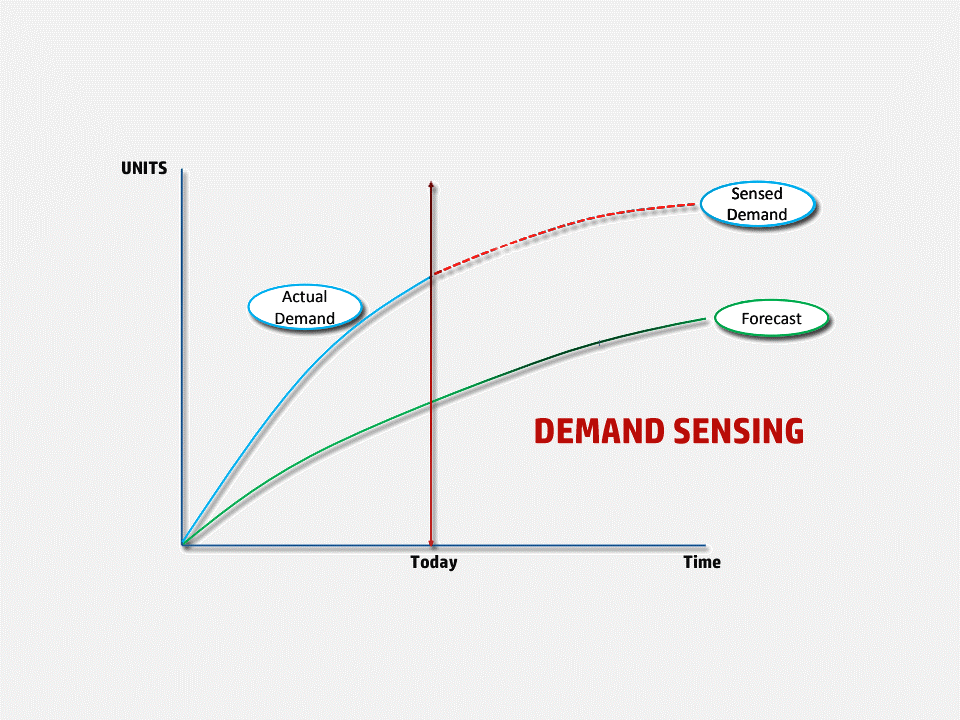
Demand sensing is not merely an incremental improvement over traditional forecasting; it is a paradigm shift. It moves the focus from “what happened last year” to “what is happening this hour.” By integrating massive streams of real-time data, demand sensing allows businesses to create a hyper-accurate picture of near-term demand, enabling a level of agility that was previously impossible.
The Mechanics of Demand Sensing: From Big Data to Actionable Insights
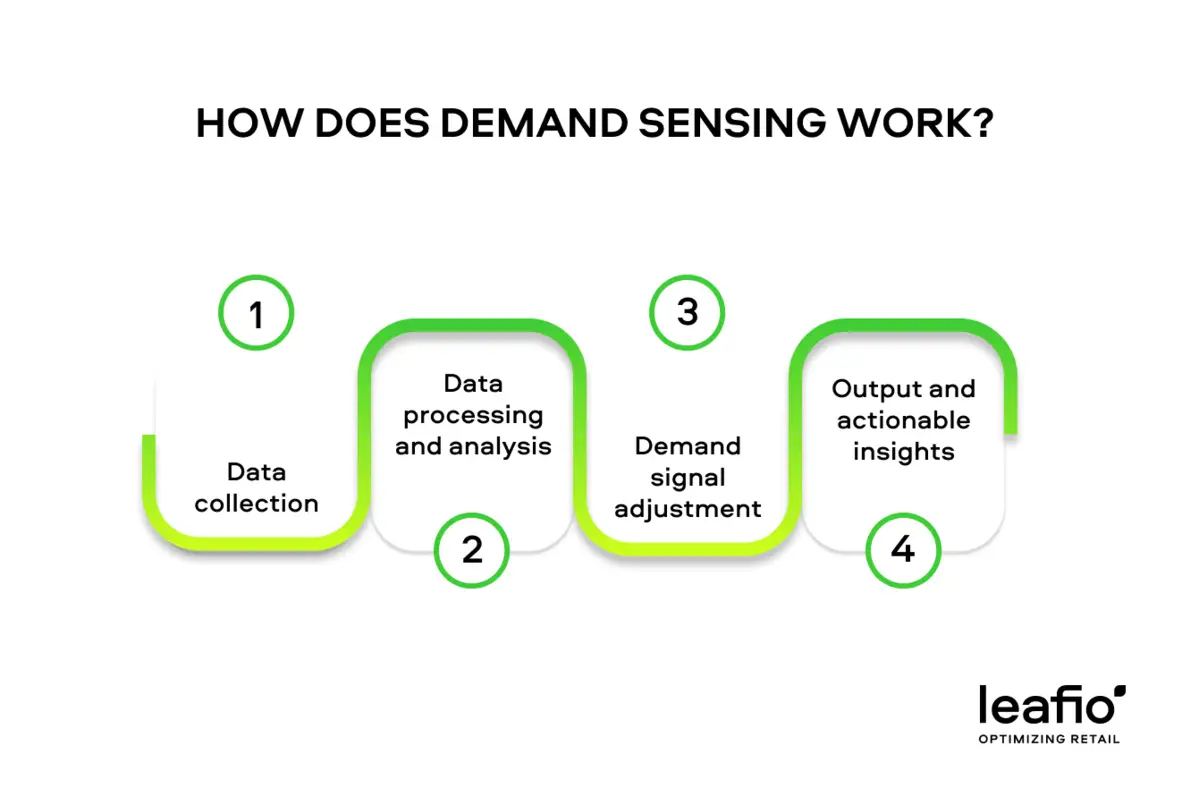
At its core, demand sensing is a digital capability that utilizes advanced algorithms to identify patterns and trends within the “noise” of daily market activity. Unlike traditional forecasting, which typically looks at monthly or weekly buckets of time, demand sensing operates on a daily—or even hourly—cadence.
Real-Time Data Integration
The primary engine of demand sensing is the ingestion of diverse data streams. Traditional models are often “siloed,” relying solely on internal historical sales records. Demand sensing, however, thrives on external signals. This includes Point-of-Sale (POS) data, warehouse withdrawal rates, social media trends, weather patterns, and even macroeconomic indicators. By streaming this data into a centralized AI engine, the system can detect subtle shifts in consumer interest before they manifest as a significant change in inventory levels.
Machine Learning and Pattern Recognition
The “sensing” aspect of the technology is powered by Machine Learning. Algorithms are trained to recognize the difference between a random statistical anomaly and a genuine shift in demand. For example, if a specific product suddenly spikes in sales in a localized region, the ML model can analyze whether this is due to a viral social media post (a “signal”) or a one-time bulk purchase by a single entity (a “noise”). This distinction is critical for preventing overreactions in the supply chain.
Short-Term Horizon Analysis
Technically, demand sensing focuses on the “tactical” window—typically the next zero to six weeks. While long-term demand planning is still necessary for annual budgeting and capacity building, demand sensing provides the high-resolution visibility needed for immediate execution. It bridges the gap between the long-term forecast and the reality of the shipping dock, ensuring that the right products are in the right place at the exact moment they are needed.
Key Technological Components of a Modern Demand Sensing System
Implementing demand sensing requires a sophisticated tech stack that goes beyond standard Enterprise Resource Planning (ERP) software. It demands an ecosystem capable of handling high-velocity data and complex algorithmic processing.
Cloud Computing and Scalability
Because demand sensing involves processing terabytes of unstructured data from thousands of sources, it requires the immense computational power of the cloud. Cloud-native platforms allow for the elasticity needed to scale processing power during peak seasons (like Black Friday or Prime Day) without requiring massive on-premise hardware investments. These platforms facilitate the “Data Lake” architecture necessary to store and process diverse datasets in real-time.
The Role of IoT and Point-of-Sale (POS) Integration
The Internet of Things (IoT) serves as the “nerves” of the demand sensing system. Smart sensors in warehouses and GPS tracking on logistics fleets provide real-time updates on inventory location and movement. When combined with direct API integrations into retailer POS systems, the demand sensing software receives an instantaneous update every time a barcode is scanned at a register. This eliminates the “latency” that typically plagues supply chains, where it might take weeks for a manufacturer to realize a product is flying off the shelves.
API Connectivity across the Ecosystem
A robust demand sensing tool must be interoperable. It sits between the ERP, the Transportation Management System (TMS), and the Warehouse Management System (WMS). Through advanced API (Application Programming Interface) connectivity, the demand sensing engine can push updated “demand signals” across the entire enterprise. This ensures that the production schedule, the shipping manifest, and the procurement orders are all synchronized based on the most recent AI-driven insights.
Demand Sensing vs. Demand Planning: A Technical Shift
To fully understand the value of demand sensing, one must distinguish it from traditional demand planning. While they share a common goal—predicting what customers want—their technical execution is fundamentally different.
Moving Beyond Time-Series Analysis
Traditional demand planning relies heavily on time-series analysis, which assumes that future demand is a linear extension of the past. If a company sold 1,000 units in June last year, the model predicts a similar number this year, perhaps adjusted for a general growth percentage.
Demand sensing replaces this static approach with “demand signal repository” (DSR) technology. Instead of looking at a single line of historical data, it looks at hundreds of “influencers.” The technology uses multivariate regression and neural networks to understand how different variables interact. For instance, it might determine that a 5-degree drop in temperature combined with a specific digital coupon leads to a 12% increase in sales for a particular SKU.
Reducing the “Bullwhip Effect” through Automation
In supply chain dynamics, the “bullwhip effect” refers to how small fluctuations in demand at the retail level can cause massive, distorted swings in production at the manufacturing level. This is usually caused by a lack of communication and delayed data.
Demand sensing mitigates this through automated feedback loops. When the AI “senses” a dip in demand, it can automatically trigger a recalibration of the replenishment logic. By automating the data flow from the retail shelf back to the factory floor, the technology reduces the need for manual intervention and “gut-feeling” adjustments, which are often the primary cause of inventory imbalances.
Implementing Demand Sensing: Challenges and Best Practices
While the technological potential of demand sensing is vast, the path to implementation requires a disciplined approach to data science and systems architecture.
Overcoming Data Silos and Ensuring Data Quality
The greatest technical hurdle to demand sensing is “dirty data.” If the data flowing into the ML models is fragmented, inconsistent, or late, the output will be flawed—a concept known in computer science as “Garbage In, Garbage Out.” Organizations must first invest in data cleansing and normalization. This involves creating a “Single Source of Truth” where data from various retailers and distributors is standardized into a format that the AI can interpret.
Continuous Learning and Model Tuning
A demand sensing system is not a “set it and forget it” tool. Because consumer behavior and global logistics are constantly evolving, the ML models must undergo continuous training. This is where the role of the data scientist becomes crucial. They must monitor the model’s performance, adjust the weighting of different demand signals, and ensure that the algorithm is not “overfitting”—becoming so focused on past patterns that it fails to recognize a completely new market reality (such as a global pandemic or a sudden trade embargo).
Building a Digital Twin of the Supply Chain
Leading-edge tech firms are now integrating demand sensing into “Digital Twins”—virtual replicas of their physical supply chains. By feeding demand sensing data into a digital twin, companies can run “what-if” simulations in a risk-free environment. They can test how the system would react to a sudden surge in demand or a supply disruption, allowing the AI to optimize the response strategy before the event even occurs in the physical world.

Conclusion: The Era of the Autonomous Supply Chain
Demand sensing represents the transition from a reactive supply chain to a proactive, and eventually autonomous, one. As AI models become more sophisticated and the “Global Nervous System” of IoT devices expands, the latency between a consumer’s desire and a manufacturer’s response will continue to shrink toward zero.
For the modern enterprise, adopting demand sensing technology is no longer an optional “innovation project”—it is a survival imperative. In an age where digital disruption is the only constant, the ability to sense the market in real-time is the ultimate competitive advantage. By harnessing the power of AI, cloud computing, and big data, businesses can finally move past the guesswork of the past and step into a future of precision-driven intelligence.
aViewFromTheCave is a participant in the Amazon Services LLC Associates Program, an affiliate advertising program designed to provide a means for sites to earn advertising fees by advertising and linking to Amazon.com. Amazon, the Amazon logo, AmazonSupply, and the AmazonSupply logo are trademarks of Amazon.com, Inc. or its affiliates. As an Amazon Associate we earn affiliate commissions from qualifying purchases.