
In the vast and rapidly evolving landscape of technology, understanding how we perceive and interpret information is paramount. From the intricate algorithms powering artificial intelligence to the meticulous process of debugging complex software, the distinction between observation and inference forms the bedrock of effective analysis, innovation, and problem-solving. While these terms are often used interchangeably in everyday language, in a professional tech context, recognizing their unique roles and relationship is crucial for engineers, data scientists, cybersecurity analysts, and product managers alike.
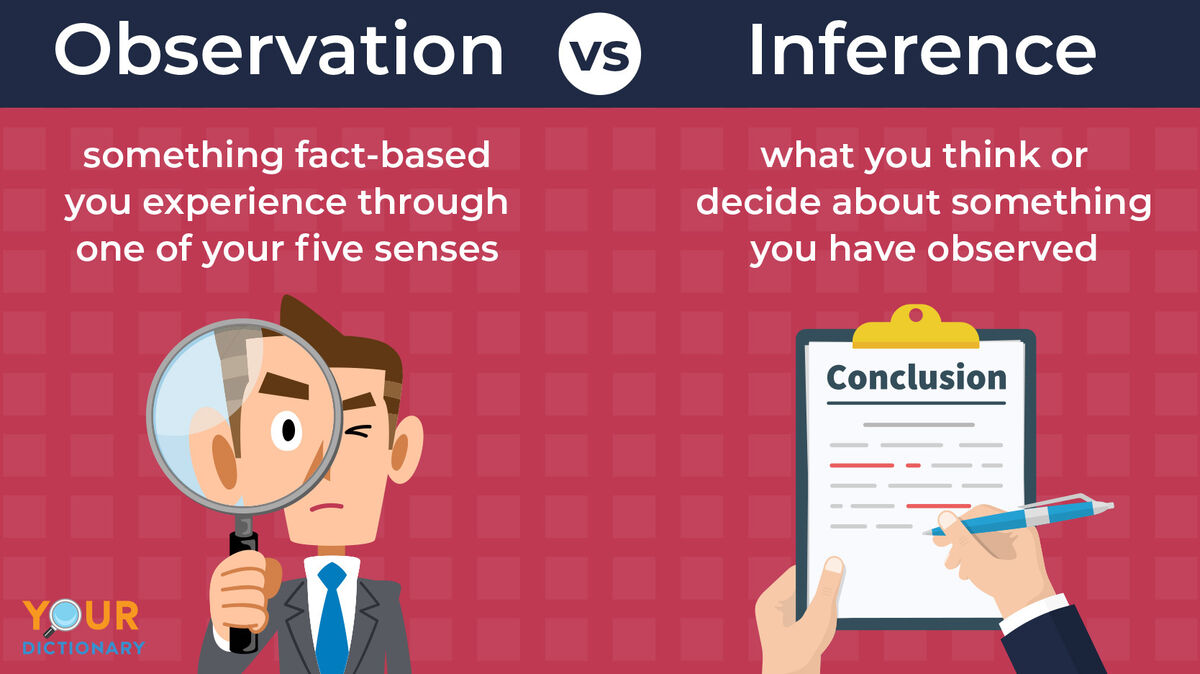
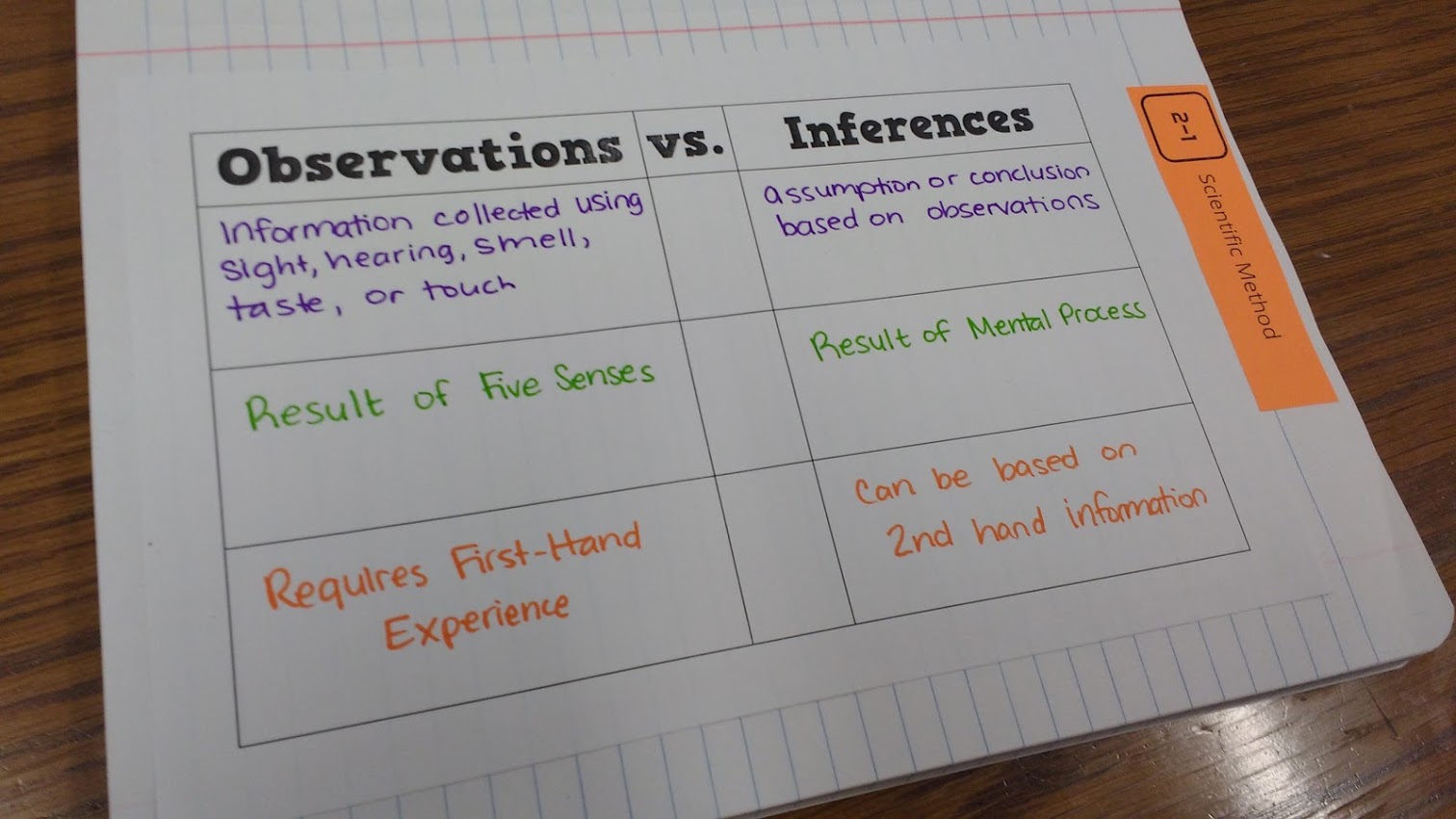
At its core, observation in technology refers to the direct acquisition of raw, factual data or sensory input without interpretation. It is what a system or a human perceives directly through sensors, logs, user interactions, or network packets. It’s the “what is.” Inference, on the other hand, is the process of drawing conclusions, making predictions, or formulating explanations based on those observations, coupled with existing knowledge or patterns. It’s the “what it means” or “what will happen.” This fundamental difference underpins nearly every advanced technological endeavor, guiding everything from data-driven decisions to the very architecture of intelligent systems.

The Foundational Pillars of Tech: Understanding Observation
Observation in technology is the initial, critical step where raw data is gathered. It is about capturing empirical evidence, whether through automated systems or human sensory input, without adding subjective meaning or assumptions.
Raw Data as Observation: The Unfiltered Truth
In the realm of data science and analytics, raw data exemplifies pure observation. This could be a stream of user clicks on a website, sensor readings from an IoT device, transaction records from an e-commerce platform, or lines of code in a version control system. Each data point is a direct, factual observation of an event or state. For instance, an application log showing an error message at a specific timestamp is an observation. A network packet capture showing traffic between two IPs is an observation. There’s no judgment yet, just the documented fact. The integrity and accuracy of these raw observations are fundamental, as any flaw here can lead to misleading inferences later. Data engineers spend considerable effort ensuring that data collection mechanisms are robust and reliable, providing the cleanest possible “observations” for subsequent analysis.
Sensory Input and System Monitoring: Observing Digital Environments
Modern technology is replete with systems designed purely for observation. Monitoring tools for servers, networks, and applications continuously gather data: CPU utilization, memory consumption, disk I/O, network latency, error rates, and response times. These are all observations – direct measurements of system performance and behavior. Similarly, in the physical world, sensors embedded in smart devices or industrial machinery observe temperature, pressure, motion, or light. An autonomous vehicle’s cameras and LiDAR sensors observe its surroundings by capturing visual data and distance measurements. In cybersecurity, intrusion detection systems (IDS) observe network traffic for specific signatures or patterns, logging every suspicious packet or connection attempt. These systems provide a continuous stream of observations, acting as the “eyes and ears” of the digital infrastructure.
Human Observation in Tech: User Experience and Debugging
While automation plays a huge role, human observation remains indispensable. In user experience (UX) design, researchers directly observe users interacting with a product or software. They might watch where a user clicks, how long they dwell on a page, or what frustrations they vocalize. These are direct observations of behavior. Similarly, a software developer debugging an application observes the program’s output, variable states at breakpoints, or the sequence of function calls. They might notice a specific loop running indefinitely or an unexpected value assigned to a variable. These direct observations, though sometimes aided by tools, are made by the human intellect interpreting literal readouts. This form of observation is critical for identifying specific, tangible issues that automated tests might miss or for understanding the nuanced aspects of human-computer interaction.
Building Bridges to Insight: The Power of Inference
Once observations are gathered, the next crucial step is to make sense of them. Inference is the intellectual leap from “what is” to “what it means” or “what will be,” leveraging existing knowledge, models, and contextual understanding. It’s about discerning patterns, explaining phenomena, and predicting future events.
Predictive Analytics and Machine Learning: Inferring Future Outcomes
Perhaps the most prominent example of inference in technology today lies in machine learning (ML) and predictive analytics. ML models “learn” from vast datasets (observations) to identify complex patterns and relationships. Once trained, these models can then make inferences or predictions about new, unseen data. For example, a recommendation engine observes a user’s past viewing habits and infers which movies they might enjoy next. A fraud detection system observes transaction patterns and infers whether a new transaction is likely fraudulent. Weather forecasting models observe current atmospheric conditions and infer future weather patterns. The accuracy and utility of these AI-driven inferences depend entirely on the quality and quantity of the initial observations and the sophistication of the inferential algorithms. The goal here is to move beyond mere data points to actionable insights and automated decision-making.
Diagnosing Issues: Inferring Root Causes from Symptoms
In software development and IT operations, diagnosis is a classic inferential process. When a system crashes (an observation), engineers don’t immediately know the cause. They observe error messages, log files, resource utilization spikes, and perhaps recent code changes. Based on these disparate observations, and drawing upon their knowledge of system architecture and common failure modes, they infer the likely root cause—perhaps a memory leak, a database deadlock, or an unhandled exception in a specific module. Similarly, when a customer reports a bug (an observation of unexpected behavior), developers must infer the underlying code defect. This process often involves systematically testing hypotheses derived from initial observations, moving from symptoms to the probable source of the problem.
User Behavior Modeling: Inferring Preferences and Intent
Beyond direct observations of user actions, tech companies strive to infer deeper aspects of user psychology: their preferences, motivations, and future intentions. By observing a user’s browsing history, search queries, clicks, scrolls, and purchase patterns, sophisticated algorithms can infer their interests, demographic profile, and even their mood. For instance, observing frequent visits to travel websites might lead to the inference that a user is planning a trip. Observing a sudden increase in downloads of productivity apps could infer a desire for self-improvement. These inferences drive personalized advertising, content recommendations, and product feature development. While direct user feedback is valuable, inferring latent needs from behavior allows for proactive product improvements and highly tailored user experiences that anticipate desires.
Why the Distinction Matters: Bridging the Gap for Better Tech
The clarity between observation and inference isn’t an academic exercise; it has profound practical implications for the reliability, fairness, and effectiveness of technology. Conflating the two can lead to significant errors, biased systems, and flawed decision-making.
Avoiding Bias and Misinterpretation in Data Science
In data science, a failure to distinguish between raw observation and the inferences drawn from it can embed and amplify biases. If the initial observations (data) are biased—for example, if a dataset used to train a facial recognition AI primarily features lighter skin tones—then any inferences made by that AI (e.g., identifying individuals) will likely be biased and perform poorly on underrepresented groups. Data scientists must rigorously evaluate the source and nature of their observations before making inferences, and continuously scrutinize whether their inferential models are merely reflecting biases present in the observational data rather than uncovering true, generalizable patterns. Misinterpreting an observation as an inference, or vice versa, can lead to incorrect conclusions about data integrity or model performance.
Enhancing AI Accuracy and Reliability
For AI and machine learning systems, understanding this distinction is fundamental to building robust and trustworthy solutions. An AI model observes millions of images of cats and dogs, then infers distinguishing features. If the observations are poor quality or mislabeled, the AI’s inferences will be inaccurate. More critically, developers need to understand why an AI makes a particular inference. Was it based on a genuine, robust pattern observed in the data, or merely a spurious correlation? Explainable AI (XAI) is an emerging field focused precisely on this: helping humans understand the inferential processes of AI, ensuring that their conclusions are based on legitimate observations and sound reasoning, rather than opaque or flawed associations. Without this distinction, AI becomes a black box, making decisions we can’t trust or verify.
Driving Innovation through Informed Decision-Making
Technological innovation often stems from identifying unmet needs or new opportunities. This process begins with careful observation—of market trends, user pain points, competitor strategies, or emerging scientific breakthroughs. However, true innovation requires inferring what these observations imply for future products or services. Observing that users frequently copy and paste text between different applications might infer a need for better inter-app communication or a universal clipboard. Observing the rise of remote work might infer a need for more sophisticated collaboration tools. By consciously separating the collection of facts from the generation of insights, tech leaders and product teams can make more informed, strategic decisions, focusing development efforts where they will have the greatest impact.
Practical Applications Across Tech Disciplines
The interplay between observation and inference is not confined to theoretical discussions but is deeply embedded in the daily operations of various tech domains.
Cybersecurity: Observing Anomalies, Inferring Threats
In cybersecurity, the stakes are incredibly high. Security analysts constantly observe network traffic, system logs, user authentication attempts, and software vulnerabilities. They look for anomalies: unusual login times, large data transfers to unknown IPs, or repeated failed access attempts. From these observations, they infer potential threats—is it a phishing attempt, a brute-force attack, or an insider threat? An unusual pattern of network activity (observation) might lead to the inference of a data exfiltration attempt. A series of failed login attempts from a specific IP address (observation) could infer a dictionary attack. The speed and accuracy of this inferential process are critical for mitigating risks and protecting digital assets.
Software Development: Observing Code Behavior, Inferring Bugs
During the software development lifecycle, observation and inference are critical for quality assurance and debugging. Developers write tests that generate specific inputs and observe the outputs. If the observed output deviates from the expected output, it signals a problem. When a bug is reported, developers observe the steps to reproduce it, the error messages, and the affected components. They then infer the part of the code that is faulty, the logical error, or the underlying architectural flaw. Performance profiling tools allow developers to observe CPU usage, memory allocation, and function call times, and then infer bottlenecks or inefficient algorithms that need optimization. The ability to move logically from observed symptoms to inferred causes is a hallmark of an effective software engineer.
Product Management: Observing User Interaction, Inferring Feature Needs
Product managers live and breathe user data. They observe user engagement metrics, A/B test results, support tickets, and direct user feedback. A low conversion rate on a specific signup form (observation) might infer that the form is too complex or asking for too much information. A surge in requests for a particular feature (observation) might infer a growing user need that the current product doesn’t address. By triangulating various observations, product managers infer user pain points, market opportunities, and the most impactful features to prioritize in the product roadmap. This blend of quantitative observation and qualitative inference ensures that products evolve to meet actual user demands and market trends.
Conclusion: The Synergy of Observation and Inference for a Smarter Digital Future
In the technological landscape, observation provides the raw material—the indisputable facts and data points. Inference is the engine that transforms this raw material into actionable knowledge, predictions, and solutions. Neither can stand effectively alone. Pure observation without inference leads to a mountain of uninterpreted data, while inference without solid, unbiased observations is merely speculation.
The truly innovative and resilient tech systems and professionals are those who master the art and science of distinguishing between these two, leveraging robust observations to fuel intelligent inferences. As technology continues its relentless march forward, driven by increasingly sophisticated AI and vast datasets, a clear understanding of the difference between what we see and what we surmise will remain a cornerstone for building a smarter, more reliable, and more impactful digital future.
aViewFromTheCave is a participant in the Amazon Services LLC Associates Program, an affiliate advertising program designed to provide a means for sites to earn advertising fees by advertising and linking to Amazon.com. Amazon, the Amazon logo, AmazonSupply, and the AmazonSupply logo are trademarks of Amazon.com, Inc. or its affiliates. As an Amazon Associate we earn affiliate commissions from qualifying purchases.