
In the landscape of modern literature, few works possess a “brand identity” as visceral, uncompromising, and unmistakable as Cormac McCarthy’s Blood Meridian. Often cited as the ultimate “anti-Western,” the novel serves as a profound case study for brand strategists, creative directors, and market leaders. To ask “what is Blood Meridian about” from a branding perspective is to explore how a narrative can achieve total market dominance through stylistic extremity, archetypal depth, and an unwavering commitment to a singular vision.
While ostensibly a story about the Glanton gang and their scalp-hunting expeditions across the mid-19th-century Texas-Mexico border, the “brand” of Blood Meridian is built on something much deeper: the exploration of inherent human violence, the philosophy of war, and the terrifying presence of Judge Holden. For brands operating in a crowded, noisy digital marketplace, the novel offers a blueprint for how to cut through the static by refusing to compromise on core identity.

The Architecture of a Masterpiece: Defining the Brand Identity of Blood Meridian
In brand strategy, identity is often divided into visual and verbal components. Cormac McCarthy’s verbal identity is perhaps the most distinct in American letters. In Blood Meridian, he employs a style that is polysyndetic—using “and” repeatedly to create a Biblical, relentless cadence—and devoid of most punctuation. This is not merely an aesthetic choice; it is a strategic positioning that signals authority and timelessness.
The Power of Stylistic Extremity
A successful brand must be recognizable even when its logo is removed. Similarly, a single paragraph of Blood Meridian is instantly identifiable. McCarthy’s refusal to use quotation marks or commas creates an immersive, “always-on” experience that mimics the lawless frontier he describes.
In the corporate world, this equates to “radical differentiation.” Most brands attempt to appeal to the widest possible audience by smoothing out their edges. Blood Meridian does the opposite. It leans into its “roughness.” By adopting a difficult, elevated, and archaic vocabulary, the book selects its audience. It tells the reader, “This is who I am; you must adapt to me.” This is the pinnacle of luxury or “high-concept” branding—where the brand does not chase the consumer, but rather invites the consumer into a specific, albeit challenging, world.
Breaking the Rules of Conventional Engagement
Traditional branding wisdom suggests that you should make the “user experience” (UX) as frictionless as possible. McCarthy ignores this. The lack of punctuation and the dense descriptions of landscape create friction. However, this friction is what makes the brand memorable. By forcing the reader to slow down and work for the narrative, McCarthy ensures a level of engagement that “easier” brands cannot match.
This mirrors the strategy of “exclusive branding” seen in high-end fashion or specialized tech sectors, where the difficulty of acquisition or the learning curve associated with the product actually increases the perceived value. To understand what Blood Meridian is about is to understand that friction, when used intentionally, can be a powerful tool for building deep-rooted brand loyalty.
The Archetypal Influence: Judge Holden as a Study in Market Dominance
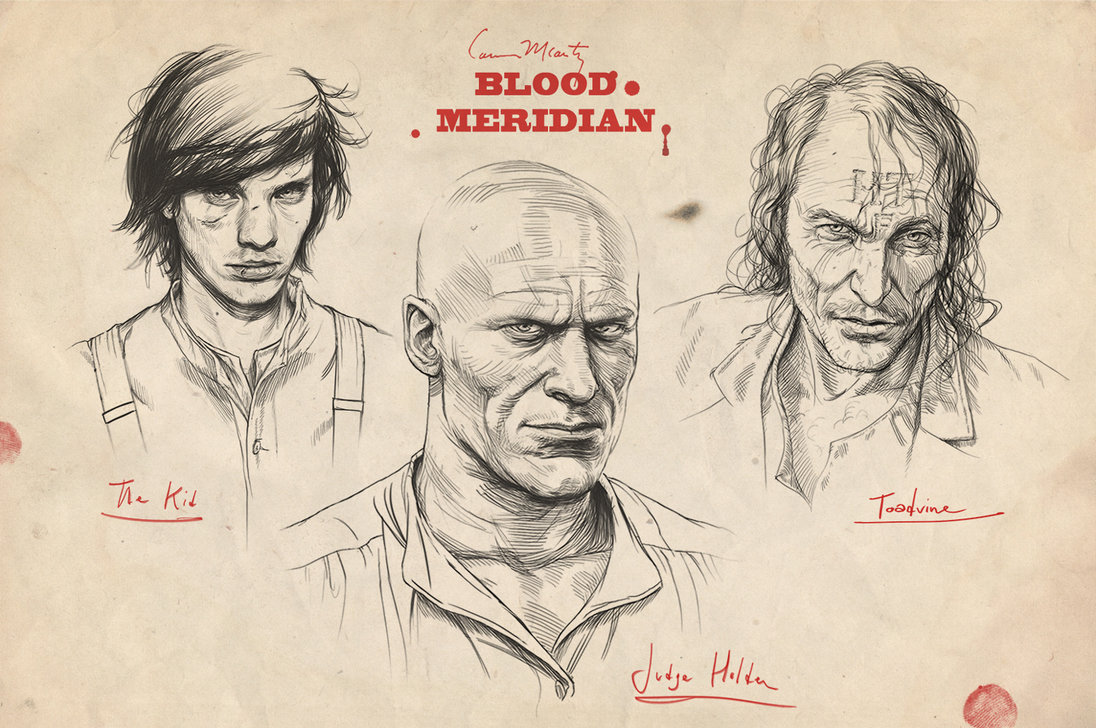
If Blood Meridian is the brand, then Judge Holden is its most potent brand asset. A massive, hairless, polymathic figure who never sleeps and claims that he will “never die,” the Judge represents a “brand persona” that is both terrifying and mesmerizing. In branding, personas are used to humanize a company; McCarthy uses the Judge to personify the darker, more efficient aspects of human nature.
Knowledge as Power and the “Judge” Persona
The Judge is a master of all trades: he is a dancer, a linguist, a chemist, and a philosopher. He represents the brand of “Total Authority.” In market terms, this is the brand that claims to own the category entirely. Think of companies like Google or Amazon in their prime—entities that don’t just participate in a market but define its rules.
The Judge’s philosophy—that whatever exists without his knowledge exists without his consent—is the ultimate statement of market hegemony. From a branding perspective, this teaches us the importance of “Omniscience” in thought leadership. Brands that position themselves as the ultimate source of truth in their industry (through white papers, deep-dive research, and expert positioning) command the same kind of gravitas that the Judge commands over the Glanton gang.
The Omnipresence of a Strong Brand Character
A great brand character or spokesperson must feel omnipresent and larger than life. The Judge is not just a character; he is an idea. He represents the “Enduring Brand”—the one that survives through sheer force of will and adaptability. Throughout the novel, he is seen engaging in every type of activity, from the most intellectual to the most brutal.

This versatility is a lesson for corporate identity. A brand should have a core “soul” (in this case, the Judge’s representation of war and ritual) that remains consistent even as it pivots into different market segments. Whether the Judge is sketching a botanical specimen or leading a charge, his “brand essence” remains terrifyingly consistent.
Navigating the Lawless Frontier: Lessons for Modern Brand Strategy
The setting of Blood Meridian—the desolate, lawless borderlands—is a perfect metaphor for the modern, disrupted marketplace. In an era where traditional “rules” of marketing are being rewritten by AI and shifting social algorithms, the book offers a vision of how to survive in a high-stakes environment.
Authenticity in the Face of Brutality
One of the most frequent buzzwords in brand strategy is “authenticity.” Blood Meridian is perhaps the most authentic Western ever written because it refuses to romanticize the era. It presents the “product”—the American West—in its rawest, most honest form.
Brands often fail when they attempt to present a sanitized version of themselves that feels disconnected from reality. Consumers have a high sensitivity to “brand-washing.” McCarthy’s brand succeeds because it is brutally honest. If a brand can lean into its true nature—even the parts that might be considered “gritty” or “unpolished”—it builds a level of trust with its audience that a polished, fake identity can never achieve. Blood Meridian is about the “truth” of the frontier, just as a great brand should be about the “truth” of its value proposition.
Creating a “Cult” Following Through Difficulty
Because Blood Meridian is so uncompromising, it has developed one of the most dedicated “cult followings” in literature. In branding, a cult following is the holy grail. It consists of customers who don’t just buy the product but integrate the brand into their identity.
McCarthy achieves this by creating a “barrier to entry.” Because the book is hard to read and emotionally taxing, finishing it becomes a badge of honor. Brands can replicate this by building communities around high-barrier experiences. This might mean limited releases, high-level certifications, or “pro” tiers that require significant time or skill to master. By making the “Blood Meridian” of your industry, you ensure that your followers are the most committed and vocal advocates possible.
The Legacy of Endurance: How Great Brands Survive the Passage of Time
Finally, Blood Meridian is a masterclass in longevity. Decades after its publication, it remains more relevant than ever. This is the ultimate goal of “Legacy Branding”: to create something that is not just a trend but a permanent fixture in the cultural landscape.
Value Beyond the Transactional
The reason Blood Meridian endures is that it offers value far beyond the “transaction” of reading a story. it provides a philosophical framework for understanding human history and violence.
For a brand to have longevity, it must offer value beyond the product itself. It must stand for something. A financial tool shouldn’t just manage money; it should stand for “Freedom.” A tech gadget shouldn’t just process data; it should stand for “Creativity.” Blood Meridian stands for “The Eternal Ritual of War.” By anchoring the brand in a universal, timeless theme, McCarthy ensures that the book will never go out of style.
The Longevity of the “Anti-Brand”
In a world of “me-too” marketing, being an “anti-brand” is a powerful strategy. Blood Meridian is the ultimate “anti-Western.” It took a tired, cliché-ridden genre and completely inverted it.
Modern brands can learn from this “inversion strategy.” If the rest of your industry is moving toward “sleek and friendly,” go “bold and industrial.” If everyone is using AI-generated corporate speak, go “human and handwritten.” Blood Meridian proves that by being the most extreme version of your category’s opposite, you can achieve a level of brand awareness and respect that lasts for generations.
In conclusion, when we ask “what is Blood Meridian about,” we are looking at a masterwork of narrative branding. It is about the power of a singular, uncompromising voice; the influence of an indomitable persona; and the endurance of a brand that refuses to follow the rules of its category. For any brand strategist, the book is a reminder that the most successful identities are often the ones that are the most courageous, the most distinct, and the most hauntingly authentic.
aViewFromTheCave is a participant in the Amazon Services LLC Associates Program, an affiliate advertising program designed to provide a means for sites to earn advertising fees by advertising and linking to Amazon.com. Amazon, the Amazon logo, AmazonSupply, and the AmazonSupply logo are trademarks of Amazon.com, Inc. or its affiliates. As an Amazon Associate we earn affiliate commissions from qualifying purchases.