
Understanding the fundamental distinctions between epoxy and resin is crucial for anyone venturing into the world of material science, manufacturing, and advanced fabrication. While often used interchangeably in casual conversation, these terms represent distinct chemical entities with vastly different properties and applications. This exploration delves into the technical nuances, clarifying their individual characteristics and highlighting the synergistic relationship that often defines their combined use.
Understanding the Base Chemistry: Resin as the Broader Category
At its core, the terminology can be a source of confusion because “resin” is a far broader classification than “epoxy.” To truly grasp the difference, we must first establish this hierarchical relationship.
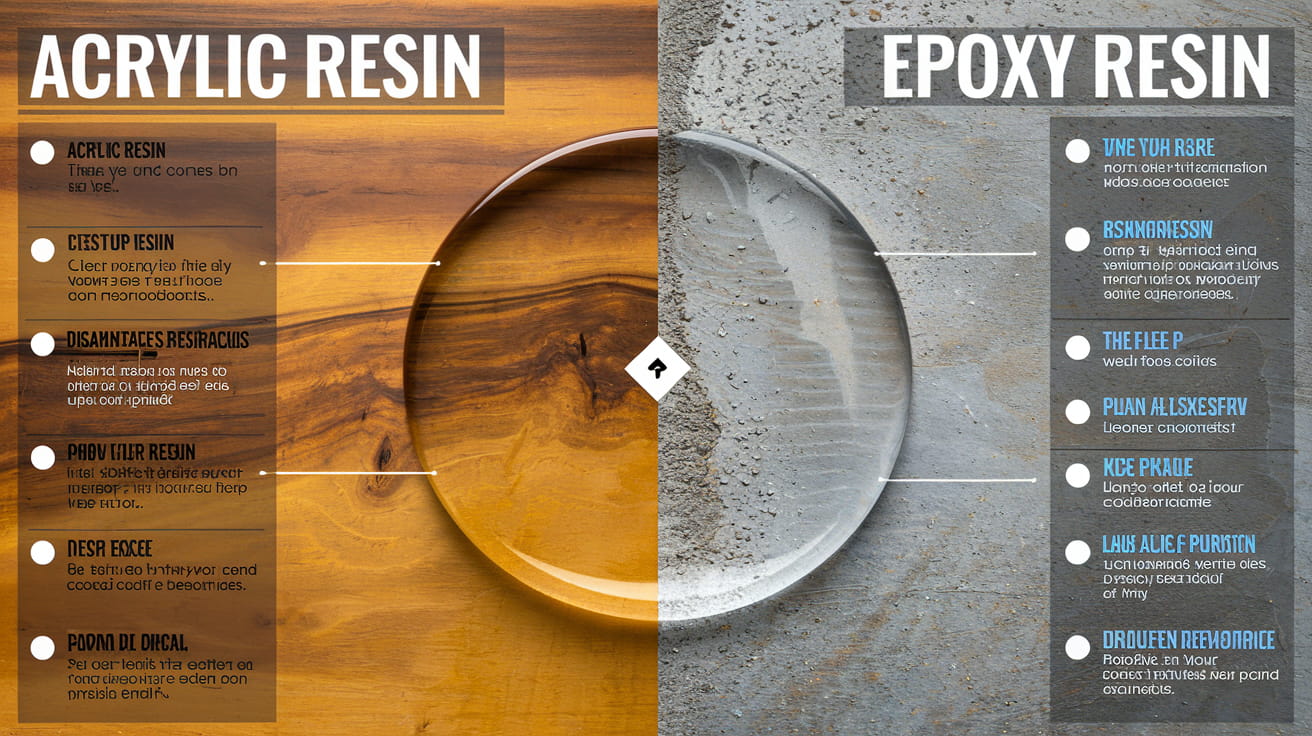
The Wide World of Resins
The term “resin” refers to a sticky, viscous organic substance, either natural or synthetic, that is typically insoluble in water. Natural resins, such as pine resin or amber, have been used for millennia in various applications. However, in modern industrial contexts, synthetic resins are of paramount importance. These are polymers, large molecules composed of repeating structural units, that can be processed and molded.
Synthetic resins come in a vast array of types, each with unique chemical structures and resulting properties. Some common examples include:
- Polyester Resins: These are thermosetting polymers, meaning they harden irreversibly when cured, often with the addition of a catalyst. They are widely used in fiberglass production, boat hulls, and automotive parts due to their good mechanical strength and relatively low cost.
- Acrylic Resins: Known for their clarity, UV resistance, and weatherability, acrylic resins are the basis for materials like Plexiglas and Lucite. They are used in signage, displays, and lenses.
- Polyurethane Resins: These versatile resins can be formulated to be rigid, flexible, or elastomeric. They find applications in foams, coatings, adhesives, and sealants, offering excellent abrasion resistance and toughness.
- Silicone Resins: Characterized by their thermal stability, flexibility at low temperatures, and excellent dielectric properties, silicone resins are used in high-performance coatings, sealants, and medical devices.
- Epoxy Resins: This is where our primary focus lies, and it’s essential to recognize that epoxy is a specific type of resin.
The key takeaway here is that all epoxies are resins, but not all resins are epoxies. This distinction is akin to understanding that a “car” is a type of “vehicle,” but not all vehicles are cars (e.g., bicycles, trucks).
The Unique Nature of Epoxy Resins
Epoxy resins are a class of thermosetting polymers characterized by the presence of one or more epoxide groups, which are three-membered ring structures containing two carbon atoms and one oxygen atom. It is the reactivity of these epoxide groups that makes epoxy resins so valuable.
When an epoxy resin is mixed with a curing agent, or hardener, a chemical reaction known as polymerization occurs. This reaction opens the epoxide rings and forms strong, cross-linked molecular chains. This cross-linking process is what gives cured epoxy its exceptional strength, durability, and chemical resistance.
The curing agents for epoxy resins are typically amines, anhydrides, or thiols. The choice of curing agent significantly influences the properties of the final cured product, including its cure speed, flexibility, temperature resistance, and adhesive strength.
The Defining Difference: Reactivity and Curing Mechanisms
The most significant technical difference between epoxy and other types of resins lies in their curing mechanisms and the resultant chemical bonds formed. This difference dictates their performance characteristics and suitability for specific applications.
Epoxy’s Two-Part System and Cross-Linking
Epoxy systems are almost always a two-part formulation: the epoxy resin itself and a hardener (or curing agent). The hardener initiates and drives the polymerization reaction. Unlike many other resin systems that might rely on external catalysts, heat, or UV light to cure, the primary curing of epoxy is a chemical reaction between the resin and the hardener.
This reaction leads to the formation of a rigid, three-dimensional network of cross-linked polymer chains. This extensive cross-linking is responsible for many of epoxy’s superior properties:
- Exceptional Strength and Rigidity: The dense network of covalent bonds formed during curing creates a material that is incredibly strong, both in tensile and compressive strength.
- Excellent Adhesion: The polarity of the epoxy molecules allows them to bond effectively to a wide variety of substrates, including metals, plastics, concrete, wood, and glass.
- Chemical Resistance: The cross-linked structure is highly resistant to attack from solvents, acids, bases, and other chemicals.
- Low Shrinkage: During curing, epoxies exhibit minimal shrinkage compared to some other resin systems, which is crucial for applications where precise dimensions are important.
- Good Electrical Insulation: Many epoxy formulations possess excellent dielectric properties, making them suitable for electrical encapsulation and insulation.
Other Resin Curing Methods
While epoxy relies on a chemical reaction between resin and hardener, other resin types employ different curing mechanisms:

- Polyester and Vinyl Ester Resins: These often cure via an addition polymerization reaction initiated by a free-radical catalyst (e.g., MEKP – Methyl Ethyl Ketone Peroxide) and an accelerator. This process typically involves the opening of double bonds within the resin molecules.
- Acrylic Resins: Curing can occur through various mechanisms, including free-radical polymerization (often initiated by heat or light) or by interpenetrating polymer networks.
- Polyurethane Resins: These are often two-part systems, but the reaction is typically between isocyanates and polyols, forming urethane linkages. The chemistry is distinct from the epoxide ring opening seen in epoxies.
The difference in curing mechanisms is a fundamental chemical distinction. Epoxy’s reliance on epoxide ring opening and subsequent cross-linking by specific hardeners sets it apart from resins that cure through free-radical polymerization or other reaction pathways. This is why specific hardeners are required for epoxies and are incompatible with other resin types.
Applications Driven by Properties: Where Do They Shine?
The distinct chemical structures and curing mechanisms of epoxy and other resins translate directly into a wide range of performance characteristics, dictating their optimal applications.
Epoxy’s Dominance in High-Performance Bonding and Coating
Due to its superior adhesive strength, chemical resistance, and mechanical properties, epoxy resins are the material of choice for demanding applications where reliability and durability are paramount.
- Adhesives: Epoxy adhesives are renowned for their ability to create incredibly strong and permanent bonds between dissimilar materials. They are used extensively in aerospace, automotive, construction, and electronics industries for structural bonding.
- Coatings: Epoxy coatings provide excellent protection against corrosion, abrasion, and chemical attack. They are commonly used for industrial floor coatings, protective coatings for pipelines and tanks, marine coatings, and decorative finishes.
- Composites: When reinforced with materials like fiberglass, carbon fiber, or Kevlar, epoxy forms high-strength, lightweight composite materials. These are vital in aerospace, sporting goods (e.g., bicycles, skis), and automotive sectors.
- Encapsulation and Potting: In electronics, epoxies are used to encapsulate sensitive components, protecting them from moisture, vibration, and thermal shock, thereby improving their reliability and longevity.
- Tooling and Molds: Epoxy’s dimensional stability and high compressive strength make it suitable for creating molds, jigs, and fixtures for manufacturing processes.
Other Resins in Their Niche Applications
While epoxy excels in high-stress environments, other resins fill crucial roles where their specific properties are more advantageous or cost-effective.
- Polyester Resins: Their affordability and ease of use make them ideal for large-scale fiberglass applications like boat hulls, automotive body panels, and recreational vehicles. They are also used in casting and laminating.
- Acrylic Resins: Their transparency and UV resistance make them perfect for clear plastics like signage, display cases, and architectural glazing. They are also used in paints and coatings.
- Polyurethane Resins: Their versatility allows for a broad spectrum of uses, from flexible foams in furniture and insulation to tough coatings for shoes and durable sealants for construction.
- Vinyl Ester Resins: Offering a good balance of mechanical strength, chemical resistance, and toughness, vinyl esters are often used in corrosive environments, such as chemical processing equipment and tanks.
The selection between an epoxy system and another resin type is a strategic decision driven by the specific technical requirements of the application, including load-bearing capacity, environmental resistance, desired finish, and budget constraints.
The Synergy: When Epoxy and Resin Work Together
While understanding their differences is vital, it’s also important to acknowledge the common scenario where “epoxy” and “resin” are discussed in tandem, often referring to a formulated product. This typically involves an epoxy resin system being modified or used in conjunction with other materials, which themselves may be considered resins or contain resinous components.
Formulated Epoxy Systems
In many commercial applications, what is purchased as an “epoxy” product is actually a carefully formulated system. This system comprises:
- The Epoxy Resin Component: This is the base resin containing the epoxide groups.
- The Hardener/Curing Agent: This is the second component that initiates the curing reaction.
- Additives and Fillers: These can be incorporated to modify the properties of the final cured product. This is where other “resins” or resinous materials might be present. For instance, fillers might include silica or talc for increased stiffness, while flexibilizers might be added to improve toughness. In some cases, other polymer resins might be blended in to achieve specific performance characteristics.
When consumers encounter products labeled as “epoxy resin,” they are generally referring to these two-part formulated systems designed for specific purposes like casting, coating, or bonding. The “resin” part of the label often refers to the base epoxy resin itself, and the term “epoxy” specifies its chemical class.

Epoxy as a Binder for Other Resin-Based Systems
Epoxy is also frequently used as a binder or matrix material for other composite systems that might involve different types of resins or reinforcements. For example, in advanced composite manufacturing, while the primary matrix might be an epoxy resin, the reinforcement could be fiberglass fabric, which itself is a resinous material (a polymer coating on glass fibers).
The term “resin” can also broadly refer to the matrix material in any composite. Therefore, when discussing composites, one might hear phrases like “a resin matrix composite,” where the matrix material could be epoxy, polyester, vinyl ester, or others.
Understanding the context in which “epoxy” and “resin” are used is key. In technical discussions, the distinction is clear: epoxy is a specific type of resin. In practical application, a consumer-grade “epoxy resin kit” is a formulated product containing an epoxy resin and its corresponding hardener, potentially with other modifiers.
In conclusion, while the terms “epoxy” and “resin” are often used loosely, their technical differences are significant. Resin is a broad chemical classification, encompassing a vast array of polymeric materials. Epoxy is a specific subclass of thermosetting resins characterized by epoxide groups, which undergo a unique curing reaction with hardeners to form exceptionally strong, durable, and chemically resistant materials. Recognizing these distinctions is fundamental to selecting the appropriate material for any given technical challenge, ensuring optimal performance and longevity in a wide array of advanced applications.
aViewFromTheCave is a participant in the Amazon Services LLC Associates Program, an affiliate advertising program designed to provide a means for sites to earn advertising fees by advertising and linking to Amazon.com. Amazon, the Amazon logo, AmazonSupply, and the AmazonSupply logo are trademarks of Amazon.com, Inc. or its affiliates. As an Amazon Associate we earn affiliate commissions from qualifying purchases.