
In the realm of modern technology, we are often obsessed with the “giga” and the “tera”—gigabytes of RAM, terabytes of cloud storage, and gigahertz of processing speed. However, as our devices become more powerful, they are simultaneously becoming physically smaller. To understand the current trajectory of hardware engineering, we must shift our gaze from the massive scale of data to the minute scale of physical dimensions. Specifically, we must ask: what does a millimeter actually look like in the context of the gadgets we carry, the screens we stare at, and the chips that power our lives?
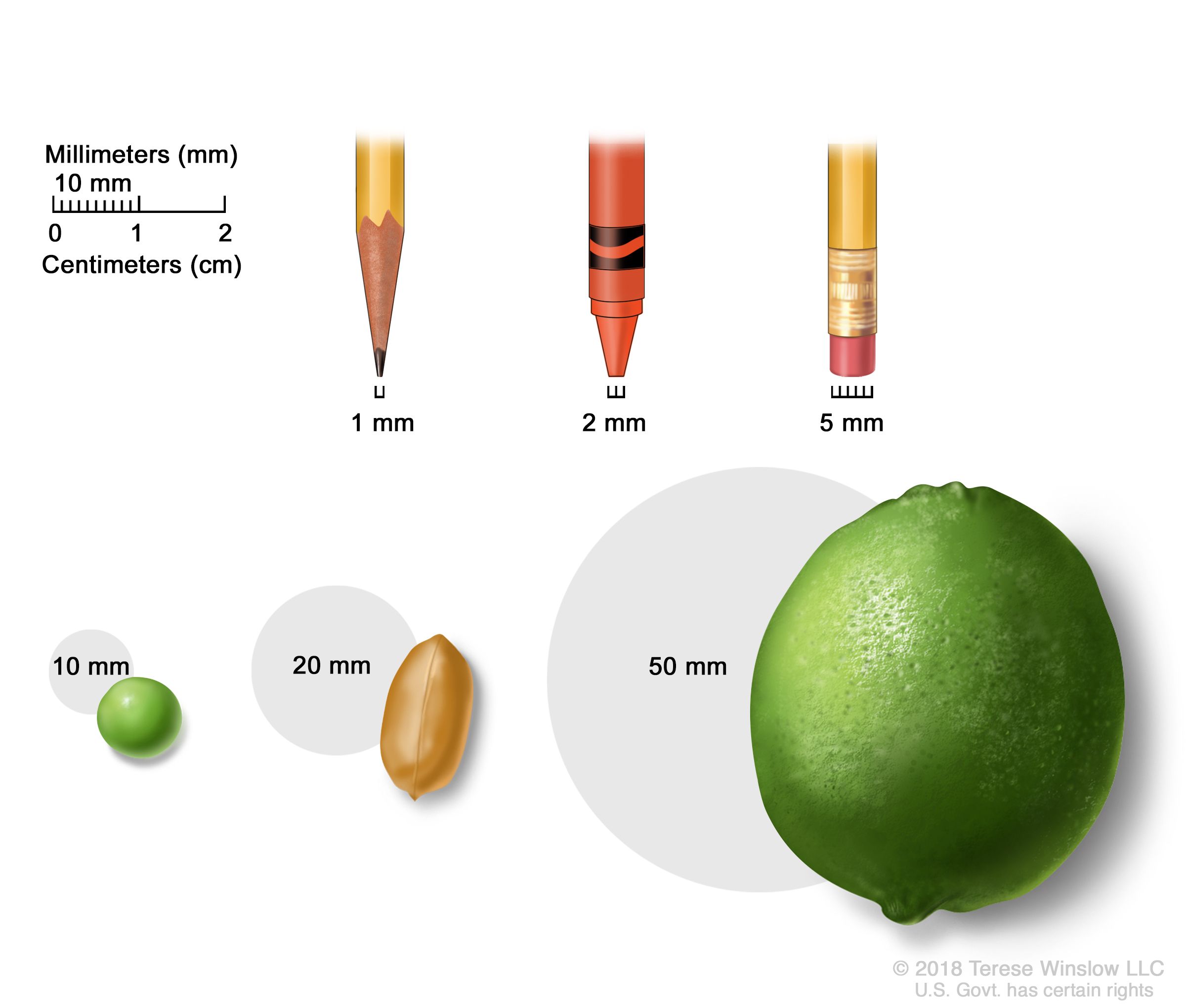
A millimeter is roughly the thickness of a standard credit card or the wire of a small paperclip. In the analog world, it is a negligible distance. In the tech world, however, a millimeter is a vast landscape of opportunity and a grueling constraint for engineers. It is the boundary where design meets the laws of physics.
The Physicality of the Digital World: Defining the Millimeter
Before we can appreciate how technology utilizes this space, we must establish a visual anchor. If you hold a sharp pencil and make a single dot on a piece of paper, that dot is likely about 0.5 millimeters wide. Two of those dots side-by-side represent the entirety of the space that dictates the thickness of a modern smartphone’s bezel or the depth of a laptop’s butterfly mechanism.
Visualizing the Scale in Consumer Electronics
In the early days of computing, hardware was measured in inches and feet. The ENIAC computer took up an entire room. Today, the evolution of the “form factor” is a race toward the sub-millimeter. When a tech reviewer mentions that a new tablet is “1mm thinner” than its predecessor, it sounds like a marginal update. In reality, shaving off a single millimeter requires a total overhaul of the internal cooling systems, battery density, and structural integrity. For a hardware engineer, a millimeter is not “small”—it is a premium piece of real estate.
From Macro to Micro: The Shift in Tech Manufacturing
The transition from vacuum tubes to transistors marked the beginning of our journey into the millimeter scale. Today, we have moved even further into the micrometer (one-thousandth of a millimeter) and nanometer scales. However, the millimeter remains the crucial bridge. It is the scale at which humans interact with machines. While a processor’s architecture is built at 3nm, the physical package that houses that chip is measured in millimeters. This scale represents the “human-to-silicon interface,” where the microscopic world of logic gates meets the macroscopic world of human hands.
Silicon and Circuits: How Millimeters Dictate Device Design
The architecture of a modern device is a puzzle where every millimeter is accounted for. If you were to open a contemporary smartphone, you would find a masterpiece of spatial efficiency. There is no “empty space” inside a flagship device.
The Battle for Thinness in Smartphones
For the last decade, the smartphone industry has been defined by the “thinness wars.” Manufacturers like Apple, Samsung, and Google compete to reduce the Z-height (thickness) of their devices. Why does this matter? Because every millimeter saved in thickness allows for a more “futuristic” feel, but it also creates immense technical hurdles.
When a device is thinned by just 1.5mm, the battery—usually the largest component—must be redesigned. This has led to the development of “stepped” or “terraced” batteries that use every available millimeter of the internal chassis. Furthermore, as devices get thinner, the “camera bump” becomes more pronounced. This bump is a direct result of the laws of optics; lenses require a certain number of millimeters of “focal depth” to resolve high-quality images. The millimeter we see protruding from the back of a phone is the physical limit of light physics.
Modular Components and Space Optimization
Beyond thickness, the millimeter dictates the placement of ports and sensors. Consider the 3.5mm headphone jack—a port named specifically for its diameter. Its removal from most flagship phones wasn’t just about pushing wireless earbuds; it was about reclaiming the 3.5 millimeters (plus the housing) of internal space. In the world of high-density PCB (Printed Circuit Board) design, those few millimeters allowed for larger haptic engines and bigger battery cells. Every millimeter of “legacy” tech removed provides room for the next generation of sensors, such as LiDAR or advanced haptics.

Visual Excellence: Pixel Pitch and Display Technology
When we talk about “what a millimeter looks like” in tech, nowhere is it more visible than in display technology. The clarity of your smartphone, monitor, or television is governed by “pixel pitch”—the distance from the center of one pixel to the center of the next, measured in millimeters.
LED and OLED Spacing
On a giant outdoor LED billboard, the pixel pitch might be 10mm to 20mm. At a distance, the image looks seamless, but up close, you can see the individual light-emitting diodes. As we move to office monitors, that pitch drops to roughly 0.2mm to 0.3mm.
The revolution of OLED and MicroLED technology is essentially a story of shrinking the millimeter. In an OLED display, each pixel is its own light source. To achieve 4K resolution on a 6-inch smartphone screen, engineers must pack millions of pixels into a space where each individual pixel occupies only a few microns. When you look at your screen, you are looking at a grid so dense that the human eye can no longer perceive the millimeter-scale gaps between the light sources.
Why Sub-Millimeter Precision Matters for VR and AR
In Virtual Reality (VR) and Augmented Reality (AR), the millimeter becomes even more critical. Because the screens are millimeters away from your pupils, a phenomenon known as the “screen door effect” can occur if the gaps between pixels are visible. To solve this, display manufacturers are pushing for “Pixels Per Degree” (PPD) that require sub-millimeter precision in manufacturing. In the world of the “Metaverse” or spatial computing, a fraction of a millimeter in lens alignment or display spacing is the difference between an immersive experience and motion sickness.
The Future of Precision: Beyond the Millimeter
As we look toward the next decade of technology, the millimeter is no longer the final frontier; it is the starting point. We are entering an era of MEMS (Micro-Electro-Mechanical Systems) and NEMS (Nano-Electro-Mechanical Systems).
MEMS and the Invisible Tech
MEMS are tiny mechanical devices—motors, gears, and sensors—that are built onto semiconductor chips. These devices are often less than a millimeter in size. They are the accelerometers that tell your phone to rotate the screen and the tiny mirrors in digital projectors that flip thousands of times per second.
The impact of these millimeter-scale machines is profound in the medical tech sector. We are seeing the rise of “lab-on-a-chip” technology, where a device only a few millimeters wide can analyze a blood sample and provide diagnostic data that previously required a full-sized laboratory. Here, the millimeter is not just a measurement; it is a vehicle for democratization of healthcare.
The Impact on Wearable Health Tech
Wearables like the Oura Ring or the Apple Watch are masterclasses in millimeter-scale engineering. To fit a heart rate monitor, an ECG, a blood oxygen sensor, and a battery into a ring, engineers must work with tolerances of a tenth of a millimeter. This miniaturization allows technology to disappear into our lives. We no longer carry “computers”; we wear “ambient intelligence.” The goal of future tech branding and design is to make the hardware so small—approaching the single millimeter mark—that the user only experiences the software.

Conclusion: The Giant Impact of Tiny Dimensions
To the average consumer, a millimeter is a measurement found on a ruler, easily ignored and rarely considered. But in the tech industry, a millimeter is a universe. It is the difference between a product that fits in a pocket and one that stays on a desk. It is the difference between a pixelated image and a retina-quality display.
Understanding what a millimeter looks like in tech provides a new appreciation for the gadgets we often take for granted. Every time a device becomes faster, lighter, or more beautiful, it is because an engineer found a way to do more within that single millimeter of space. As we continue to push the boundaries of AI, robotics, and personal computing, our success will not just be measured by the power of our algorithms, but by our ability to master the physical world at the smallest possible scale. The millimeter is the canvas upon which the future of technology is being painted.
aViewFromTheCave is a participant in the Amazon Services LLC Associates Program, an affiliate advertising program designed to provide a means for sites to earn advertising fees by advertising and linking to Amazon.com. Amazon, the Amazon logo, AmazonSupply, and the AmazonSupply logo are trademarks of Amazon.com, Inc. or its affiliates. As an Amazon Associate we earn affiliate commissions from qualifying purchases.