
In the intricate world of chemistry, the concepts of polarity and nonpolarity stand as foundational pillars, dictating how molecules interact with each other and, consequently, defining the very properties of substances. This fundamental distinction, rooted in the distribution of electron density within a molecule, might seem like an abstract academic concept. However, its implications are profoundly practical, serving as a cornerstone for countless technological advancements, from designing advanced materials and optimizing industrial processes to developing next-generation pharmaceuticals and sustainable environmental solutions. To truly innovate in these diverse technological landscapes, a clear understanding of what distinguishes a polar molecule from a nonpolar one is not just beneficial—it’s essential.

The Atomic Foundation: Electronegativity and Chemical Bonds
At the heart of molecular polarity lies the nature of the chemical bonds that hold atoms together and the inherent electron-attracting power of each atom.
Covalent Bonds: The Basis of Molecular Structure
Most molecules are formed through covalent bonds, where atoms share pairs of electrons to achieve a stable electron configuration, typically resembling that of a noble gas. This sharing can be equal or unequal, and this distinction is precisely where polarity begins to emerge. Imagine two atoms coming together, each contributing an electron to form a shared pair. This shared pair constitutes the covalent bond, acting as the glue that holds the atoms in a stable molecular structure.
Electronegativity: The Electron-Pulling Power
The degree to which electrons are shared depends on a property called electronegativity. Electronegativity is a measure of an atom’s ability to attract shared electrons towards itself in a chemical bond. Different elements possess different electronegativities. For instance, highly electronegative atoms like fluorine and oxygen exert a strong pull on shared electrons, while less electronegative atoms like hydrogen and carbon have a weaker pull. The difference in electronegativity between two bonded atoms is the primary determinant of whether that specific bond is polar or nonpolar.
If two atoms in a covalent bond have identical or very similar electronegativities (e.g., C-C or H-H), they share electrons almost equally, resulting in a nonpolar covalent bond. The electron density is evenly distributed across the bond. However, if there’s a significant difference in electronegativity (e.g., O-H or C-Cl), the electrons will be pulled more strongly towards the more electronegative atom, creating an uneven distribution of charge. This unequal sharing gives rise to a polar covalent bond, where one end of the bond acquires a slight negative charge (δ-) and the other a slight positive charge (δ+). These are called partial charges, indicating that electrons are shifted, but not fully transferred as they would be in an ionic bond.
Defining the Divide: Polar vs. Nonpolar Molecules
While the polarity of individual bonds is a crucial starting point, determining whether an entire molecule is polar or nonpolar requires a holistic view that also considers the molecule’s three-dimensional shape.
Polar Molecules: Unequal Sharing and Dipole Moments
A molecule is considered polar if it possesses an overall net dipole moment. This means that despite containing individual polar bonds, these bond dipoles do not cancel each other out due to the molecule’s asymmetry. For a molecule to be polar, two conditions typically need to be met:
- It must contain at least one polar covalent bond. As discussed, this occurs when there’s a significant electronegativity difference between bonded atoms.
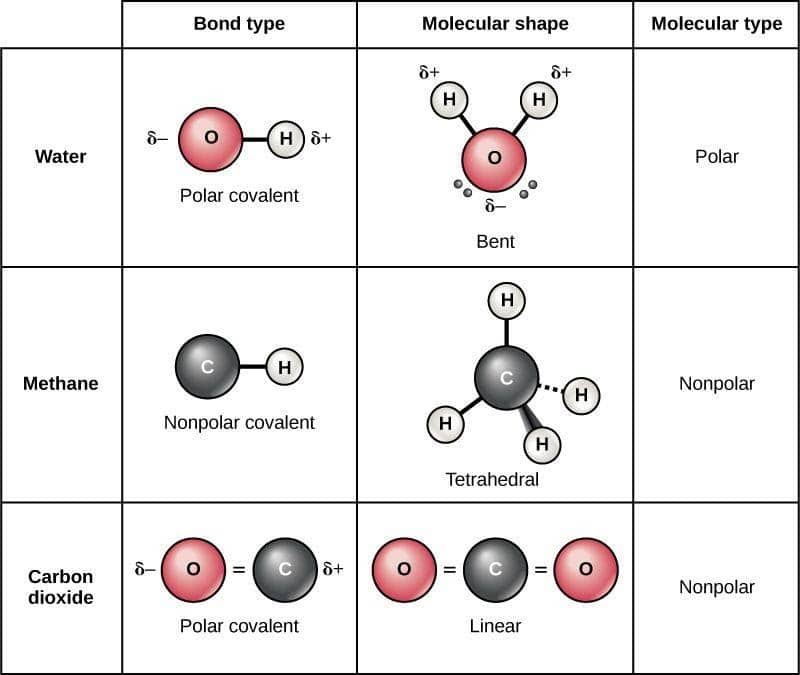
- The molecule’s geometry must be asymmetrical. Even if a molecule has polar bonds, if its shape is perfectly symmetrical (like carbon dioxide, CO2), the individual bond dipoles can cancel out, resulting in a nonpolar molecule. However, in an asymmetrical molecule like water (H2O), the bent shape ensures that the bond dipoles (from O-H bonds) add up, creating a region of overall negative charge near the oxygen and a region of overall positive charge near the hydrogens, giving water a distinct net dipole moment. This net dipole moment acts like a tiny magnet, with a positive pole and a negative pole.
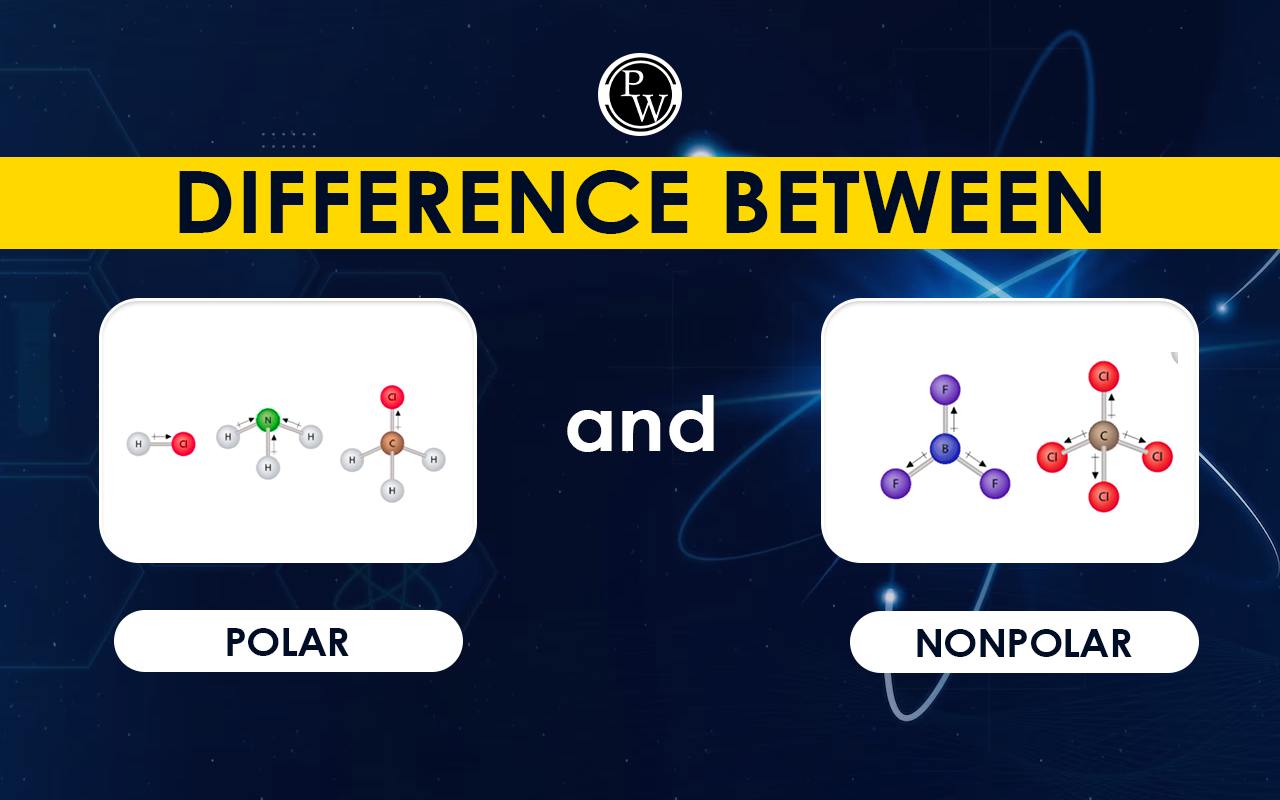
Examples of polar molecules include water (H2O), ammonia (NH3), and hydrogen chloride (HCl).
Nonpolar Molecules: Symmetrical Sharing and Balanced Charges
A molecule is classified as nonpolar if it either contains only nonpolar bonds or if its symmetrical molecular geometry causes the dipoles of its polar bonds to cancel each other out, resulting in no overall net dipole moment.
- Molecules with only nonpolar bonds: These are typically molecules composed of identical atoms (e.g., O2, N2, H2) or atoms with very similar electronegativities (e.g., methane, CH4, where the C-H bonds are only very slightly polar, but often considered nonpolar for practical purposes due to their small electronegativity difference and symmetrical arrangement).
- Molecules with polar bonds but symmetrical geometry: As mentioned with CO2, even though the C=O bonds are polar (oxygen is more electronegative than carbon), the linear geometry of CO2 means that the two bond dipoles pull in opposite directions and exactly cancel each other out. Similarly, carbon tetrachloride (CCl4) has polar C-Cl bonds, but its tetrahedral symmetry ensures that the bond dipoles cancel, making the molecule nonpolar overall.
Examples of nonpolar molecules include oxygen (O2), nitrogen (N2), carbon dioxide (CO2), and methane (CH4).
The Importance of Molecular Geometry
It is paramount to emphasize that molecular geometry is just as critical as bond polarity in determining overall molecular polarity. A molecule’s shape dictates how its individual bond dipoles are oriented in space. If these dipoles are arranged symmetrically, they effectively neutralize each other, much like opposing forces of equal magnitude. If the arrangement is asymmetrical, a net dipole moment emerges, defining the molecule as polar.
Intermolecular Forces: How Polarity Dictates Behavior
The polarity of a molecule profoundly influences its intermolecular forces (IMFs)—the attractive forces between molecules. These forces, weaker than the intramolecular forces (covalent or ionic bonds) that hold atoms together within a molecule, are nevertheless critical in determining a substance’s physical properties such as melting point, boiling point, solubility, and viscosity.
The Dance of Attraction: Dipole-Dipole and Hydrogen Bonding
Polar molecules, with their positive and negative ends, can attract each other electrostatically. This attraction is known as dipole-dipole interaction. The positive end of one polar molecule is attracted to the negative end of an adjacent polar molecule. For molecules containing hydrogen bonded to highly electronegative atoms like oxygen, nitrogen, or fluorine, a particularly strong type of dipole-dipole interaction occurs called hydrogen bonding. Hydrogen bonds are exceptionally strong IMFs that significantly raise boiling points and impact solubility, as famously seen with water.
Van der Waals Forces: The Universal Weak Attraction
Nonpolar molecules, lacking permanent dipoles, primarily interact through weaker forces known as London Dispersion Forces (a type of Van der Waals force). These temporary attractive forces arise from instantaneous, fleeting dipoles created by the random movement of electrons. Though weak, these forces become more significant with increasing molecular size and surface area, as more electrons are available to create these temporary dipoles. Both polar and nonpolar molecules experience London Dispersion Forces, but for polar molecules, they are usually overshadowed by stronger dipole-dipole or hydrogen bonding interactions.
“Like Dissolves Like”: Solubility and Miscibility
One of the most immediate and technologically relevant consequences of polarity is the principle of “like dissolves like.” Polar solvents (like water) are effective at dissolving polar solutes (like salts or sugars) because their strong dipole-dipole interactions can overcome the attractive forces within the solute and surround the solute particles. Conversely, nonpolar solvents (like hexane or benzene) readily dissolve nonpolar solutes (like oils, fats, or waxes) through London Dispersion Forces. This principle is fundamental in chemical separations, drug delivery, cleaning solutions, and numerous industrial processes.
Polarity’s Indispensable Role in Modern Technology
The nuanced understanding of molecular polarity is not merely academic; it is a critical tool for engineers and scientists across virtually every technological domain, enabling the design of materials and processes with tailored functionalities.
Advanced Materials Science: Engineering for Specific Functions
In materials science, the ability to control molecular polarity is paramount. For instance, in developing polymers, understanding the polarity of monomers influences polymerization, cross-linking, and ultimately, the physical properties of the resulting plastic or rubber. Polar polymers, like nylon, can be engineered for strength and resistance to polar solvents, while nonpolar polymers, like polyethylene, are valued for their water repellency and electrical insulation. This knowledge is crucial for creating everything from robust construction materials and durable textiles to biocompatible implants and high-performance electronic components like liquid crystals in displays. Adhesives and coatings also rely heavily on polarity matching for effective binding to surfaces, as specific polar or nonpolar groups are designed to interact optimally with the target substrate.
Chemical Engineering & Manufacturing: Process Optimization
Chemical engineers leverage molecular polarity to design and optimize separation processes, such as distillation, extraction, and chromatography. For example, in drug manufacturing, separating desired compounds from impurities often involves selecting solvents with specific polarities to selectively dissolve or precipitate components. The polarity of catalysts can also be tuned to favor specific reaction pathways, enhancing yield and purity in complex chemical syntheses. Furthermore, understanding the polarity of reactants and products dictates the choice of reaction medium, ensuring efficient mixing, solubility, and ultimately, a successful and economically viable industrial process.
Biotechnology & Pharmaceuticals: Designing Interactions at the Molecular Level
In biotechnology and pharmaceutical development, molecular polarity is a central theme. The efficacy of a drug depends on its ability to interact specifically with target receptors in the body, which are often proteins with specific polar and nonpolar regions. Designing drugs involves tuning their polarity to achieve optimal solubility in biological fluids, permeability across cell membranes, and binding affinity to active sites. For example, highly polar drugs may struggle to cross the nonpolar lipid bilayers of cell membranes, leading to the development of sophisticated drug delivery systems that encapsulate or modify drug polarity. Similarly, understanding the polarity of DNA, proteins, and lipids is fundamental to genetic engineering, diagnostic tools, and the development of new therapeutics.
Environmental Technology: Solutions for a Sustainable Future
Environmental technologies frequently exploit molecular polarity for pollution control and resource management. Water purification systems, for instance, often use technologies like reverse osmosis or activated carbon filtration, which rely on the differential interactions of polar water molecules and various contaminants (which can be polar or nonpolar) with membrane surfaces or adsorbent materials. In addressing oil spills, surfactants (molecules with both polar and nonpolar parts) are used to emulsify nonpolar oil into polar water, facilitating its dispersion and degradation. Developing new catalysts for green chemistry, designing materials for carbon capture, or even creating biodegradable plastics all hinge on a deep understanding and precise manipulation of molecular polarity to achieve desired environmental outcomes.
Conclusion
The difference between polar and nonpolar molecules, rooted in the uneven or even distribution of electron density and the resulting molecular geometry, transcends the pages of a chemistry textbook. It is a fundamental principle that underpins the very fabric of our technological world. From the strength of a new composite material to the specificity of a life-saving drug, and from the efficiency of an industrial process to the effectiveness of an environmental clean-up, the nuanced properties conferred by molecular polarity are continuously harnessed by scientists and engineers. As technology advances, the ability to predict, control, and manipulate these molecular distinctions will remain an indispensable tool, driving innovation and shaping the future of countless industries.
aViewFromTheCave is a participant in the Amazon Services LLC Associates Program, an affiliate advertising program designed to provide a means for sites to earn advertising fees by advertising and linking to Amazon.com. Amazon, the Amazon logo, AmazonSupply, and the AmazonSupply logo are trademarks of Amazon.com, Inc. or its affiliates. As an Amazon Associate we earn affiliate commissions from qualifying purchases.