
For more than a century, the dial tone has served as the universal “green light” of the telecommunications world. To the average user, it is a simple, steady hum heard upon picking up a telephone receiver—a signal that the system is functioning and ready to process a request. However, beneath this ubiquitous sound lies a complex infrastructure of electrical engineering, digital protocols, and historical evolution that has shaped how humanity communicates. In the modern era of fiber optics, Voice over IP (VoIP), and 5G, the dial tone has transitioned from a physical necessity to a psychological comfort, remaining a cornerstone of our technological lexicon.

The Anatomy of a Sound: How the Dial Tone Functions
The dial tone is not merely a random noise; it is a precisely engineered audio signal designed to be distinct from the human voice and background interference. In North America, the standard dial tone is a composite of two pure sine waves: 350 Hz and 440 Hz. When these two frequencies are played simultaneously, they create a “dual-tone” sound characterized by a specific harmonic interval that the human ear perceives as a steady, slightly buzzy hum.
Frequencies and Standards
The selection of 350 Hz and 440 Hz was a deliberate choice by engineers at Bell Labs during the mid-20th century. These frequencies fall within the “voice band”—the range of frequencies that telephone systems are optimized to transmit—but they do not occur naturally in human speech in a sustained, simultaneous fashion. This ensures that the telephone exchange equipment can easily distinguish between a user’s voice and a signaling tone.
Internationally, the dial tone varies. In many European countries, the tone is a single frequency of 425 Hz, often pulsed or steady depending on the specific national standard. These variations are managed by the International Telecommunication Union (ITU), which provides recommendations to ensure that telecommunications hardware can operate across borders while maintaining local signaling traditions.
The Signaling Loop
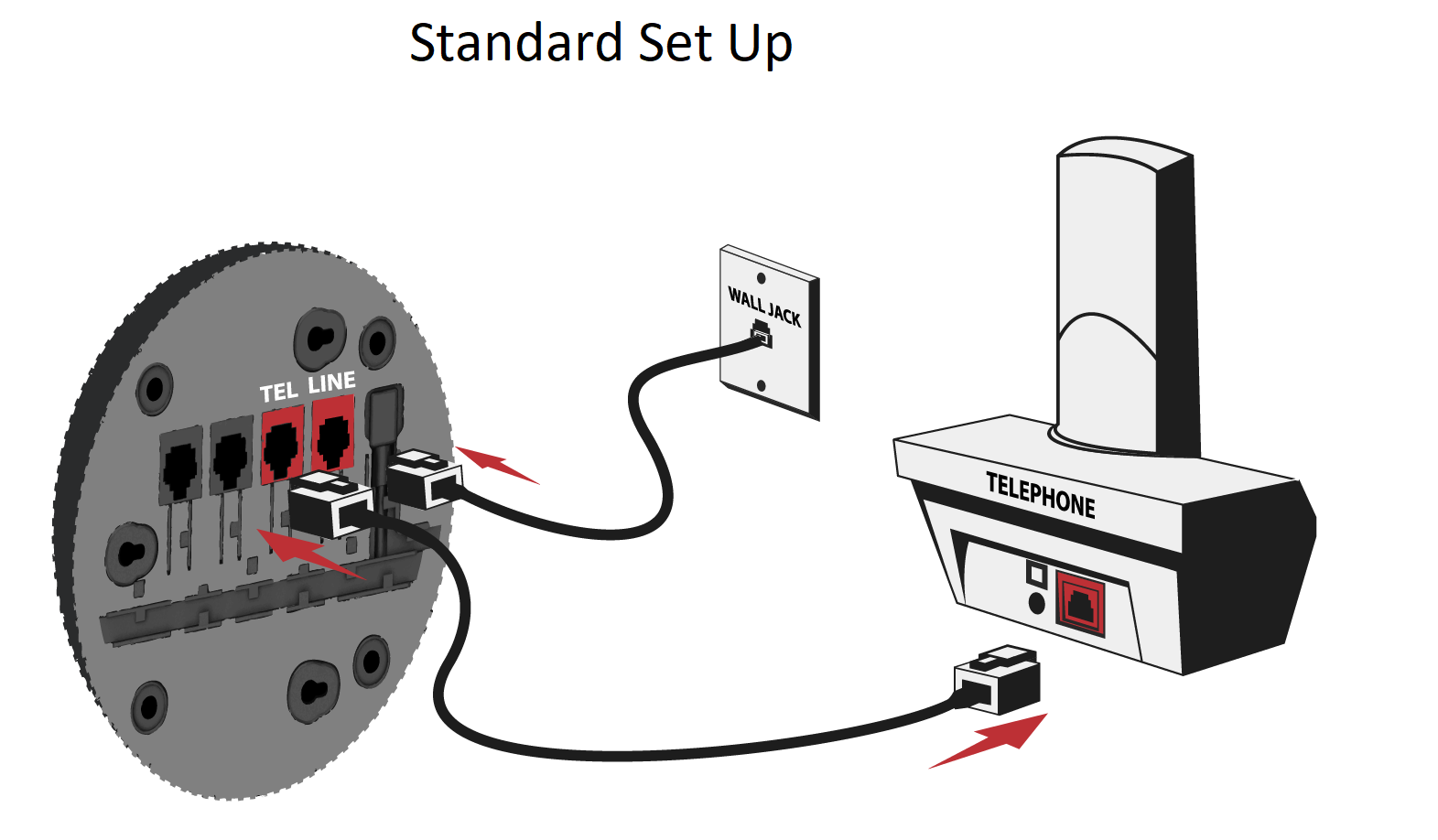
Technically, the dial tone is the result of a completed electrical circuit known as the “local loop.” When a traditional landline telephone is “on-hook,” the circuit between the home and the telephone company’s Central Office (CO) is open. No current flows. When the handset is lifted (“off-hook”), the switch inside the phone closes the circuit.
The Central Office detects this change in current and interprets it as a request for service. In response, the CO’s switching equipment connects a “tone generator” to the line, which sends the 350/440 Hz signal back to the user. This tone serves as an acknowledgment: “I hear you, and I am ready to receive your digits.” Once the user begins dialing, the CO removes the dial tone to clear the path for the Address Signaling (the DTMF tones or pulses representing the phone number).
A Brief History of Telephony Signaling
The dial tone was not always a feature of telephony. In the earliest days of the telephone, there was no such thing as a “ready signal” because there was no automated switching. Communication was a manual, human-centric process.
From Operators to Automation
In the late 19th century, if you wanted to make a call, you would pick up the receiver and wait for a human operator to speak. You would provide the name or number of the person you wished to reach, and the operator would manually plug a patch cord into a switchboard to connect your line to the recipient’s line. There was no need for a dial tone because the operator’s voice was the signal that the system was ready.
As cities grew and the number of telephone subscribers exploded, manual switching became a bottleneck. The breakthrough came from an unlikely source: Almon Strowger, an undertaker who believed manual operators were diverting his business calls to a competitor. In 1891, he patented the Strowger switch, the first electromechanical automatic telephone exchange. This invention replaced human operators with mechanical “step-by-step” switches.
The Strowger Switch and the Birth of the Tone
With the removal of the human operator, users needed a way to know that the mechanical switch was ready to receive their pulses. Without a signal, a user might start dialing before the switch had reset or was available, leading to failed connections. The dial tone was introduced as the machine’s way of saying “Go ahead.”
Interestingly, the dial tone was not standardized immediately. Early systems used various buzzers, clicks, or even silence followed by a specific light. It wasn’t until the mid-1940s and the expansion of the “Precise Tone Plan” that the dual-frequency hum we recognize today became the industry standard across the Bell System in North America.
The Transition to Digital: Dial Tones in the VoIP Era
As the world shifted from analog copper wires to digital networks and Voice over IP (VoIP), the physical necessity of the dial tone began to vanish. In a purely digital environment, such as a smartphone or a computer running a communication app, there is no “local loop” to close and no mechanical switch to wait for.
Virtual Signaling
In a VoIP system, your “phone” is essentially a specialized computer. When you open a calling app, the device is already connected to the network via data packets. There is no technical reason for the device to play a sound before you dial a number. In fact, on a mobile phone, you dial the number first and then hit “Send”—the exact opposite of the traditional landline process.
However, many VoIP desk phones and residential adapters still produce a dial tone. This is known as a “comfort tone” or “synthetic dial tone.” Because humans have been conditioned for over a century to expect a sound when they pick up a receiver, silence can be interpreted as a technical failure. The VoIP hardware generates a local audio file of a dial tone to reassure the user that the device is powered on and the internet connection is active.
Why We Still Need Artificial Feedback
The dial tone in the digital age serves as a crucial user interface (UI) element. It provides immediate feedback regarding the state of the service. If a VoIP user picks up their handset and hears silence, they immediately know there is a network configuration issue or a loss of internet connectivity.
Furthermore, the dial tone has evolved to convey more information through “stutter tones.” If you have a new voicemail, many systems will play a broken, rhythmic dial tone (the Message Waiting Indicator) to alert you before you even begin to dial. This use of audio signaling proves that even as the underlying technology changes from analog voltage to digital packets, the concept of the dial tone remains a vital diagnostic and informational tool.
Troubleshooting and Technical Significance
For technicians and IT professionals, the dial tone is the first line of defense in troubleshooting connectivity issues. It is a fundamental indicator of the health of the Physical Layer (Layer 1) and the Data Link Layer (Layer 2) of the telecommunications stack.
Deciphering Variations
Different patterns in the dial tone or subsequent signals provide specific data points:
- Steady Tone: The line is clear, and the switch is ready.
- Stutter Tone: A software-level notification (usually voicemail).
- Fast Busy (Reorder Tone): This indicates that the local exchange is congested or the number cannot be routed. It signals a “trunk busy” condition rather than a “user busy” condition.
- Siren or Howler Tone: If a phone is left off the hook for too long without dialing, the system sends a high-volume, multi-frequency “howler” tone to alert the user to hang up the phone and clear the line.
The Dial Tone as a Diagnostic Tool
In a business environment using a PBX (Private Branch Exchange), the presence of a dial tone confirms that the internal handset is successfully communicating with the local server. If an employee can hear an internal dial tone but cannot reach an outside line, the technician knows the issue lies with the SIP trunk or the external gateway, not the individual’s desk phone. This “binary” check—is there a tone or not?—remains the fastest way to isolate hardware failures from software configuration errors.
The Future of the “Digital Dial Tone”
As we move toward a future dominated by Artificial Intelligence, the Internet of Things (IoT), and 6G, the term “dial tone” is undergoing a metaphorical transformation. In tech circles, industry leaders often speak of the “digital dial tone” to describe a state of ubiquitous, invisible, and always-on connectivity.
Ubiquitous Connectivity and AI
In this context, the “dial tone” is no longer a sound, but a standard of reliability. Just as we expect a sound when we pick up a phone, we now expect an immediate “handshake” when we query a cloud AI, load a web page, or activate a smart home device. If the latency is too high, the “digital dial tone” is considered broken.
Modern software architectures, particularly those relying on microservices, aim to provide this level of instant availability. Engineers strive to make the “request-response” cycle as seamless as the old analog dial tone. In the world of AI tools, the “dial tone” is the readiness of the Large Language Model to process a prompt the millisecond it is received.
Beyond Audio: The New Indicators of Readiness
While the physical sound of the dial tone may eventually fade into history as landlines are decommissioned, the principle of the “ready signal” is eternal. On our smartphones, this is represented by the signal strength bars or the 5G icon. On our computers, it is the rhythmic pulsing of a status light or the “connected” icon in the taskbar.
The dial tone was the first great achievement in human-machine interface design for the masses. It taught us how to interact with a global network, providing a simple audio cue that bridged the gap between human intent and mechanical execution. Whether it exists as a 440 Hz hum or a high-speed data handshake, the essence of the dial tone—the promise of an open line to the rest of the world—will remain the foundation of all communication technology.
aViewFromTheCave is a participant in the Amazon Services LLC Associates Program, an affiliate advertising program designed to provide a means for sites to earn advertising fees by advertising and linking to Amazon.com. Amazon, the Amazon logo, AmazonSupply, and the AmazonSupply logo are trademarks of Amazon.com, Inc. or its affiliates. As an Amazon Associate we earn affiliate commissions from qualifying purchases.