
In the intricate hierarchy of digital connectivity, understanding how data travels across different geographic scales is fundamental to modern information technology. While most users are familiar with the Local Area Network (LAN) that powers their homes or offices, and the Wide Area Network (WAN) that defines the global internet, there exists a critical middle layer known as the Metropolitan Area Network, or MAN. A MAN serves as a high-speed bridge, connecting multiple LANs across a specific geographic area—typically a city or a large campus. As urban environments become increasingly data-dependent, the MAN has evolved into the backbone of smart city initiatives, corporate headquarters clusters, and municipal governance.
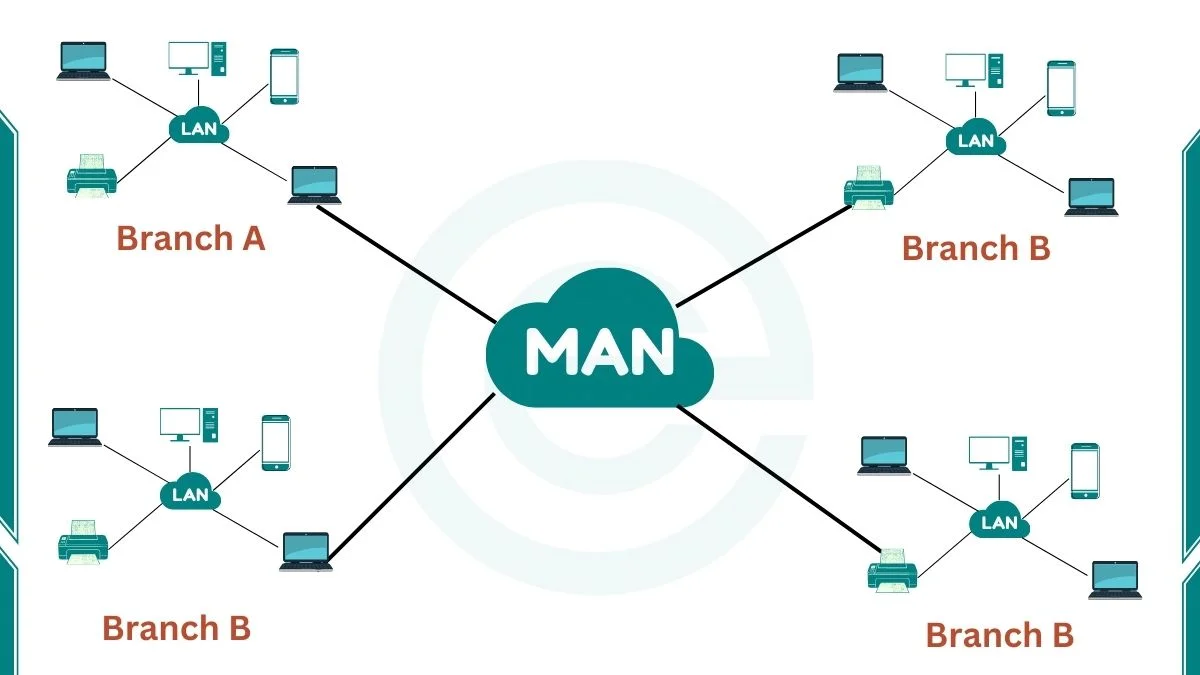
Understanding the Architecture and Scope of a Metropolitan Area Network
A Metropolitan Area Network is designed to provide regional connectivity that exceeds the capabilities of a LAN but remains more localized and manageable than a sprawling WAN. The geographic scope of a MAN generally ranges from five to fifty kilometers in diameter. This specific range makes it the ideal solution for connecting several buildings within a city, ensuring that data can be exchanged at high speeds without the latency or cost overhead often associated with long-haul telecommunications.
Defining the Geographic Boundaries
The “Metropolitan” in MAN is the key to its identity. Unlike a LAN, which is restricted to a single building or a small group of adjacent buildings (like a residential home or a small office), a MAN covers an entire city landscape. It is larger than a campus area network (CAN) but smaller than a WAN, which can span across countries or continents. This mid-sized footprint allows organizations—such as local governments, university systems, or large corporations with multiple branches in one city—to maintain a unified network environment that behaves as if all users are in the same building, despite being several miles apart.
The Technology Behind MANs
The physical layer of a MAN is typically constructed using high-performance media. In the early days of networking, technologies like FDDI (Fiber Distributed Data Interface) and DQDB (Distributed Queue Dual Bus) were the standards. However, modern MANs almost exclusively rely on fiber-optic cabling and high-speed Ethernet technologies. Fiber optics provide the necessary bandwidth to handle the massive data loads generated by thousands of users, supporting speeds ranging from 1 Gbps to 100 Gbps and beyond. In some urban deployments, wireless MANs (WMANs) utilizing WiMAX or specialized point-to-point microwave links are used where laying physical cable is geographically or financially prohibitive.
How a MAN Functions: Bridging the Gap Between LAN and WAN
To understand the function of a MAN, one must view it as a sophisticated aggregator. Its primary role is to interconnect various LANs, allowing for the seamless sharing of resources, applications, and data across a metropolitan region. By acting as a high-speed intermediary, a MAN ensures that internal city traffic does not have to be routed through the broader (and often slower or more expensive) public internet unless necessary.
Connectivity Mechanisms
A MAN typically utilizes a backbone of high-capacity switches and routers. When a user in “Office A” wants to access a server in “Office B” five miles away, the MAN identifies the destination within its regional directory and routes the packet through the city’s private or leased fiber infrastructure. This process bypasses the congestion of the global internet, leading to significantly lower latency. This is particularly crucial for real-time applications such as VoIP (Voice over IP), video conferencing, and synchronous data replication between data centers.
Common Protocols and Standards
Modern MANs leverage several key networking protocols to maintain efficiency and reliability. Metro Ethernet is perhaps the most common, as it allows organizations to extend their existing Ethernet-based LANs into the metropolitan space using familiar technology. Another critical technology is MPLS (Multiprotocol Label Switching), which provides efficient routing and allows for the creation of Virtual Private LAN Services (VPLS). By using these standards, a MAN can prioritize different types of traffic, ensuring that mission-critical data receives the bandwidth it requires while less urgent traffic is managed accordingly.
Key Components and Infrastructure of a MAN

The physical and logical construction of a MAN requires significant investment and sophisticated hardware. Unlike a LAN, which might be managed by a single IT administrator, a MAN often involves collaboration between private enterprises, telecommunications providers, and local government entities.
Hardware Requirements
The core of a MAN consists of high-end routers and multi-layer switches capable of handling immense throughput. These devices are often housed in secure “nodes” or data centers distributed throughout the city. Additionally, specialized equipment such as Optical Add-Drop Multiplexers (OADMs) is used in fiber-based MANs to manage individual light wavelengths, allowing different data streams to travel simultaneously over the same physical fiber strand. This technique, known as Wavelength Division Multiplexing (WDM), dramatically increases the carrying capacity of the network without requiring the installation of new cables.
Transmission Media: Fiber Optics vs. Wireless
While fiber optics are the gold standard for MANs due to their immunity to electromagnetic interference and massive bandwidth, they are not the only medium.
- Fiber Optics: Most metropolitan networks use “Dark Fiber”—existing underground fiber lines that have been laid but are not yet in use—or leased lines from ISPs.
- Wireless MANs (WMAN): In cities with historical architecture where digging is restricted, wireless solutions are utilized. IEEE 802.16 (WiMAX) is a notable standard here, providing broadband access over a wide area.
- Coaxial Cable: In some legacy implementations, especially those integrated with cable television providers, coaxial cable is used to provide MAN services to residential and small business customers.
Advantages and Disadvantages of Implementing a MAN
Implementing a network of this scale involves a complex cost-benefit analysis. For the right organization or municipality, the advantages are transformative, but the challenges are equally significant.
Why Businesses and Cities Choose MANs
The most compelling reason to deploy a MAN is speed. Because it operates on dedicated high-speed lines, data transfer rates are vastly superior to standard WAN connections. Furthermore, a MAN allows for centralized management of resources. A city government can host a single massive database or software suite in one central location and provide high-speed access to all municipal offices, schools, and libraries across the city. This centralization reduces hardware costs and simplifies software updates. Additionally, security is generally higher in a private MAN than on the public internet, as the physical infrastructure can be more closely monitored and controlled.
Potential Drawbacks and Security Challenges
The primary disadvantage of a MAN is the sheer cost of installation and maintenance. Laying fiber-optic cable through an urban environment requires permits, construction, and significant capital. Furthermore, the complexity of managing a network that spans a city requires a highly skilled technical team. From a security perspective, while a MAN is more private than a WAN, it also presents a larger “attack surface” than a LAN. A physical break in a fiber line due to construction or a sophisticated cyberattack on a central node can bring down communications for an entire city or a large corporation.
Real-World Applications and the Future of Metropolitan Connectivity
The utility of MANs extends far beyond simple office-to-office communication. They are the invisible engines driving the next generation of urban living and industrial efficiency.
Smart Cities and Public Infrastructure
The concept of the “Smart City” is entirely dependent on MAN architecture. Sensors placed on traffic lights, water systems, and public transit vehicles must transmit data back to a central control center in real-time. A MAN provides the high-capacity, low-latency pipeline required to process this data. For instance, a MAN can facilitate city-wide surveillance systems, automated emergency response coordination, and public Wi-Fi zones that offer seamless connectivity for citizens as they move through the urban core.

The Shift Toward 5G and SD-WAN Integration
The future of MANs is being shaped by the advent of 5G technology and the rise of Software-Defined Wide Area Networking (SD-WAN). As 5G small cells are deployed across cities, they will likely use existing fiber MANs for “backhaul”—the process of getting wireless data back to the core network. Meanwhile, SD-WAN is making MAN management more flexible, allowing administrators to use software to dynamically route traffic based on current network conditions.
As we move toward an era of ubiquitous connectivity, the Metropolitan Area Network remains a vital component of the technological landscape. It bridges the gap between our immediate workspaces and the global digital world, ensuring that the cities of the future are faster, smarter, and more interconnected than ever before. Whether it is a university system sharing research data across campuses or a municipal government optimizing traffic flow, the MAN is the silent infrastructure that makes modern urban life possible.
aViewFromTheCave is a participant in the Amazon Services LLC Associates Program, an affiliate advertising program designed to provide a means for sites to earn advertising fees by advertising and linking to Amazon.com. Amazon, the Amazon logo, AmazonSupply, and the AmazonSupply logo are trademarks of Amazon.com, Inc. or its affiliates. As an Amazon Associate we earn affiliate commissions from qualifying purchases.