
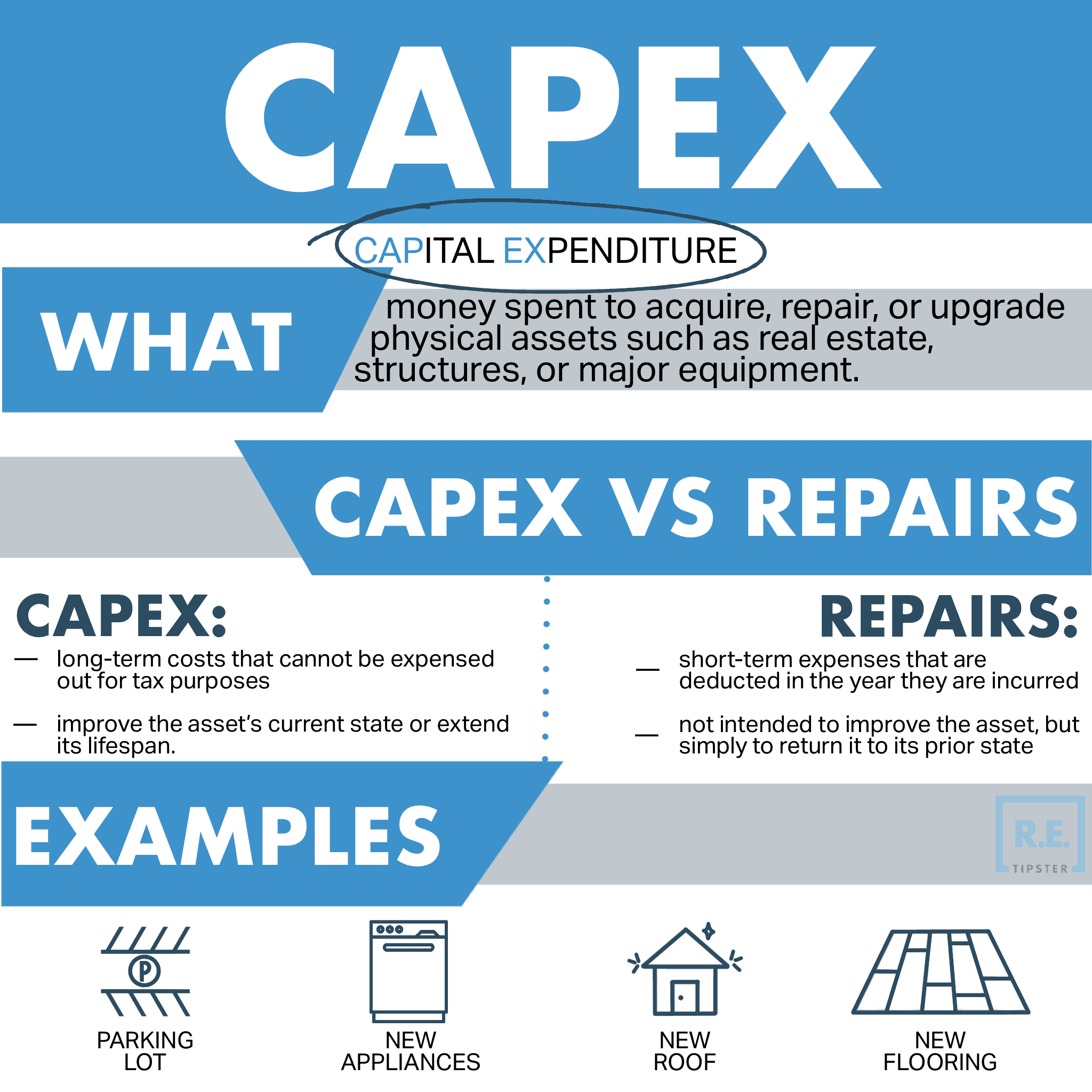
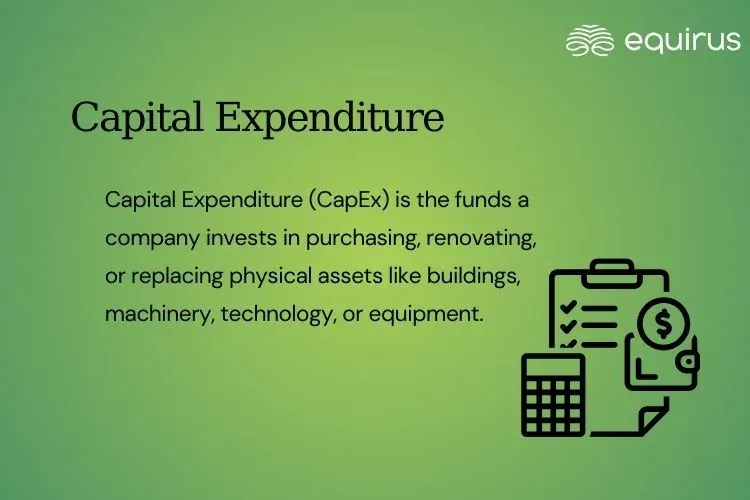
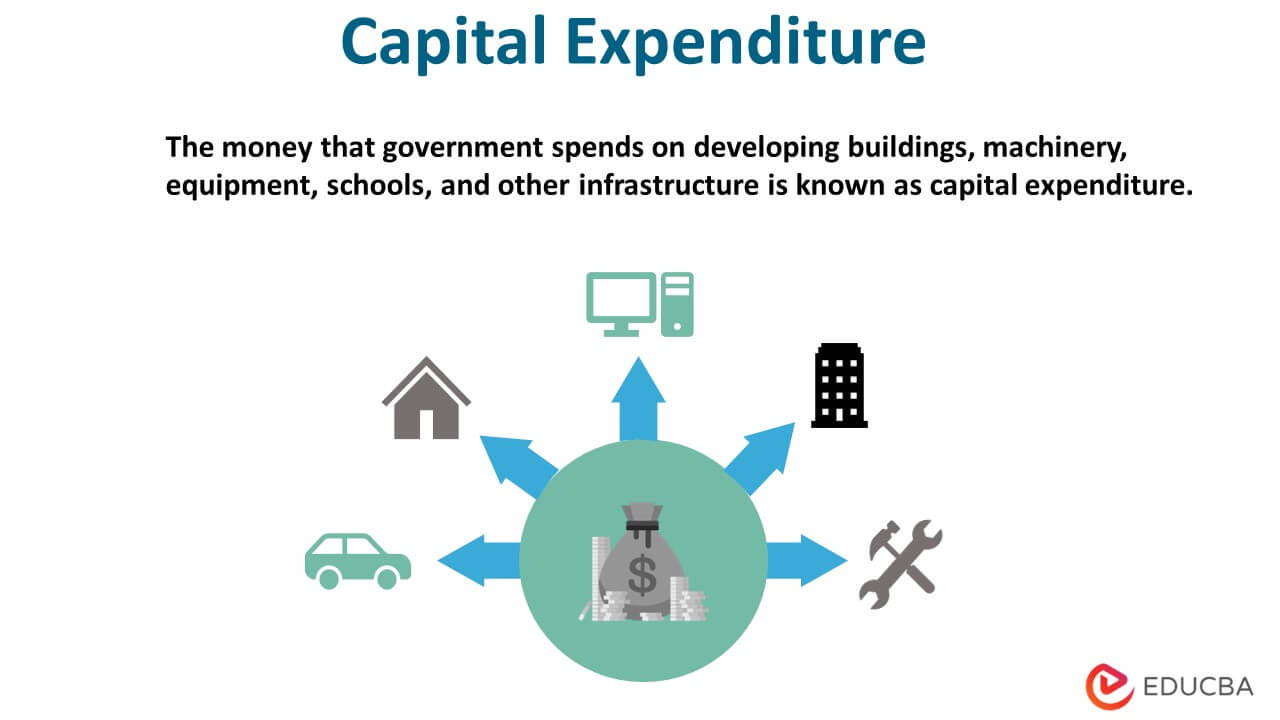
In the complex world of business finance, understanding how money moves is the cornerstone of long-term sustainability and growth. Among the various terms that define a company’s financial health, “Capital Expenditure”—commonly referred to as CapEx—stands out as one of the most critical. At its simplest, capital expenditure represents the funds a company uses to acquire, upgrade, and maintain physical assets such as property, plants, buildings, technology, or equipment.
However, for the savvy investor or the diligent business owner, CapEx is much more than a line item on a balance sheet. It is a signal of intent, a measure of growth potential, and a fundamental component of financial valuation. This guide explores the depths of capital expenditure, its role in business finance, and how it differs from everyday operational costs.
Understanding Capital Expenditure (CapEx) in the Modern Financial Landscape
To master the nuances of business finance, one must first be able to distinguish between the money spent to keep the lights on and the money spent to build a brighter future. Capital expenditure falls into the latter category. It is an investment in the productive capacity of a business.
The Core Difference Between CapEx and OpEx
The most common point of confusion for those new to finance is the distinction between Capital Expenditure (CapEx) and Operational Expenditure (OpEx). While both involve spending money, their accounting treatments and business purposes are vastly different.
Operational Expenditure refers to the day-to-day expenses required to run a business. This includes wages, rent, utilities, and raw materials. These expenses are “expensed” on the income statement in the period they occur because they are consumed immediately.
In contrast, Capital Expenditure is “capitalized.” This means the cost is not deducted from profits all at once. Instead, the asset is placed on the balance sheet, and its cost is spread out over its useful life through a process called depreciation. For an expense to be considered CapEx, it must result in the acquisition of an asset that provides a benefit for more than one fiscal year.
Criteria for Classification: Tangibility and Longevity
Not every large purchase qualifies as CapEx. To meet the definition, an expenditure generally must meet two criteria:
- Useful Life: The asset must have a functional life extending beyond twelve months. If a company buys printer paper, it is OpEx because it will be used quickly. If they buy the printer itself, it is CapEx.
- Value Enhancement: The expenditure must either create a new asset or significantly improve an existing one. Routine repairs that merely restore an asset to its previous working condition are usually treated as OpEx (maintenance). However, an overhaul that extends the asset’s life or increases its capacity is CapEx.
Why Capital Expenditure Matters for Investors and Business Owners
From a strategic “Money” perspective, CapEx is a primary indicator of a company’s stage in its lifecycle. A company that spends heavily on CapEx is often in a “growth phase,” reinvesting its earnings into new facilities or technology to capture more market share.
Measuring Growth Potential through Investment
Investors look at CapEx to understand a company’s management strategy. If a firm in a competitive industry—such as manufacturing or telecommunications—stops spending on capital assets, it may signal that they are struggling with cash flow or have given up on innovation. Conversely, high CapEx can be a bullish signal, suggesting that the leadership sees significant opportunities for expansion.
However, there is a delicate balance. Excessive CapEx can drain a company’s liquidity, especially if the return on that investment (ROI) does not materialize as expected. Therefore, analyzing the “Efficiency of CapEx” is a vital skill for anyone involved in business finance.
The Relationship Between CapEx and Free Cash Flow (FCF)
For those focused on investing and financial tools, the relationship between CapEx and Free Cash Flow is paramount. Free Cash Flow is the cash a company produces through its operations, minus the money it takes to maintain or expand its asset base (CapEx).
The formula is straightforward: Free Cash Flow = Operating Cash Flow – Capital Expenditures.
FCF is the “gold standard” for many investors because it represents the actual cash available to pay dividends, buy back shares, or reduce debt. A company with high earnings but even higher CapEx requirements might actually have negative free cash flow, making it a potentially risky investment despite its reported profits.
Types of Capital Expenditures and Their Strategic Impact
CapEx is not a monolithic category. Depending on the goal of the spend, it can be categorized into different types that tell different stories about the business’s trajectory.
Maintenance CapEx vs. Expansion CapEx
Financial analysts often divide capital spending into two buckets: maintenance and expansion.
- Maintenance CapEx: This is the “stay-in-business” spending. It involves replacing old machinery or updating existing software to ensure the company can continue its current level of production.
- Expansion CapEx: This is “growth” spending. It involves buying a second factory, entering a new geographic market, or purchasing a competitor’s patents. Expansion CapEx is what drives future revenue growth.
When analyzing a company’s financial health, it is important to see if they are spending enough on maintenance. If maintenance CapEx is consistently lower than depreciation, the company may be “liquidation-harvesting”—essentially letting its assets rot to show higher short-term profits.
Intangible Assets as Capital Expenditures
While we often think of CapEx as “bricks and mortar,” the modern economy relies heavily on intangible assets. In many jurisdictions, the costs associated with acquiring patents, trademarks, or long-term software licenses are treated as capital expenditures. Instead of depreciation, these costs are “amortized” over their legal or useful life. For a tech-heavy business, these intangible investments are often the most significant part of their capital budget.
Calculating and Accounting for CapEx
To truly understand CapEx, one must know where to find it in financial statements. It does not appear directly on the Income Statement; instead, it is found on the Cash Flow Statement under “Investing Activities.”
The Formula: Analyzing the Cash Flow Statement
If you are looking at a company’s balance sheet and income statement but don’t have the cash flow statement, you can estimate CapEx using the following formula:
CapEx = (Ending Net PP&E – Beginning Net PP&E) + Current Depreciation
This formula accounts for the fact that the value of “Property, Plant, and Equipment” (PP&E) on the balance sheet decreases every year due to depreciation. If the net PP&E increases despite depreciation, the company must have spent money on new capital assets.
Depreciation and Amortization: Spreading the Cost Over Time
Because a capital asset provides value for many years, accounting principles (such as GAAP or IFRS) require that the cost be matched to the revenue it generates. This is the “Matching Principle.”
For example, if a delivery company buys a truck for $50,000 and expects it to last five years, they don’t record a $50,000 loss in year one. Instead, they record a $10,000 depreciation expense each year for five years. This makes the company’s profit look more stable and reflects the reality of how the asset is being “consumed.”
Best Practices for Capital Budgeting and Financial Health
Managing capital expenditure is an art as much as a science. It requires a long-term vision and a disciplined approach to capital budgeting.
Aligning CapEx with Long-Term Business Strategy
Every dollar spent on a capital asset is a dollar that cannot be used for marketing, hiring, or dividends. Therefore, businesses must use financial tools like Net Present Value (NPV) and Internal Rate of Return (IRR) to evaluate whether a CapEx project is worth the investment.
A successful CapEx strategy aligns with the company’s core competencies. For example, a logistics firm should focus its CapEx on fleet efficiency and warehouse automation rather than speculating in unrelated real estate. By focusing capital on areas that provide a competitive advantage, companies ensure that their investments yield the highest possible returns.
Avoiding the Pitfalls of Over-Leveraging
One of the greatest risks in business finance is using too much debt to fund capital expenditures. While debt can “leverage” returns, it also introduces fixed interest obligations. If a company spends millions on a new factory funded by debt, but the market demand for their product shifts, they are left with an expensive, underutilized asset and a massive debt burden.
Healthy companies often aim to fund their maintenance CapEx through operating cash flow, reserved debt only for major expansionary projects that have a clear path to profitability. Monitoring the “CapEx to Sales” ratio can help determine if a company is overextending itself relative to its revenue-generating ability.
Conclusion: The Strategic Value of Understanding CapEx
Capital expenditure is the engine of economic growth. For a business, it represents the courage to invest in the future. For an investor, it provides a window into the company’s soul, revealing whether management is focused on short-term appearances or long-term value creation.
By mastering the definition and application of CapEx, you gain a powerful tool for financial analysis. Whether you are managing your own business’s budget or building a diverse investment portfolio, understanding how to deploy capital effectively is the hallmark of financial literacy. In the world of money, it isn’t just about how much you spend, but how wisely you invest that spending into assets that will pay dividends for years to come.
aViewFromTheCave is a participant in the Amazon Services LLC Associates Program, an affiliate advertising program designed to provide a means for sites to earn advertising fees by advertising and linking to Amazon.com. Amazon, the Amazon logo, AmazonSupply, and the AmazonSupply logo are trademarks of Amazon.com, Inc. or its affiliates. As an Amazon Associate we earn affiliate commissions from qualifying purchases.