
Determining the value of Apple Inc. (AAPL) requires looking far beyond the flashing numbers on a digital ticker. While the current share price serves as a real-time reflection of market sentiment, it is the underlying financial health, strategic positioning, and capital allocation of the world’s most successful consumer technology company that dictate its true worth. For investors, understanding Apple’s price is not merely about tracking a daily percentage change; it is about analyzing the convergence of hardware cycles, service-based recurring revenue, and aggressive shareholder return programs.
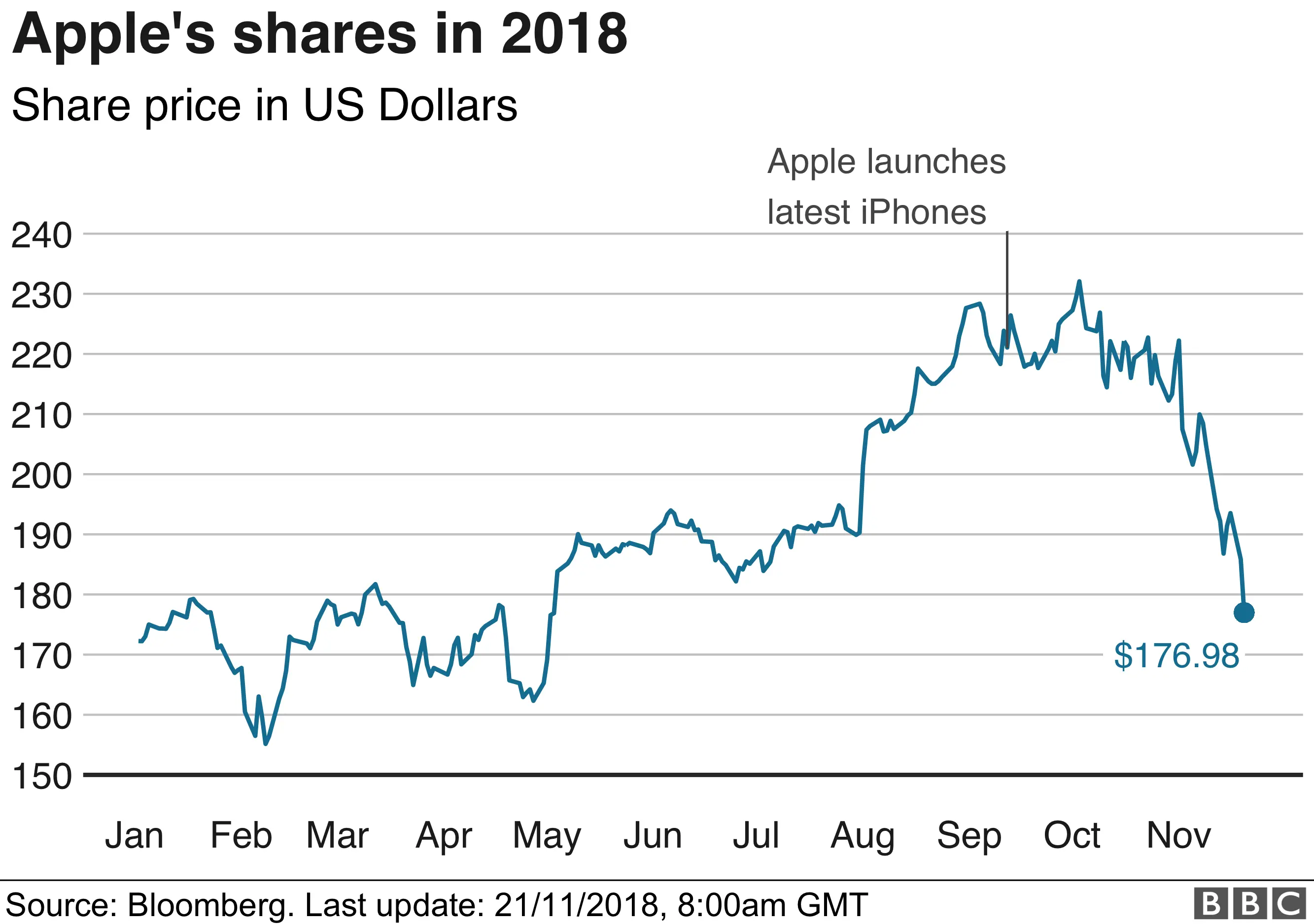
As a titan of the “Magnificent Seven,” Apple’s stock price acts as a barometer for the broader tech sector and the S&P 500. Whether the price is experiencing a period of consolidation or pushing toward new all-time highs, the factors driving those movements remain consistent: consumer demand for the iPhone, the growth of the Services segment, and the company’s ability to integrate artificial intelligence into its ecosystem.
Understanding the Dynamics of Apple’s Market Valuation
The market price of an Apple share is a complex calculation of future earnings potential discounted back to the present day. Unlike speculative growth stocks, Apple is valued as a “quality” compounder. This means that while investors pay a premium for the stock, they do so because of the company’s unparalleled brand loyalty and massive free cash flow.
The Impact of Product Cycles on Share Volatility
Apple’s share price historically follows a seasonal pattern dictated by the iPhone release cycle. Typically, anticipation builds in the third quarter (leading up to the September event), often resulting in a “run-up” in price. Following the launch, the stock may experience a “sell the news” correction as investors pivot their focus to actual sales data and holiday guidance. Understanding this hardware cycle is crucial for investors who are trying to time their entries or understand why the price may stagnate despite positive product reviews.
The Ecosystem Lock-In and Value Retention
One of the primary reasons Apple maintains a high valuation relative to its hardware peers is the “walled garden.” When a consumer buys an iPhone, the likelihood of them purchasing an iPad, Mac, or Apple Watch increases significantly. From a financial perspective, this reduces customer acquisition costs and increases the lifetime value of each user. Investors view this ecosystem as a defensive moat, protecting the share price during economic downturns because Apple users are statistically less likely to switch to competitors, even when discretionary income is tight.
Key Financial Metrics Every Investor Should Monitor
To understand if the current share price represents a “buy,” “hold,” or “sell,” one must look at the fundamental ratios that professional analysts use to grade the stock. Apple’s valuation is often measured against its historical averages and its peers in the big-tech space.
The Price-to-Earnings (P/E) Ratio
The P/E ratio is the most common metric used to evaluate Apple’s share price. Historically, Apple traded at a P/E between 12 and 18. However, over the last several years, the market has “re-rated” the stock, often seeing it trade between 25 and 32. This expansion in the P/E multiple suggests that investors now view Apple more as a software and services company—which commands higher multiples—than a hardware manufacturer. When the current share price results in a P/E significantly above its five-year average, it may indicate the stock is overextended. Conversely, a dip toward the lower end of its historical range often presents a value opportunity.
Free Cash Flow and Margin Expansion
Apple is a cash-generating machine. Its ability to maintain high gross margins, often exceeding 40%, is a testament to its pricing power. For investors, the most important figure is often Free Cash Flow (FCF). This is the money left over after the company pays for its operating expenses and capital expenditures. Apple uses its FCF to fuel its massive share buyback program, which has a direct and positive impact on the share price by reducing the total supply of shares outstanding, thereby increasing the earnings per share (EPS).
The Strategic Shift: Services and Recurring Revenue
Perhaps the most significant driver of Apple’s share price in the modern era is the transition from a hardware-reliant business to a services powerhouse. This shift has fundamentally changed how the market values the company’s revenue.

High-Margin Growth in Services
The Services segment—which includes the App Store, iCloud, Apple Music, Apple Pay, and Apple TV+—boasts margins that are nearly double those of hardware products. As this segment grows as a percentage of total revenue, Apple’s overall profitability improves. From an investing standpoint, services revenue is “better” than hardware revenue because it is recurring. Investors are willing to pay a higher price for a company that has a predictable stream of income from subscriptions than for one that relies on a one-time purchase every three years.
The Role of Apple Intelligence in the Next Supercycle
The integration of generative AI, branded as “Apple Intelligence,” represents the next frontier for the share price. The market is currently pricing in the potential for an “AI Supercycle,” where users are compelled to upgrade their devices to access advanced AI features. If Apple successfully demonstrates that AI can drive a massive wave of hardware upgrades while simultaneously opening new service revenue streams (such as “AI-as-a-Service”), the share price could see a significant upward revaluation.
Macroeconomic Pressures and the Global Tech Landscape
No stock exists in a vacuum, and Apple’s share price is heavily influenced by global economic conditions, interest rates, and geopolitical stability.
Interest Rates and Growth Valuation
As a large-cap tech stock, Apple is sensitive to the Federal Reserve’s interest rate policy. When rates are high, the “discount rate” applied to future earnings increases, which can put downward pressure on the share price. Additionally, high rates make the yields on “risk-free” assets like Treasury bonds more attractive, causing some investors to rotate out of equities and into fixed income. Monitoring the macroeconomic environment is essential for understanding the broader “risk-on” or “risk-off” sentiment that moves Apple’s stock.
Supply Chain Resilience and Global Markets
With a significant portion of its manufacturing based in China and a growing footprint in India, Apple’s share price is sensitive to international trade relations and supply chain disruptions. Any friction in these regions can lead to production delays, affecting quarterly earnings and investor confidence. Furthermore, as a global company, Apple’s earnings are subject to currency fluctuations. A strong U.S. dollar can act as a headwind, making Apple’s products more expensive abroad and reducing the value of international sales when converted back to dollars.
The Role of Dividends and Share Buybacks in Price Appreciation
For the income-oriented investor, Apple offers a unique proposition. While its dividend yield is relatively low compared to traditional “value” stocks, the growth of that dividend and the sheer scale of its buyback program provide a significant floor for the share price.
The Power of Share Buybacks
Apple is the undisputed king of share repurchases. By spending tens of billions of dollars each year to buy back its own stock, the company effectively increases the “slice of the pie” owned by each remaining shareholder. This consistent demand for its own shares provides a level of support for the stock price during market volatility. Over the long term, buybacks are a tax-efficient way for Apple to return value to shareholders and drive the share price higher even during periods of modest revenue growth.
Dividend Growth Potential
While Apple’s dividend might seem modest, it is backed by one of the strongest balance sheets in corporate history. The company has a track record of increasing its dividend annually. For long-term investors, the “yield on cost”—the dividend yield based on the price at which you originally bought the stock—can become quite substantial over a decade or more. This makes the current share price an attractive entry point for those employing a dividend growth investing strategy.
Conclusion: Evaluating Apple’s Position in a Portfolio
When asking “what is the current share price for Apple,” the answer is a moving target, but the investment thesis remains robust. Apple is no longer just a smartphone company; it is a diversified financial ecosystem that combines hardware, software, and services into a seamless consumer experience.
For the disciplined investor, the current share price should be viewed through the lens of long-term value. While short-term fluctuations are inevitable due to interest rate shifts or quarterly earnings misses, the company’s core strengths—unrivaled brand equity, massive cash reserves, and a growing services business—provide a compelling case for its continued dominance. Whether you are looking for growth through AI innovation or stability through massive buybacks, Apple remains a cornerstone of the modern financial landscape, justifying its position as one of the most closely watched and widely held stocks in the world.
aViewFromTheCave is a participant in the Amazon Services LLC Associates Program, an affiliate advertising program designed to provide a means for sites to earn advertising fees by advertising and linking to Amazon.com. Amazon, the Amazon logo, AmazonSupply, and the AmazonSupply logo are trademarks of Amazon.com, Inc. or its affiliates. As an Amazon Associate we earn affiliate commissions from qualifying purchases.