
The United States of America, a vibrant tapestry of cultures, industries, and aspirations, is defined not just by its landmass or its economy, but fundamentally by its people. The question, “What is the current population of the USA?” transcends mere numerical curiosity; it is a profound inquiry into the very bedrock of the nation’s financial health, economic trajectory, and investment landscape. For individuals, businesses, and policymakers alike, understanding the dynamic shifts in population – its size, composition, growth, and distribution – is not just informative, but absolutely critical for astute financial planning, strategic investing, and robust economic forecasting.

Population data isn’t just a statistic found in government reports; it’s the living, breathing engine behind every economic indicator. It dictates the size of the labor force, the scale of consumer demand, the needs for infrastructure, and the sustainability of social safety nets. From the housing market to the future of healthcare, from the performance of the stock market to the viability of retirement plans, the current and projected population of the USA casts a long shadow over every aspect of personal, business, and national finance. This article delves into the financial implications of the US population, exploring how these demographic realities shape economic opportunities and challenges across the spectrum of monetary concerns.
The Snapshot: Current US Population and Its Core Drivers
To understand the financial implications, we must first establish a baseline for the current population and the forces shaping it. This is not a static number but a constantly evolving figure with profound economic reverberations.
Pinpointing the Numbers: Estimates from the Census Bureau and Population Clock
As of early 2024, the United States population hovers around 335 million people. This figure is not fixed but is a dynamic estimate meticulously tracked by institutions like the U.S. Census Bureau. The Census Bureau’s Population Clock provides real-time estimates, updating every few seconds based on assumptions about births, deaths, and net international migration. While the decennial census provides the most comprehensive snapshot every ten years, ongoing surveys and demographic models fill in the gaps, offering crucial data for immediate financial analysis.
For investors, this overall number represents the fundamental market size for goods and services. For businesses, it defines the potential customer base. For governments, it dictates the scale of public services required. However, the number itself is only the starting point. The trends behind this number – whether it’s growing, shrinking, or changing composition – hold far greater financial significance. A larger population generally implies a larger economy, more consumers, and a broader tax base, but also increased demands on resources and infrastructure.
Demographics in Motion: Births, Deaths, and Migration as Economic Variables
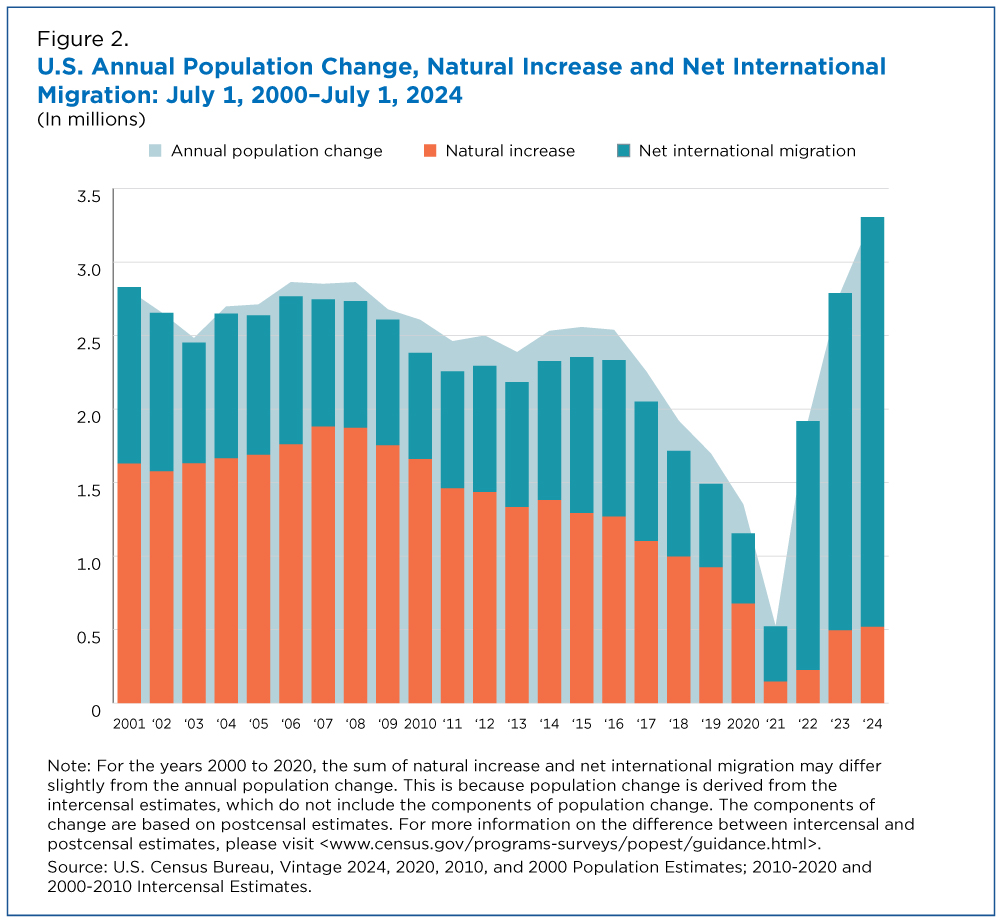
The three primary components driving population change are births, deaths, and net international migration. Each of these components acts as a powerful economic variable, influencing everything from long-term investment strategies to immediate consumer spending patterns.
The birth rate in the U.S. has been on a general decline for several decades. A sustained low birth rate has significant long-term financial implications, primarily concerning the future labor force and dependency ratios. Fewer births today mean fewer young workers entering the economy 20-25 years down the line, potentially leading to labor shortages, slower economic growth, and increased pressure on social security and Medicare systems as the proportion of retirees relative to workers grows. Conversely, industries catering to infants and young families might face shrinking markets.
Death rates are also critical. While improved healthcare and longevity are generally positive, an aging population means a greater demand for healthcare services, specialized housing, and retirement planning products. The “greying” of America poses challenges for pension funds and social security, requiring careful financial adjustments to ensure solvency for future generations. Industries focusing on elder care, pharmaceuticals, and wealth management for retirees stand to benefit, while others may need to adapt to a changing consumer base.
Finally, net international migration – the number of people entering the U.S. minus those leaving – plays a crucial role in offsetting declining birth rates and bolstering the working-age population. Immigration can inject vitality into the labor force, introduce new entrepreneurial spirit, and contribute to consumption. From a financial perspective, immigrants often fill critical labor gaps, particularly in sectors like agriculture, construction, and healthcare. They also contribute to the tax base and stimulate demand for housing, education, and various consumer goods. Changes in immigration policy or patterns can therefore have immediate and profound financial impacts on labor supply, economic growth, and specific industries.
Understanding these intertwined demographic forces is not merely an academic exercise; it’s a foundational requirement for any robust financial analysis or strategic economic decision in the United States.
Macroeconomic Impact: Population as a Financial Engine
The sheer number of people in a nation, and their demographic characteristics, act as a primary engine driving the macroeconomic landscape. Population dynamics influence national income, resource allocation, and government policy in profound ways that resonate across all financial sectors.
Labor Force Dynamics and Economic Productivity
At the heart of any economy is its labor force. The size and composition of the U.S. population directly determine the pool of available workers, which in turn influences economic productivity and Gross Domestic Product (GDP) growth. A growing working-age population generally provides a larger workforce, potentially leading to increased production, innovation, and higher economic output. However, it’s not just about numbers; the quality of the labor force – its education, skills, and health – is equally vital for enhancing productivity.
As demographics shift, the labor force faces challenges such as an aging workforce (potentially leading to fewer innovations, loss of institutional knowledge as experienced workers retire), and skill mismatches with evolving industries. From a financial perspective, businesses must continuously invest in training and technology to boost per-worker productivity. Policies related to education, vocational training, and workforce development become critical financial investments for the nation to maintain its competitive edge and sustain economic growth. Conversely, a declining or stagnant working-age population can lead to slower GDP growth, wage inflation due to labor scarcity, and increased automation as companies seek to offset human capital constraints.
Consumer Demand and Market Size
The population isn’t just a source of labor; it’s also the aggregate of all consumers whose spending fuels a significant portion of the economy. The total population size directly translates into the overall market size for goods and services. A larger population generally means greater consumer demand, supporting a wide array of industries from retail and automotive to entertainment and tourism.
Beyond the total number, demographic shifts profoundly influence what consumers demand. An aging population, for example, increases demand for healthcare, pharmaceuticals, assisted living, and retirement-related financial products. A younger, more diverse population might drive demand for technology, sustainable products, urban housing, and culturally specific goods and services. Businesses must constantly analyze these demographic trends to segment markets, develop relevant products, and tailor marketing strategies. Failure to adapt to changing consumer demographics can lead to financial stagnation or decline for companies. For investors, understanding these shifts can highlight growth sectors and identify industries facing headwinds.
Public Finance and Resource Allocation
The population directly impacts government finance and the allocation of public resources. A larger population generally necessitates greater public expenditure on infrastructure (roads, bridges, public transit), education, public safety, and healthcare. The tax base – the number of individuals and businesses contributing taxes – is directly tied to the population and its economic activity.
Demographic changes place specific strains and opportunities on public finance. An aging population, as mentioned, increases pressure on entitlement programs like Social Security and Medicare, requiring complex financial planning and potential policy adjustments to ensure their long-term viability. Rapid population growth in certain regions can strain local budgets, demanding significant investment in new schools, utilities, and housing. Conversely, population decline in other areas can lead to underutilized infrastructure and reduced local tax revenues. Governments must make difficult financial decisions about how to tax and spend, balancing current needs with long-term demographic trends, all while considering the national debt and economic stability. These decisions have ripple effects on bond markets, interest rates, and the overall investment climate.
Strategic Investing: Adapting to Demographic Shifts
For investors, population data is not abstract; it’s a critical tool for identifying future growth opportunities, managing risk, and making informed decisions across various asset classes. Demographic shifts dictate where capital will flow and which sectors will thrive or decline.
Real Estate and Infrastructure Investment
Perhaps nowhere are demographic impacts more visible than in real estate and infrastructure. Population growth or decline directly influences housing demand, property values, and the need for new commercial spaces. Regions experiencing net in-migration often see booming housing markets, rent increases, and opportunities for real estate development. Conversely, areas with persistent out-migration can face stagnating property values and declining demand.
Investors in real estate must analyze granular demographic data, looking beyond national averages to understand local population trends. Factors like household formation rates, age distribution (e.g., millennials moving into homeownership vs. boomers downsizing), and migration patterns are paramount. Infrastructure investments – spanning transportation, utilities, and telecommunications – are also heavily influenced by population dynamics. Growing urban centers require expanded public transit and smart city solutions, while aging populations necessitate retrofitting homes for accessibility. Investing in companies that provide these essential infrastructure services or are strategically located in high-growth demographic areas can yield significant returns.

Sectoral Opportunities: Healthcare, Technology, and Consumer Goods
Demographic shifts create distinct “sweet spots” and challenges for specific economic sectors. Understanding these can guide sectoral investment strategies.
-
Healthcare: An aging population unequivocally drives demand for healthcare services, pharmaceuticals, medical devices, and long-term care facilities. Investing in companies focused on geriatric care, chronic disease management, and innovative health technologies becomes a compelling strategy.
-
Technology: While often seen as universally beneficial, technology investments can be fine-tuned to demographic trends. For younger, digitally native populations, investments in social media, gaming, e-commerce, and fintech are pertinent. For an aging population, technology solutions that enhance independent living, telehealth, and personal safety offer substantial growth potential.
-
Consumer Goods & Services: As the population diversifies, so does consumer taste. Investments in companies that cater to specific ethnic groups, or those offering personalized and experiential goods over mass-market items, can capture growing niches. The rise of single-person households or smaller families also influences demand for housing size and food packaging, creating opportunities for adaptive businesses. Sustainability and ethical consumption, often championed by younger demographics, also represent a significant investment trend.
Capital Markets and Long-Term Planning
On a broader scale, population dynamics influence capital markets and long-term financial planning. The solvency of pension funds, for instance, relies heavily on the ratio of active contributors to retirees – a direct demographic consequence. As the population ages, these funds face pressure, necessitating careful management and potentially shifts in investment strategies to generate higher returns or reduce liabilities.
Furthermore, long-term investors need to consider the impact of demographic change on interest rates, inflation, and economic growth potential. A shrinking workforce could lead to lower potential GDP growth, which might translate into lower corporate earnings growth over the very long term. Conversely, a robust and growing working-age population, especially one augmented by skilled migration, can support higher economic growth and, consequently, stronger capital market performance. Understanding these underlying currents allows investors to position their portfolios for resilience and growth over multi-decade horizons.
Business Acumen: Leveraging Population Data for Growth
For businesses, population data is not merely background noise; it is actionable intelligence. Strategic business decisions, from market entry to product development and talent acquisition, are critically informed by demographic insights.
Market Segmentation and Product Development
A deep understanding of the U.S. population allows businesses to move beyond mass marketing to sophisticated market segmentation. Instead of viewing the “335 million” as a monolithic entity, companies can identify distinct demographic groups based on age, income, ethnicity, household composition, and geographic location. This precision enables the development of highly targeted products and services that resonate with specific consumer needs and preferences.
For example, an apparel company might target Gen Z with sustainable, customizable fashion, while simultaneously developing comfortable, easy-to-wear lines for an older demographic. A food manufacturer might create convenient single-serving meals for growing numbers of single households, alongside family-sized options for traditional families. By leveraging demographic data, businesses can optimize their product development cycles, reduce marketing waste, and foster stronger brand loyalty, ultimately translating into higher revenues and profitability. This also extends to pricing strategies and distribution channels, ensuring products reach the right consumers through the most effective means.
Workforce Strategy and Human Capital
The population is not just a market; it’s also the source of a company’s most vital asset: human capital. Businesses must align their workforce strategies with current and projected demographic realities to ensure they have the talent needed to compete and grow.
An aging workforce means that companies need robust succession planning strategies, knowledge transfer programs to capture the expertise of retiring employees, and potentially a greater focus on automation to offset labor shortages. Conversely, a younger, more diverse incoming workforce requires inclusive hiring practices, flexible work arrangements, and opportunities for continuous learning and development. Businesses operating in regions with population decline might face challenges in attracting and retaining talent, necessitating more aggressive recruitment efforts or considering remote work models. Understanding these trends allows companies to forecast labor costs, invest in appropriate training, and develop attractive employee value propositions that appeal to different demographic segments, ensuring a sustainable talent pipeline.
Regional Economic Development
The U.S. population is not evenly distributed, and its growth patterns vary significantly by region. Some states and metropolitan areas are experiencing rapid growth due to migration and economic opportunity, while others face stagnation or decline. For businesses, understanding these regional demographic shifts is crucial for decisions regarding location of operations, supply chain logistics, and identifying emerging markets.
Investing in areas with robust population growth can provide access to expanding labor pools and consumer bases. Conversely, businesses in regions with declining populations might need to re-evaluate their strategies, perhaps focusing on niche markets, consolidating operations, or exploring opportunities in other locales. Local demographic data can also highlight specific unmet needs, such as the demand for affordable housing in rapidly growing tech hubs, or healthcare services in areas with a high concentration of retirees. By closely monitoring regional population trends, businesses can make smarter capital expenditure decisions, optimize their geographical footprint, and contribute to, or benefit from, localized economic development initiatives.
Personal Financial Planning in a Demographic Context
For individuals, understanding the demographic landscape is equally vital for making informed personal financial decisions that will impact their wealth, careers, and quality of life.
Retirement and Healthcare Costs
The most direct impact of population dynamics on personal finance is felt in retirement planning and healthcare costs. As life expectancies increase and birth rates decline, the ratio of retirees to active workers (the dependency ratio) grows. This places significant strain on social security and Medicare systems, raising questions about their long-term sustainability and the level of benefits future retirees can expect.
Individuals must proactively adjust their retirement savings strategies, perhaps increasing contributions or considering alternative investment vehicles, to account for potential reductions in government benefits. Furthermore, an aging population means higher demand for healthcare, which often translates into rising healthcare costs. Planning for increasing out-of-pocket medical expenses, long-term care insurance, and understanding Medicare options becomes paramount for securing a comfortable retirement. Ignoring these demographic realities can lead to significant financial shortfalls in later life.
Career Choices and Education Investment
The shifting demographics of the U.S. labor force significantly influence career opportunities and the return on investment for education. As the population ages, demand for specific skills changes. For instance, younger generations entering the workforce might find strong demand in fields like artificial intelligence, renewable energy, and data science, where innovation is key. Conversely, traditional manufacturing or administrative roles might see declining demand due to automation or workforce shifts.
Investing in education and skills development needs to align with these evolving labor market demands. Choosing a career path that is projected to grow and remain relevant in a changing demographic landscape can lead to greater job security, higher earning potential, and a more robust personal financial trajectory. Continuous learning and adaptability become crucial financial assets in a dynamic economy shaped by demographic change.
Housing Decisions and Wealth Accumulation
Population trends heavily influence local housing markets, which are often the largest single asset for many individuals. Rapid population growth in certain urban or suburban areas can drive up housing prices, making homeownership less accessible but potentially offering significant appreciation for existing homeowners. Conversely, areas experiencing population decline may see stagnant or falling property values.
Individuals making housing decisions – whether to buy, rent, or where to live – must consider these demographic currents. For wealth accumulation, investing in real estate in areas with strong demographic tailwinds can be a powerful strategy. Understanding regional population shifts can also inform decisions about relocation for job opportunities or retirement, impacting not only housing costs but also local tax burdens and access to amenities. Personal financial planning, therefore, must integrate these micro- and macro-demographic analyses to optimize one’s housing and wealth-building strategies.
Conclusion
The question “What is the current population of the USA?” opens a Pandora’s Box of financial insights and implications. From the macroeconomic performance of the nation to the granular decisions made by businesses, and the personal financial planning of individuals, population dynamics are an indispensable lens through which to view economic reality. The U.S. population, currently around 335 million and constantly evolving, is more than just a number; it’s the living fabric that dictates labor supply, fuels consumer demand, shapes public finance, and drives investment trends.
For astute financial professionals, strategic investors, visionary entrepreneurs, and prudent individuals, a continuous and nuanced understanding of these demographic shifts is not optional—it is essential. It enables the identification of emerging opportunities, the mitigation of potential risks, and the crafting of resilient financial strategies that can navigate the ever-changing landscape of the American economy. As the U.S. population continues its dynamic journey, its financial ripple effects will undoubtedly remain a central theme for all who seek prosperity and stability.
aViewFromTheCave is a participant in the Amazon Services LLC Associates Program, an affiliate advertising program designed to provide a means for sites to earn advertising fees by advertising and linking to Amazon.com. Amazon, the Amazon logo, AmazonSupply, and the AmazonSupply logo are trademarks of Amazon.com, Inc. or its affiliates. As an Amazon Associate we earn affiliate commissions from qualifying purchases.