
In the vast and ever-evolving landscape of digital technology, data is the fundamental building block. From complex enterprise systems to simple mobile applications, the ability to store, transfer, and interpret data efficiently is paramount. Among the many formats developed for this purpose, XML stands out as a venerable and enduring standard. XML, which stands for Extensible Markup Language, is a markup language much like HTML, but with a fundamentally different purpose. While HTML is designed to display data, XML is designed to describe data, providing a framework for creating documents that are both human-readable and machine-readable, making it a cornerstone for data exchange and storage across disparate systems.
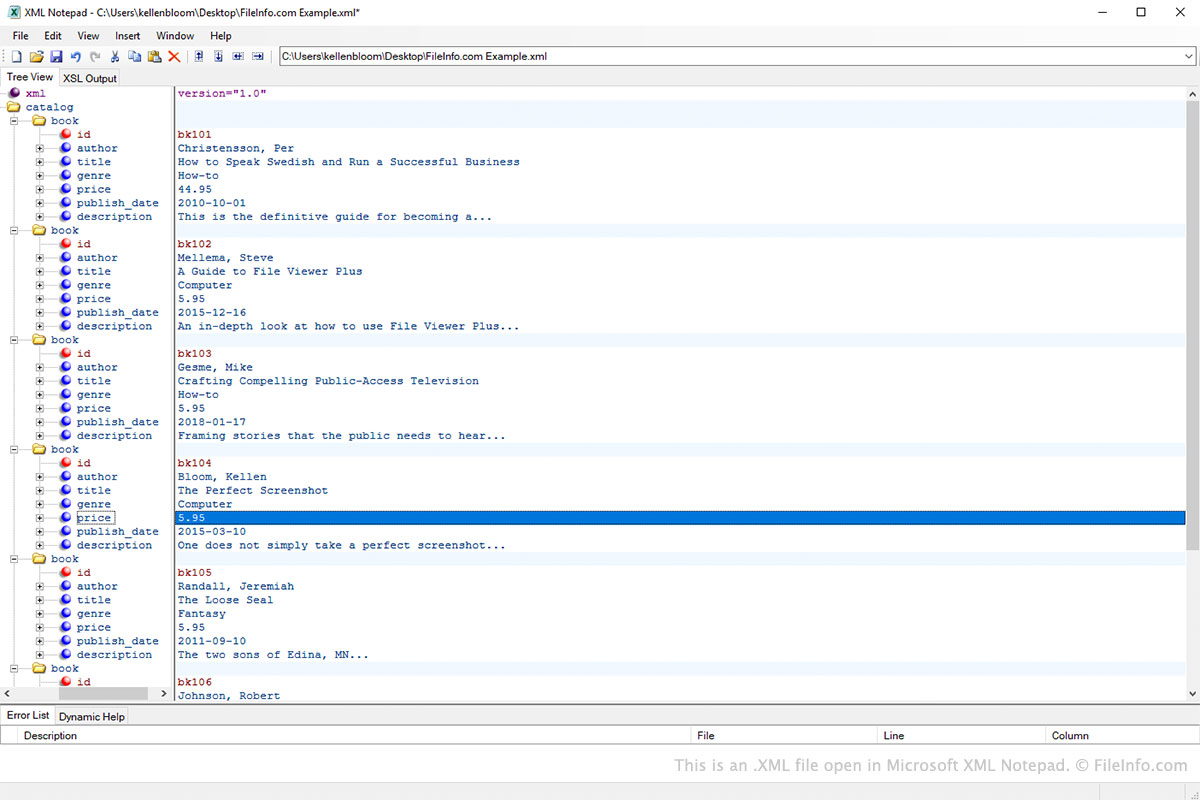
Unlike HTML, which uses predefined tags (like <p> for paragraph or <h1> for heading), XML allows users to define their own tags. This “extensibility” is key to its power, as it means XML is not limited to a fixed set of tags but can be customized to describe virtually any type of information. This adaptability has cemented its role in a multitude of applications, from web services and configuration files to content syndication and document storage. Understanding XML is crucial for anyone delving into the intricacies of modern software development, data management, and system interoperability.
The Core Concept: Understanding XML’s Foundation
At its heart, XML is a set of rules for encoding documents in a format that is both human-readable and machine-readable. It is a meta-language, meaning it is a language for describing other languages. This core characteristic empowers developers and data architects to create custom markup languages tailored to specific data structures and domains.
Definition and Purpose
XML was developed by the World Wide Web Consortium (W3C) and released in 1998, primarily as a simplified subset of SGML (Standard Generalized Markup Language). Its main purpose is to enable the sharing of structured data across different information systems, particularly over the internet. Before XML, exchanging complex data between applications often involved proprietary formats or cumbersome conversion processes. XML aimed to solve this by providing a universal, platform-independent way to encapsulate data.
Imagine you have two different software applications, perhaps one for inventory management and another for sales tracking, built by different companies using different programming languages and databases. For these applications to communicate and share product information or customer orders, they need a common language. XML provides that language, allowing data to be structured and exchanged in a way that both systems can understand and process, regardless of their underlying technologies. It focuses on what the data is, not how it should be displayed.
Key Characteristics of XML
Several fundamental characteristics define XML and contribute to its widespread adoption:
-
Self-Describing: XML documents contain metadata within their tags, describing the data they hold. For instance,
<book><title>The Hitchhiker's Guide to the Galaxy</title></book>clearly indicates that “The Hitchhiker’s Guide to the Galaxy” is the title of a book. This makes XML files largely self-explanatory. -
Extensibility: As its name suggests, XML is extensible. Users can define their own tags and document structures, making it highly adaptable to any type of data or domain. There’s no predefined fixed set of tags to use, unlike HTML.
-
Platform Independent: XML is purely text-based. This means an XML document created on a Windows machine can be easily read and processed on a Linux server or a macOS desktop, making it ideal for heterogeneous computing environments.
-
Human-Readable: While designed for machines, XML’s syntax is relatively straightforward and uses familiar tag-based structures, making it understandable to humans, especially developers, who need to debug or inspect data.
-
Strict Syntax: XML enforces strict rules regarding its structure (e.g., every opening tag must have a closing tag, tags are case-sensitive). This strictness, while sometimes perceived as rigid, ensures consistency and makes it easier for machines to parse and process XML documents reliably.
The Structure of an XML Document
Understanding the fundamental syntax and structure of an XML document is crucial for anyone working with this technology. XML documents adhere to a strict set of rules to ensure they are “well-formed” and can be processed by parsers.
Elements, Tags, and Attributes
The building blocks of an XML document are elements, tags, and attributes.
-
Elements: An element represents a logical piece of data. It consists of a start tag, an end tag, and content in between. For example,
<product_name>Laptop X</product_name>is an element whereproduct_nameis the element name and “Laptop X” is its content. -
Tags: Tags are the markers that delimit elements. A start tag looks like
<element_name>and an end tag looks like</element_name>. XML tags are case-sensitive (<Product>is different from<product>). -
Attributes: Attributes provide additional information about an element and are placed within the start tag. They are name-value pairs. For instance,
<product category="electronics">Laptop X</product>has two attributes:idwith value “123” andcategorywith value “electronics”. Attributes are generally used for metadata about an element, while the element’s content describes its primary data.
Elements can be nested within other elements, creating a hierarchical tree-like structure, which is characteristic of XML.
Well-Formed vs. Valid XML
These two terms are fundamental to XML processing:
-
Well-Formed XML: An XML document is “well-formed” if it adheres to the basic syntax rules of XML. This means:
-
It has exactly one root element.
-
Every start tag has a corresponding end tag.
-
Tags are properly nested (e.g.,
<a><b></b></a>is correct,<a><b></a></b>is not). -
Attribute values are quoted.
-
Special characters (like
<or&) are properly escaped (<and&).
-
-
Valid XML: A well-formed XML document is “valid” if, in addition to being well-formed, it conforms to a specific XML schema or DTD (Document Type Definition). A schema defines the allowed structure, elements, and attributes for a particular type of XML document. For example, a schema for a “book” XML file might specify that every book must have a title, an author, and an ISBN, and that the ISBN must be a number. Validation ensures that the data adheres to a predefined business or application logic.
The XML Declaration and Root Element
Every XML document typically starts with an XML declaration, though it’s optional. It looks like: <?xml version="1.0" encoding="UTF-8"?>. This declaration specifies the XML version being used (usually “1.0”) and the character encoding (commonly “UTF-8”).
Following the declaration (or as the very first element if no declaration is present), every XML document must have exactly one root element. This root element encapsulates all other elements in the document, forming the single parent node from which all other elements branch off, creating the document’s tree structure.
Common Applications and Use Cases of XML
XML’s flexibility and robust structure have led to its adoption across a wide spectrum of technological domains. Its ability to describe data independently of its display or processing mechanism makes it an invaluable tool for interoperability and structured data management.
Data Exchange and Interoperability
One of XML’s most significant contributions is facilitating data exchange between disparate systems. Whether it’s two applications developed in different programming languages, or systems running on different operating systems, XML provides a common language for them to communicate.
-
Web Services (SOAP): Early web services heavily relied on XML, particularly with the SOAP (Simple Object Access Protocol) standard. SOAP messages are essentially XML documents exchanged over HTTP, defining how applications can call remote procedures and exchange structured information. While RESTful APIs often use JSON today, SOAP remains prevalent in enterprise environments, especially where strict contracts and robust security are required.
-
B2B Data Exchange: In business-to-business (B2B) transactions, XML is frequently used to exchange purchase orders, invoices, and shipping notices between companies. Industry-specific XML standards (like XBRL for financial reporting or HL7 for healthcare) ensure standardized communication across sectors.
Configuration Files
Many software applications and systems use XML to store configuration settings. Instead of hardcoding values or using simple key-value pair files, XML offers a structured, hierarchical way to manage complex configurations.

-
Application Settings: Java EE applications often use
web.xmlfor web application deployment descriptors. Microsoft’s .NET framework extensively usesapp.configorweb.configfiles, all of which are XML-based, to define settings like database connection strings, logging configurations, and security policies. -
Build Automation Tools: Tools like Apache Maven or Ant use XML files (
pom.xmlfor Maven) to define project structure, dependencies, build processes, and deployment instructions. This allows for declarative, version-controlled configuration of complex software projects.
Document Storage and Content Management
While not a database itself, XML’s ability to describe hierarchical data makes it suitable for storing document-oriented content, especially in environments where flexibility in schema is desired or where content needs to be transformed for various outputs.
-
Content Management Systems (CMS): Some CMS platforms use XML internally to store content, separating the content from its presentation. This allows the same content to be easily rendered in different formats (e.g., web page, PDF, mobile app) by applying different stylesheets.
-
Archiving: XML’s human-readable and platform-independent nature makes it an excellent format for long-term data archiving, ensuring that data remains accessible and interpretable even as technologies evolve.
Data Syndication (RSS/Atom)
XML is the backbone of widely used content syndication formats like RSS (Really Simple Syndication) and Atom. These formats allow websites to publish frequently updated information, like blog posts or news headlines, in a standardized way that can be subscribed to and read by various news readers or aggregators. Each RSS/Atom feed is an XML document describing a list of items, each with a title, link, description, and other metadata.
Advantages and Disadvantages of Using XML
Like any technology, XML comes with its own set of strengths and weaknesses that influence its suitability for particular tasks. A balanced understanding of these pros and cons is essential for making informed architectural decisions.
The Benefits: Platform Independence, Extensibility, Human Readability
-
Platform and Language Independence: This is perhaps XML’s greatest strength. Being a text-based format, XML can be generated and parsed by virtually any programming language on any operating system. This makes it ideal for data exchange in heterogeneous environments where different technologies need to communicate.
-
Self-Describing and Human-Readable: The tag-based structure with descriptive element names makes XML documents largely understandable even without prior knowledge of their specific schema. This aids in debugging, troubleshooting, and collaboration among developers.
-
Extensibility: The ability to define custom tags and structures means XML can be adapted to represent almost any kind of structured data. This makes it incredibly versatile and future-proof, as new data requirements can be accommodated without breaking existing parsers (provided they handle unknown elements gracefully).
-
Strong Tooling and Standards: A rich ecosystem of tools, parsers, validators (like DTDs and XSDs), and transformation languages (XSLT) exists for XML. This mature tooling simplifies development and processing.
-
Hierarchy Support: XML naturally supports hierarchical data structures, which are common in many real-world datasets (e.g., an order containing multiple items, each with its own properties).
The Drawbacks: Verbosity, Parsing Overhead, Steeper Learning Curve
-
Verbosity: XML can be very verbose compared to other data formats like JSON or binary formats. The repeated opening and closing tags, along with potentially long element names, result in larger file sizes. This verbosity can increase storage requirements, network bandwidth usage, and processing time, especially for large datasets.
- Example:
{ "name": "Alice" }(JSON) vs.<person><name>Alice</name></person>(XML).
- Example:
-
Parsing Overhead: Due to its text-based nature and the need to parse tags, XML parsing can be computationally more intensive than parsing binary formats or simpler text formats like CSV. For performance-critical applications with massive data volumes, this overhead can be a significant concern.
-
Steeper Learning Curve (for advanced features): While basic XML syntax is straightforward, mastering advanced concepts like XML Schema Definitions (XSDs) for complex validation, DTDs, XPath for querying, and XSLT for transformations can involve a considerable learning curve.
-
Lack of Native Data Types: Unlike some programming languages or JSON, XML elements do not inherently define data types (e.g., integer, boolean). While XSDs can add this capability, the core XML specification itself treats all content as character data, requiring explicit type conversions in applications.
-
Security Concerns (XML External Entities – XXE): Improperly configured XML parsers can be vulnerable to XML External Entity (XXE) attacks, which can lead to information disclosure, denial of service, or server-side request forgery. Developers must be aware of and mitigate these potential risks.
Working with XML: Tools and Technologies
Effectively utilizing XML in software development requires familiarity with a range of supporting tools and technologies. These help in creating, validating, transforming, and querying XML documents.
XML Parsers and Processors
To read and interpret XML documents, applications use XML parsers. A parser reads the XML document and builds an in-memory representation (like a Document Object Model – DOM) or generates events (like SAX parsers) that an application can respond to.
-
DOM (Document Object Model): A DOM parser reads the entire XML document into memory, creating a tree structure that represents the document’s elements, attributes, and text. This allows for easy navigation and manipulation of the document but can be memory-intensive for very large files.
-
SAX (Simple API for XML): A SAX parser is an event-driven, stream-based parser. It reads the XML document sequentially and generates events (e.g., “start of element,” “end of element,” “found text”) as it encounters different parts of the document. SAX is more memory-efficient as it doesn’t load the entire document into memory, making it suitable for large files or environments with limited resources.
-
StAX (Streaming API for XML): StAX is a pull-parser API, offering a middle ground between DOM and SAX. The application “pulls” events from the parser as needed, giving more control than SAX while still being memory-efficient.
Most modern programming languages (Java, Python, C#, JavaScript, PHP, etc.) come with built-in or readily available libraries for XML parsing and manipulation.
XML Schema Definitions (XSD) and DTDs
To ensure the validity of XML documents against a predefined structure, developers use schema languages:
-
DTD (Document Type Definition): DTDs were the original way to define the legal building blocks of an XML document. They specify which elements can appear in a document, their order, their attributes, and their data types. However, DTDs have limitations, such as not being written in XML itself, limited data typing, and no support for namespaces.
-
XSD (XML Schema Definition): XSD is the successor to DTDs and is the preferred schema language for XML. XSDs are themselves XML documents, offering more powerful features like richer data typing (e.g., integers, booleans, dates), namespace support, and greater extensibility. They allow for much more precise validation of XML document structure and content.
Validating an XML document against an XSD ensures that the data conforms to the expected structure and data types, which is crucial for data integrity and interoperability.
XSLT for Transformations
XSLT (Extensible Stylesheet Language Transformations) is a language for transforming XML documents into other XML documents, HTML, plain text, or other formats. It uses XPath to navigate and select parts of the XML document, and then applies transformation rules to restructure or reformat the data.
-
Use Cases: XSLT is commonly used to:
-
Transform XML data into HTML for display in web browsers.
-
Convert XML data from one schema to another (e.g., converting an older version of an XML document to a newer one).
-
Extract specific data from an XML document and output it in a different format.
-
Generate reports or other structured documents from raw XML data.
-
XSLT processors interpret XSLT stylesheets and apply them to source XML documents to produce the desired output.
XML Editors and IDE Support
Working with XML is greatly facilitated by specialized tools and IDEs:
-
Dedicated XML Editors: Applications like Oxygen XML Editor or Altova XMLSpy provide advanced features for XML editing, including syntax highlighting, validation against schemas, XSLT debugging, XPath evaluation, and graphical schema design.
-
IDE Integration: Most modern Integrated Development Environments (IDEs) like Visual Studio Code, IntelliJ IDEA, Eclipse, or Visual Studio offer excellent support for XML. This includes syntax highlighting, auto-completion, real-time validation, and integration with schema definitions and transformation tools. This makes it easier for developers to write, manage, and debug XML files within their development workflows.

Conclusion
XML, or Extensible Markup Language, remains a foundational technology in the digital world. Despite the rise of alternatives like JSON for web APIs, XML continues to be indispensable in numerous areas, from enterprise-level data exchange and configuration management to document storage and content syndication. Its core principles of self-description, extensibility, and platform independence have ensured its longevity and relevance. While its verbosity and the overhead associated with parsing can be a consideration, the robust ecosystem of tools, standards, and established use cases make understanding and working with XML a vital skill for anyone navigating the complexities of modern technology and data management. As systems become increasingly interconnected, the ability to define, share, and process structured data effectively will only grow in importance, securing XML’s place in the tech landscape for years to come.
aViewFromTheCave is a participant in the Amazon Services LLC Associates Program, an affiliate advertising program designed to provide a means for sites to earn advertising fees by advertising and linking to Amazon.com. Amazon, the Amazon logo, AmazonSupply, and the AmazonSupply logo are trademarks of Amazon.com, Inc. or its affiliates. As an Amazon Associate we earn affiliate commissions from qualifying purchases.