
In the rapidly evolving landscape of digital finance, Ripple stands as a unique entity that distinguishes itself from the speculative nature of many traditional cryptocurrencies. While Bitcoin was envisioned as a decentralized alternative to fiat currency and Ethereum as a programmable playground for decentralized applications, Ripple was built with a specific financial objective: to transform the way money moves across borders. For investors and financial professionals, understanding Ripple requires a shift in perspective, moving away from the concept of a “digital coin” and toward the concept of a global settlement infrastructure.
To understand Ripple, one must first clarify the distinction between Ripple the company and XRP the digital asset. Ripple Labs is a technology company that develops software for the financial sector, primarily focusing on improving the efficiency of cross-border payments. XRP, on the other hand, is the independent digital asset that runs on the XRP Ledger (XRPL). This distinction is critical for any investor looking to integrate Ripple into a diversified financial portfolio, as the success of the company’s enterprise software is often, though not always, a catalyst for the utility and demand of the underlying asset.

The Mechanics of Ripple: A Financial Perspective
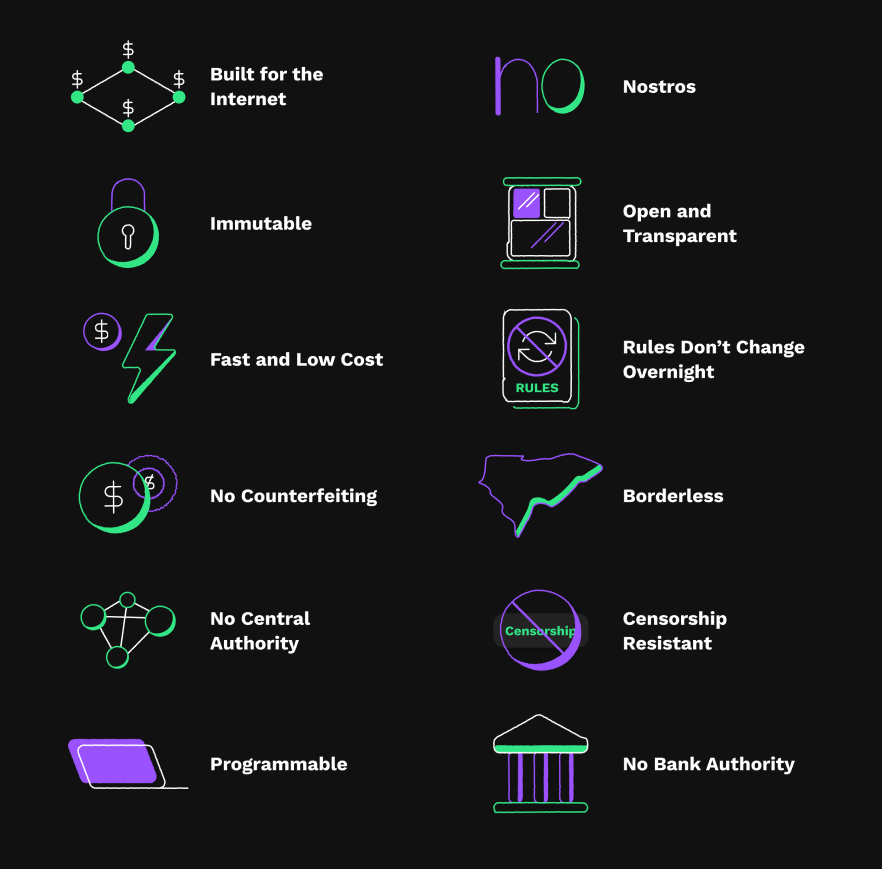
The core value proposition of Ripple lies in its ability to solve the “pre-funding” problem in international banking. Currently, the global financial system relies on a decades-old framework known as the correspondent banking system. When a bank in the United States wants to send money to a bank in Southeast Asia, it must maintain a pre-funded account (a Nostro account) in the destination country’s local currency. This ties up trillions of dollars in dormant capital worldwide—capital that could otherwise be invested or used for operational growth.
The XRP Ledger and Consensus Protocols
Unlike Bitcoin, which relies on a Proof-of-Work (PoW) mechanism that consumes vast amounts of energy to secure its network, the XRP Ledger utilizes a unique consensus protocol. This system does not require mining. Instead, a group of trusted validator nodes agrees on which transactions are valid. From a financial standpoint, this translates to incredible efficiency. Transactions on the XRP Ledger settle in roughly three to five seconds, compared to the ten minutes required for Bitcoin or the several days required for traditional bank wires.
This efficiency is not just about speed; it is about cost. The transaction fees on the Ripple network are negligible, often a fraction of a cent. For a business or an individual moving large sums of money, the elimination of intermediary fees and the reduction of currency conversion spreads represent a significant improvement in the bottom line.
Scalability and Institutional Integration
From a scalability perspective, the XRP Ledger is capable of handling over 1,500 transactions per second, putting it on par with major payment processors like Visa. For institutional investors, this throughput is a key metric. A financial tool is only as good as its reliability under heavy load. Ripple’s focus on enterprise-grade stability has made it a preferred partner for hundreds of financial institutions worldwide, including banks, payment providers, and digital asset exchanges.
XRP as a Strategic Investment Asset
When evaluating XRP as a component of a personal finance or investment strategy, it is essential to look at its market dynamics. XRP is consistently ranked among the top cryptocurrencies by market capitalization. Its value is driven by a combination of speculative retail interest and, more importantly, its growing utility as a “bridge currency” in international settlements.
Market Liquidity and Volatility
Liquidity is the lifeblood of any financial asset. XRP enjoys high liquidity because it is listed on almost every major global exchange. For the investor, this means that entering and exiting positions is relatively seamless, even during periods of high market activity. However, like all digital assets, XRP is subject to significant volatility. Its price can be influenced by macroeconomic trends, regulatory announcements, and shifts in the broader cryptocurrency market sentiment.
A sophisticated investment approach to XRP involves understanding its supply schedule. Unlike Bitcoin, which has a maximum supply of 21 million coins that are slowly released through mining, the total supply of 100 billion XRP was created at its inception. A significant portion of this supply is held in escrow by Ripple Labs, with a set amount released monthly to provide transparency and prevent market flooding. For investors, this predictable release schedule is a vital piece of data for long-term valuation modeling.
Utility-Driven Value vs. Speculation
The primary bull case for XRP is its utility. In a world where central banks are exploring Central Bank Digital Currencies (CBDCs), Ripple has positioned itself as a neutral intermediary. If XRP becomes the standard bridge for converting one CBDC to another, the demand for the asset could shift from speculative trading to institutional necessity. This “utility floor” is what many financial analysts point to when distinguishing XRP from “meme coins” or assets that lack a clear business application.
The Role of Ripple in Modernizing Global Finance
Ripple’s primary product suite, formerly known as RippleNet and now increasingly integrated under the umbrella of “Liquidity Hub” and “Payments,” represents a paradigm shift in business finance. These tools allow companies to source liquidity and execute payments in real-time, regardless of the destination or the currency pair involved.
On-Demand Liquidity (ODL)
The most significant financial innovation offered by Ripple is On-Demand Liquidity (ODL). ODL uses XRP as a bridge between two fiat currencies. For example, a payment provider in Mexico might want to send funds to a partner in the Philippines. Instead of holding Philippine Pesos in a pre-funded account, the provider can buy XRP with Mexican Pesos, send the XRP instantly to the destination, and have it converted into Philippine Pesos on the other end.
The financial implications are profound. By using ODL, businesses can free up capital that was previously trapped in foreign accounts. This increases capital efficiency, allowing for more agile business operations and the ability to reinvest those funds into core business activities. For the end-user, this often results in lower fees for remittances, making it a powerful tool for financial inclusion in developing economies.
Global Partnerships and the Network Effect
The value of a financial network is often determined by the number of participants. Ripple has aggressively pursued partnerships with established financial giants such as Santander, SBI Holdings, and various regional banks across the Middle East and Asia. These partnerships serve two purposes: they validate the technology and they expand the network’s reach. As more corridors are opened and more banks join the ecosystem, the network effect takes hold, making it increasingly beneficial for new players to adopt the system.
Risk Management and the Regulatory Landscape
No financial analysis of Ripple is complete without addressing the regulatory challenges that have defined its recent history. The intersection of emerging technology and legacy legal frameworks often creates friction, and Ripple has been at the center of this storm, particularly in the United States.
The SEC vs. Ripple Legal Battle
The U.S. Securities and Exchange Commission (SEC) filed a landmark lawsuit against Ripple Labs in late 2020, alleging that the sale of XRP constituted an unregistered securities offering. This legal battle has been one of the most closely watched events in the financial world. The outcome of this case has massive implications for how digital assets are classified and regulated globally.
From an investment standpoint, the lawsuit introduced a unique risk profile for XRP. While many other cryptocurrencies faced general market risks, XRP investors had to account for specific legal outcomes. However, recent court rulings that provided partial clarity—distinguishing between institutional sales and programmatic sales on exchanges—have been viewed by many in the financial community as a step toward a more stable regulatory environment for the asset.
Portfolio Diversification and Risk Mitigation
Given its unique positioning, XRP is often used by investors as a diversifier within a crypto-asset portfolio. Because its price action can sometimes decouple from Bitcoin based on Ripple-specific news (such as new banking partnerships or legal updates), it offers a different risk-reward profile.
However, risk management remains paramount. Financial advisors typically recommend that exposure to volatile digital assets like XRP be limited to a small percentage of a total investment portfolio. Utilizing strategies such as dollar-cost averaging (DCA) can help mitigate the impact of short-term price swings, while keeping a close eye on the global regulatory environment ensures that an investor is not blindsided by sudden shifts in policy.
The Future of Ripple in the Fintech Ecosystem
As we look toward the future of money, the line between traditional banking and digital assets continues to blur. Ripple is positioned at the very center of this convergence. Its focus on solving real-world financial problems—liquidity, speed, and cost—gives it a pragmatic edge in an industry often criticized for being overly theoretical.
For the modern investor, Ripple represents more than just a cryptocurrency; it represents a bet on the modernization of the global financial plumbing. Whether through its role in the burgeoning CBDC market or its continued expansion into the multi-trillion-dollar cross-border payment industry, Ripple’s trajectory is inextricably linked to the future of how value is moved and managed across the globe. Understanding the nuances of its technology, its market role, and its regulatory environment is essential for anyone looking to navigate the complexities of 21st-century finance.
aViewFromTheCave is a participant in the Amazon Services LLC Associates Program, an affiliate advertising program designed to provide a means for sites to earn advertising fees by advertising and linking to Amazon.com. Amazon, the Amazon logo, AmazonSupply, and the AmazonSupply logo are trademarks of Amazon.com, Inc. or its affiliates. As an Amazon Associate we earn affiliate commissions from qualifying purchases.