
The circumference equation is a cornerstone of geometry, providing the means to calculate the distance around a circle. While seemingly a basic mathematical concept, its practical applications permeate nearly every facet of modern technology, from the intricate design of microprocessors to the rendering of fluid user interfaces. Understanding this fundamental equation is crucial for anyone involved in hardware engineering, software development, UI/UX design, and the broader fields of digital innovation where precision and circular mechanics are paramount.
The Fundamental Equation and Its Digital Relevance
At its core, the circumference equation offers a precise measurement of the perimeter of a circular object. In a world increasingly shaped by digital designs and automated manufacturing, this mathematical truth becomes an indispensable tool, driving the creation and optimization of countless tech products and software solutions.

Defining Circumference in a Digital World
Circumference, represented by ‘C’, is the total distance along the edge of a circle. Unlike linear measurements for squares or rectangles, which are straightforward to visualize, the curved nature of a circle necessitates a unique approach. In technology, from the circular base of a robotic vacuum cleaner to the perfectly rounded icon on a smartphone screen, understanding and accurately calculating circumference is not just academic—it’s foundational for functional design and performance. Whether engineers are designing a circular track for a hard drive’s read/write head or graphic designers are ensuring seamless anti-aliasing for circular shapes in a game engine, the concept of circumference is continuously applied.
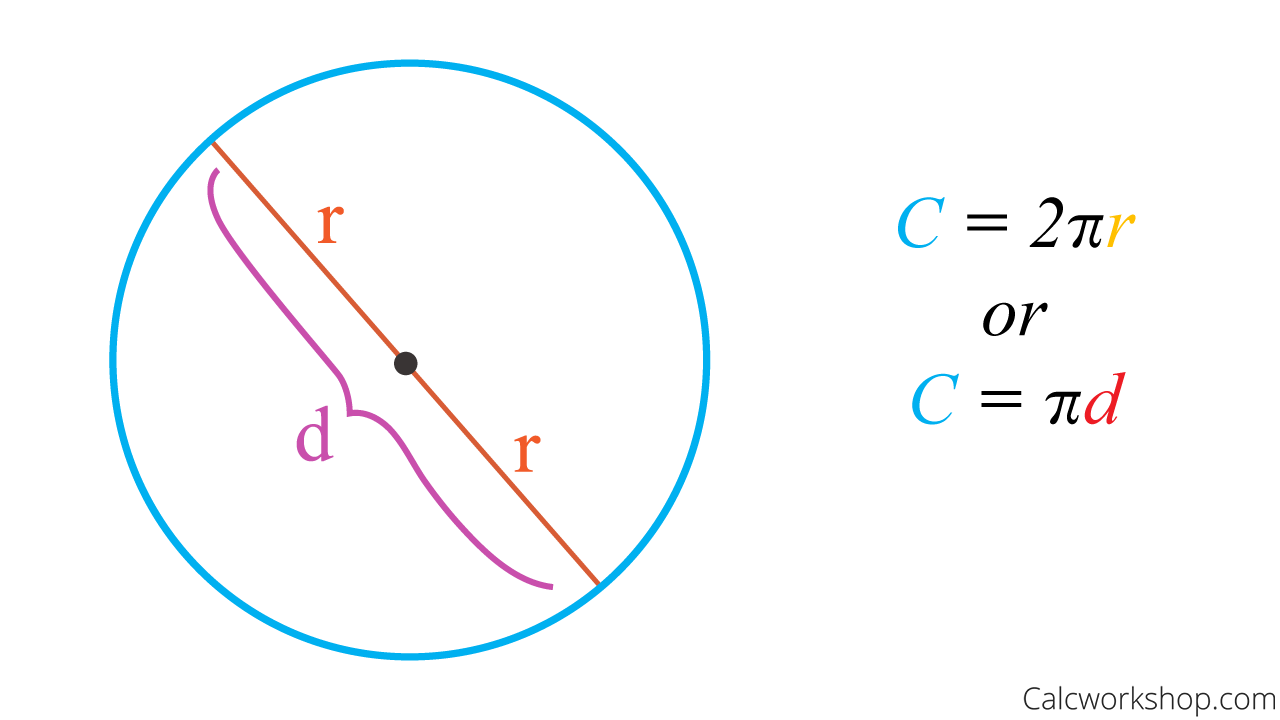
Unpacking the Formula: C = 2πr or C = πd
The elegance of the circumference equation lies in its simplicity and directness. There are two primary forms, both yielding the same result:
- C = 2πr: This form uses the radius (‘r’), which is the distance from the center of the circle to any point on its edge. Multiplying the radius by two effectively gives you the diameter, making it interchangeable with the second form. This version is particularly useful in scenarios where the central pivot or axis is a primary reference point, common in rotating components like gears, motors, or disk drives where the radius from the center of rotation is a key parameter.
- C = πd: This form uses the diameter (‘d’), which is the distance across the circle passing through its center. The diameter is simply twice the radius (d = 2r). This version is often preferred when the overall span of a circular object is the most readily available or relevant measurement, such as specifying the size of a circular display, a drone propeller, or the footprint of a circular sensor.
Both equations clearly demonstrate that the circumference is directly proportional to the radius or diameter. Doubling the radius or diameter will double the circumference, a linear relationship that simplifies scaling and design adjustments in tech projects.
The Significance of Pi (π) in Tech Calculations
Central to both circumference equations is the mathematical constant Pi (π). Approximately 3.14159, Pi represents the ratio of a circle’s circumference to its diameter. It’s an irrational number, meaning its decimal representation never ends and never repeats, making it a source of endless fascination and computational challenge. In technology, the precision required for Pi can vary significantly.
For many everyday tech applications—like estimating material for a circular enclosure or rough UI layout—a simplified Pi (e.g., 3.14) might suffice. However, in critical engineering fields such as aerospace, precision manufacturing of optical lenses, or advanced robotics, where even microscopic deviations can lead to catastrophic failures, Pi must be calculated to many more decimal places using sophisticated algorithms and computing power. Software libraries and hardware floating-point units are specifically designed to handle Pi with high accuracy, ensuring that digital models and physical prototypes align perfectly with theoretical calculations. The ongoing computation of Pi to billions of digits also serves as a benchmark for processor performance and computational efficiency in supercomputing.
Applications of Circumference in Technology and Software
The practical applications of the circumference equation are vast and varied across the tech landscape, demonstrating its fundamental role in both the physical and digital realms.
Hardware Design and Manufacturing
In hardware engineering, circumference is an indispensable tool.
- Gears and Rotational Systems: Designing gears, pulleys, and sprockets requires precise circumference calculations to ensure correct mesh, speed ratios, and power transmission in robotics, automated machinery, and even consumer electronics like printers or optical drives.
- Disk Drives and Storage: The geometry of hard disk drives (HDDs) and optical discs (CDs, DVDs, Blu-rays) is inherently circular. Circumference calculations are crucial for determining data track lengths, storage capacity, and the rotational speeds required for optimal read/write operations.
- Smartwatches and Wearables: The design of circular watch faces, bezels, and the internal components of smartwatches heavily relies on circumference for aesthetic appeal, ergonomic fit, and the efficient arrangement of sensors and circuitry.
- Drones and Aerospace: Propellers, fan blades, and the circular airframes of certain drones or aircraft components use circumference in their aerodynamic design and manufacturing to optimize lift, thrust, and stability.
- Circular Sensors and Antennas: Many types of sensors (e.g., pressure, temperature, light sensors) and antennas (e.g., parabolic dishes, circular patch antennas) have circular geometries where circumference calculations are vital for their operational range and efficiency.
Software Development and UI/UX Design
The digital world, despite its abstract nature, is also heavily influenced by circular geometry.
- Rendering Graphics: Game engines, CAD software, and graphic design tools use circumference equations to accurately render circles, arcs, and other curved shapes. Anti-aliasing algorithms, which smooth the jagged edges of digital curves, subtly rely on these geometric principles to create visually pleasing outputs.
- Animation Paths: Animating objects along circular or arcing paths in software applications, video games, or motion graphics requires computing points along a circumference. This ensures fluid, natural-looking movements for elements like rotating menus, orbiting objects, or character animations.
- Data Visualization: Circular charts like pie charts, radar charts, and gauges are common in data visualization dashboards. Circumference calculations determine the lengths of arcs, segments, and labels, allowing developers to present complex data in an intuitive and scalable manner.
- Circular Progress Bars and Loaders: These common UI elements visually indicate progress by filling a circular path. The circumference equation helps developers define the length of the arc that needs to be drawn based on the completion percentage, providing clear feedback to users.
IoT and Smart Devices
The rapidly expanding realm of the Internet of Things often involves compact, aesthetically driven devices where efficient use of space and form factor are critical.
- Wearable Tech Enclosures: From smart rings to fitness trackers, many IoT wearables feature circular designs. Circumference guides the design of outer casings, ensuring internal components fit precisely and devices are comfortable for users.
- Smart Home Hubs: Circular smart speakers or display hubs leverage circumference in their industrial design for optimal sound dispersion, button placement, and aesthetic integration into home environments.
- Sensor Placement: When designing smart environmental sensors or proximity detectors, the circular range or optimal placement of components within a circular enclosure often relies on an understanding of circumference.
Precision and Optimization in Tech with Circumference
The ability to accurately apply the circumference equation is not just about measuring; it’s about achieving high levels of precision and optimizing performance in technological systems.
Engineering Accurate Components
In advanced manufacturing, particularly with CNC machining and 3D printing, highly precise circular dimensions are essential. For example, the precise circumference of a turbine blade’s root or a microscopic circular component in a MEMS device dictates its fit, functionality, and longevity. Errors in circumference calculations, even minute ones, can lead to tolerance stack-ups that render expensive components unusable or cause system failures. Quality control in tech manufacturing heavily relies on verifying these geometric accuracies.
Optimizing Performance through Geometric Understanding
Understanding circumference contributes directly to optimizing performance. Consider a rotating hard drive platter: the data transfer rate at the outer edge is higher than near the center due to the greater circumference (and thus linear speed) at the same angular velocity. Engineers leverage this knowledge to optimize data layout and access patterns. Similarly, in wireless communication, the circumference of a circular antenna array can be optimized to enhance signal strength and directionality. In robotics, the circumference of a wheel directly impacts how far a robot travels per rotation, which is critical for navigation and odometry.
Computational Geometry and Algorithmic Efficiency
At a higher level, computational geometry, a field critical to computer graphics, robotics, and geographic information systems (GIS), frequently employs circumference and other circular calculations. Algorithms that detect collisions between circular objects, calculate the shortest path around obstacles, or perform pattern recognition often use circumference as a fundamental parameter. Optimizing these algorithms for speed and resource efficiency often involves clever ways to compute and manipulate circular dimensions, reducing computational overhead in complex simulations and real-time applications.
Learning and Implementing Circumference in a Tech Career
For aspiring and current tech professionals, a solid grasp of geometric fundamentals like the circumference equation is more than just a theoretical requirement—it’s a practical asset.
Essential Skill for Engineers and Developers
Whether one is a mechanical engineer designing new hardware, a software engineer developing graphical user interfaces, a data scientist visualizing information, or a robotics engineer programming autonomous systems, the circumference equation will inevitably arise. It forms part of the core mathematical toolkit necessary to translate abstract ideas into tangible, functional technology. Proficiency in applying this equation, often programmatically, is a hallmark of a capable tech professional.

Resources for Further Exploration
Modern tech education and development offer numerous avenues for mastering these concepts. Programming languages like Python, Java, and C++ feature built-in math libraries that provide precise values for Pi and functions for various geometric calculations. CAD (Computer-Aided Design) software packages like AutoCAD, SolidWorks, and Fusion 360 integrate these equations seamlessly into their design environments, allowing engineers to model and analyze circular components with ease. Furthermore, online courses, technical documentation, and specialized forums provide continuous learning opportunities to deepen understanding and explore advanced applications of geometric principles in technology. Mastery of such fundamental equations paves the way for innovation and problem-solving in an increasingly complex and circular tech world.
aViewFromTheCave is a participant in the Amazon Services LLC Associates Program, an affiliate advertising program designed to provide a means for sites to earn advertising fees by advertising and linking to Amazon.com. Amazon, the Amazon logo, AmazonSupply, and the AmazonSupply logo are trademarks of Amazon.com, Inc. or its affiliates. As an Amazon Associate we earn affiliate commissions from qualifying purchases.