
In the intricate world of air travel, the quest for the cheapest flight is a perpetual pursuit for budget-conscious travelers. For those loyal to United Airlines or simply seeking to fly with one of the world’s largest carriers, pinpointing the optimal booking day can feel like searching for a needle in a haystack. While conventional wisdom once pointed to specific days of the week, the reality of modern airline pricing is far more nuanced, driven by sophisticated algorithms, real-time demand, and a myriad of other factors. This comprehensive guide will dissect the dynamics of flight pricing, debunk common myths, and equip you with actionable strategies to secure the most economical United flights, focusing on financial acumen rather than just a simple calendar trick.
Decoding the Dynamics of Flight Pricing
Understanding the forces that dictate flight prices is the first step toward becoming a savvy traveler. It’s rarely a simple linear equation; instead, it’s a complex interplay of economic principles and technological prowess.
The Algorithmic Nature of Airfare
Airlines, including United, no longer rely on static pricing models. Instead, they employ highly sophisticated revenue management systems powered by artificial intelligence and machine learning. These algorithms analyze vast amounts of data in real-time, including historical booking patterns, current demand, competitor pricing, route popularity, fuel costs, and even events or holidays impacting specific destinations. Prices can fluctuate multiple times within a single day, sometimes within minutes, making the “cheapest day” a moving target rather than a fixed point. This dynamic pricing ensures airlines maximize revenue by charging each passenger the highest price they are willing to pay, based on their individual booking behavior and market conditions.
Demand and Supply: The Core Drivers
At its heart, airline pricing remains a classic example of supply and demand. When demand for a particular flight is high (e.g., popular holiday routes, peak seasons, business travel during weekdays), prices naturally climb. Conversely, when demand is low, airlines are more inclined to offer discounts to fill seats. Factors influencing demand include school holidays, major sporting events, festivals, and even daily commuter patterns. Understanding these peak periods for specific routes is crucial; booking a flight to Orlando during spring break will inevitably be more expensive than during a shoulder season, regardless of the day you book.
Understanding Fare Classes and Availability
Beyond the surface price, airlines allocate seats into various “fare classes,” each with different rules, restrictions, and price points. Even within the economy cabin, there can be dozens of different fare classes (e.g., Basic Economy, Economy, Economy Plus, etc.), each corresponding to a different letter code (e.g., N, T, S, L, K, G, etc.). Each class has a limited number of seats available at its respective price. Once the cheapest fare classes sell out, the system automatically moves to the next higher-priced class. This means that if you check a flight, leave it for a few hours, and return, the specific cheap fare class you saw might be gone, even if other seats in the same cabin are still available at a higher price.
Myth vs. Reality: The “Cheapest Day” Phenomenon
For years, travelers have clung to the idea of a magical day to book flights. While some remnants of these theories persist, the modern reality is far more complex.
The Fabled Tuesday Rule: Is It Still Relevant?
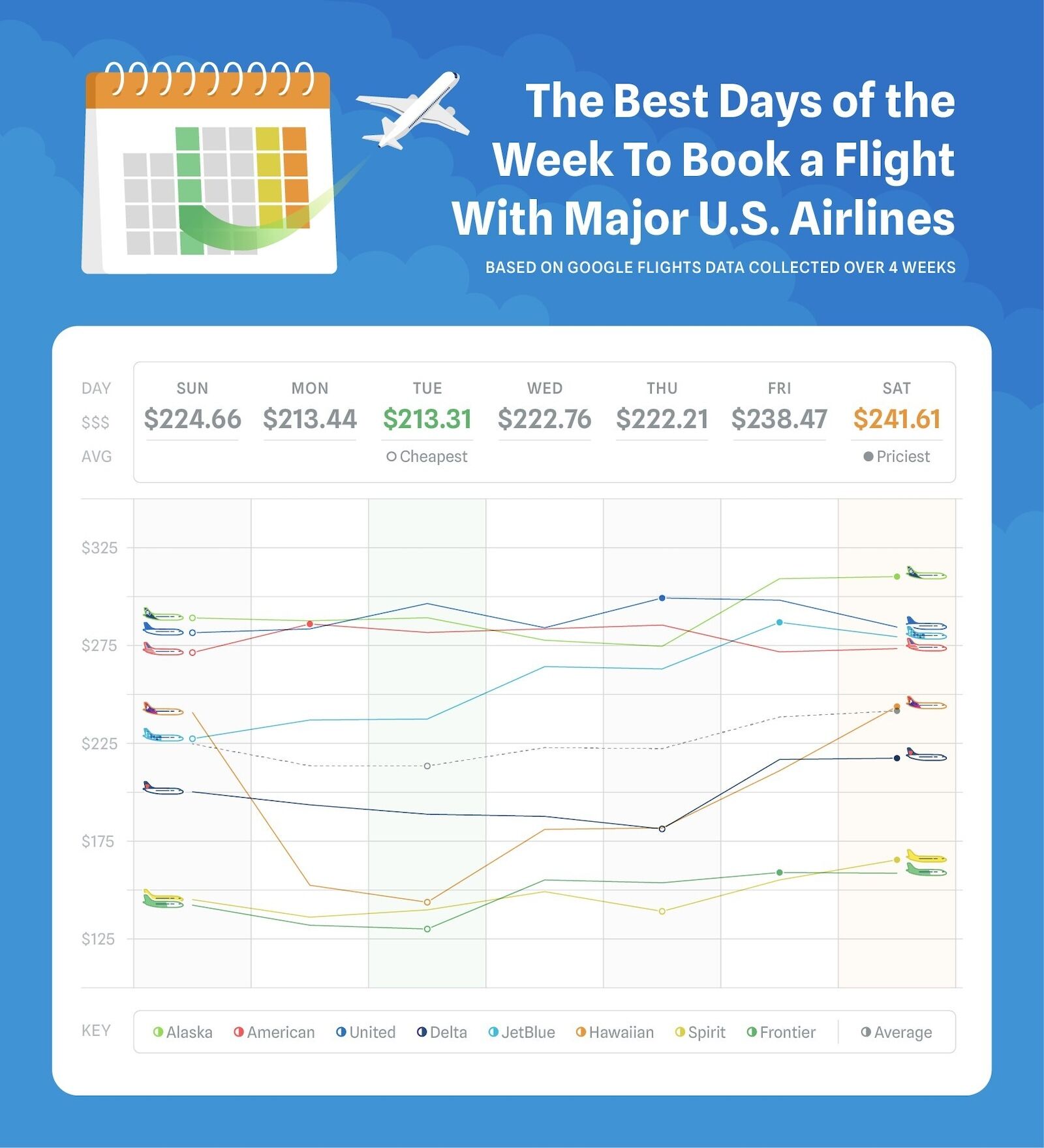
The “Tuesday Rule” is perhaps the most enduring myth in air travel. The theory suggests that airlines release their weekly sales on Monday evenings, and by Tuesday morning, competitors have matched these fares, creating a brief window of the absolute lowest prices. While this might have held some truth in a less automated, pre-internet era, its relevance has significantly diminished. With algorithmic pricing and instant competitive analysis, sales and price adjustments can occur at any moment. While you might still find good deals on a Tuesday, it’s rarely a guaranteed event, and certainly not an exclusive one. The focus should shift from a specific day of the week to when prices generally tend to drop or remain stable.
Why Weekend Bookings Can Be Costly
Conversely, booking flights on weekends, particularly Saturdays and Sundays, often correlates with higher prices. This isn’t necessarily due to airlines actively raising prices, but rather a consequence of human behavior. Many leisure travelers have more time to browse and book flights on their days off from work. This increased weekend demand can signal to the pricing algorithms that there’s a higher willingness to pay, leading to slightly inflated fares compared to mid-week. While not an absolute rule, it’s a general trend to be aware of if flexibility allows.
The Advantage of Mid-Week Purchases
While Tuesday might not be a silver bullet, the middle of the week (typically Tuesday, Wednesday, and Thursday) often does present better opportunities for booking cheaper flights. This is less about a coordinated airline strategy and more about natural demand cycles. Business travelers often book at the beginning or end of the week, and leisure travelers frequently browse on weekends. The lull in demand during mid-week often leads to fewer price fluctuations upwards and occasionally, more attractive pricing as airlines try to fill seats that haven’t been booked during peak booking periods. This isn’t a guarantee, but a statistical tendency worth considering.
Strategic Timing: When to Book for United Flights
Beyond the day of the week, the overarching booking window—how far in advance you purchase your ticket—is a far more critical factor in securing optimal fares, especially for a major carrier like United.
The “Goldilocks Window”: Finding the Sweet Spot
There’s a commonly accepted “Goldilocks Window” for booking domestic flights: typically 1-3 months (30-90 days) before your departure date. For international flights, this window expands to 2-8 months out (60-240 days). Booking within this period often yields the best balance of availability and competitive pricing. Too early, and airlines may not have loaded their full fare inventory or are testing higher prices. Too late, and the cheaper fare classes will have sold out, leaving only more expensive options. United, like other airlines, meticulously manages its inventory across this timeline.
Booking in Advance: Too Early vs. Too Late

Booking too far in advance (e.g., 9-12 months out) might not always secure the absolute lowest price. While you might feel organized, airlines sometimes start with higher “placeholder” fares and then adjust them downwards as the departure date approaches and they get a clearer picture of demand. Conversely, booking within the last few weeks before departure (especially 7-14 days) almost invariably leads to significantly higher prices. Airlines assume these last-minute bookers are primarily business travelers or those with urgent needs, and thus are less price-sensitive and willing to pay a premium. Avoid procrastinating if saving money is your priority.
Leveraging Seasonal and Holiday Trends
Seasonality profoundly impacts flight prices. Travel during peak holiday periods (e.g., Thanksgiving, Christmas, New Year’s, Spring Break, summer months to popular destinations) will always be more expensive, regardless of the day you book. To mitigate these costs, aim to book these flights much earlier than the Goldilocks Window, often 4-6 months in advance. Conversely, consider traveling during the shoulder seasons (e.g., late spring/early fall) or off-peak months to experience significant savings. Flexibility with your travel dates, even by a few days, can lead to substantial price differences.
Beyond the Day: Advanced Strategies for United Savings
While the day and booking window are important, a holistic approach involving several other smart financial strategies will truly maximize your savings on United flights.
Flexibility is Your Best Friend: Dates and Airports
The single most powerful tool in your arsenal is flexibility. If your travel dates can shift by a day or two, or if you can fly out of a less popular nearby airport (e.g., flying out of Milwaukee instead of Chicago O’Hare for some routes), you can often unlock considerably lower fares. United’s website and app often feature a “flexible dates” or “low fare calendar” option, allowing you to visually see how prices vary across an entire month. Utilize this tool to identify the absolute cheapest days to fly, which often don’t correspond to the cheapest days to book.
Utilizing United’s Tools and Features
United.com and the United app offer several features designed to help you find better fares:
-
Flexible Search: As mentioned, this allows you to see prices across a range of dates.
-
Fare Calendar/Low Fare Finder: Specific tools that highlight the cheapest days to fly within a given month.
-
Price Drop Protection/Guarantees: Keep an eye out for United-specific programs or credit card benefits that offer price protection if the fare drops after you book.
-
Basic Economy Fares: While restrictive (no seat selection, last to board, carry-on only on some routes), Basic Economy can be significantly cheaper for those who prioritize price above all else. Understand the limitations before booking.
The Power of Incognito Mode and VPNs
A common piece of advice is to clear your browser cookies, use incognito/private browsing mode, or even a VPN to disguise your location when searching for flights. The theory is that airlines and online travel agencies (OTAs) track your searches and may subtly increase prices if they detect repeated interest in a particular route. While hard evidence linking this directly to price manipulation by airlines like United is debated, it doesn’t hurt to try. Using incognito mode prevents your browser from storing cookies, which could theoretically prevent perceived tracking.
Loyalty Programs, Credit Cards, and Miles
If you’re a frequent United flyer, leveraging their MileagePlus loyalty program is a no-brainer. Earning and redeeming miles can drastically reduce out-of-pocket costs. United co-branded credit cards (e.g., Chase United MileagePlus cards) offer sign-up bonuses, earning multipliers on United purchases, free checked bags, priority boarding, and sometimes even lounge access, all of which contribute to overall travel savings and enhanced experience. Even without a specific United card, general travel rewards cards can offer points transferable to United or usable to offset travel expenses.
Considering Basic Economy vs. Standard Economy
United’s Basic Economy fares are often the cheapest cash option available. However, they come with significant restrictions, such as no advanced seat assignment (you’re assigned one at check-in), last boarding group, and potentially no full-sized carry-on bag (only a personal item) on certain routes or for certain travelers. For many, the financial savings are worth these trade-offs, especially for short, direct flights where comfort and flexibility are less critical. For longer flights or those who value amenities, stepping up to a standard Economy fare is usually a better financial decision in the long run.
Final Considerations for Maximizing Your Savings
Beyond booking strategies, a few other financial tactics can ensure you’re getting the best overall deal on your United flight.
Setting Up Fare Alerts
This is one of the most effective, passive ways to save money. Websites like Google Flights, Skyscanner, Kayak, and even United.com allow you to set up email alerts for specific routes and dates. When the price for your desired flight drops, you’ll receive a notification, allowing you to snatch up the deal immediately. This negates the need to constantly check prices yourself and keeps you informed about market fluctuations.
Examining Hidden Costs and Ancillary Fees
The advertised base fare isn’t always the final price. United, like other airlines, charges for various ancillary services. Factor in costs for checked baggage, seat selection (if not Basic Economy), in-flight Wi-Fi, and even meals on some international routes. Sometimes, a slightly more expensive flight with a different airline that includes these amenities might end up being cheaper overall than a “cheapest” United flight with numerous add-ons.

The Value of Price Guarantees and Travel Insurance
Some credit cards offer price drop protection, refunding you the difference if a flight’s price decreases after your purchase. Additionally, consider travel insurance, especially for expensive international trips. While an upfront cost, it can protect your financial investment against unforeseen circumstances like cancellations, delays, medical emergencies, or lost luggage, potentially saving you thousands if something goes awry.
In conclusion, while there isn’t a single “cheapest day” to book a flight on United in today’s dynamic pricing environment, a combination of strategic timing, flexible travel plans, astute use of technology, and a comprehensive understanding of airline economics will invariably lead to significant savings. Focus less on a mythical calendar date and more on becoming an informed, adaptable, and proactive traveler. By applying these financial strategies, your next United flight can be both enjoyable and remarkably affordable.
aViewFromTheCave is a participant in the Amazon Services LLC Associates Program, an affiliate advertising program designed to provide a means for sites to earn advertising fees by advertising and linking to Amazon.com. Amazon, the Amazon logo, AmazonSupply, and the AmazonSupply logo are trademarks of Amazon.com, Inc. or its affiliates. As an Amazon Associate we earn affiliate commissions from qualifying purchases.