
In the world of business finance, few metrics are as foundational or as telling as gross profit. Whether you are a solo entrepreneur launching a side hustle, a retail manager overseeing operations, or an investor scrutinizing a company’s financial health, understanding the calculation for gross profit is non-negotiable. It is the first major milestone on an income statement, serving as the bridge between raw sales and actual bottom-line earnings.
At its simplest level, gross profit reveals how efficiently a company produces its products or delivers its services before administrative and overhead costs are factored in. If a business cannot maintain a healthy gross profit, it is mathematically impossible for it to remain sustainable in the long run. This article explores the mechanics of the gross profit calculation, breaks down its essential components, and explains why this single number is a powerhouse for financial decision-making.
What is Gross Profit? Defining the Foundation of Profitability
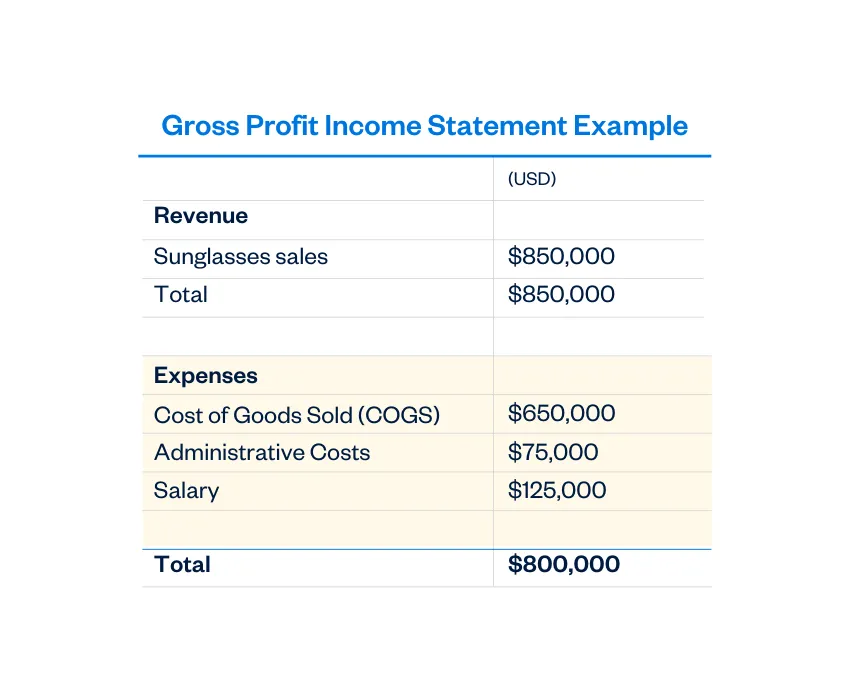
Gross profit represents the residual profit a company makes after deducting the costs associated with making and selling its products or the costs associated with providing its services. It is often referred to as “top-line profit” because it appears near the top of the income statement, immediately following the revenue and cost of goods sold (COGS) figures.
The Fundamental Formula
The calculation for gross profit is straightforward, yet its implications are profound. The formula is:
Gross Profit = Total Revenue – Cost of Goods Sold (COGS)
To use this formula effectively, one must first understand what constitutes “Revenue” and “COGS.” Revenue is the total amount of money generated by the sale of goods or services. Cost of Goods Sold includes only the direct costs attributable to the production of the goods sold by a company. This typically includes the materials used in creating the product along with the direct labor costs used in producing the good.
Gross Profit vs. Net Profit: Clearing the Confusion
A common mistake for those new to business finance is conflating gross profit with net profit. While gross profit only subtracts the direct costs of production, net profit (the “bottom line”) is what remains after all expenses are paid.
To arrive at net profit, you must subtract operating expenses (rent, utilities, marketing), interest, and taxes from your gross profit. Essentially, gross profit measures production efficiency, while net profit measures the overall health and viability of the entire business structure. Understanding the distinction is vital because a company can have a massive gross profit but still be losing money if its overhead costs are too high.
Why Gross Profit is a “Pure” Metric
Gross profit is often considered a “pure” metric because it is less susceptible to accounting maneuvers than net profit. While net profit can be affected by tax strategies, debt restructuring, or one-time administrative expenses, gross profit stays focused on the core relationship between the cost to create and the price of sale. It tells you if your product itself is a viable engine for wealth creation.
Breaking Down the Components: Revenue and COGS
To accurately calculate gross profit, a business owner must have a granular understanding of what goes into—and stays out of—the two primary variables. Errors in categorizing expenses can lead to an inflated sense of success or an unnecessary panic regarding financial health.
Calculating Total Revenue
Revenue, often called “Gross Sales,” is the starting point. However, for a precise calculation, most accountants use “Net Revenue.” This is calculated by taking the total sales and subtracting any returns, allowances (discounts given to customers for damaged goods), and discounts. If you sell $100,000 worth of software subscriptions but offer $5,000 in promotional discounts and process $2,000 in refunds, your revenue for the gross profit calculation is $93,000.
Decoding Cost of Goods Sold (COGS)
COGS is the most variable part of the equation and changes depending on the industry. For a manufacturer, COGS includes raw materials and factory labor. For a retailer, COGS is primarily the wholesale price paid for inventory. For a service-based business, such as a consultancy, COGS might include the billable hours of the consultants directly performing the work.
It is important to remember that COGS only includes expenses that fluctuate directly with production volume. If you produce zero units, your COGS should, in theory, be zero. This is why fixed costs like the rent for your office or the salary of your HR manager are never included in COGS.
Direct Labor and Raw Materials
Direct labor refers to the wages paid to employees who are physically working on the product. If you own a bakery, the wages of the baker are COGS. However, the wages of the person who cleans the windows or manages the social media account are operating expenses. Raw materials include the ingredients (flour, sugar) and the packaging (boxes, ribbons). By isolating these costs, you can see exactly how much it costs to put one unit of your product into a customer’s hands.
Gross Profit Margin: The Percentage that Tells the Real Story
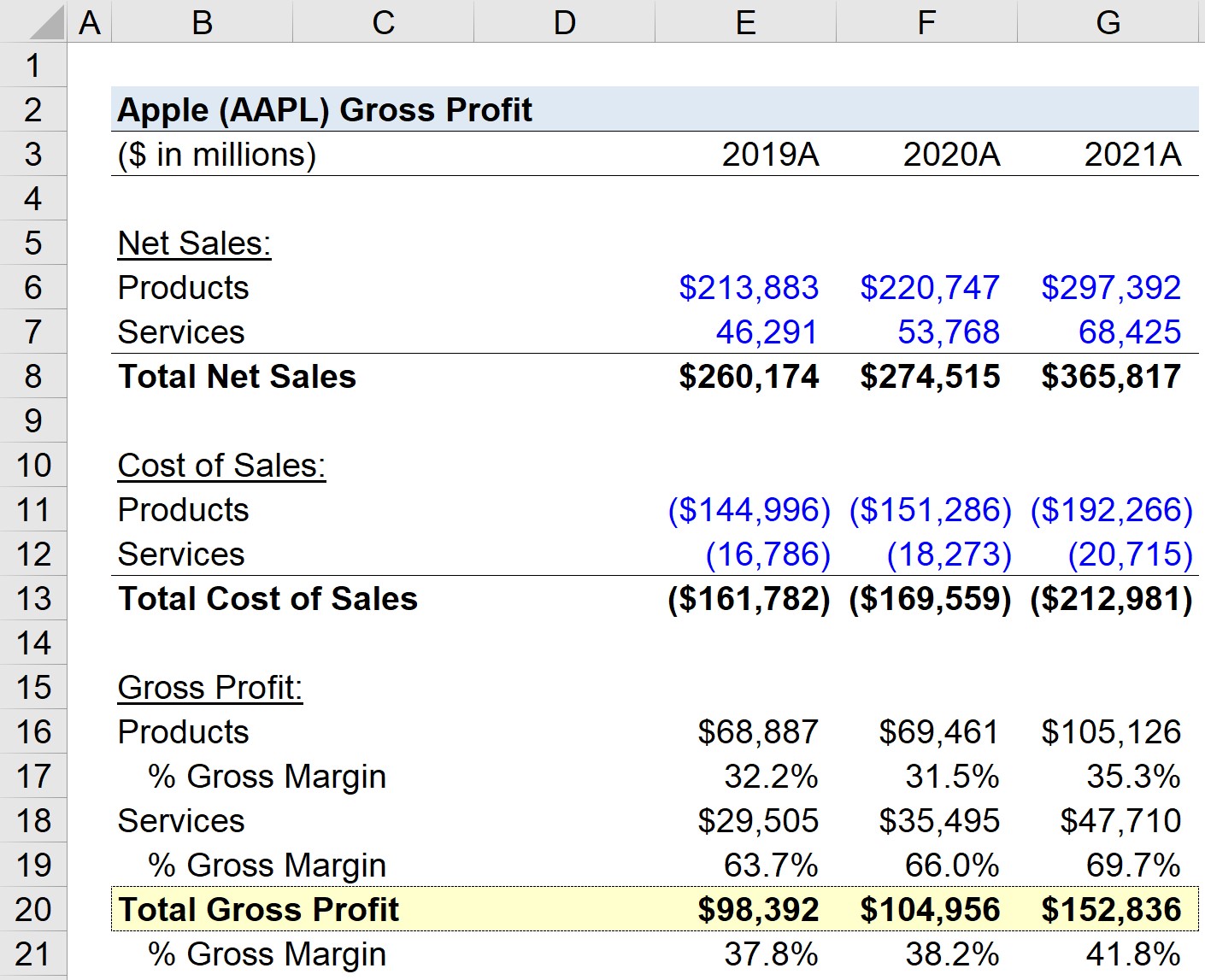
While the gross profit dollar amount is useful for bookkeeping, the Gross Profit Margin—expressed as a percentage—is the most valuable tool for comparison and strategy. It allows you to compare your performance against competitors or against your own past performance, regardless of how much your total sales volume has changed.
Calculating the Margin
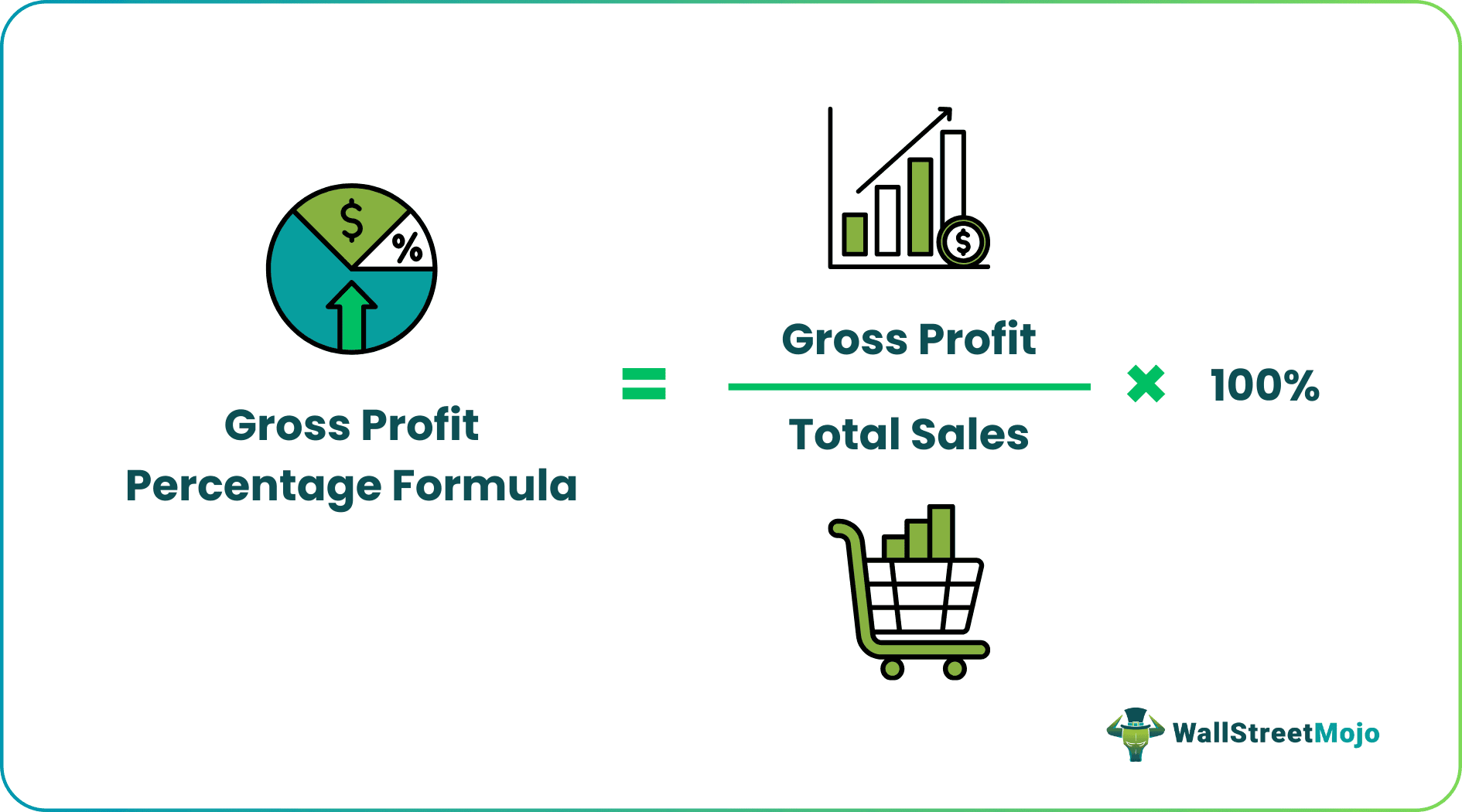
The formula for Gross Profit Margin is:
Gross Profit Margin = (Gross Profit / Total Revenue) x 100
For example, if a business earns $500,000 in revenue and has a COGS of $300,000, its gross profit is $200,000.
($200,000 / $500,000) x 100 = 40%.
This means that for every dollar the company earns, it keeps 40 cents to cover its operating expenses and contribute to profit, while 60 cents goes toward the direct cost of making the product.
Industry Benchmarks and Comparisons
What constitutes a “good” gross profit margin varies wildly by industry. A software-as-a-service (SaaS) company may have a gross profit margin of 80% to 90% because the cost to deliver software to one additional user is negligible. Conversely, a grocery store might operate on a gross profit margin of 20% to 30% due to the high cost of inventory and spoilage.
When analyzing your own business, you should look for industry benchmarks. If your competitors are averaging a 50% margin and you are at 35%, it signals a problem: either your suppliers are overcharging you, your labor is inefficient, or your pricing is too low.
The Impact of Scale on Margins
As a business grows, it often benefits from “economies of scale.” This means that as you buy more raw materials, you can negotiate lower prices, or as you refine your production process, your labor becomes more efficient. Monitoring your gross profit margin over time allows you to see if your scaling efforts are actually making your production more cost-effective.
Why Gross Profit Matters for Your Business Strategy
Beyond the accounting department, the calculation for gross profit is a vital strategic tool. It informs pricing, identifies waste, and helps entrepreneurs decide which products to focus on and which to retire.
Evaluating Pricing Strategies
If your gross profit is too low, you have two primary levers: increase your prices or decrease your COGS. Many business owners are afraid to raise prices for fear of losing customers. However, by calculating gross profit, you can see if your current price even covers the “cost to serve.” If your margin is razor-thin, you may be working harder for less money. A higher gross profit margin gives you a “buffer” to withstand economic downturns or unexpected increases in material costs.
Identifying Operational Inefficiencies
A shrinking gross profit over several quarters is a major red flag. If revenue is staying steady but gross profit is dropping, it means your COGS are rising. This could be due to “scope creep” in service delivery, rising shipping costs, or waste in the manufacturing process. By isolating gross profit, you can pinpoint exactly where the leakage is occurring without being distracted by other business expenses like marketing or rent.
Measuring Production Efficiency
For businesses that sell multiple products, calculating the gross profit for each product line is essential. You might find that Product A has a 60% margin while Product B has a 15% margin. In this scenario, even if Product B sells more units, it might be dragging down the overall health of the company. Strategy should shift toward promoting high-margin products or finding ways to manufacture Product B more cheaply.
Advanced Applications: Using Gross Profit for Growth
In the mature stages of a business, the gross profit calculation becomes a primary driver for forecasting, obtaining investment, and scaling operations.
Forecasting and Budgeting
When creating a budget for the next fiscal year, your historical gross profit margin is your best predictor of future success. If you know your margin is consistently 40%, and you project $1 million in sales next year, you can confidently budget $400,000 for all your other expenses and profit. Without this calculation, budgeting becomes guesswork, which is a leading cause of business failure.
Attracting Investors and Lenders
If you ever seek a business loan or venture capital, the first thing an investor will look at is your gross profit margin. They want to see that the core business model is profitable. High gross profit margins suggest a “moat”—a competitive advantage that allows a company to charge a premium or operate more efficiently than others. It proves that your product has value in the marketplace that exceeds the cost of its creation.
Scaling Your Side Hustle or Corporate Venture
For those managing a side hustle or an online income stream, gross profit is the ultimate reality check. It is easy to be blinded by high sales figures. If you sell $10,000 worth of handmade goods but spend $9,000 on materials and shipping, your “business” is actually a low-paying job. By calculating gross profit, you can determine if your side hustle is scalable. If the margin is high, every extra hour you put in yields significant returns. If the margin is low, you must find a way to automate or outsource production to make growth worthwhile.
In conclusion, the calculation for gross profit is more than just a line on a spreadsheet; it is the pulse of a business’s economic viability. By mastering the relationship between revenue and the direct costs of production, you gain the clarity needed to price products effectively, manage resources wisely, and build a financially resilient enterprise. Whether you are looking at your personal portfolio or your own company’s books, always start with gross profit—it is where the story of profitability begins.
aViewFromTheCave is a participant in the Amazon Services LLC Associates Program, an affiliate advertising program designed to provide a means for sites to earn advertising fees by advertising and linking to Amazon.com. Amazon, the Amazon logo, AmazonSupply, and the AmazonSupply logo are trademarks of Amazon.com, Inc. or its affiliates. As an Amazon Associate we earn affiliate commissions from qualifying purchases.