
To the casual observer, the Book of Job is a profound exploration of human suffering and divine sovereignty. However, through the lens of modern personal finance and business management, this ancient text serves as one of history’s most compelling case studies on wealth management, risk mitigation, and the psychological resilience required to survive a total financial wipeout. It provides a blueprint for how an individual can lose everything—not through mismanagement, but through “Black Swan” events—and eventually achieve a state of restoration that doubles their previous net worth.
The narrative provides a detailed look at the mechanics of wealth in an agrarian society, the fragility of diversified assets, and the vital importance of maintaining “intellectual and moral equity” when liquid assets vanish. For the modern investor or business leader, Job’s journey is less a story of passive endurance and more a masterclass in high-stakes crisis management and the long-term compounding of personal value.

The Economics of Job: A High Net Worth Case Study
Before the onset of the central conflict, the Book of Job opens with an audit of his holdings. Job is not merely a “good man”; he is described as the greatest man among all the people of the East. In modern terms, Job was a high-net-worth individual (HNWI) with a portfolio that was exceptionally diversified for his era.
Analyzing the Asset Allocation
Job’s portfolio consisted of 7,000 sheep, 3,000 camels, 500 yoke of oxen, and 500 female donkeys, along with a “very large number of servants.” In the context of ancient economics, these were not just animals; they were diversified business units.
- Sheep: Represented the textile and commodity sector (wool and meat).
- Camels: Represented the logistics and transportation sector, essential for trade routes.
- Oxen: Represented agricultural infrastructure and heavy machinery (plowing).
- Donkeys: Served as secondary transport and local logistics.
- Servants: Represented the human capital and labor force required to scale operations.
Job’s wealth was tangible, productive, and spread across various sectors of the economy. He was a tycoon of the ancient world. His financial standing was bolstered by his “brand equity”—his reputation for integrity and wisdom made him a pillar of the community, which in turn protected his business interests through social trust.
The Vulnerability of Tangible Assets
Despite this diversification, Job’s story highlights a critical vulnerability in physical asset management: systematic risk. While Job had diversified his types of livestock, he was still heavily exposed to geographic and environmental risks. When the “Sabeans” and “Chaldeans” raided his holdings, and “the fire of God” (likely lightning or a natural disaster) struck, his entire portfolio was liquidated in a series of rapid-fire events. This illustrates the concept of “correlation in a crisis,” where seemingly unrelated assets fail simultaneously due to a macro-level catastrophe.
Dealing with Systematic Risk: The Anatomy of a Financial Wipeout
In the world of finance, a “Black Swan” is an unpredictable event that has a severe impact. Job experiences a series of Black Swans that occur in such rapid succession that he has no time to hedge his positions or move his capital. Within a single day, his net worth drops from “greatest in the East” to zero.
Navigating the “Total Loss” Scenario
For a business owner or investor, the psychological impact of a total loss is often more devastating than the financial loss itself. Job’s response is a study in behavioral finance. While he mourns, he does not succumb to “panic selling” of his core values. He recognizes that his initial capital was a gift (“The Lord gave, and the Lord has taken away”).
In modern terms, this is a realization of “unearned alpha.” Job understands that much of his success was due to favorable market conditions and divine favor, not just his own merit. This humility allows him to detach his self-worth from his net worth—a crucial skill for any investor who wishes to survive a market crash without losing their sanity.
The Role of Bad Financial Advice
As Job sits in the ashes of his empire, he is visited by three “friends” who act as the ancient equivalent of poor financial consultants. Their core argument is based on a flawed “merit-based” economic model: if you are suffering financially, you must have made a specific mistake or committed a “sin” in your business dealings.
This is a common fallacy in the world of money. People often assume that wealth is a direct indicator of wisdom and poverty is a direct indicator of failure. Job’s friends fail to account for “systematic risk”—the idea that bad things can happen to good portfolios for reasons entirely outside the control of the manager. Job’s refusal to accept their simplistic explanations is an act of intellectual integrity. He refuses to “cook the books” of his own conscience to satisfy their narrative.
Behavioral Finance: Maintaining Internal Equity During Scarcity
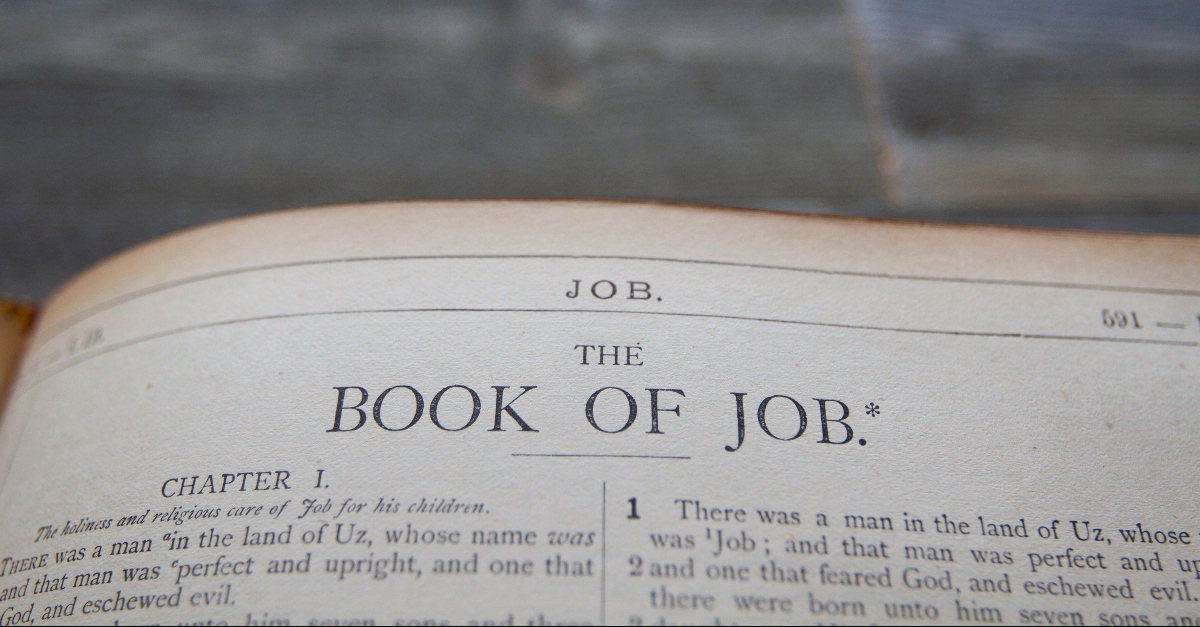
The middle section of the Book of Job is a lengthy debate about justice, but from a money perspective, it is a debate about the “fairness” of the market. Job is essentially questioning the “Terms and Conditions” of his life’s contract.
The Psychology of Sunk Costs and Resilience
Job is faced with the ultimate “sunk cost” dilemma. His previous life is gone. His children (his legacy and future workforce) are gone. His health (his primary means of labor) is failing. In such a scenario, many would choose “corporate liquidation”—giving up entirely.
However, Job maintains what we might call “Intrinsic Value.” Even when his “Book Value” (his assets minus liabilities) is negative, his “Intrinsic Value” (his character, his wisdom, and his relationship with the Creator) remains intact. In the world of investing, a company whose stock price has crashed but whose fundamentals are still strong is a prime candidate for a turnaround. Job is that “distressed asset” whose fundamentals never wavered.
Integrity as a Long-Term Asset
Job’s story suggests that integrity is not just a moral choice, but a strategic financial one. Because he does not compromise his principles during his period of “insolvency,” he remains positioned for a massive recovery. Had he followed his wife’s advice to “curse God and die” (a total abandonment of his core brand identity), he would have closed the door on any future restoration. By staying “in the market” of faith and integrity, he kept his options open for a rebound.
From Ruin to Restoration: The Principle of Compounding and Recovery
The conclusion of the Book of Job is perhaps the most famous “turnaround story” in literature. After Job’s period of testing, his fortunes are restored. However, the text notes a very specific detail: “The Lord blessed the latter part of Job’s life more than the former.”
The “Double Portion” Principle
The Bible records that Job ended up with 14,000 sheep, 6,000 camels, 1,000 yoke of oxen, and 1,000 donkeys. He received exactly double what he had lost. In financial terms, this is a 100% return on his original peak net worth.
How did this happen? While the text attributes it to divine blessing, we can also see the mechanics of “Restorative Capital.” After his ordeal, his relatives and friends came to him, and each gave him a piece of silver and a gold ring. This was essentially a “seed round” of venture capital. Because Job had maintained his reputation (his brand) throughout his crisis, his community was willing to reinvest in him. He used this initial capital to leverage his years of experience and wisdom, leading to an accelerated compounding of his wealth.
The Value of Experience and Wisdom
Job’s “latter years” were more blessed not just because he had more animals, but because he possessed the wisdom that only comes from surviving a catastrophic market cycle. He had “skin in the game.”
A seasoned investor who has lived through a depression is often more effective than a novice who has only known a bull market. Job’s restored wealth was built on a foundation of proven resilience. He also had a new family, and notably, he gave his daughters an inheritance along with their brothers—an unconventional move for the time that suggests a more progressive and strategic approach to estate planning and wealth transfer.
Modern Applications for Financial Planning and Business Continuity
The Book of Job provides timeless lessons for anyone navigating the volatile world of money, business, and personal finance.
1. Diversification is Not a Guarantee
Even the most diversified portfolio can be wiped out by systematic shocks. Therefore, an individual’s “emergency fund” must consist of more than just liquid capital; it must include “social capital” (relationships) and “intellectual capital” (skills and wisdom). When Job’s physical assets were gone, his reputation was the only thing that eventually brought the “seed capital” back to him.
2. The Danger of Moralizing Financial Success
Just as Job’s friends were wrong to assume his poverty was a sign of failure, modern society is often wrong to assume wealth is a sign of superior intelligence. Markets are influenced by “time and chance.” Understanding this helps a business leader stay humble during the highs and resilient during the lows.
3. Crisis Management and Brand Integrity
In a corporate crisis, the first instinct is often to cut corners or engage in unethical behavior to save the bottom line. Job’s refusal to “curse God” is the ultimate example of maintaining brand integrity under pressure. In the long run, the market (and life) rewards those who do not compromise their core values for short-term relief.
4. The Long Game of Wealth Building
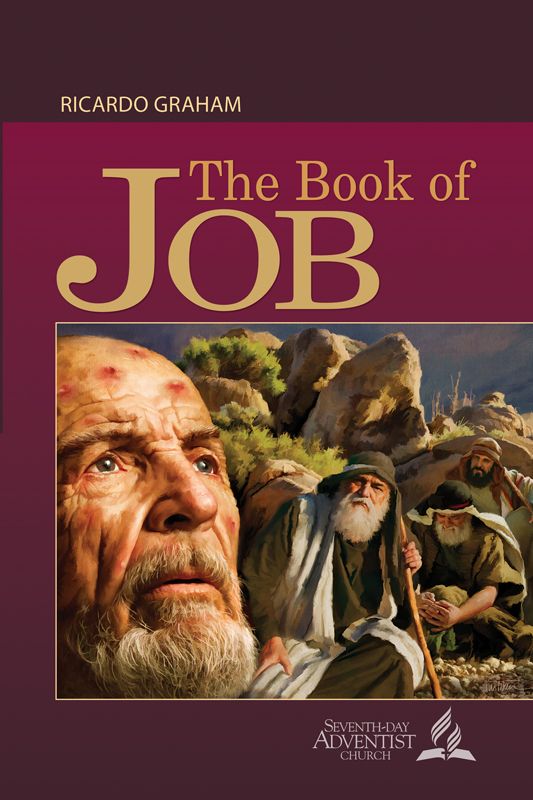
Job lived for 140 years after his restoration, seeing four generations of his descendants. This highlights the importance of a “long-term horizon” in financial planning. Wealth is not just about the current quarter’s earnings; it is about building a legacy that can withstand the tests of time and the inevitable cycles of loss and gain.
Ultimately, the Book of Job is about the “Inherent Value” of the individual. It teaches that money is a tool that can be given and taken away, but the character of the “Money Manager” is the true engine of long-term prosperity. Whether you are managing a small personal budget or a massive corporate empire, the principles of Job—integrity, resilience, and the recognition of systematic risk—remain the gold standard for navigating the complexities of the financial world.
aViewFromTheCave is a participant in the Amazon Services LLC Associates Program, an affiliate advertising program designed to provide a means for sites to earn advertising fees by advertising and linking to Amazon.com. Amazon, the Amazon logo, AmazonSupply, and the AmazonSupply logo are trademarks of Amazon.com, Inc. or its affiliates. As an Amazon Associate we earn affiliate commissions from qualifying purchases.