
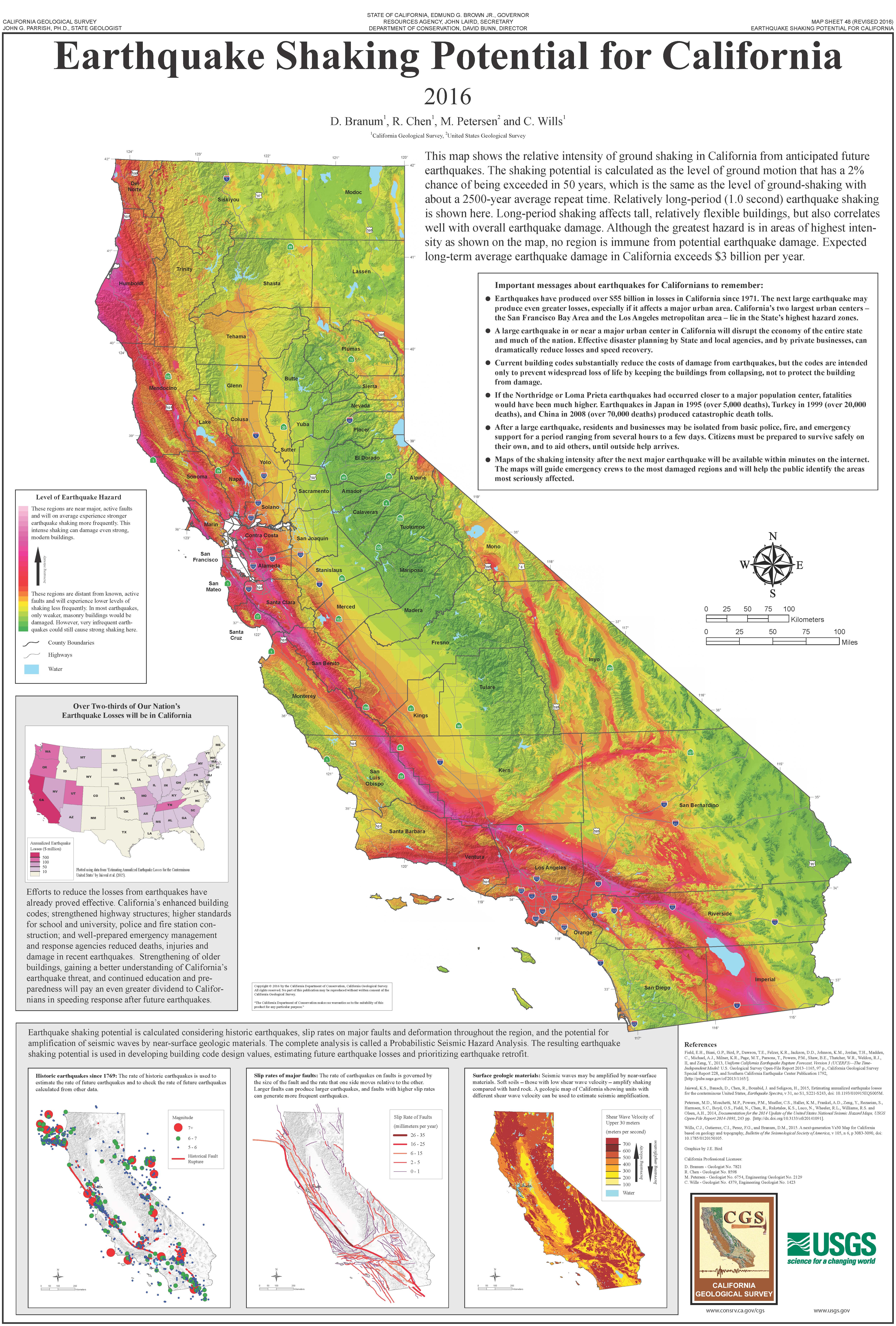
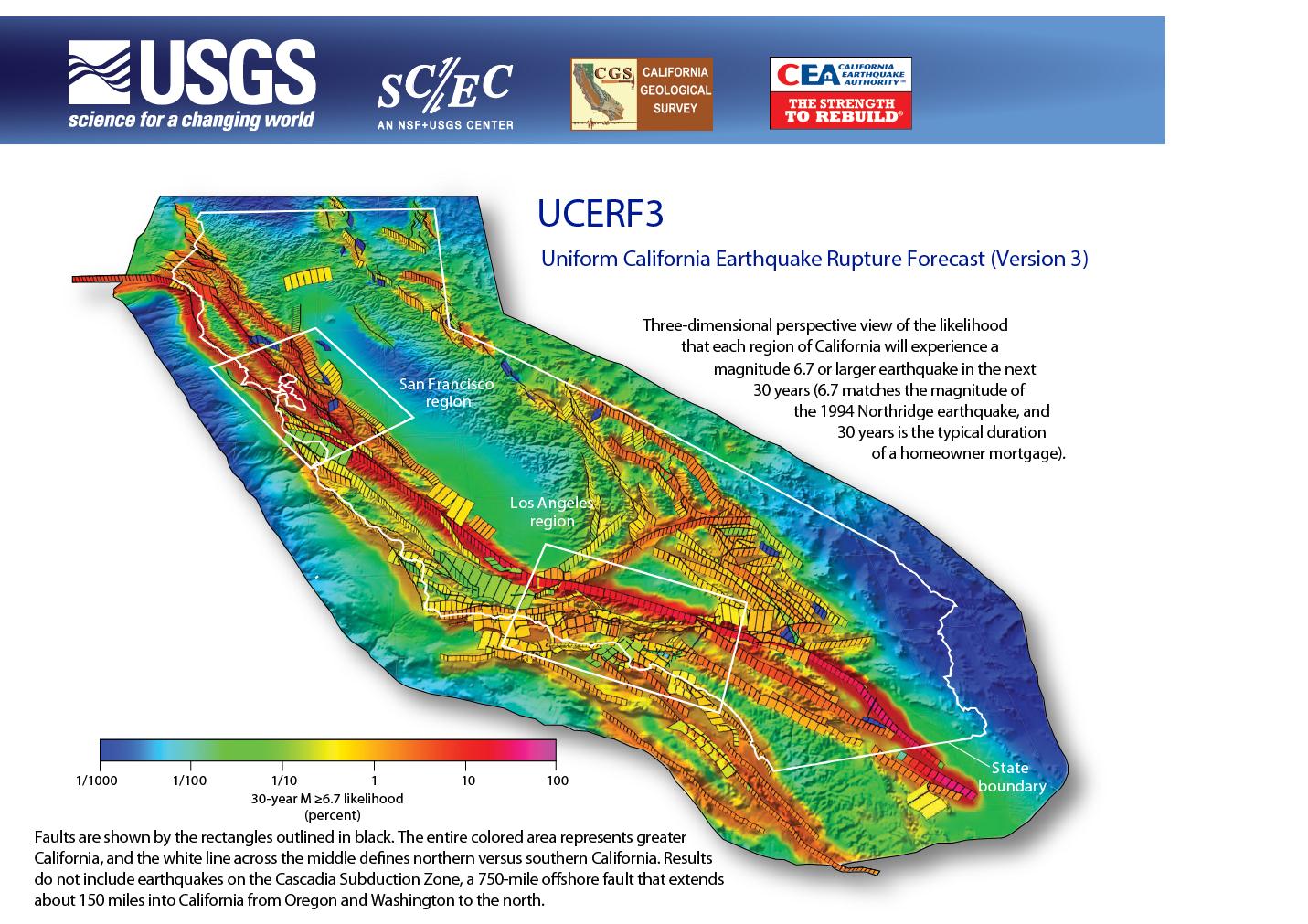
In the lexicon of Californian life, “The Big One” refers to a hypothetical earthquake of magnitude 7.8 or greater along the San Andreas Fault. While the term is rooted in seismology, its implications in the 21st century have shifted from purely geological concerns to a massive technological challenge. California is not merely a geographic location; it is the nerve center of the global digital economy. Silicon Valley, the epicenter of global innovation, sits precariously atop a complex network of fault lines.
For the tech industry, “The Big One” represents the ultimate stress test for infrastructure, data integrity, and the resilience of the global cloud. As we move deeper into an era defined by Artificial Intelligence (AI) and interconnected IoT (Internet of Things) devices, the strategy for surviving California’s next great earthquake has evolved from simple building codes to sophisticated digital safeguards.
The Digital Fault Lines: Silicon Valley’s Infrastructure Vulnerability
When the ground moves in California, the vibrations are felt across the global digital landscape. The physical infrastructure that supports the world’s most powerful software—data centers, fiber-optic cables, and semiconductor fabrication plants—is concentrated in regions with high seismic risk.
Data Center Redundancy and Cloud Sovereignty
The modern internet relies on “Availability Zones.” Tech giants like Google, Meta, and Amazon Web Services (AWS) maintain massive footprints in the Bay Area and Los Angeles. A major seismic event could physically sever the power grids and cooling systems required to keep these servers operational. To mitigate this, engineers have developed advanced “failover” protocols. These systems use automated software to reroute data traffic to geographically distant regions (such as Oregon or Virginia) the moment a seismic sensor detects a significant tremor. This concept of cloud redundancy ensures that even if a data center in Santa Clara is offline, the global services it supports remain live.
The Physical Backbone: Submarine Cables and Fiber Networks
The San Andreas Fault doesn’t just threaten buildings; it threatens the physical wires of the internet. California serves as a primary landing point for trans-pacific submarine cables that connect North America to Asia. A massive earthquake could trigger underwater landslides, snapping these vital connections. Tech firms are currently investing in “self-healing” network topologies. These utilize intelligent routing algorithms that can detect a physical break in a fiber line and instantly redirect packets through satellite links or alternative terrestrial paths, maintaining the flow of global commerce despite the localized disaster.
Next-Gen Early Warning Systems: The Role of AI and IoT
In earthquake mitigation, seconds matter. Technology has transitioned from passive observation to active, real-time intervention through the development of Early Warning Systems (EWS).
ShakeAlert and the API Economy of Safety
The U.S. Geological Survey (USGS) developed “ShakeAlert,” a sophisticated network of sensors that detects the initial, faster-moving “P-waves” of an earthquake before the more destructive “S-waves” arrive. The true innovation, however, lies in the API (Application Programming Interface) integration. This tech allows the ShakeAlert signal to be ingested by various software platforms. For instance, when a quake is detected, the system can automatically trigger scripts to slow down BART trains, open elevator doors at the nearest floor, and shut off industrial gas valves to prevent fires—all before the ground actually starts shaking.
Leveraging Smartphone Accelerometers for Crowdsourced Detection
One of the most ambitious tech projects in seismic safety is the Android Earthquake Alerts System. By turning millions of smartphones into mini-seismometers, Google has created the world’s largest earthquake detection network. Most modern phones contain tiny accelerometers that can sense the distinct signature of an earthquake. Through machine learning algorithms, Google can distinguish between a phone being dropped and a seismic wave. When thousands of phones in a specific area report the same vibration pattern simultaneously, the “cloud” confirms an earthquake is occurring and pushes an immediate notification to users further away from the epicenter, providing a life-saving “heads-up” of several seconds.
Crisis Tech: Communication Resilience During Total Grid Failure
In the aftermath of “The Big One,” traditional cellular networks are likely to be overwhelmed or physically destroyed. The tech sector is focusing on decentralized communication tools to bridge this gap during the critical “Golden Hour” of emergency response.
Satellite Connectivity and the New Space Race
The emergence of Low Earth Orbit (LEO) satellite constellations, such as SpaceX’s Starlink, has revolutionized disaster tech. Unlike traditional cell towers that rely on local ground infrastructure, satellite internet provides a direct-to-device link that is immune to terrestrial seismic damage. Furthermore, the integration of satellite SOS features in the latest iterations of the iPhone ensures that even if every cell tower in California were to fall, individuals could still communicate with emergency services via satellite. This shift from terrestrial-dependent to space-based communication is a fundamental change in how we view disaster resilience.
Mesh Networking and Peer-to-Peer Communication
In a scenario where the internet backbone is compromised, “mesh networking” becomes the software solution of choice. Apps that utilize Bluetooth and Wi-Fi Direct allow devices to connect to one another without a central router. By hopping signals from one phone to the next, a digital net can be cast over a neighborhood. This peer-to-peer technology allows for the sharing of maps, medical information, and survivor status within local communities even when the wider world is digitally dark. This “bottom-up” approach to connectivity ensures that information continues to flow at the micro-level.
Engineering the Future: Seismic-Resistant Smart Cities
Beyond software and alerts, technology is fundamentally changing how the physical world is constructed to withstand “The Big One.” The intersection of material science and digital modeling is creating a new generation of resilient urban environments.
Building Information Modeling (BIM) and Digital Twins
Modern skyscrapers in Los Angeles and San Francisco are no longer just static piles of steel and glass; they are integrated digital systems. Using Building Information Modeling (BIM), architects create “Digital Twins” of structures. These are high-fidelity virtual models that allow engineers to simulate exactly how a building will react to different magnitudes of earthquakes. By running millions of AI-driven simulations, designers can identify potential points of failure and reinforce them digitally before a single brick is laid. This predictive engineering ensures that the “Big One” results in structural integrity rather than catastrophic collapse.
Robotics and Autonomous Search and Recovery
The post-earthquake environment is often too dangerous for human first responders. This has led to a surge in “Robotics-as-a-Service” (RaaS) for disaster management. We are seeing the deployment of specialized drones equipped with LiDAR (Light Detection and Ranging) to map collapsed buildings in 3D, and quadrupedal robots (like Boston Dynamics’ Spot) that can navigate rubble to locate survivors using thermal imaging and acoustic sensors. These autonomous systems represent the pinnacle of tech-integrated safety, allowing for search operations to continue in environments that would be lethal for humans.

Conclusion: The Silicon Shield
The “Big One” in California is an inevitability, but its impact on the modern world will be mitigated by the very technology that the state has pioneered. We have moved past the era where we simply wait for the ground to stop shaking. Today, we live in a world where AI predicts seismic waves, satellites maintain our connections, and digital twins protect our skylines.
The resilience of California’s tech ecosystem is not just a local concern; it is a global necessity. As we continue to refine early warning APIs, harden our data center infrastructure, and deploy autonomous recovery tools, we are building what can be described as a “Silicon Shield.” While technology cannot stop the tectonic plates from shifting, it provides the tools, the data, and the communication pathways necessary to ensure that when the “Big One” finally arrives, the digital heart of the world continues to beat. The future of seismic safety is not found in the soil, but in the code, the sensors, and the decentralized networks that bind our modern world together.
aViewFromTheCave is a participant in the Amazon Services LLC Associates Program, an affiliate advertising program designed to provide a means for sites to earn advertising fees by advertising and linking to Amazon.com. Amazon, the Amazon logo, AmazonSupply, and the AmazonSupply logo are trademarks of Amazon.com, Inc. or its affiliates. As an Amazon Associate we earn affiliate commissions from qualifying purchases.