
The landscape of personal security has undergone a radical transformation over the last decade, shifting from purely mechanical solutions to a sophisticated ecosystem of integrated hardware and software. When evaluating what defines the “best” handgun for self-defense today, the conversation is no longer limited to caliber or capacity. Instead, it revolves around technological modularity, optical integration, and the implementation of smart security features. For the modern user, a self-defense tool is an advanced piece of hardware that must interface seamlessly with digital sighting systems, biometric storage, and data-driven training platforms.
The Rise of the Tech-Enabled Handgun: Engineering and Modularity
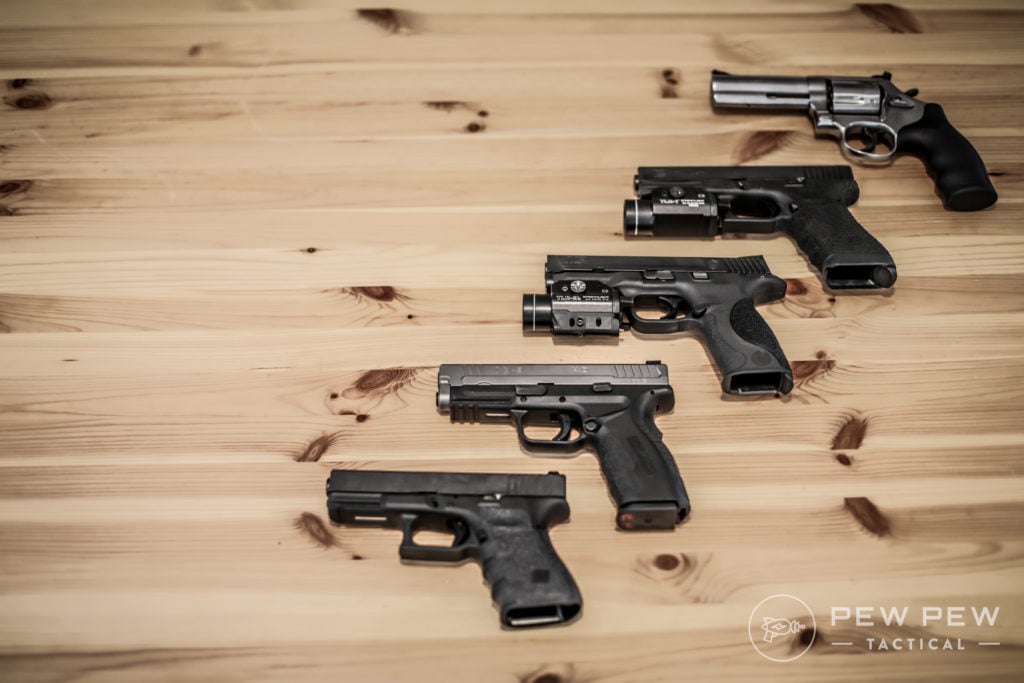
The primary metric for a high-performance self-defense handgun in the current era is its technological architecture. Traditional firearms were static machines; modern platforms are designed with an “open-architecture” philosophy. This modularity allows the user to swap frames, trigger groups, and slide assemblies to fit specific ergonomic needs and mission profiles.
Modular Fire Control Units (FCU)
One of the most significant breakthroughs in handgun technology is the serialized Fire Control Unit. Unlike traditional designs where the frame is the legal firearm, systems like the SIG Sauer P320 and P365 utilize a removable chassis that houses the trigger mechanism. This allows the internal “computer” of the handgun to be moved between different grip modules and slide lengths. From a technical standpoint, this represents a shift toward a “core-and-shell” design, enabling the user to upgrade the external interface without purchasing a new mechanical system.
Advanced Materials and Thermodynamics
The materials science behind modern handguns has evolved beyond simple polymers. Manufacturers are now utilizing tungsten-infused polymers to manage recoil through increased mass without the bulk of traditional steel. Furthermore, advanced coatings like Diamond-Like Carbon (DLC) and Nitride treatments are applied via physical vapor deposition (PVD). These are not merely aesthetic choices; they are functional technological applications designed to reduce the coefficient of friction and increase the mean time between failures (MTBF) in harsh environments.
The Optical Revolution: Red Dot Sights and Digital Aiming Systems
Perhaps the most visible shift in self-defense technology is the transition from analog iron sights to Micro Red Dot Sights (MRDS). This represents a fundamental change in the “user interface” of the firearm. For decades, shooters were required to focus on a front sight post while blurring the target. Modern optical tech allows for “threat-focused” shooting, where the user remains focused on the environment while a digital reticle is superimposed over their field of vision.
Optic-Ready Platforms (ORP)
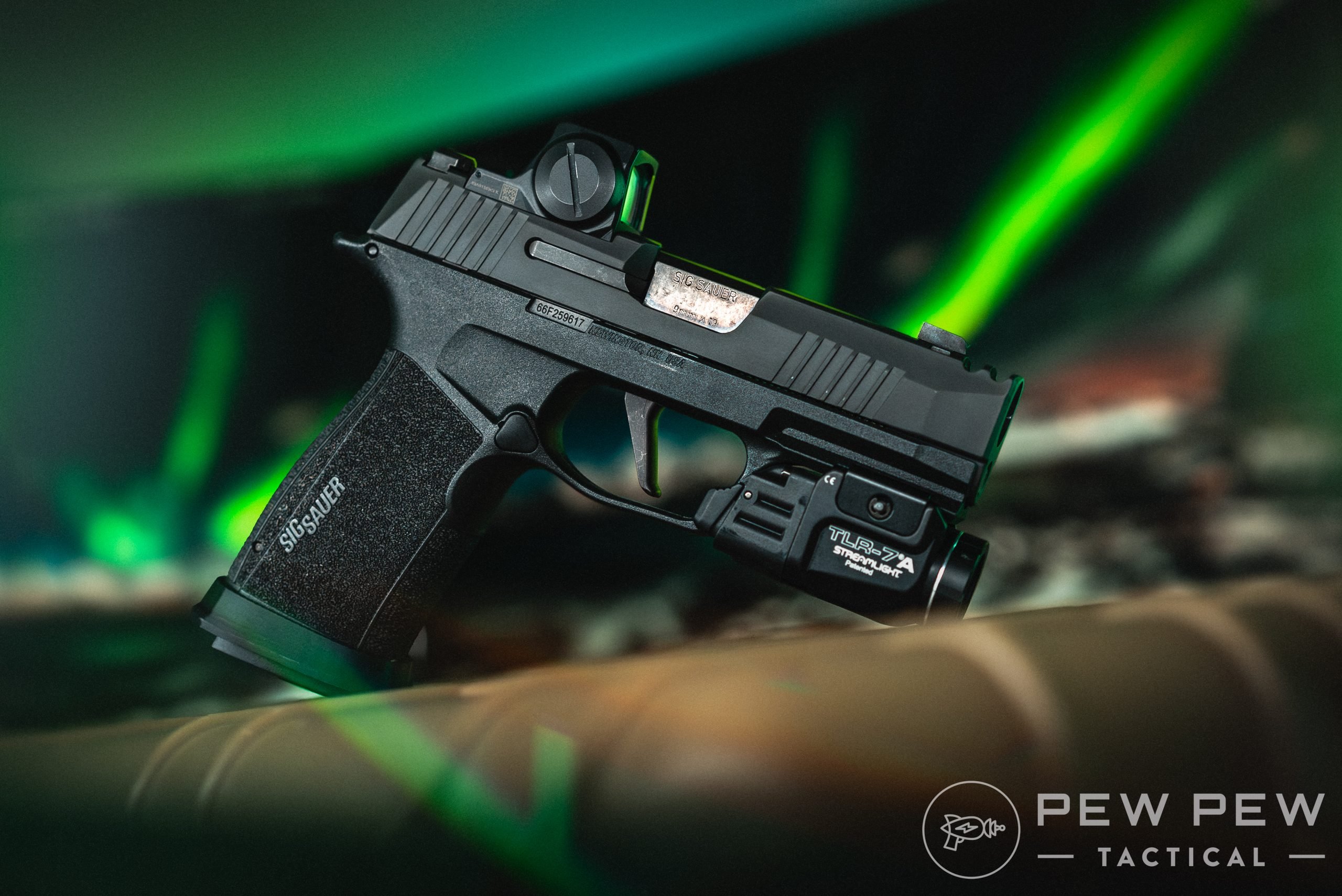
The industry standard has shifted toward “Optics Ready” slides. These slides feature precision-milled footprints—such as the Trijicon RMR or Holosun K-series patterns—that allow for the direct mounting of electronic sights. The technical challenge here involves maintaining zero under extreme G-forces; a handgun slide accelerates at thousands of feet per second squared during every shot. Modern optics are now engineered with “shake-awake” sensors and solar fail-safes, ensuring the digital interface is active the moment movement is detected.
Aspheric Lenses and Emitter Tech
The tech within the optics themselves is increasingly complex. High-end defensive optics now utilize aspheric lenses to eliminate parallax error, ensuring the point of impact remains consistent regardless of the eye’s angle to the lens. Multi-reticle systems (MRS) allow users to toggle between a 2 MOA (Minute of Angle) dot for precision and a 65 MOA circle for rapid target acquisition. This level of customization mimics the UI/UX choices found in high-end software, tailoring the hardware’s performance to the user’s cognitive load during high-stress scenarios.
Smart Gun Innovation and Biometric Security
As digital security becomes a cornerstone of every other tech industry, the self-defense market is finally seeing the integration of biometrics and proximity sensors. The goal is to create a “personalized” tool that functions only for the authorized user, effectively acting as a hardware-level encryption for physical force.
Biometric Authentication Systems
Companies like Biofire are pioneering the first generation of reliable “smart guns.” These devices utilize high-speed capacitive fingerprint sensors and 3D infrared facial recognition. The technical hurdle for these systems is the “Time to Unlock.” In a self-defense context, the handgun must authenticate the user in milliseconds. These systems use edge computing to process biometric data locally—ensuring privacy and speed—without the need for a cloud connection.
RFID and Proximity Locking
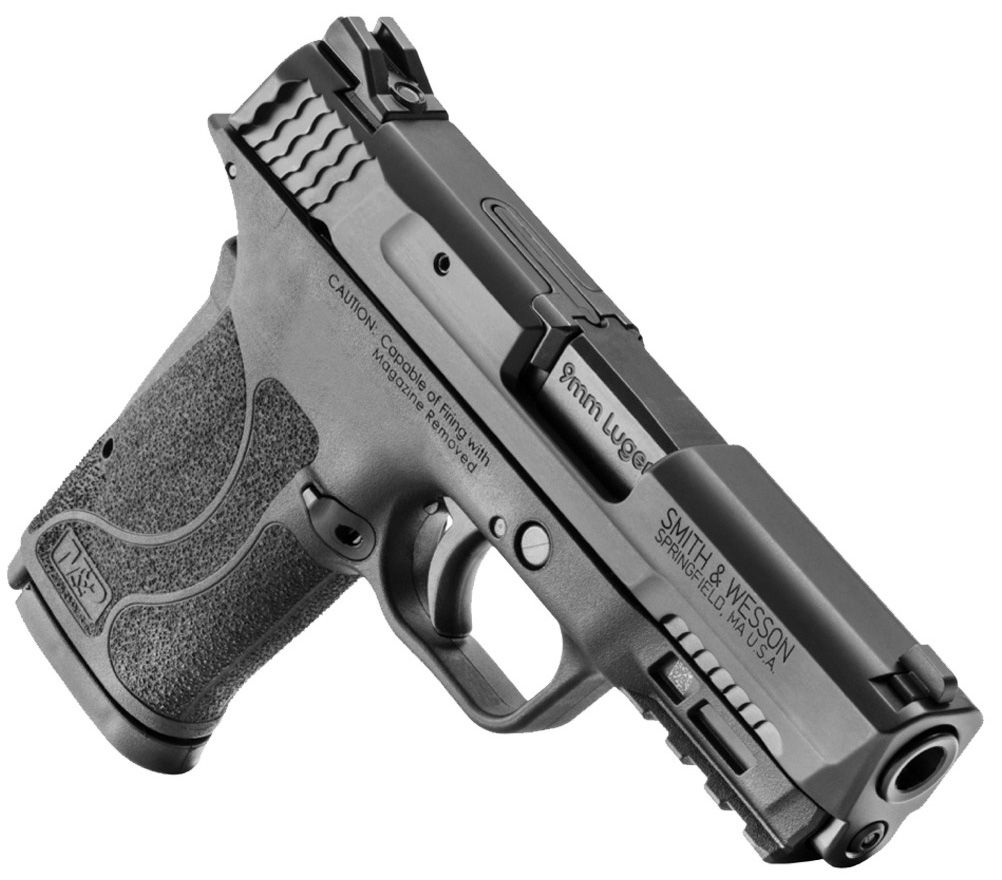
Another technological approach to handgun security involves Radio Frequency Identification (RFID). Some modern systems utilize a wearable “key,” such as a ring or a wristband, that communicates with a sensor in the grip via a low-latency encrypted link. When the key is within a specific range (usually measured in centimeters), the mechanical block on the firing pin is retracted. This creates a fail-secure environment where the tool is inert unless the authenticated “token” is present, mimicking the multi-factor authentication (MFA) protocols used in digital security.
Tactical Gadgets: Weapon Mounted Lights and Lasers
A self-defense handgun is often part of a larger hardware stack that includes illumination and target designation tools. The technology behind Weapon Mounted Lights (WML) has moved beyond simple lumens to focus on candela and beam pattern management.
High-Candela LED Engineering
In the tech world of tactical illumination, candela measures the intensity of light in a specific direction, whereas lumens measure the total output. Modern lights from manufacturers like Cloud Defensive and Modlite utilize custom-engineered drivers and reflectors to produce high-candela beams capable of “punching through” photonic barriers, such as streetlights or oncoming headlights. This is essentially optical signal processing—clearing visual noise to provide the user with better data.
Integrated Laser Aiming Modules
Lasers have moved from bulky external attachments to streamlined, integrated components. Green lasers are now the standard due to their higher visibility in the human eye’s peak sensitivity range. Advanced units now offer “smart” switching, where a single pressure pad can activate both a high-output white light and a laser simultaneously, or cycle through modes based on the duration of the press. This minimizes the “input latency” for the user during a crisis.
Data-Driven Training: Software and Hardware Synergy
The “best” handgun is only as effective as the user’s proficiency, and the modern way to build that proficiency is through data analytics and haptic feedback.
Diagnostic Hardware and Apps
The MantisX system is a prime example of how IoT (Internet of Things) has entered the self-defense space. A small sensor attaches to the handgun’s rail and tracks the movement of the firearm in real-time with high-frequency gyroscopes and accelerometers. This data is transmitted via Bluetooth to a smartphone app, which analyzes the “trigger pull” and provides instant feedback on mechanical errors. It turns a mechanical practice session into a data-driven diagnostic report, allowing users to track their progress through various metrics and “gamified” drills.
Virtual and Augmented Reality Simulation
Virtual Reality (VR) and dry-fire software platforms allow users to practice in high-fidelity simulated environments without the cost of live ammunition. These systems use laser-emitting cartridges that interface with camera-based software on a PC or tablet. The software records “hits” and “misses” on digital targets, providing a safe and infinitely repeatable environment for testing the “human-machine interface.”
Security and Storage: The High-Tech Safes
The final component of the best self-defense handgun setup is how it is stored. Analog lockboxes have been replaced by smart safes that act as the final node in a home security network.
Quick-Access Biometric Algorithms
Modern handgun safes utilize high-resolution optical or capacitive sensors that can store dozens of unique fingerprints. The software running these safes is designed for high-concurrency and low-latency, often featuring “anti-spoofing” technology to prevent unauthorized access via latent prints.
Connectivity and Remote Monitoring
The latest generation of safes features Wi-Fi and Bluetooth connectivity, sending “tamper alerts” directly to a user’s smartphone. If the safe is moved, or if an unauthorized fingerprint is detected, the system triggers a push notification. This integration into the broader “Smart Home” ecosystem ensures that the handgun remains a secure asset, monitored with the same rigor as a digital server or a high-value financial account.
In conclusion, identifying the best handgun for self-defense requires looking through a lens of technological integration. It is no longer just about the mechanical reliability of the firearm, but how that firearm functions as a platform for optics, illumination, biometric security, and data-driven training tools. The modern defensive handgun is a sophisticated piece of tech hardware, designed for maximum performance, precision, and security in an increasingly digital world.
aViewFromTheCave is a participant in the Amazon Services LLC Associates Program, an affiliate advertising program designed to provide a means for sites to earn advertising fees by advertising and linking to Amazon.com. Amazon, the Amazon logo, AmazonSupply, and the AmazonSupply logo are trademarks of Amazon.com, Inc. or its affiliates. As an Amazon Associate we earn affiliate commissions from qualifying purchases.