
Navigating the financial landscape of Australia requires a foundational understanding of its labor market, specifically the concept of the “basic wage.” In Australia, this is formally known as the National Minimum Wage. It serves as the bedrock of the nation’s economic safety net, ensuring that employees receive a fair day’s pay for a fair day’s work. For employees, it dictates their personal cash flow and lifestyle capacity; for employers, it represents a significant portion of operational expenditure and financial planning.
The Australian wage system is often regarded as one of the most robust and complex in the world. Unlike many jurisdictions where a single flat rate applies to everyone, Australia utilizes a tiered system involving the National Minimum Wage, Modern Awards, and Enterprise Agreements. Understanding where you sit within this framework is the first step toward effective personal financial management or business sustainability.

The Framework of the Australian Minimum Wage
The structure of Australian wages is governed by a central authority and a set of legislative instruments designed to balance economic growth with social equity.
The Role of the Fair Work Commission (FWC)
The Fair Work Commission is Australia’s independent workplace relations tribunal. One of its most critical financial functions is the Annual Wage Review. Every fiscal year, an expert panel examines the economic climate—considering factors such as inflation, GDP growth, and employment rates—to decide whether an increase in the minimum wage is warranted.
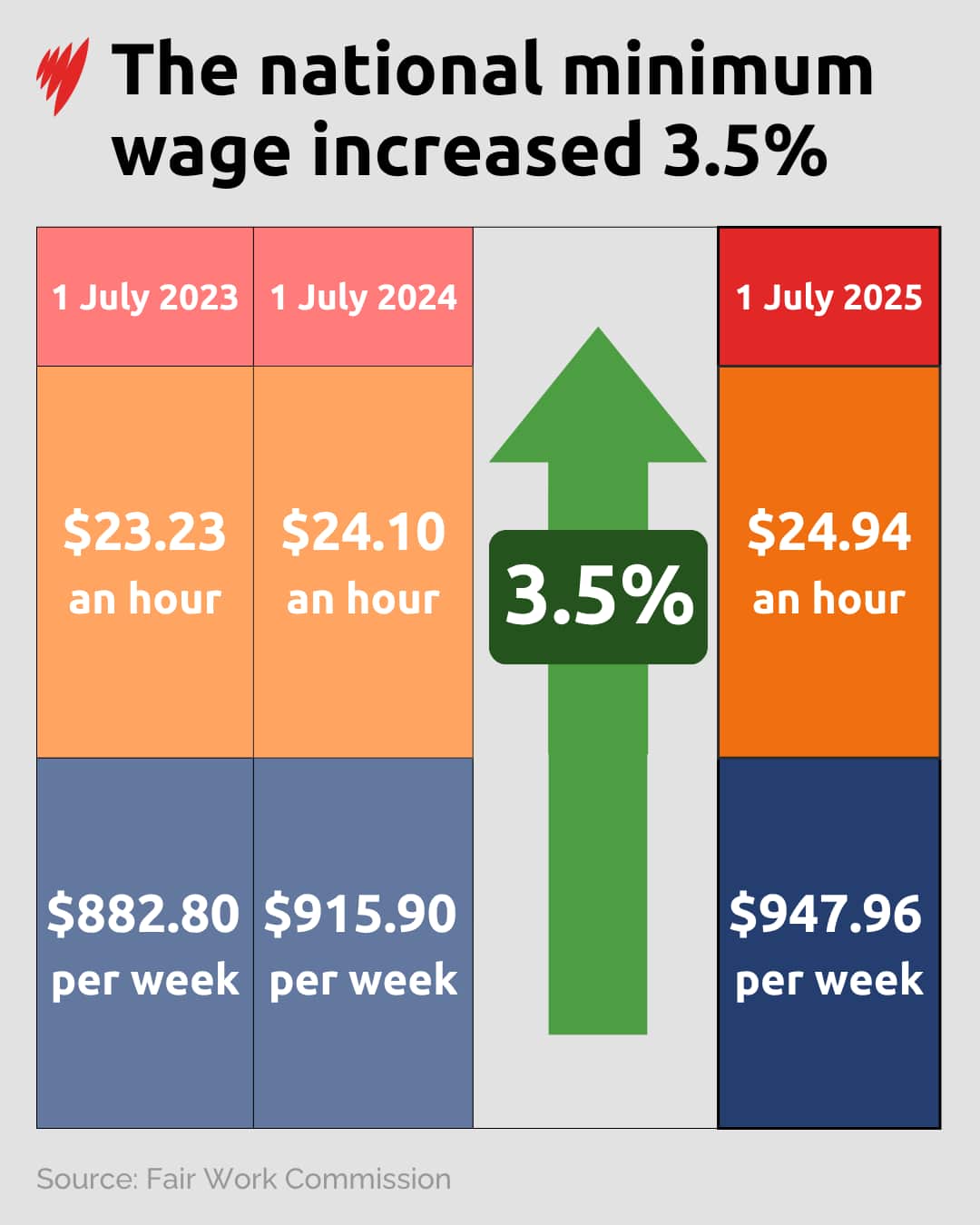
As of July 1, 2024, the National Minimum Wage was increased to $915.90 per week, or $24.10 per hour. This decision is never made in a vacuum; it is a delicate financial balancing act. The Commission must ensure that the wage is high enough to support the “working poor” against the rising cost of living, but not so high that it triggers a wage-price spiral or forces small businesses into insolvency.
National Minimum Wage vs. Modern Awards
It is a common misconception that the National Minimum Wage applies to all workers. In reality, it serves only as the absolute “floor.” Most employees in Australia are covered by “Modern Awards.” These are industry-specific legal documents that outline minimum pay rates and conditions for specific sectors, such as retail, hospitality, or construction.
There are over 100 Modern Awards in Australia. If an employee is covered by an Award, their “basic wage” is typically higher than the National Minimum Wage. For example, a tradesperson under the Building and Construction General On-site Award will have a significantly higher base rate than the national floor due to the skill level and risks associated with their role. Financially, identifying the correct Award is crucial for ensuring legal compliance and accurate budgeting.
Calculating Your Earnings: Rates, Penalties, and Allowances
The “basic wage” is rarely the final figure on a payslip. In the Australian financial system, the base rate is the starting point from which various loadings and penalties are calculated.
Casual vs. Full-Time Pay Scales
One of the most distinct features of the Australian money landscape is “casual loading.” In Australia, casual employees do not receive paid sick leave or annual leave. To compensate for this lack of security and benefits, they are entitled to a 25% loading on top of the base hourly rate.
From a personal finance perspective, a casual worker might earn $30.13 per hour (the $24.10 base plus the 25% loading), which looks attractive on paper. However, this higher hourly rate is intended to cover the “hidden costs” of not having paid time off. Conversely, full-time and part-time employees receive the base rate but gain the financial security of guaranteed hours and accrued leave, which acts as a form of deferred income.
Understanding Penalty Rates and Loading
Australia’s “penalty rate” system is a vital component of a worker’s earning potential. These are higher rates paid for working outside of standard business hours, such as weekends, public holidays, or late-night shifts.
For an individual looking to maximize their side hustle or primary income, understanding these rates is key. A Saturday shift might attract a 125% or 150% rate, while a public holiday could pay 250%. For a business, these are “variable costs” that must be meticulously managed. Failure to account for penalty rates in a business plan can lead to significant financial distress, as labor costs can effectively double during peak holiday periods.
The Economic Impact of Wage Adjustments
When the “basic wage” moves, the entire economy feels the ripple effects. This section explores how these adjustments influence the broader financial ecosystem.
Inflation and the Cost of Living
There is a constant debate in financial circles regarding the relationship between the minimum wage and inflation. When the Fair Work Commission raises wages, it increases the “disposable income” of lower-income households. This generally leads to increased consumer spending, which stimulates the economy.
However, if wage growth outpaces productivity, businesses may pass these costs on to consumers in the form of higher prices. This contributes to inflation. For the average Australian, a 5% wage increase is a win, but if the cost of groceries and rent also rises by 5%, the real-term financial gain is neutralized. Therefore, the basic wage is a primary lever in the nation’s monetary policy and overall cost-of-living discussions.
Business Sustainability and Labor Costs
For small to medium enterprises (SMEs), the minimum wage is often their largest line item in the budget. An increase in the basic wage requires immediate financial restructuring. Businesses must decide whether to absorb the cost, reduce staff hours, or increase the prices of their goods and services.
Effective business finance involves “wage forecasting.” Savvy business owners track the Annual Wage Review closely and build a buffer into their financial models. Understanding the nuances of the basic wage allows businesses to remain competitive while staying compliant with the law, avoiding the heavy fines associated with underpayment.
Navigating Rights and Compliance in the Workplace
The financial integrity of the Australian wage system relies on transparency and enforcement. Both employers and employees have a vested interest in ensuring that the correct “basic wage” is paid.
Wage Theft and Recovery Processes
“Wage theft” has become a prominent term in Australian business finance. It refers to the systemic underpayment of employees, whether intentional or accidental. This can include failing to pay the correct base rate, withholding penalty rates, or not contributing the required Superannuation.
The Fair Work Ombudsman (FWO) serves as the regulator in this space. For employees, the FWO provides tools like the “Pay and Conditions Tool” (PACT) to calculate what they should be earning. From a financial recovery standpoint, if an employee discovers they have been underpaid, they can seek back-pay. For a business, a wage theft audit can result in millions of dollars in back-payments and penalties, potentially leading to bankruptcy.
Resources for Financial Empowerment
Understanding the basic wage is the first step toward financial literacy. Australians are encouraged to use various digital tools and government resources to track their earnings. Knowing your “gross income” (before tax) versus your “net income” (after tax) is essential for budgeting.
Furthermore, the basic wage is intrinsically linked to the Superannuation Guarantee. As of 2024, employers must pay 11.5% of an employee’s ordinary time earnings into their superannuation fund. This is a crucial “hidden” component of the basic wage that secures a worker’s long-term financial future.
Future Outlook: Trends in Australian Remuneration
As we look toward the future of money and work in Australia, the definition of the “basic wage” continues to evolve.
The rise of the “gig economy”—platforms like Uber, DoorDash, and Airtasker—has challenged traditional wage structures. For years, gig workers were classified as independent contractors, meaning they weren’t entitled to the National Minimum Wage. However, recent legislative changes are moving toward providing “minimum standards” for these workers. This represents a significant shift in the Australian financial landscape, as it attempts to bring gig work into the regulated fold of the basic wage system.
Additionally, as automation and AI begin to perform more entry-level tasks, the demand for “unskilled” labor may shift. This could lead to a reimagining of what a “living wage” looks like in a digital-first economy. For investors and workers alike, staying informed about these wage trends is not just about knowing the current hourly rate; it is about understanding the shifting value of labor in a globalized market.
In conclusion, the basic wage in Australia is more than just a number. It is a complex financial instrument that dictates the standard of living for millions, influences the viability of businesses, and shapes the nation’s economic trajectory. Whether you are an employee looking to optimize your take-home pay or an employer managing a payroll, a deep understanding of the minimum wage framework is an indispensable asset in your financial toolkit.
aViewFromTheCave is a participant in the Amazon Services LLC Associates Program, an affiliate advertising program designed to provide a means for sites to earn advertising fees by advertising and linking to Amazon.com. Amazon, the Amazon logo, AmazonSupply, and the AmazonSupply logo are trademarks of Amazon.com, Inc. or its affiliates. As an Amazon Associate we earn affiliate commissions from qualifying purchases.