
For the modern professional and the financially conscious individual, understanding the trajectory of earnings is a cornerstone of long-term planning. Whether you are budgeting for a first home, calculating your retirement runway, or simply trying to ensure your lifestyle keeps pace with the economy, the question of the “average wage increase” is central to your financial health.
Historically, the benchmark for a standard annual raise has hovered around 3%. However, the economic landscape of the 2020s has challenged this norm, introducing volatility through unprecedented inflation, shifts in labor market dynamics, and the rise of remote work. To navigate your career and personal finances effectively, you must look beyond the surface-level percentages and understand the mechanics of how wages grow in a complex global economy.
Understanding the Historical Context of Annual Pay Raises
The concept of the annual raise is rooted in the corporate structures of the mid-20th century, designed to provide employees with a sense of progression and to offset the natural rise in the cost of goods and services. For decades, a 3% increase was considered the “gold standard” for a satisfactory performance review in a stable economy.
The 3% Standard and Why It Persisted
The 3% figure was not arbitrary. It was designed to balance two competing interests: the company’s need to maintain a predictable payroll budget and the employee’s need to maintain purchasing power. In an environment where inflation typically sat between 1% and 2%, a 3% raise offered a slight “real” gain in wealth. This allowed employees to slowly increase their standard of living over time. From a corporate finance perspective, 3% was a safe harbor that shareholders accepted as a necessary cost of doing business and retaining talent.
Economic Cycles and Their Impact
Wage growth is never a flat line; it is a pulse that reacts to the broader economy. During the Great Recession of 2008, wage growth stagnated as companies prioritized survival over retention. Conversely, the “Great Resignation” and the post-pandemic recovery saw a sharp spike in wage demands. In 2022 and 2023, average wage increases in many sectors jumped to 4% or 5% as companies competed for a dwindling supply of skilled labor. Understanding where we are in the economic cycle—whether in a period of expansion or contraction—is vital for setting realistic expectations for your next salary review.
Factors That Dictate Your Specific Wage Growth
While national averages provide a useful baseline, they rarely reflect the reality of an individual’s paycheck. Several granular factors determine whether you will receive the standard 3%, a “cost of living adjustment” (COLA), or a double-digit jump.
Industry Benchmarks and Sector Volatility
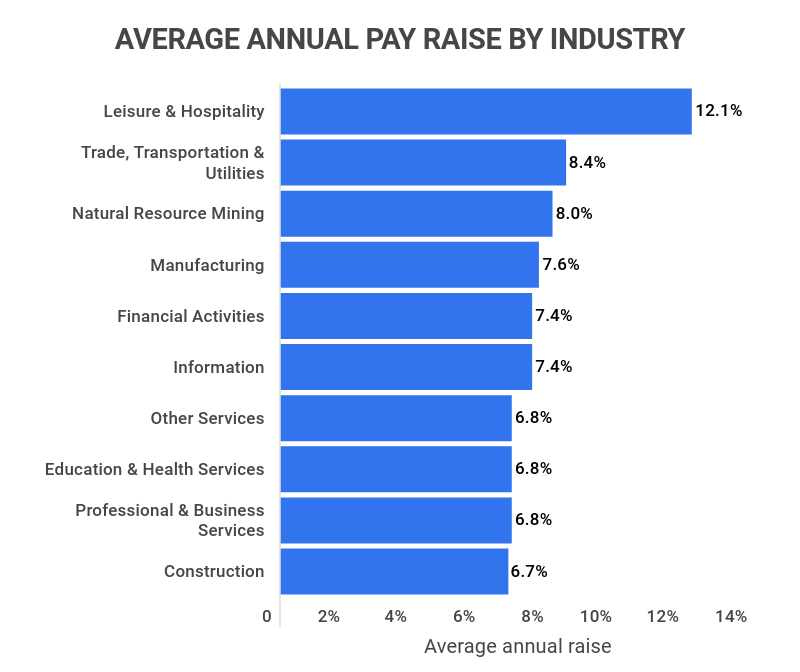
The “Money” category reveals that not all sectors are created equal when it comes to liquidity and payroll flexibility. Professionals in high-margin industries like finance, professional services, and specialized technology often see higher average increases compared to those in low-margin sectors like retail or hospitality. For example, during periods of high interest rates, the financial sector may have more capital to allocate toward retention, whereas manufacturing firms might tighten their belts due to rising raw material costs.
Regional Cost of Living Adjustments (COLA)
Geography remains one of the most significant drivers of wage increases. A 3% raise in a high-cost urban center like New York City or San Francisco may not cover the rising cost of rent and utilities, effectively resulting in a decrease in standard of living. Employers in these regions often apply a “geographic differential” to their raises. Conversely, as remote work becomes more permanent, we are seeing a “localization” of wages, where companies may moderate increases for employees moving to lower-cost-of-living areas.
Performance-Based Increases vs. Flat Rates
There is a critical distinction between a merit increase and a cost-of-living adjustment. Merit increases are based on individual contributions, KPIs (Key Performance Indicators), and value added to the company. A top-tier performer might see a 7% to 10% increase, while an average performer receives 3%. Financially savvy employees track their “ROI” to the company throughout the year, using these metrics to justify an increase that exceeds the corporate average.
The Critical Relationship Between Wage Growth and Inflation
One of the most dangerous mistakes an individual can make in personal finance is focusing solely on the “nominal” wage increase—the raw number on the paper—without considering the “real” wage increase.
Real Wages vs. Nominal Wages
If your employer grants you a 4% raise, but the Consumer Price Index (CPI) shows that inflation is running at 6%, your “real wage” has actually decreased by 2%. In this scenario, despite having more dollars in your bank account, you can afford fewer goods and services than you could the year prior. This is known as “bracket creep” or “inflationary erosion.” When negotiating a raise, it is essential to cite current inflation data to ensure your “real” income is at least holding steady.
The Purchasing Power Parity
Purchasing power is the true measure of wealth. Over the last few years, the average wage increase has struggled to keep pace with the soaring costs of “big ticket” items like housing, healthcare, and education. Even if the “average” wage increase is reported as 4.5% by the Bureau of Labor Statistics, if your specific basket of goods (rent, gas, groceries) has increased by 10%, you are technically moving backward. Financial planning requires a personalized look at how your specific expenses align with your income growth.
Strategies to Secure a Higher Than Average Raise
Waiting for a 3% annual bump is a passive approach to wealth building. To significantly move the needle on your net worth, you must employ active strategies that leverage market dynamics.
Upskilling and Professional Certifications
In the realm of business finance, employees are viewed as assets. The value of an asset increases when its utility increases. Obtaining a specialized certification (such as a CFA for finance professionals or a PMP for project managers) provides a quantifiable reason for a salary adjustment. These credentials often move an employee into a different “pay band” entirely, where the average increase is calculated against a higher base.
Leveraging Market Data during Negotiations
Salary transparency laws are changing the landscape of personal finance. Many states now require companies to publish salary ranges. Use this data, along with resources like Glassdoor, Payscale, and industry-specific surveys, to benchmark your current earnings. If the market rate for your role has increased by 15% due to a talent shortage, but your company is offering a 3% “standard” raise, you have the financial data necessary to negotiate a market adjustment.
The “Job Hopping” Premium
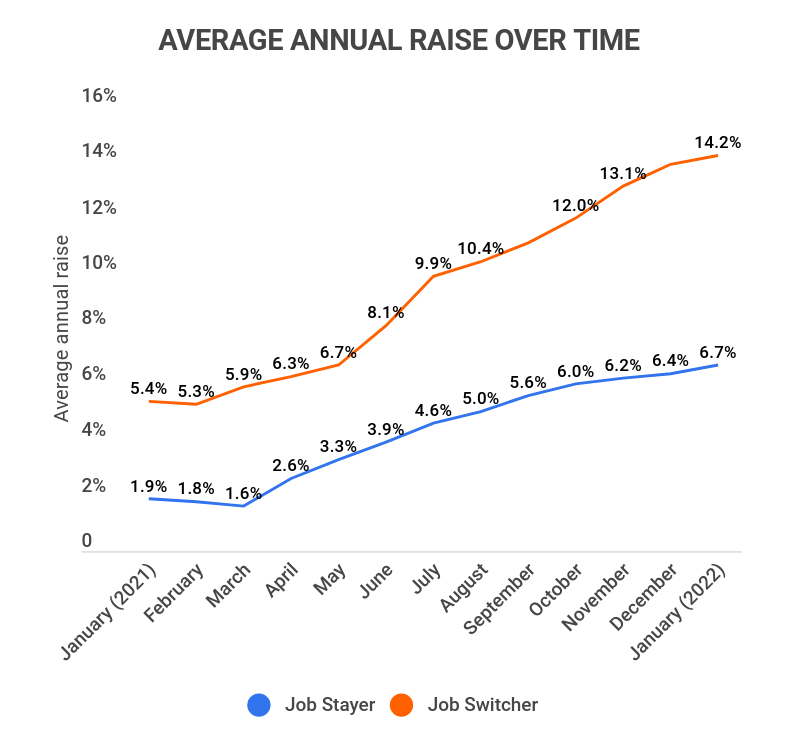
One of the most consistent findings in labor economics is that employees who change jobs every 2–3 years see significantly higher cumulative wage growth than those who stay with a single employer for a decade. While internal raises are often capped by rigid HR budgets (e.g., “no more than 5% without VP approval”), external hires are often paid from a “recruitment budget,” which is typically more flexible. It is not uncommon for a professional to secure a 15% to 20% increase by moving to a new firm—a gain that would take five to seven years to achieve through standard internal raises.
Future Projections: What to Expect in the Modern Economy
As we look toward the future of work and money, several emerging trends will dictate how average wage increases are structured.
The Rise of Remote Work Compensation
We are entering an era of “decoupled” wages, where your pay is no longer strictly tied to the office’s physical location. This is creating a more competitive national (and even international) market for talent. For employees in smaller markets, this is a financial boon, as they can command “big city” wages while maintaining “small town” expenses. However, it also means that the “average” increase will be influenced by a much broader pool of talent.
Automation and Value-Add Roles
As AI and automation begin to handle routine tasks, wage growth will likely bifurcate. Roles that involve repetitive tasks may see stagnating wages or lower-than-average increases. Conversely, roles that require complex decision-making, emotional intelligence, and high-level strategy will likely see aggressive wage growth. From a personal finance perspective, the best hedge against low wage increases is moving into “value-add” positions that are difficult to automate.
Total Compensation and Benefits
Finally, the “average wage increase” is increasingly being replaced by the concept of “Total Compensation.” Companies that cannot afford a 6% cash raise may instead offer more equity (RSUs), better 401(k) matching, or increased health insurance subsidies. When calculating your annual increase, it is vital to value these “non-cash” benefits. A 2% raise combined with an additional 3% in 401(k) matching is often more financially advantageous in the long run due to tax benefits and compound interest.
In conclusion, while the average wage increase per year typically lands between 3% and 5%, this number is merely a starting point. By understanding the interplay of inflation, industry demand, and personal performance, you can take control of your financial narrative. Real wealth is not built on the averages; it is built by understanding the mechanics of the economy and positioning yourself to exceed the baseline.
aViewFromTheCave is a participant in the Amazon Services LLC Associates Program, an affiliate advertising program designed to provide a means for sites to earn advertising fees by advertising and linking to Amazon.com. Amazon, the Amazon logo, AmazonSupply, and the AmazonSupply logo are trademarks of Amazon.com, Inc. or its affiliates. As an Amazon Associate we earn affiliate commissions from qualifying purchases.