
The automotive market has undergone a radical transformation over the last decade, with Tesla standing at the forefront of the shift toward electrification. For the prospective buyer or the fiscally-minded investor, understanding the price of a Tesla is no longer as simple as looking at a static MSRP. Because Tesla utilizes a direct-to-consumer sales model and frequently adjusts its pricing based on real-time supply chain data and market demand, the “average price” is a moving target.
As of the current market cycle, the average price for a new Tesla typically ranges between $40,000 and $100,000, depending heavily on the model, trim level, and software configurations. However, the sticker price is only the beginning of the financial story. To truly understand the capital requirements of Tesla ownership, one must analyze the initial investment, the impact of federal incentives, and the long-term total cost of ownership (TCO) compared to traditional internal combustion engine (ICE) vehicles.
Breaking Down the Current Tesla Model Pricing (The Initial Investment)
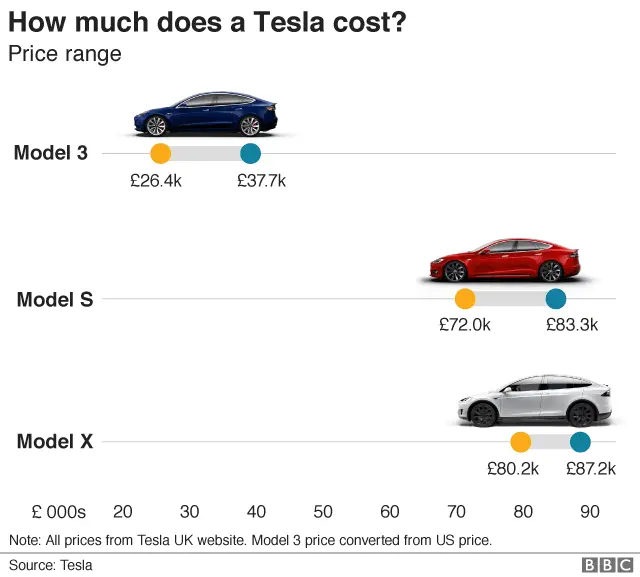
To determine the average price, we must first segment the Tesla lineup into its two distinct categories: the high-volume “mass market” models and the low-volume “premium” models. The financial entry point for the brand has lowered significantly since its inception, yet the ceiling for performance variants remains high.
Entry-Level Accessibility: The Model 3 and Model Y
The Model 3 and Model Y represent the vast majority of Tesla’s sales volume and, consequently, define the “average” price for most consumers. The Model 3, a compact executive sedan, serves as the brand’s entry point. Currently, the Rear-Wheel Drive (RWD) base version often starts around $39,000 to $42,000.
The Model Y, a compact crossover SUV, is currently the best-selling vehicle globally. Because of its popularity and utility, it commands a slightly higher premium than the Model 3. The average starting price for a Model Y Long Range typically sits between $45,000 and $50,000. When most analysts discuss the average Tesla price, they are usually referring to a figure in the $48,000 range, which reflects the heavy sales weighting toward these two models.
The Premium Tier: Model S and Model X
For those moving into the luxury segment, the financial requirements increase dramatically. The Model S sedan and the Model X SUV are Tesla’s flagship vehicles. These models feature advanced powertrain technology, larger battery packs, and more sophisticated interior materials.
The Model S generally starts around $75,000, while the Model X begins closer to $80,000. However, for buyers seeking the “Plaid” performance trims—which offer sub-two-second 0-60 mph times—the price can easily exceed $90,000 or $100,000. While these models represent a smaller percentage of total units sold, they significantly pull the “mean” price of the brand upward.
Performance and Long Range Premiums
Within each model, Tesla offers tiered pricing based on battery capacity and motor configuration. A “Long Range” variant usually adds $5,000 to $10,000 to the base price, while “Performance” trims add another $5,000 to $10,000 on top of that. For a consumer, the financial decision often comes down to a trade-off between range security and upfront capital expenditure.
Incentives and Tax Credits: Reducing the Effective Purchase Price
In the world of personal finance, the “net price” is far more important than the “gross price.” Tesla’s pricing strategy is inextricably linked to government incentives, specifically the United States Federal EV Tax Credit under Section 30D of the Internal Revenue Code.
Federal EV Tax Credits
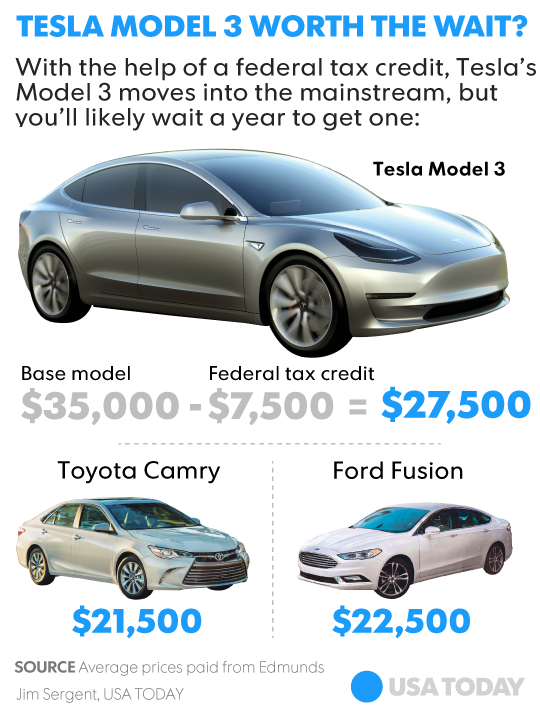
The Inflation Reduction Act (IRA) radically changed the financial landscape for Tesla buyers. Currently, many versions of the Model 3 and Model Y qualify for a federal tax credit of up to $7,500. For a buyer looking at a $45,000 Model Y, this credit effectively reduces the purchase price to $37,500.
It is vital for buyers to understand the “Point-of-Sale” (POS) credit mechanism. As of 2024, eligible buyers can transfer the tax credit directly to the dealer (Tesla) to reduce the purchase price at the time of sale, rather than waiting to claim it on their annual tax return. This provides immediate liquidity relief and reduces the amount of principal that needs to be financed, thereby lowering monthly interest payments.
State-Level Rebates and Local Incentives
Beyond federal help, several states offer additional financial “kickbacks” for EV adoption. States like Colorado, California, and Massachusetts have historically offered rebates ranging from $2,500 to $5,000. In some specific financial scenarios, a resident in a high-incentive state can stack federal and state credits to reduce the effective price of a new Tesla by over $12,000, bringing the cost of a new Model 3 into the territory of a budget-friendly Toyota or Honda.
Income Caps and Eligibility
From a financial planning perspective, one must be aware of the income limitations. The federal credit is capped for individuals earning over $150,000 (or $300,000 for married couples filing jointly). If a buyer exceeds these limits, the “average price” they pay is effectively $7,500 higher than their lower-earning counterparts.
Total Cost of Ownership: Beyond the Sticker Price
When calculating whether a Tesla fits into a personal or business budget, the sticker price is only one variable in a complex equation. The Total Cost of Ownership (TCO) is where Tesla often proves its financial utility.
Fuel Savings: Electricity vs. Gasoline
The most immediate financial benefit of Tesla ownership is the reduction in “fueling” costs. On average, charging a Tesla at home costs about one-third to one-fourth as much as fueling a comparable gasoline vehicle per mile. For a driver who travels 15,000 miles per year, this can result in annual savings of $1,000 to $2,000, depending on local utility rates and the price of gas. Over a five-year ownership period, this equates to a $5,000 to $10,000 reduction in the net cost of the vehicle.
Maintenance and Long-Term Reliability Costs
Tesla vehicles have significantly fewer moving parts than internal combustion engines. There are no oil changes, spark plugs, timing belts, or transmission flushes. This “mechanical simplicity” translates to lower recurring maintenance costs.
However, one must account for specific “EV costs.” Teslas are heavy due to their battery packs, which can lead to faster tire wear. Additionally, out-of-warranty repairs on high-tech components like the infotainment screen or the air suspension (on Model S/X) can be expensive. Generally, the financial consensus is that maintenance costs are roughly 40% lower than those of a BMW or Audi in the same price bracket.
Insurance Premiums for High-Tech Vehicles
A critical and often overlooked financial factor is insurance. Teslas are frequently more expensive to insure than comparable gas vehicles. This is due to the high cost of repairs for the aluminum chassis and the specialized sensors used for Autopilot and Full Self-Driving (FSD) features. A buyer should expect to pay 15% to 30% more in annual premiums, which can eat into the savings gained from fuel efficiency.
Depreciation and Resale Value: The Investment Perspective
For many car owners, the largest expense is not gas or insurance—it is depreciation. The “price” of a Tesla is ultimately determined by what you pay minus what you can sell it for later.
How Tesla Holds Value
Historically, Teslas held their value better than almost any other vehicle on the market. High demand and limited supply meant that used Teslas often sold for near-MSRP prices. However, as production has scaled and Tesla has aggressively cut prices on new models, the used market has stabilized.
Tesla’s software-centric approach provides a unique “residual value” hedge. Unlike traditional cars that become obsolete the moment a new model year is released, Teslas receive Over-The-Air (OTA) updates that add features and improve efficiency. This helps the vehicle maintain a higher functional value over time compared to a legacy vehicle that remains static.
Volatility in the Used Market
The financial risk for a Tesla owner lies in the company’s pricing volatility. If Tesla slashes the price of a new Model 3 by $5,000 overnight, the resale value of every existing Model 3 on the road drops instantly. Investors and owners must be prepared for this lack of “price stability,” which is a departure from the traditional automotive pricing model.
Financing and Leasing Strategies
Given the average price of a Tesla, the method of acquisition is a major financial decision. With interest rates fluctuating, the choice between cash, financing, or leasing requires careful analysis.
Direct Lending vs. Tesla Financing
Tesla offers its own financing through partner banks, often with a streamlined integration in the Tesla app. However, savvy buyers can often find lower APRs through local credit unions that offer “Green Auto Loans.” For a $50,000 vehicle, a 2% difference in interest rates can save nearly $3,000 over the life of a 60-month loan.
The Lease vs. Buy Decision
Leasing a Tesla has become more attractive recently due to the rapid pace of technological advancement. If a buyer is concerned that battery technology will take a massive leap in the next three years, leasing allows them to walk away from the vehicle without worrying about its residual value.
However, it is important to note that Tesla has historically been restrictive with its lease terms—for example, previously not allowing lessees to purchase the vehicle at the end of the term for certain models. For those looking to build equity in a high-value asset, traditional financing remains the superior financial path.
The Opportunity Cost of FSD
Finally, one must consider the financial implications of the Full Self-Driving (FSD) software suite. Currently priced as an upfront add-on (often around $8,000 to $12,000) or a monthly subscription, FSD is a significant capital outlay. From a purely financial standpoint, the subscription model is often more prudent, as the upfront cost of FSD does not always translate to an equivalent increase in the vehicle’s resale value.
In conclusion, while the average price for a Tesla sits in the mid-$40,000 range for the typical buyer, the true financial impact is a product of incentives, operational savings, and depreciation. For the modern consumer, a Tesla represents a shift from “variable expenses” (gas and oil) to “fixed capital investment” (upfront vehicle cost), making it a unique asset in the landscape of personal finance.
aViewFromTheCave is a participant in the Amazon Services LLC Associates Program, an affiliate advertising program designed to provide a means for sites to earn advertising fees by advertising and linking to Amazon.com. Amazon, the Amazon logo, AmazonSupply, and the AmazonSupply logo are trademarks of Amazon.com, Inc. or its affiliates. As an Amazon Associate we earn affiliate commissions from qualifying purchases.