
Understanding the average interest rate on a mortgage is more than just tracking a single number; it is an exploration of the global economy, personal financial health, and the mechanics of the debt market. For the average homebuyer or real estate investor, the mortgage rate is the single most significant factor determining the long-term affordability of a property. While news headlines often broadcast a daily percentage, that figure is a fluid benchmark influenced by a complex web of fiscal policy, investor sentiment, and individual risk profiles.
To navigate the housing market effectively, one must understand how these rates are calculated, why they fluctuate, and how a seemingly small decimal shift can result in a difference of tens of thousands of dollars over the life of a loan.
The Macroeconomic Drivers of Mortgage Rates
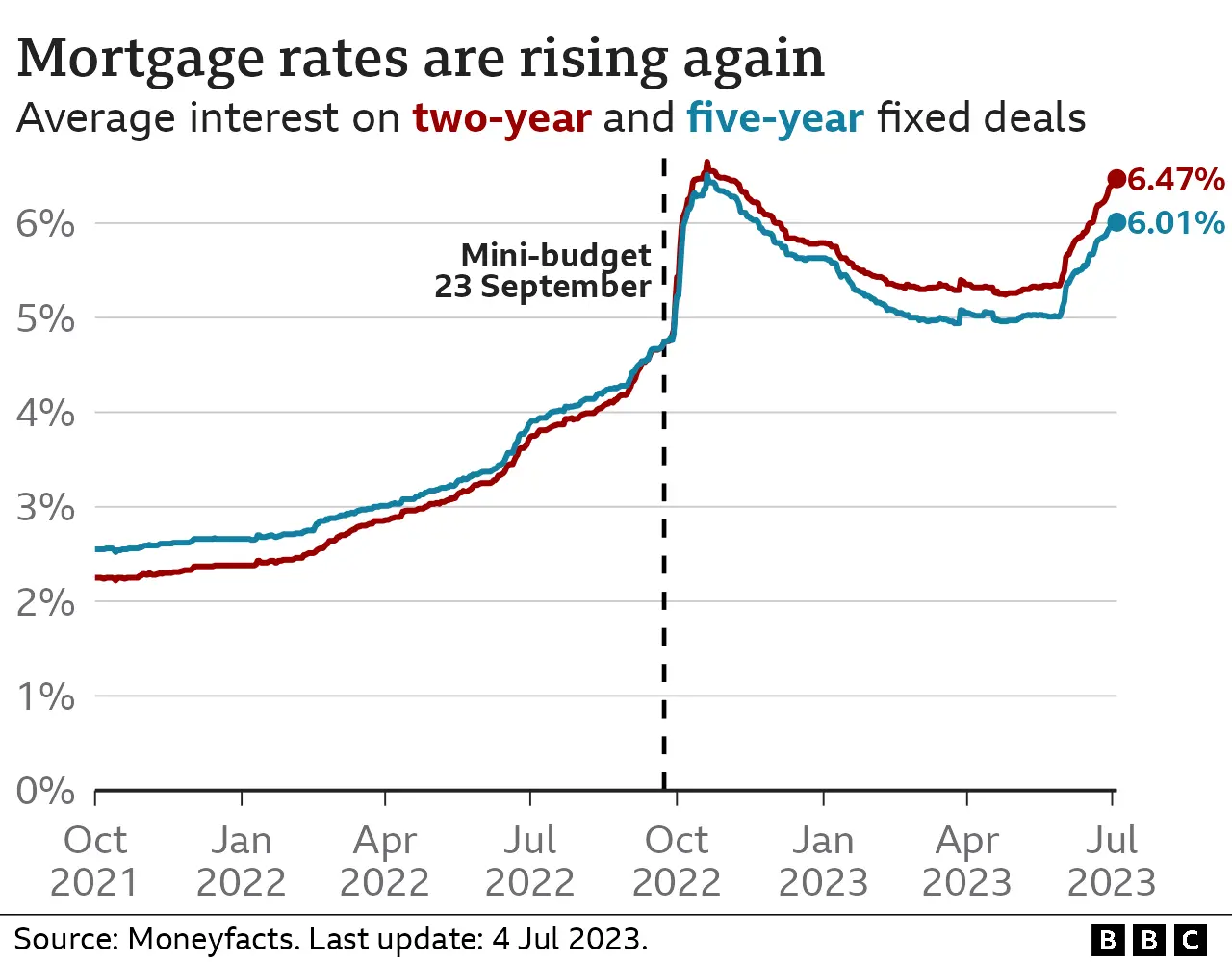
Mortgage rates do not exist in a vacuum. They are primarily driven by the broader economic environment and the secondary market where mortgages are traded as securities. While many people believe the Federal Reserve sets mortgage rates directly, the reality is more nuanced.
The Federal Reserve and the Federal Funds Rate
The Federal Reserve influences mortgage rates indirectly through its control of the federal funds rate—the interest rate at which commercial banks borrow and lend to each other overnight. When the Fed raises rates to combat inflation, the cost of borrowing increases across the board. While this does not mean a 0.25% hike by the Fed results in an immediate 0.25% increase in mortgage rates, it sets a baseline for the “cost of money.” When banks pay more to borrow, they charge consumers more to lend.
The 10-Year Treasury Yield
A more direct barometer for the average mortgage rate is the 10-year Treasury yield. Most 30-year fixed-rate mortgages are paid off or refinanced within ten years. Therefore, investors who buy mortgage-backed securities (MBS) view them as competitors to the 10-year Treasury bond. When the yield on the 10-year Treasury rises, mortgage rates typically follow suit to remain attractive to investors. The “spread” between the 10-year Treasury and the average mortgage rate—usually around 1.5 to 2 percentage points—reflects the additional risk investors take on when holding mortgages instead of government-backed debt.
Inflation and Economic Growth
Inflation is the natural enemy of mortgage lenders. Because a mortgage is a long-term fixed-income investment for the lender, the purchasing power of the interest they receive is eroded by inflation. When inflation is high, lenders demand higher interest rates to compensate for that loss of value. Conversely, in a stagnant or recessionary economy, the demand for loans drops, and the Fed may lower rates to stimulate borrowing, leading to a dip in the national average.
Personal Factors: Why Your Rate May Differ from the Average
When you see a “national average” quoted in financial news, it typically refers to a borrower with a pristine credit profile, a substantial down payment, and a standard 30-year fixed-term loan. Most borrowers will find that their actual quoted rate deviates from this average based on their specific financial profile.
Credit Score and Risk Tiering
Lenders use credit scores—primarily FICO scores—to determine the probability of default. A borrower with a score above 760 is generally offered the lowest available market rates. As credit scores drop, lenders add “loan-level price adjustments” (LLPAs). For a borrower with a score in the 600s, the interest rate might be a full percentage point higher than the national average, reflecting the increased risk the bank is assuming.
Loan-to-Value Ratio (LTV)
The amount of equity you have in the property significantly impacts your rate. A borrower putting 20% down represents less risk to a lender than a borrower putting 3.5% down. Higher equity provides a buffer for the lender in the event of a foreclosure. Consequently, those with lower LTV ratios often secure rates slightly below the average, while high-LTV borrowers may face higher rates or the additional cost of Private Mortgage Insurance (PMI).
Debt-to-Income (DTI) Ratio
Lenders analyze your DTI to ensure you have the cash flow to sustain mortgage payments alongside other obligations like student loans, car payments, and credit card debt. While DTI doesn’t always change the interest rate directly in the same way a credit score does, it determines eligibility for certain loan products. A high DTI might force a borrower into a specialized loan product with higher interest rates than a standard conventional loan.
Comparing Mortgage Products and Their Rates

The “average” rate also varies significantly depending on the structure and duration of the loan. Choosing the right product requires balancing monthly affordability with long-term interest costs.
30-Year vs. 15-Year Fixed-Rate Mortgages
The 30-year fixed-rate mortgage is the industry standard due to its lower monthly payments. However, because the lender is committing to a fixed rate for three decades, they charge a premium for the extended risk. A 15-year fixed-rate mortgage typically carries a significantly lower interest rate—often 0.5% to 1% lower than its 30-year counterpart. While the monthly payments are higher because the principal is amortized over a shorter period, the total interest paid over the life of the loan is drastically reduced.
Adjustable-Rate Mortgages (ARMs)
ARMs offer an initial interest rate that is usually lower than the current average for fixed-rate loans. This “teaser” rate is fixed for a set period—commonly five, seven, or ten years. After that, the rate adjusts periodically based on market indexes. ARMs can be a strategic choice for those who plan to sell the home or refinance before the adjustment period begins, but they carry the risk of significantly higher payments if market rates rise in the future.
Government-Backed Loans (FHA, VA, and USDA)
FHA loans often have lower nominal interest rates than conventional loans because they are insured by the Federal Housing Administration. However, they require mortgage insurance premiums (MIP) that can make the “effective” rate higher. VA loans, available to veterans and service members, often provide some of the lowest rates in the market with no down payment requirement, making them a highly competitive alternative to the standard market average.
The Financial Impact of Rate Fluctuations
To understand the weight of the average interest rate, one must look at the math of amortization. Interest rates are not just numbers; they are the price of time and capital.
The Cost of a 1% Difference
Consider a $400,000 mortgage on a 30-year fixed term. At a 4% interest rate, the monthly principal and interest payment is approximately $1,910, and the total interest paid over the life of the loan is about $287,000. If the average rate climbs to 5%, the monthly payment jumps to $2,147, and the total interest paid increases to roughly $373,000. That single percentage point increase costs the borrower an additional $86,000 over 30 years. This illustrates why timing the market—or at least understanding the current rate environment—is essential for wealth preservation.
Buying Points to Lower Your Rate
Borrowers often have the option to “buy down” their interest rate by paying discount points at closing. One point typically costs 1% of the total loan amount and reduces the interest rate by approximately 0.25%. This is a strategic move for homeowners who plan to stay in their property for a long time, as the monthly savings will eventually surpass the upfront cost. Calculating the “break-even point” is a critical exercise in personal finance to determine if paying for a lower-than-average rate is a sound investment.
Strategic Approaches to Securing a Favorable Rate
While the national average is dictated by the market, your specific rate is something you can influence through preparation and comparison.
The Importance of Rate Shopping
Data from various consumer protection agencies suggests that borrowers who get quotes from at least three different lenders save an average of several thousand dollars over the life of their loan. Different institutions—big banks, credit unions, and online mortgage brokers—have different “appetites” for risk and different overhead costs, which allows them to offer varying rates. Even a difference of 0.125% is worth pursuing.
Timing the Lock
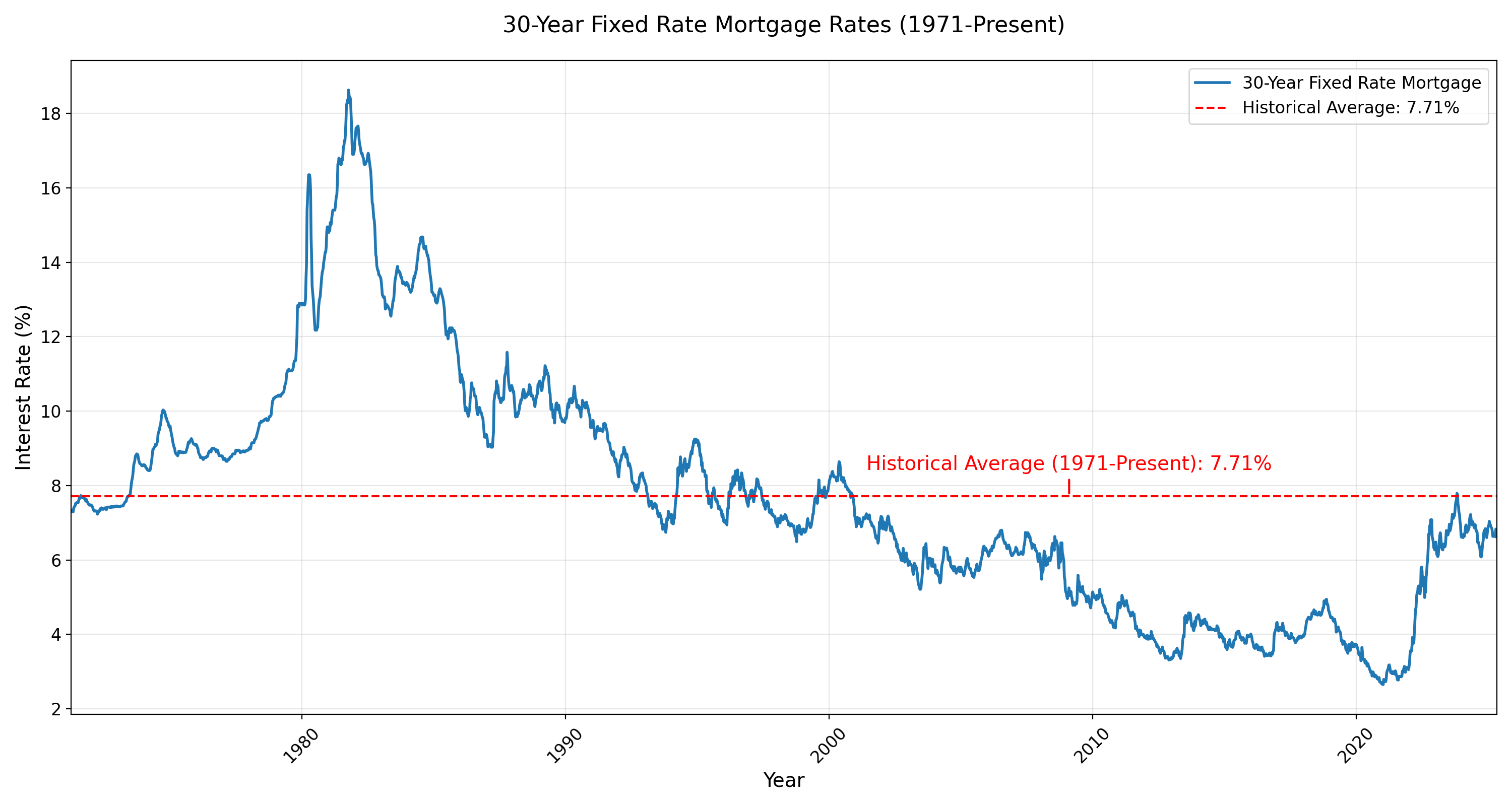
Because mortgage rates fluctuate daily, lenders offer a “rate lock” that guarantees a specific interest rate for a set period, usually 30 to 60 days. Deciding when to lock in a rate is a matter of analyzing market trends. If inflation data is expected to be high, it may be wise to lock earlier. If the economy shows signs of cooling, waiting a few days might result in a slight dip.
Improving Financial Health Before Application
In the months leading up to a mortgage application, focus on optimizing your financial profile to beat the average. This includes avoiding new lines of credit, paying down existing revolving debt to lower your credit utilization ratio, and ensuring all bills are paid on time. A jump from one credit tier to the next (e.g., from “Good” to “Excellent”) can result in a rate reduction that far outweighs any minor fluctuations in the national average.
In conclusion, the average interest rate on a mortgage is a multifaceted figure that serves as a pulse for the national economy. While the headline number provides a snapshot of the current lending climate, your personal financial strategy will ultimately determine the rate you pay. By understanding the underlying economic forces and meticulously managing your credit and loan choices, you can position yourself to secure a rate that supports your long-term financial goals and builds lasting home equity.
aViewFromTheCave is a participant in the Amazon Services LLC Associates Program, an affiliate advertising program designed to provide a means for sites to earn advertising fees by advertising and linking to Amazon.com. Amazon, the Amazon logo, AmazonSupply, and the AmazonSupply logo are trademarks of Amazon.com, Inc. or its affiliates. As an Amazon Associate we earn affiliate commissions from qualifying purchases.