
In the evolving landscape of diagnostic methodologies, the question “what is the autism test called?” often surfaces with an expectation of a singular, definitive procedure. However, for Autism Spectrum Disorder (ASD), the reality is a multi-faceted assessment process, increasingly augmented and even driven by advanced technology. There isn’t a single “autism test” but rather a comprehensive evaluation leveraging a suite of tools, software, and digital protocols designed to observe, measure, and analyze a range of behaviors and developmental markers. This technological pivot is transforming how ASD is identified, making the process more efficient, objective, and accessible.

Beyond a Single Test: The Technological Ecosystem of ASD Diagnosis
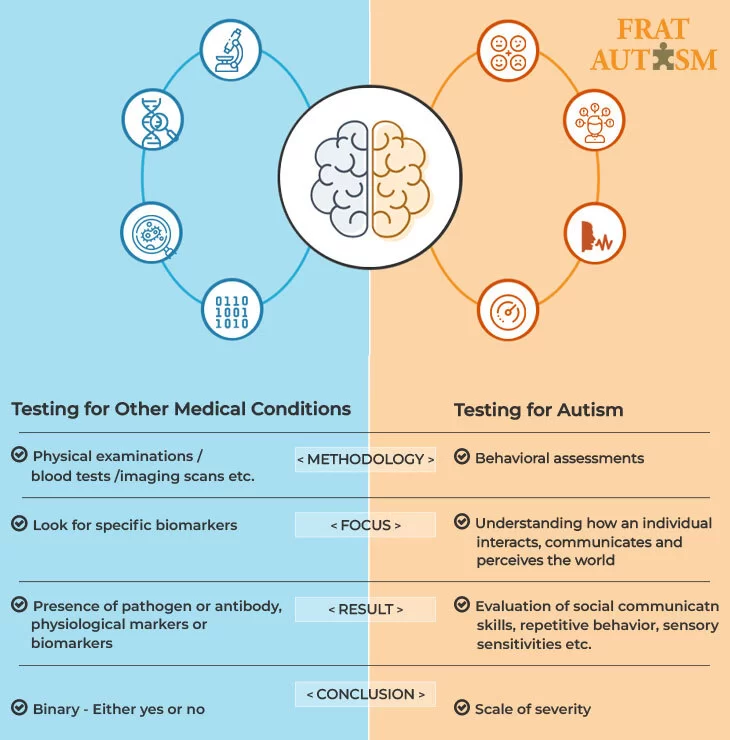
The traditional approach to diagnosing ASD typically involves clinical observation, parent interviews, and standardized behavioral assessments conducted by multidisciplinary teams. While these core components remain critical, the definition of what constitutes an “autism test” is broadening to include sophisticated technological applications. This shift acknowledges the complexity of ASD, where no single biomarker or simple checklist can provide a definitive answer. Instead, technology is enabling a more granular, data-driven approach, moving beyond subjective interpretation to quantifiable insights.
The Shift from Clinical Observation to Data-Driven Insights
Modern diagnostic protocols are integrating digital tools that enhance the precision and reliability of assessments. For instance, high-definition video analysis software can process hours of behavioral observations, identifying subtle patterns in social interaction, communication, and repetitive behaviors that might be missed by the human eye alone. These systems can track eye gaze, facial expressions, body language, and vocal inflections, providing objective metrics that contribute to a comprehensive profile. This computational approach complements clinical judgment, offering empirical data points to support diagnostic conclusions.
AI-Powered Predictive Analytics
Artificial intelligence (AI) and machine learning (ML) algorithms are at the forefront of this transformation. Researchers are training these systems on vast datasets of medical records, behavioral observations, genetic information, and neuroimaging scans from individuals with and without ASD. The goal is to develop predictive models that can identify early indicators of ASD, even before overt behavioral symptoms become apparent. These AI tools can process complex patterns across multiple data streams, flagging potential developmental differences that warrant further investigation. While not a standalone diagnostic test, AI-powered predictive analytics serve as powerful screening tools, guiding clinicians towards at-risk individuals and optimizing resource allocation for early intervention.
Software and App-Based Screening Innovations
The accessibility and ubiquity of smart devices have paved the way for a new generation of software and app-based screening tools. These digital solutions are designed to be user-friendly, engaging, and scalable, making early developmental screening more widespread and less resource-intensive. They serve as preliminary indicators, prompting parents or caregivers to seek professional evaluation if red flags are detected.
Gamified Digital Assessments for Early Detection
Many new applications utilize gamification to engage young children in tasks that subtly assess social communication, joint attention, and sensory processing. For example, apps might present interactive scenarios where a child needs to follow social cues, interpret emotions, or engage in turn-taking activities. The software then records reaction times, interaction patterns, and performance metrics, comparing them against normative data. These “digital games” effectively translate traditional assessment tasks into an engaging format, reducing the stress often associated with formal testing environments. Examples include apps that track a child’s gaze when presented with social stimuli versus non-social objects, or those that analyze vocalizations for prosodic abnormalities.
Telehealth Platforms Facilitating Remote Evaluation
The COVID-19 pandemic significantly accelerated the adoption of telehealth technologies, which have proven invaluable in bridging geographical gaps in ASD diagnosis. Telehealth platforms enable clinicians to conduct assessments remotely, using secure video conferencing tools to observe a child’s behavior in their natural environment. Specialized software integrated into these platforms can facilitate interactive tasks, administer questionnaires, and even support remote administration of parts of standardized diagnostic instruments. While face-to-face interaction remains the gold standard for many components, telehealth dramatically improves access to expert evaluators, especially for families in rural areas or those facing mobility challenges. These platforms also offer opportunities for ongoing monitoring and intervention support, creating a continuous digital care pathway.
Wearable Technology and Digital Biomarkers
The rise of wearable technology offers unprecedented opportunities for passive, continuous data collection, yielding “digital biomarkers” that can provide objective insights into an individual’s behavioral and physiological state. These devices move beyond snapshot observations to capture real-world data over extended periods, offering a more ecological assessment of everyday functioning.

Quantifying Behavioral Patterns
Wearable sensors, such as smartwatches or specialized patches, can monitor a range of physiological indicators, including heart rate variability, skin conductance, sleep patterns, and activity levels. These data points, when analyzed with sophisticated algorithms, can reveal patterns associated with stress, anxiety, or sensory sensitivities common in individuals with ASD. For example, sudden spikes in heart rate or changes in activity levels in specific social situations could indicate an individual’s response to an overwhelming environment. This objective quantification of subtle physiological responses adds a layer of measurable data to complement observed behaviors.
Eye-Tracking and Facial Recognition Software
Advanced eye-tracking and facial recognition technologies are becoming integral to understanding social attention and emotional processing deficits in ASD. Eye-tracking devices, whether integrated into screens or worn as glasses, can precisely measure where an individual is looking, for how long, and how their gaze shifts in response to social stimuli. This provides objective data on social engagement, joint attention, and the processing of faces and emotions. Similarly, facial recognition software, often powered by AI, can analyze micro-expressions and facial muscle movements, offering insights into an individual’s emotional responses and their ability to produce typical facial expressions during social interactions. These tools provide quantifiable metrics that are critical for understanding the nuanced social communication challenges in ASD.
Virtual Reality, AI, and Future Diagnostic Frontiers
The convergence of virtual reality (VR), augmented reality (AR), and AI is opening up entirely new frontiers for both assessment and intervention in ASD. These immersive technologies offer controlled, customizable environments for observing and training social skills, making them powerful tools for understanding and supporting individuals with ASD.
Simulating Social Scenarios in VR
Virtual reality environments allow clinicians to create realistic social situations that would be difficult or impossible to replicate in a traditional clinical setting. Individuals can practice social interactions, navigate novel environments, or learn specific vocational skills within a safe and repeatable virtual space. During these simulations, AI algorithms can analyze responses, track behaviors, and even adapt the scenario in real-time based on the individual’s performance. This provides rich diagnostic information about an individual’s social responsiveness, problem-solving abilities, and anxiety levels in controlled, yet ecologically valid, settings. The ability to manipulate variables within the VR environment also allows for precise testing of specific hypotheses related to social cognition and sensory processing.
The Role of AI in Diagnostic Support Systems
Beyond predictive analytics, AI is evolving to become a direct diagnostic support system. These intelligent systems can integrate data from various sources—behavioral observations, genetic tests, neuroimaging, digital biomarkers, and clinician reports—to provide a comprehensive diagnostic profile. By identifying complex correlations and subtle patterns across these diverse datasets, AI can assist clinicians in making more informed and accurate diagnoses, particularly in complex cases or in differentiating ASD from other neurodevelopmental conditions. These systems do not replace human clinicians but act as powerful cognitive aids, processing vast amounts of information and highlighting critical insights that might otherwise be overlooked.
Addressing Digital Security and Ethical AI in Autism Assessment
As technology becomes more deeply embedded in ASD assessment, critical considerations around digital security, data privacy, and ethical AI development come to the forefront. The sensitive nature of health data, especially concerning neurodevelopmental conditions, demands robust safeguards and transparent practices.
Safeguarding Sensitive Health Information
The collection and storage of personal health information (PHI) through digital tools necessitate stringent cybersecurity measures. Encryption, secure servers, access controls, and compliance with regulations like HIPAA (Health Insurance Portability and Accountability Act) are paramount. Developers of diagnostic software and telehealth platforms must prioritize data protection, ensuring that individuals’ privacy is maintained throughout the assessment process and beyond. Breaches of this sensitive data could have severe consequences, undermining trust and potentially exposing individuals to discrimination. Therefore, continuous vigilance and investment in state-of-the-art digital security protocols are non-negotiable.
Ensuring Algorithmic Fairness and Transparency
The increasing reliance on AI and ML in diagnostic tools also raises ethical questions about algorithmic bias and transparency. If AI models are trained on unrepresentative datasets, they might perpetuate or even amplify existing biases, leading to misdiagnosis or delayed intervention for certain demographic groups. Developers must rigorously test algorithms for fairness across diverse populations, ensuring that their tools are equitable and accurate for everyone. Furthermore, the “black box” nature of some AI systems, where it’s difficult to understand how a decision was reached, poses challenges. Efforts towards developing “explainable AI” (XAI) are crucial, allowing clinicians to understand the rationale behind an AI-assisted diagnosis and maintain ultimate oversight and responsibility for clinical decisions. The ethical implementation of these advanced technologies is as important as their technical prowess in shaping the future of ASD assessment.
aViewFromTheCave is a participant in the Amazon Services LLC Associates Program, an affiliate advertising program designed to provide a means for sites to earn advertising fees by advertising and linking to Amazon.com. Amazon, the Amazon logo, AmazonSupply, and the AmazonSupply logo are trademarks of Amazon.com, Inc. or its affiliates. As an Amazon Associate we earn affiliate commissions from qualifying purchases.