
For many investors, the Apple share price is more than just a ticker symbol on a screen; it is a barometer for the health of the technology sector and a cornerstone of the modern equity market. As one of the world’s most valuable companies by market capitalization, Apple Inc. (AAPL) commands the attention of retail investors, institutional fund managers, and economic analysts alike. However, understanding what drives that specific dollar amount requires looking beyond the daily fluctuations and delving into the fundamental financial mechanics, market sentiment, and macroeconomic factors that govern its movement.
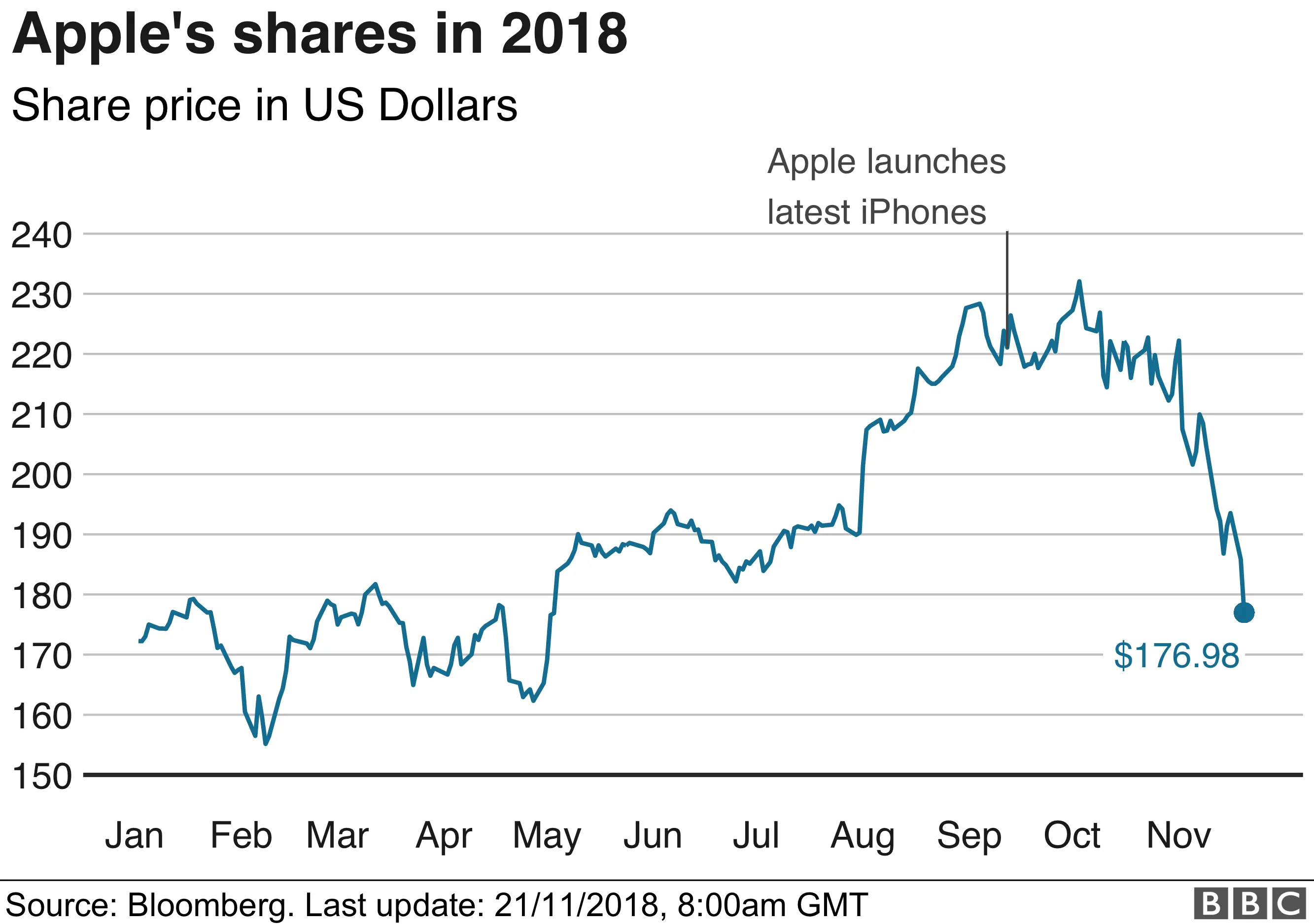
The Apple share price is a reflection of the collective market expectation of the company’s future earnings, discounted back to the present. To an investor, the current price represents a balance between those who believe the company will continue to innovate and grow its margins and those who believe its peak valuation is already behind it. In this comprehensive guide, we will analyze the primary drivers of Apple’s valuation and how investors should interpret the share price through the lens of personal finance and wealth management.
Factors Influencing Apple’s Market Valuation
When evaluating why the Apple share price sits at a particular level, one must first look at the company’s diverse revenue streams. While Apple began as a hardware manufacturer, its current valuation is increasingly tied to its ecosystem—a closed-loop environment where hardware, software, and services work in tandem to generate recurring revenue.
iPhone Cycles and Revenue Streams
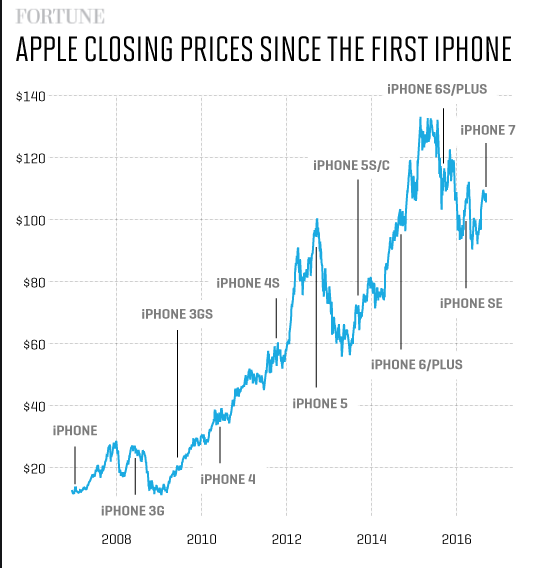
The iPhone remains the single largest contributor to Apple’s top-line growth. Investors closely monitor “iPhone cycles”—the periods following the release of new models. A “super-cycle,” characterized by significant hardware upgrades (such as the transition to 5G or the introduction of “Apple Intelligence” AI features), often leads to a surge in the share price. If pre-order data suggests high demand for premium “Pro” models, the market typically reacts positively, anticipating higher Average Selling Prices (ASP) and improved profit margins.
The Growing Services Segment
In recent years, the investment community has shifted its focus from hardware units sold to the growth of Apple’s Services segment. This includes the App Store, iCloud, Apple Music, Apple Pay, and Apple TV+. From a financial perspective, Services are highly attractive because they offer significantly higher gross margins than hardware and provide a predictable, recurring revenue stream. A rising Apple share price is often a reflection of the market’s confidence in this “subscription-style” business model, which reduces the company’s reliance on seasonal hardware sales.
Research and Development (R&D) and Future Innovation
Stock prices are inherently forward-looking. A portion of the Apple share price is “priced in” based on the company’s potential to disrupt new markets. Whether it is the expansion into spatial computing with the Vision Pro, advancements in health technology via the Apple Watch, or the integration of generative AI across its operating systems, the market rewards Apple for its R&D spending. If investors believe Apple is falling behind in the AI race, the share price may stagnate; conversely, a breakthrough in proprietary technology can act as a massive catalyst for valuation growth.
How to Analyze Apple’s Financial Health
To determine if the current Apple share price represents a fair value, an “expensive” entry point, or a bargain, investors must look at the company’s fundamental financial metrics. Apple is unique in its ability to generate massive amounts of free cash flow, which dictates its long-term stability.
Key Performance Indicators (KPIs) to Watch
The most common metric used to judge the share price is the Price-to-Earnings (P/E) ratio. This tells an investor how much the market is willing to pay for every dollar of Apple’s profit. Historically, Apple traded at a lower P/E than other software-heavy tech giants, but as its Services revenue has grown, its P/E ratio has expanded. Other vital KPIs include Year-over-Year (YoY) revenue growth and gross margins. Any contraction in margins—due to rising component costs or labor issues—is often met with a sharp correction in the share price.
Balance Sheet Strength and Buybacks
Apple maintains one of the most robust balance sheets in corporate history. For the value-conscious investor, the company’s commitment to “net cash neutral” is a critical factor. Apple uses its vast cash reserves to engage in aggressive share buyback programs. When Apple repurchases its own stock, it reduces the total number of shares outstanding, which increases the Earnings Per Share (EPS) for remaining investors. This financial engineering provides a “floor” for the Apple share price, as the company effectively creates its own demand in the market.
Dividend Yield and Growth Potential
While Apple is often viewed as a “growth stock,” it also appeals to income-focused investors through its quarterly dividend. While the dividend yield might seem modest compared to traditional utility or banking stocks, the growth of that dividend is what matters. Apple has a history of increasing its dividend annually, making it a favorite for Dividend Growth Investing (DGI) strategies. The share price often reflects this stability, attracting institutional “buy and hold” investors who prioritize capital preservation.

Macroeconomic Influences on the Apple Share Price
No stock exists in a vacuum. Even a company as dominant as Apple is subject to the whims of the global economy. The Apple share price is often influenced by external factors that have little to do with the quality of its products and everything to do with the global financial environment.
Interest Rates and Tech Sector Volatility
The Federal Reserve’s monetary policy is a primary driver of tech valuations. High interest rates generally lead to a compression in P/E multiples across the technology sector. This happens because the “discount rate” used by analysts to value future earnings increases, making future profits less valuable in today’s dollars. When interest rates rise, the Apple share price may face downward pressure, even if the company is performing well operationally. Conversely, a pivot toward lower rates often sparks a rally in the stock.
Global Supply Chain Dynamics
Apple’s manufacturing is deeply integrated into global supply chains, particularly in China, India, and Vietnam. Any geopolitical tension, trade tariffs, or labor disruptions in these regions can lead to supply shortages. If Apple cannot meet demand for its products during the critical holiday quarter, the market will quickly punish the share price. Investors closely monitor “channel checks”—reports from suppliers—to gauge whether Apple is hitting its production targets.
Currency Fluctuations and International Sales
Because Apple generates a significant portion of its revenue outside the United States, it is highly sensitive to the strength of the U.S. Dollar. A “strong dollar” means that the revenue Apple earns in Euros, Yen, or Yuan is worth less when converted back into Dollars for financial reporting. Currency headwinds can shave billions off Apple’s reported revenue, leading to a disconnect between local sales success and the final EPS figures that drive the share price.
Investment Strategies for Apple Stock
Deciding to invest based on the Apple share price requires a clear strategy. Depending on an individual’s financial goals, the approach to buying and holding AAPL can vary significantly.
Long-term Growth vs. Short-term Trading
For the majority of retail investors, Apple is a “core” holding meant for long-term wealth accumulation. Its historical performance has significantly outpaced the S&P 500, making it a staple of retirement accounts. However, short-term traders often use the Apple share price to play “earnings beats” or technical breakouts. While short-term volatility is common, especially around product launches, the long-term trend has historically rewarded those who ignore the “noise” and focus on the company’s compounding power.
Diversification and Portfolio Weighting
Because Apple is such a large component of major indices like the Nasdaq-100 and the S&P 500, most investors already have exposure to it through index funds and ETFs. When considering a direct purchase of Apple shares, an investor must be careful not to become “over-concentrated.” If 20% of your portfolio is in Apple, your personal net worth becomes highly sensitive to a single company’s performance. Financial advisors often recommend balancing a direct position in Apple with other sectors to mitigate risk.
Technical Analysis vs. Fundamental Analysis
Some investors look at “support” and “resistance” levels to decide when to buy. For instance, if the Apple share price has historically bounced back after hitting its 200-day moving average, a technical trader might see that as a buying opportunity. Fundamental analysts, on the other hand, ignore the charts and focus on whether the “Intrinsic Value” of the company—based on projected cash flows—is higher than the current market price. A combination of both approaches is often the most effective way to navigate entry and exit points.
The Future Outlook: What Lies Ahead for Investors?
As we look toward the future, the Apple share price will likely be defined by the company’s ability to transition into the “AI Era.” The integration of “Apple Intelligence” represents a pivotal moment where the company aims to prove that privacy-focused, on-device AI is the next major utility for consumers. If successful, this could trigger a massive upgrade cycle across its entire hardware lineup, driving the share price to new all-time highs.
Furthermore, the expansion of Apple’s footprint in healthcare and financial services (via the Apple Card and High-Yield Savings accounts) suggests that the company is looking to become even more indispensable to its users’ daily lives. For the investor, the Apple share price remains a reflection of trust—trust in the brand’s premium positioning, trust in its management’s capital allocation, and trust in its ability to innovate.
While no investment is without risk, and past performance is never a guarantee of future results, Apple’s financial discipline and market dominance make its share price one of the most important metrics in the financial world. Whether you are a seasoned investor or just starting your journey in personal finance, understanding the nuances of the Apple share price is an essential step in mastering the art of the market.
aViewFromTheCave is a participant in the Amazon Services LLC Associates Program, an affiliate advertising program designed to provide a means for sites to earn advertising fees by advertising and linking to Amazon.com. Amazon, the Amazon logo, AmazonSupply, and the AmazonSupply logo are trademarks of Amazon.com, Inc. or its affiliates. As an Amazon Associate we earn affiliate commissions from qualifying purchases.