
Charles Schwab is one of the most respected names in the financial world, known for its robust trading platforms, extensive investment options, and high-quality customer service. However, there are many valid reasons why an investor might choose to close their account. Whether you are consolidating your assets into a single brokerage to simplify your portfolio, moving to a platform that better suits a new trading style, or simply liquidating assets for a major life purchase, closing a financial account requires a methodical approach.
Closing a brokerage account is not as simple as deleting an app from your phone. Because these accounts involve tax-sheltered assets, unsettled trades, and complex regulatory requirements, you must navigate the process with care to avoid unnecessary fees or unexpected tax liabilities. This guide provides a deep dive into the financial considerations and step-by-step procedures for closing a Schwab account.

Preparing Your Portfolio for a Clean Exit
Before you initiate the closure process, you must evaluate the current state of your assets. A “clean” closure ensures that no residual funds are left behind and that you don’t trigger unwanted financial consequences.
Liquidating Assets vs. In-Kind Transfers
The first decision you must make is whether you want to sell your holdings and withdraw cash or move your securities to another brokerage. Selling your assets (liquidation) is straightforward but can trigger capital gains taxes if the account is a standard taxable brokerage account.
Alternatively, if you are moving to another firm like Fidelity or Vanguard, you can perform an “in-kind” transfer using the Automated Customer Account Transfer Service (ACATS). This allows you to move your stocks, ETFs, and mutual funds without selling them, preserving your investment positions and avoiding immediate tax consequences. However, be aware that some proprietary Schwab mutual funds may not be transferable to other platforms and might need to be liquidated regardless.
Managing Residual Dividends and Interest
Brokerage accounts often have “trailing” activity. Even after you sell your stocks, you might receive a dividend payment a few weeks later because you held the stock on the record date. Similarly, cash held in a Schwab sweep account earns interest monthly.
If you close the account too quickly while these payments are pending, the funds may sit in a “zombie” account. It is often wise to stop reinvesting dividends (DRIP) and let the cash accumulate for one cycle before initiating a final withdrawal. This ensures that every penny is accounted for before the account is officially shuttered.
Handling Fractional Shares
Schwab allows investors to purchase “stock slices” or fractional shares. It is important to note that the ACATS system generally does not support the transfer of fractional shares. If you are moving your account to a new broker, your whole shares will transfer, but your fractional shares will typically be liquidated by Schwab, and the resulting cash will be sent to your new broker after the transfer is complete.
The Step-by-Step Process to Close Your Schwab Account
Once your assets are positioned correctly, you can proceed with the actual closure. Schwab provides multiple channels for this, though the specific method may depend on the complexity of your holdings.
Utilizing Online Tools and Secure Messaging
For many standard brokerage accounts with a zero balance, you can initiate the closure through the Schwab website. After logging in, you can use the “Secure Message Center” to send a formal request to close the account.
In your message, clearly state the account number and confirm that you have already withdrawn or transferred the balance. Using the secure message system provides a digital paper trail, which is essential for your financial records. If the account is completely empty, a representative can often process the closure within 24 to 48 hours.
Contacting Customer Service for Direct Assistance
If you have a more complex situation—such as an account with outstanding margin debt, unsettled trades, or complex options positions—speaking with a Schwab representative via telephone is the most efficient route.
When you call, ask to speak with the “Account Closures” or “Retirement” department if you are dealing with an IRA. A representative can review your account in real-time to ensure there are no “blockers,” such as pending corporate actions or uncashed checks, that would prevent the account from closing. Be prepared for a “retention” conversation where they may ask why you are leaving and offer incentives to stay; remain firm if your decision is final.
Closing via a Local Branch Visit
For investors who prefer a face-to-face interaction or those dealing with estate accounts and complicated legal paperwork, visiting a Charles Schwab branch is an excellent option. This is particularly useful if you need to provide physical documents, such as a death certificate for an inherited account or corporate resolutions for a business account. A branch consultant can verify your identity on the spot and provide immediate receipts for your closure request.
Key Considerations for Different Account Types
Not all Schwab accounts are created equal. The financial and legal implications of closing an account vary significantly depending on its tax status and structure.
Standard Brokerage vs. Individual Retirement Accounts (IRAs)
Closing a standard taxable brokerage account is relatively low-stakes. As long as you have accounted for capital gains, the process is simple. However, closing an IRA (Traditional, Roth, or SEP) requires extreme caution.
If you withdraw the funds from an IRA directly to your bank account, the IRS may view this as a taxable distribution. If you are under age 59½, you could face a 10% early withdrawal penalty in addition to ordinary income tax. To avoid this, ensure you are performing a “Direct Rollover” to another qualified retirement account or a “Trustee-to-Trustee” transfer. Schwab may charge a full account termination fee (typically around $50) for closing an IRA, so ensure you have enough cash in the account to cover this fee.
Managed Portfolios and Intelligent Portfolios
If you are using Schwab Intelligent Portfolios (their robo-advisor service), the closure process involves an extra step. You must first “enroll” or “de-enroll” from the managed service. Because these accounts are managed by algorithms, they often hold a complex mix of ETFs and a specific cash allocation for rebalancing. Closing these accounts requires the algorithm to stop trading before the final liquidation or transfer can occur.
Checking and Savings Accounts (Schwab Bank)
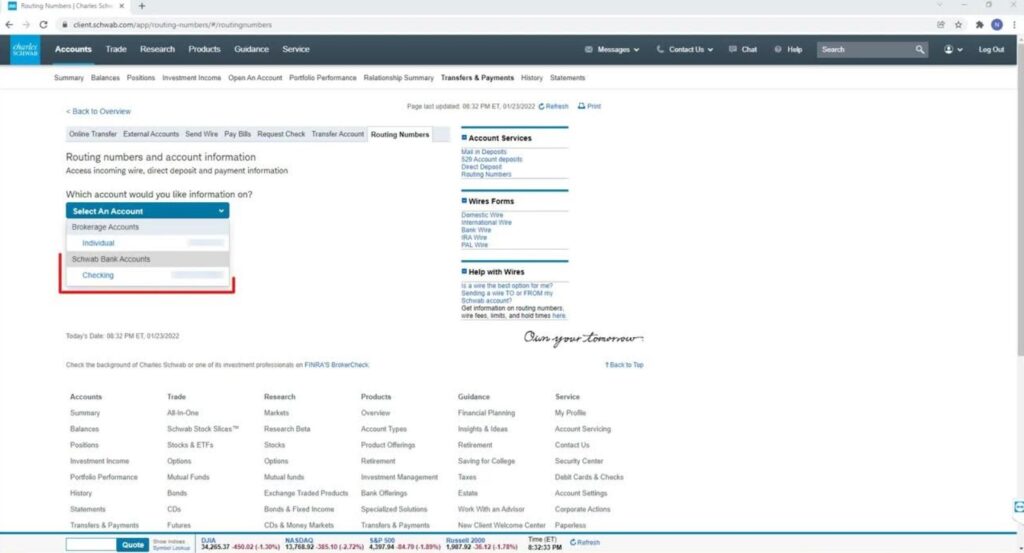
Many investors have a Schwab Bank High Yield Investor Checking account linked to their brokerage. These are separate entities. Closing your brokerage account does not automatically close your checking account. If you intend to leave Schwab entirely, you must specifically request the closure of the bank account as well, ensuring that all outstanding checks and automated bill pays (ACH) have been cleared or moved to your new bank.
Post-Closure: Ensuring a Clean Financial Exit
The work isn’t finished just because you no longer see the account on your dashboard. There are several “post-game” financial steps to take to ensure the transition is complete.
Verification of Final Balance and Fees
After the closure date, keep a close eye on your statements. Verify that any closing fees were accurate and that no “residual” interest payments have appeared. If a small amount of money (often called “residual credit”) appears in the account after it has been “closed,” Schwab will typically send a physical check to your address on file or attempt to push the funds to your new brokerage via ACATS.
Maintaining Access for Tax Season
This is perhaps the most overlooked aspect of closing a financial account. Even if you close your account in June, you will still need your 1099-B, 1099-DIV, and 1099-INT forms in February of the following year.
Before closing the account, download the last two years of monthly statements and any cost-basis reports. While Schwab typically maintains login access for “closed” clients for a limited time to allow for tax document retrieval, it is much safer to have your own digital copies. You will need these records to accurately report your capital gains or losses to the IRS.
Updating Your Financial Map
Finally, once the account is closed and the funds are settled in their new home, update your personal financial records. Whether you use a spreadsheet, an app like Empower, or a professional financial planner, ensure your net worth statement reflects the move. Consolidating accounts is often a great time to re-evaluate your asset allocation and ensure that your new financial setup aligns with your long-term wealth-building goals.
Closing a Charles Schwab account marks the end of one chapter in your financial journey. By following a structured approach—prioritizing tax efficiency, managing trailing dividends, and securing your records for tax season—you can ensure that your move is a strategic step forward rather than a logistical headache.
aViewFromTheCave is a participant in the Amazon Services LLC Associates Program, an affiliate advertising program designed to provide a means for sites to earn advertising fees by advertising and linking to Amazon.com. Amazon, the Amazon logo, AmazonSupply, and the AmazonSupply logo are trademarks of Amazon.com, Inc. or its affiliates. As an Amazon Associate we earn affiliate commissions from qualifying purchases.