
The modern world is built on a fundamental paradox: the physical universe is inherently analog, yet the systems we use to process, store, and communicate information are almost entirely digital. From the sound of a human voice and the heat of a processor to the light captured by a smartphone camera, every physical phenomenon exists as a continuous, fluctuating wave. To harness this data, technology relies on a critical bridge known as the Analog-to-Digital Converter (ADC).
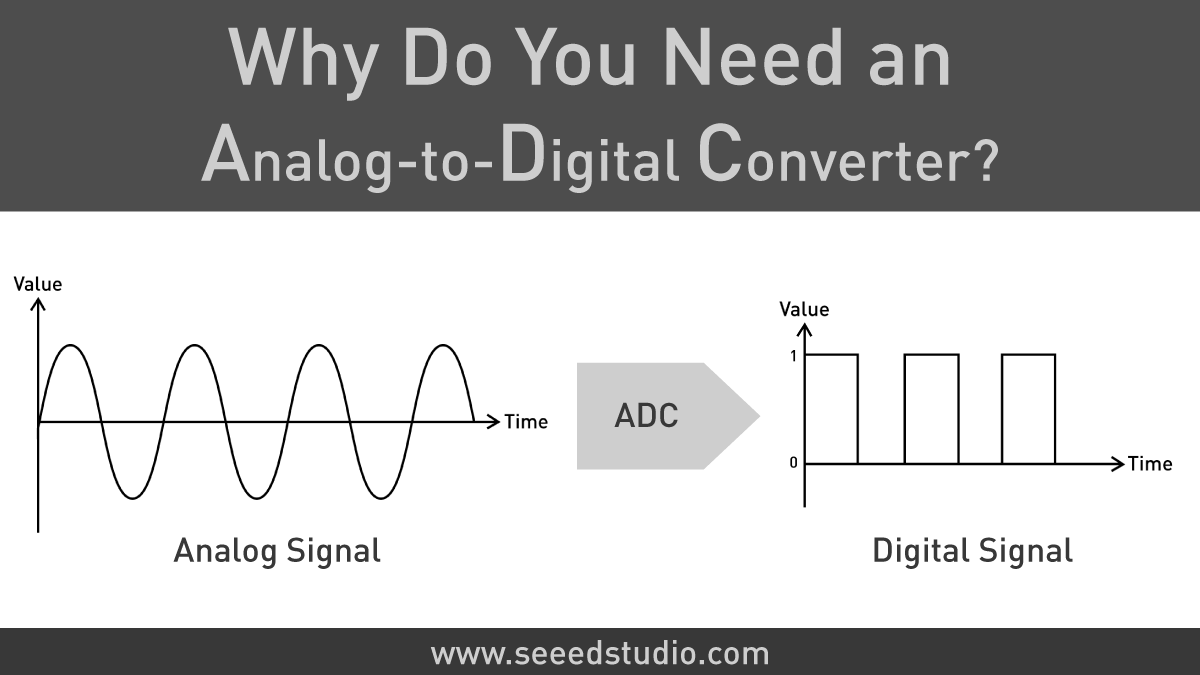
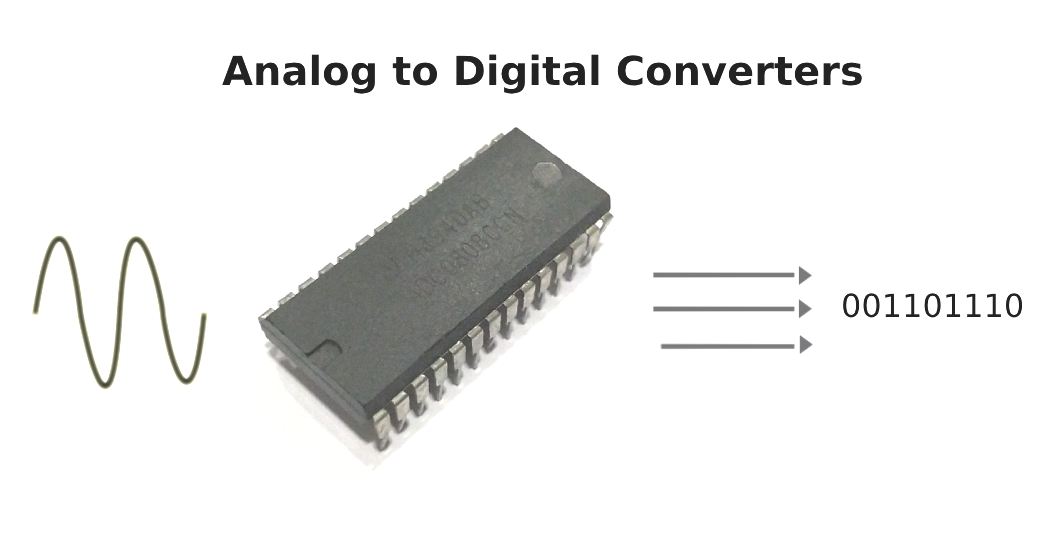
An ADC is a specialized electronic system or integrated circuit that transforms continuous physical signals—such as voltage, light, or pressure—into a discrete sequence of binary numbers. This conversion is the prerequisite for all modern computing. Without the ADC, the internet would be silent, digital photography would not exist, and the vast field of Artificial Intelligence would have no real-world data to analyze. Understanding the ADC is essential for anyone looking to grasp how the physical and digital worlds intersect in the 21st century.
The Mechanics of Conversion: From Waves to Bits
The process of converting an analog signal into a digital format is not a single leap but a series of precise mathematical and electronic stages. Because analog signals are infinite in their variations, a converter must “simplify” the data into a format that a processor can understand. This involves three primary stages: sampling, quantization, and encoding.
Sampling and the Nyquist Theorem
Sampling is the process of measuring the amplitude of an analog signal at specific, periodic intervals. Imagine a film camera taking 24 frames per second to capture motion; an ADC does the same for electrical signals. The frequency at which these measurements are taken is known as the sampling rate.
The effectiveness of sampling is governed by the Nyquist-Shannon Sampling Theorem, which dictates that to accurately reconstruct an analog signal, the sampling rate must be at least twice the highest frequency present in the signal. For example, because the human ear can hear sounds up to 20,000 Hz, standard audio CDs use a sampling rate of 44.1 kHz. If the sampling rate is too low, a phenomenon called “aliasing” occurs, where high-frequency signals are incorrectly recorded as lower-frequency “ghosts,” leading to data distortion.
Quantization and Bit Depth
Once the signal has been sampled, the ADC must assign a numerical value to the amplitude of each sample. This is quantization. Unlike the analog signal, which can have an infinite number of values (e.g., 1.234… volts), the digital system has a finite number of “steps” available.
The number of available steps is determined by the “bit depth” or resolution of the ADC. An 8-bit converter has 256 possible levels (2 to the power of 8), while a 16-bit converter has 65,536 levels. Higher bit depth allows for a more accurate representation of the original signal, reducing “quantization error”—the slight difference between the actual analog value and the nearest digital step. In high-fidelity audio and medical imaging, high bit depth is crucial for preserving the nuance and detail of the original data.
Encoding into Binary
The final stage of the process is encoding. Once the quantization stage has mapped a sample to a specific level, that level is converted into a binary string—a series of 1s and 0s. This binary data is the “language” of computers, allowing the information to be stored on hard drives, manipulated by software algorithms, or transmitted across fiber-optic cables.
Key Performance Metrics of ADC Technology
In the tech industry, not all ADCs are created equal. The choice of a converter depends on the specific requirements of the application, ranging from the low-power needs of a smart thermostat to the ultra-high-speed requirements of a radar system. Engineers evaluate ADCs based on several critical metrics.
Sampling Rate and Bandwidth
The sampling rate, usually measured in Samples Per Second (SPS), determines the bandwidth of the converter. High-speed ADCs, capable of billions of samples per second (Gsps), are used in software-defined radio and advanced telecommunications. Conversely, low-speed ADCs are often found in environmental sensors where the physical state (like soil moisture) changes slowly over time.
Signal-to-Noise Ratio (SNR)
Every electronic component introduces a certain amount of background noise. The Signal-to-Noise Ratio measures the strength of the desired signal relative to that background noise. A high SNR is vital for applications where the signal is very faint, such as in deep-space communication or seismic monitoring. If the noise floor is too high, it can obscure the digital data, rendering the conversion useless.
Effective Number of Bits (ENOB)
While a manufacturer might list an ADC as “16-bit,” electrical noise and non-linearity often mean the actual performance is lower. The Effective Number of Bits (ENOB) provides a more realistic measure of a converter’s accuracy. It represents the resolution of an ideal ADC that would perform the same as the real-world device. For developers of high-end gadgets, ENOB is often a more important specification than the nominal resolution.
Common Architectures in Modern Electronics
Depending on the balance required between speed, precision, and cost, different ADC architectures are employed. Each has its own strengths and trade-offs.
Successive Approximation Register (SAR)
The SAR ADC is the workhorse of the electronics world. It uses a binary search algorithm to converge on the correct digital value for a given analog input. It is highly efficient, offers moderate to high resolution (8 to 18 bits), and consumes very little power. You will find SAR ADCs in almost every battery-powered IoT device, wearable fitness tracker, and industrial control system.
Flash ADCs: The Speed Kings
When speed is the only priority, Flash ADCs are the answer. They use a massive array of comparators to measure the signal in a single step. This allows for incredibly high sampling rates, but the trade-off is high power consumption and high cost. Because the number of components doubles with every extra bit of resolution, Flash ADCs are usually limited to lower resolutions (around 8 bits) and are primarily used in high-speed oscilloscopes and fiber-optic receivers.
Sigma-Delta (Σ-Δ): Precision and Accuracy
For applications where accuracy is more important than speed, the Sigma-Delta ADC is the standard. It uses a technique called “oversampling” and “noise shaping” to achieve extremely high resolutions, often up to 24 or 32 bits. These converters are essential for professional audio recording, high-precision weighing scales, and laboratory-grade instrumentation.
Practical Applications in Today’s Tech Ecosystem
The ADC is the invisible engine driving the most significant technological trends of the decade. Its presence is felt in virtually every sector of the digital economy.
Digital Media and Communication
Every time you take a photo with your smartphone, a specialized ADC (often integrated into the CMOS image sensor) converts the light hitting the pixels into digital color data. Similarly, in telecommunications, 5G technology relies on ultra-fast ADCs to convert radio waves into data packets at speeds fast enough to support 4K streaming and low-latency gaming.
The Internet of Things (IoT) and Industrial Automation
In the “Smart Factory” or “Smart Home,” sensors are constantly monitoring variables like temperature, humidity, vibration, and light. These sensors produce analog voltages that must be converted to digital signals before they can be sent to a central hub or the cloud for analysis. The ADC is what allows a smart thermostat to “know” it needs to turn on the air conditioning or a robotic arm to “feel” the pressure it is applying to a component.
Healthcare and Medical Imaging
Modern medicine would be unrecognizable without the ADC. In an MRI or CT scanner, analog signals representing the body’s internal structures are converted into high-resolution digital images. In wearable health tech, ADCs convert the electrical impulses of the heart (ECG) into data that can be monitored by a doctor remotely. The precision of the ADC in these contexts can literally be a matter of life and death.

The Future of Converters in the AI and Quantum Era
As we move toward a future dominated by Artificial Intelligence and Edge Computing, the role of the ADC is evolving. Traditionally, ADCs were standalone components, but we are now seeing a trend toward “Integrated Sensing.” This involves placing the ADC directly onto the same chip as the AI processor.
This integration reduces the distance data must travel, lowering latency and power consumption. In the context of self-driving cars, for instance, the ability of an ADC to rapidly and accurately convert LIDAR and radar signals is crucial for the AI to make split-second navigational decisions.
Furthermore, the rise of Quantum Computing is presenting new challenges for ADC design. Quantum systems require extremely precise control signals and must be monitored at near-absolute zero temperatures. Developing ADCs that can operate in these extreme environments is a burgeoning field of research that will define the next generation of computing.
In conclusion, the Analog-to-Digital Converter is the unsung hero of the digital age. It is the translator that allows our software-driven world to interact with the physical reality of the universe. As our demand for more data, higher resolution, and faster connectivity continues to grow, the innovation within ADC technology will remain at the very heart of the tech industry’s progress. Whether it is enabling the next breakthrough in AI or simply ensuring your voice sounds clear on a video call, the ADC remains the vital link between the world we see and the data we use.
aViewFromTheCave is a participant in the Amazon Services LLC Associates Program, an affiliate advertising program designed to provide a means for sites to earn advertising fees by advertising and linking to Amazon.com. Amazon, the Amazon logo, AmazonSupply, and the AmazonSupply logo are trademarks of Amazon.com, Inc. or its affiliates. As an Amazon Associate we earn affiliate commissions from qualifying purchases.