
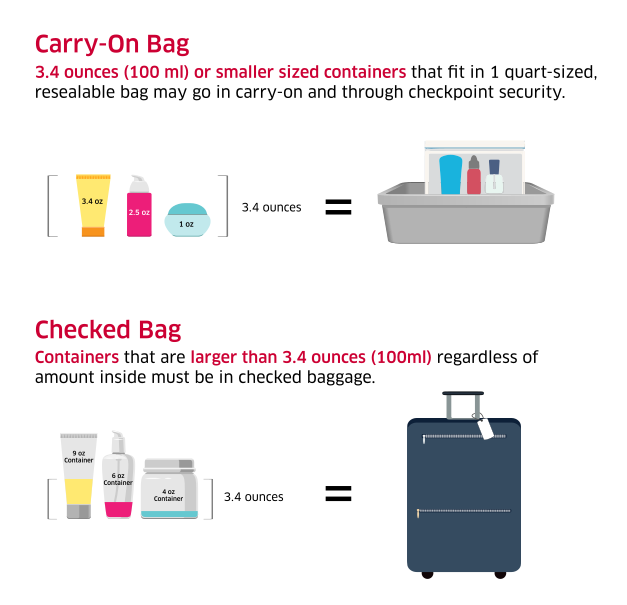
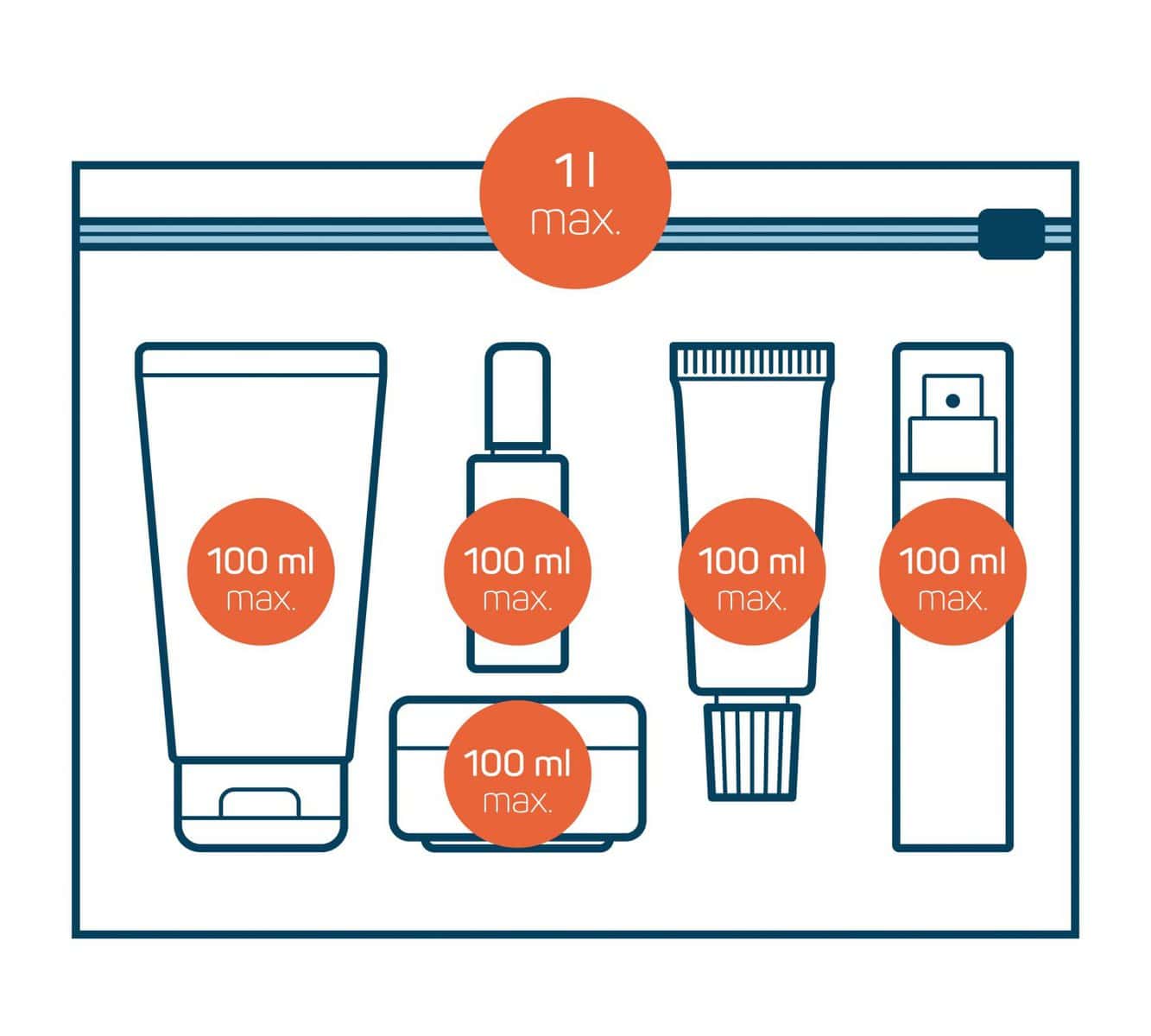
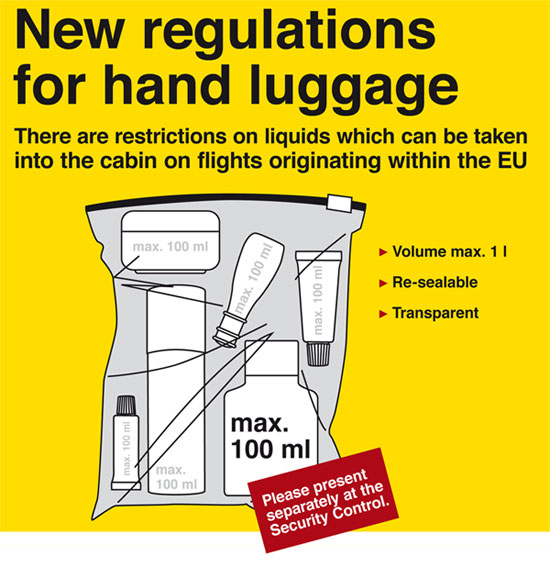
For nearly two decades, the global traveling public has been defined by a single numerical constraint: 100 milliliters. The “liquid rule”—often referred to in the United States as the 3-1-1 rule—has dictated how we pack, what we buy, and how we navigate the choreographed chaos of airport security. While most passengers view these restrictions as a static bureaucratic mandate, the reality is that the amount of liquid allowed on a plane is a variable dictated entirely by the current state of detection technology.
Today, we are witnessing a pivotal shift. We are moving away from blanket volume restrictions toward a “smart screening” era. This transition is being fueled by breakthroughs in Computed Tomography (CT), Artificial Intelligence (AI) algorithms, and sophisticated molecular analysis. Understanding the technology behind these regulations is essential for any modern traveler or tech enthusiast looking to navigate the future of the digital and physical skies.
The Technological Foundation of the 100ml Limit
To understand where we are going, we must first analyze the technical limitations that necessitated the 100ml rule in the first place. The restriction was not an arbitrary number; it was a response to the limits of dual-energy X-ray systems.
Legacy X-Ray Limitations and the 2006 Transatlantic Plot
In 2006, security agencies thwarted a plot to detonate liquid explosives disguised as soft drinks on multiple transatlantic flights. At that time, airport security relied heavily on 2D X-ray scanners. These machines are excellent at identifying solid metallic objects—like knives or firearms—but they struggle to differentiate between benign liquids (like water or shampoo) and volatile chemical compounds (like liquid TATP).
Because 2D X-rays project a flat image, they cannot accurately calculate the density or the effective atomic number of a substance hidden within a container. The 100ml limit was established as a “safety buffer.” Scientists determined that it would be extremely difficult for a bad actor to mix enough liquid from multiple small containers to create a viable explosive device mid-flight within a pressurized cabin, especially given the time and stability required for such a reaction.
The Problem of Overlapping Objects
One of the primary technical hurdles for legacy scanners is “clutter.” In a 2D scan, a bottle of perfume stacked on top of a laptop creates a composite image that is difficult for a human operator to parse. This is why travelers are required to remove their “3-1-1” bags from their luggage. Technology, rather than policy, was the bottleneck; if the hardware couldn’t “see” through the liquid, the liquid had to be isolated.
Next-Generation Scanning: The Rise of CT Technology
The most significant tech trend in aviation security today is the transition from 2D X-rays to 3D Computed Tomography (CT). This is the same technology used in medical MRIs, repurposed for the high-throughput environment of an airport terminal.
3D Volumetric Imaging
Unlike traditional scanners that take two static images, CT scanners use a spinning X-ray source that captures hundreds of images from every conceivable angle. These images are then processed by powerful onboard computers to create a high-resolution 3D model of the bag’s contents.
For the security operator, this means they can rotate the bag digitally on their screen, “peeling back” layers of clothing to see exactly what is inside a bottle. This technological leap is the primary reason why some airports, such as London City Airport and several hubs in the Middle East, have already begun to scrap the 100ml limit entirely, allowing passengers to carry up to two liters of liquid.
Automated Threat Recognition (ATR)
The hardware is only half the story. The true “tech” behind modern liquid allowance lies in the software. Automated Threat Recognition (ATR) systems use machine learning to analyze the molecular density of liquids in real-time.
When a bag passes through a CT scanner, the ATR software compares the density and atomic signatures of the liquids against an extensive database of known explosives and flammable materials. If the software detects a match, it flags the item for manual inspection. Because these algorithms are significantly more precise than the human eye, the “need” for a volume restriction vanishes. The machine doesn’t care if you have 100ml or 500ml; it only cares about the chemical composition of the substance.
Digital Ecosystems and Passenger Apps: Navigating Compliance
As technology upgrades are rolled out unevenly across the globe, a new category of “Travel Tech” has emerged to help passengers manage the complexity of varying regulations. Digital security is no longer just about the scanner; it’s about the information ecosystem that surrounds the traveler.
The Integration of Real-Time Regulation Data
Apps like “MyTSA” in the United States or “App in the Air” utilize real-time APIs to provide passengers with the most current information regarding liquid allowances at specific airports. As an airport upgrades to CT technology, its digital profile changes.
For the tech-savvy traveler, these apps serve as a critical interface. They provide a crowdsourced and official data stream on wait times and equipment types. If an app indicates that a terminal is equipped with “Analogic” or “Smiths Detection” 3D scanners, the passenger knows they can potentially leave their liquids and electronics inside their bags, streamlining the digital and physical flow of the checkpoint.
AI Chatbots and Natural Language Processing (NLP)
Airlines and airport authorities are increasingly deploying NLP-driven chatbots to handle inquiries about liquid restrictions. Instead of searching through dense PDF documents of prohibited items, passengers can interact with an AI that understands context. For example, a passenger can ask, “Can I bring 150ml of contact lens solution?” The AI can cross-reference the volume with the “medically necessary” exemption clause in aviation law, providing an instant, accurate tech-driven response.
The Future of “Liquid-Free” Security Checkpoints
We are approaching a technological “singularity” in aviation security where the concept of a “liquid limit” will seem as antiquated as a paper ticket. This shift is being driven by three emerging tech trends.
Molecular Spectroscopy
Beyond CT scans, researchers are developing scanners that utilize Raman spectroscopy. This technology involves shining a laser at a container; the way the light scatters provides a unique “fingerprint” of the liquid’s molecular structure. This can identify substances through opaque plastic or glass, offering a level of certainty that even current CT scanners cannot match. Once this technology becomes miniaturized and cost-effective for mass airport deployment, liquid volume will become a completely irrelevant metric for security.
Biometric Integration and the “Internet of Bags”
The future of air travel involves a seamless “walk-through” experience. This requires the integration of biometric identification with advanced baggage screening. Imagine a scenario where your liquid allowance is tied to your digital identity. Smart bins equipped with RFID tags track your items as they move through a high-speed tunnel scanner. The data is processed in the cloud, and by the time you walk through a facial recognition portal, your liquids have been cleared by an AI.
Standardization of Global Security Tech
One of the greatest friction points in modern travel is the lack of technological parity between airports. A passenger might be allowed a 200ml bottle in Terminal A but have it confiscated during a transfer in Terminal B.
The International Air Transport Association (IATA) and other global bodies are pushing for a “Smart Security” program. This involves a standardized software architecture that allows different hardware manufacturers to share threat libraries. By creating a unified digital standard for what constitutes a “safe” liquid, the tech industry is helping to harmonize global regulations, eventually leading to a universal end to the 100ml restriction.
Conclusion: Data Over Volume
The question of “how much liquid is allowed on a plane” is no longer just a matter of airline policy—it is a question of technological infrastructure. For years, 100ml was the limit of our digital vision. We restricted what we could not understand.
However, as CT scanners, AI-driven threat recognition, and molecular spectroscopy become the standard, the focus is shifting from the volume of the liquid to the data behind the liquid. We are moving toward a future where “smart” checkpoints will recognize a bottle of water as easily as a human recognizes a face. For the traveler, this means the eventual end of the plastic baggie and the 100ml bottle. For the tech industry, it represents one of the most successful applications of AI and hardware engineering in the pursuit of global safety and efficiency. The “liquid rule” is not just being relaxed; it is being solved by technology.
aViewFromTheCave is a participant in the Amazon Services LLC Associates Program, an affiliate advertising program designed to provide a means for sites to earn advertising fees by advertising and linking to Amazon.com. Amazon, the Amazon logo, AmazonSupply, and the AmazonSupply logo are trademarks of Amazon.com, Inc. or its affiliates. As an Amazon Associate we earn affiliate commissions from qualifying purchases.