
The Dow Jones Industrial Average (DJIA), often simply called “the Dow,” is one of the most widely recognized and oldest stock market indices in the world. It serves as a barometer for the health of the U.S. stock market and, by extension, the broader economy. For investors, economists, and the general public alike, tracking the Dow’s performance, particularly its all-time highs, offers insights into market sentiment, corporate profitability, and economic growth trajectories. An all-time high signifies a point where the index has reached its highest value ever recorded, reflecting periods of sustained economic expansion, robust corporate earnings, and strong investor confidence. While the specific numerical value of an “all-time high” is ephemeral, constantly shifting as the market closes higher, understanding what drives these peaks and their implications is crucial for anyone engaging with financial markets. This article delves into the significance of the Dow’s all-time highs, the forces behind them, and what they mean for the discerning investor.

Understanding the Dow Jones Industrial Average (DJIA)
To fully appreciate the significance of the Dow’s all-time highs, it’s essential to first understand what the index represents and how it is constructed. Far from being a mere collection of numbers, the DJIA is a carefully curated selection of companies designed to reflect the industrial sector of the U.S. economy, although its scope has broadened considerably over its long history.
A Brief History and Calculation
The Dow Jones Industrial Average was created by Charles Dow in 1896, initially comprising 12 predominantly industrial stocks. Over time, it expanded to 30 companies, a number it has maintained since 1928. Despite its “industrial” moniker, today’s Dow is a diverse mix of large, publicly traded American companies from various sectors, including technology, finance, healthcare, and consumer goods. Iconic names like Apple, Microsoft, Goldman Sachs, Johnson & Johnson, and Walmart are typically among its constituents. Unlike market-capitalization-weighted indices such as the S&P 500, the Dow is a price-weighted index. This means that stocks with higher share prices have a greater impact on the index’s value than those with lower share prices, regardless of their total market capitalization. The index is calculated by summing the prices of its 30 component stocks and dividing by a factor known as the “Dow Divisor,” which is adjusted for stock splits, dividends, and other structural changes to maintain historical continuity.
Why the Dow Matters to Investors
Despite criticisms about its price-weighted methodology and its relatively small number of components compared to broader market indices, the Dow remains incredibly relevant. Its long history provides a valuable benchmark for comparing current market performance with past cycles, offering a rich dataset for historical analysis. Furthermore, the companies included in the Dow are typically “blue-chip” stocks—well-established, financially sound companies with a history of strong earnings and reliable performance. Their collective performance is often seen as an indicator of the overall health of the U.S. corporate sector and the broader economy. For many individual investors, the Dow is the simplest and most frequently cited index, making it a key reference point for understanding market trends and investor sentiment. Its movements can influence confidence, spending, and investment decisions across the economy.
Pinpointing the Dow’s All-Time High
The concept of an “all-time high” is dynamic. As markets fluctuate, previous records are continually challenged and, often, surpassed. Pinpointing the exact figure requires checking real-time market data, but understanding the context of these peaks is arguably more valuable than the number itself.
The Latest Record-Breaking Figures
As of my last update, the Dow Jones Industrial Average has consistently pushed into new record territory over recent years, reflecting periods of strong economic recovery and growth. For instance, in early 2024, the Dow broke past the 38,000-point mark, setting new intraday and closing highs. These milestones are not isolated events but rather the culmination of various economic and corporate forces converging to propel stock prices upward. It is crucial to remember that this specific number is a snapshot; market conditions, corporate news, and economic data can lead to new records being set almost daily during bull runs. Investors tracking the market will observe these figures reported frequently in financial news, signaling a period of robust market performance.
Historical Context of Market Peaks
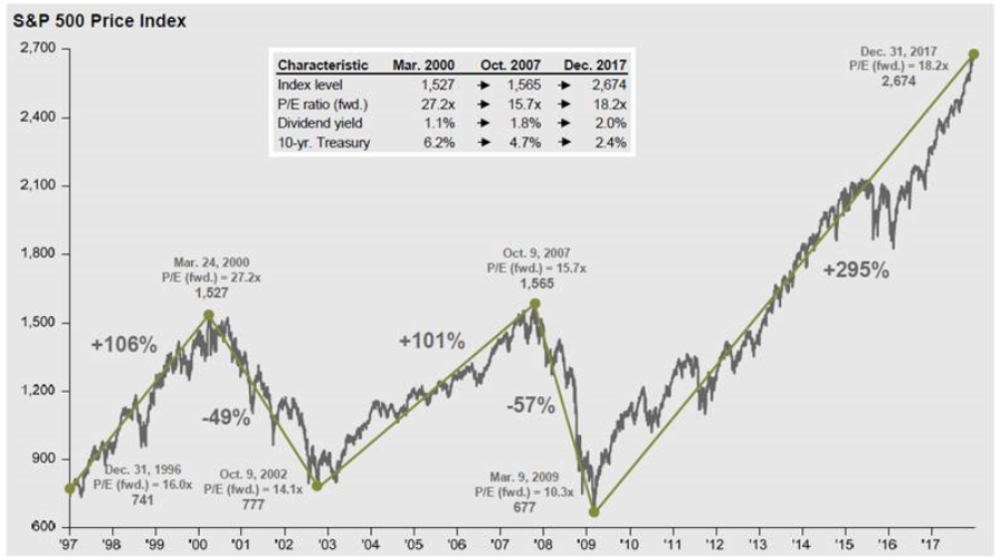
The Dow’s journey to its current highs has been punctuated by numerous significant peaks throughout history, each reflecting a unique economic era. From the “Roaring Twenties” before the Great Depression, to the post-World War II boom, the dot-com bubble of the late 1990s, and the periods following the 2008 financial crisis and the COVID-19 pandemic, each new all-time high tells a story of economic resilience and transformation. For example, the Dow first closed above 1,000 in 1972, then above 10,000 in 1999, 20,000 in 2017, and 30,000 in 2020. These long-term trends illustrate the market’s enduring upward bias, driven by innovation, productivity gains, and the underlying growth of the global economy, despite intermittent corrections and bear markets. Understanding this historical progression helps put current highs into perspective, reminding investors that market growth is a long-term phenomenon.
Drivers Behind the Dow’s Ascent to New Highs
The consistent achievement of new all-time highs by the Dow is not coincidental. It is typically the result of a confluence of powerful economic, corporate, and psychological factors working in tandem to foster a positive environment for equity markets.
Economic Fundamentals and Corporate Earnings
At the core of any sustained market rally are strong economic fundamentals. When the economy is growing, characterized by low unemployment, rising consumer spending, and increasing business investment, corporate profits tend to soar. The companies within the Dow, being large and often multinational, are direct beneficiaries of robust economic activity, both domestically and internationally. Healthy corporate earnings translate into higher stock valuations, as investors are willing to pay more for shares of companies demonstrating profitability and growth potential. Furthermore, positive outlooks on future earnings, driven by technological advancements or expanding markets, also play a significant role in pushing stock prices higher.
Monetary Policy and Interest Rates

Central bank policies, particularly those of the U.S. Federal Reserve, exert a profound influence on stock market performance. Periods of low-interest rates, quantitative easing, and other accommodative monetary policies tend to make borrowing cheaper for companies, stimulating investment and expansion. Lower interest rates also make equity investments more attractive relative to fixed-income assets (like bonds), as the potential returns from stocks become comparatively higher. This ‘easy money’ environment can fuel asset price inflation, including stock valuations, contributing significantly to the Dow’s upward trajectory. Conversely, periods of tightening monetary policy and rising interest rates can act as headwinds, potentially cooling off overheated markets.
Technological Advancements and Innovation
Many of the companies that now lead the Dow are at the forefront of technological innovation. Breakthroughs in areas like artificial intelligence, biotechnology, digital communication, and renewable energy not only create new industries but also enhance productivity and efficiency across existing sectors. This wave of innovation can lead to significant revenue growth and competitive advantages for the companies involved, driving their stock prices higher. The transformative power of technology means that the Dow components are constantly evolving, adapting, and leveraging new tools to expand their market share and profitability, which in turn helps push the overall index to new records.
Investor Sentiment and Market Psychology
Beyond the tangible economic and corporate factors, market psychology and investor sentiment play a critical role in reaching and sustaining all-time highs. When investors are optimistic about the future, confident in the economy, and perceive good value in stocks, they are more likely to invest, driving demand and prices higher. This positive feedback loop can create a “fear of missing out” (FOMO) effect, where even cautious investors are drawn into the market to avoid being left behind during a bull run. Conversely, negative sentiment, often fueled by geopolitical events, economic downturns, or financial crises, can lead to sharp market corrections, illustrating the powerful emotional component of market movements.
Implications of an All-Time High for Investors
While a rising Dow often brings a sense of euphoria, particularly for those with significant equity exposure, it also prompts important considerations for strategic investors. An all-time high is not merely a number; it carries implications for risk, opportunity, and future planning.
Is it a Sign of Overvaluation or Continued Growth?
One of the key questions that arises when the Dow hits new highs is whether the market is becoming overvalued, suggesting a potential correction, or if it simply reflects continued, healthy growth. There’s no single answer, as the interpretation depends on various indicators like price-to-earnings (P/E) ratios, economic growth forecasts, and interest rate environments. Some argue that high valuations, especially when coupled with slower earnings growth, signal an impending pullback. Others contend that in an era of technological disruption and low-interest rates, higher valuations are justifiable as companies continue to innovate and expand globally. For investors, it’s crucial to look beyond the headline number and analyze the underlying fundamentals of individual companies and the broader economic outlook.
The Importance of Long-Term Perspective
Historically, the Dow has always trended upwards over the long term, despite numerous bear markets, recessions, and global crises. Each all-time high serves as a reminder that patience and a long-term investment horizon are often rewarded. Short-term market fluctuations, including pullbacks from new highs, are a natural part of the investment cycle. Investors who panic and sell during downturns often miss out on the subsequent recoveries and the eventual attainment of even higher peaks. Maintaining a diversified portfolio and sticking to an investment strategy tailored to one’s financial goals and risk tolerance is paramount, regardless of whether the market is hitting new highs or experiencing a dip.
Diversification and Risk Management in a Bull Market
Even in a seemingly robust bull market marked by new all-time highs, the principles of diversification and risk management remain critical. Concentrating investments heavily in a few top-performing stocks or sectors can amplify gains but also significantly increase exposure to risk should those specific investments falter. A diversified portfolio, spread across different asset classes (stocks, bonds, real estate), industries, and geographies, helps mitigate risk by ensuring that no single event or sector downturn can derail one’s entire investment strategy. Furthermore, using strategies like dollar-cost averaging (investing a fixed amount regularly) can help smooth out the impact of market volatility, allowing investors to buy more shares when prices are lower and fewer when they are higher.
Navigating Future Market Dynamics
The financial markets are constantly evolving, influenced by a myriad of factors from global politics to technological breakthroughs. Understanding the Dow’s all-time highs not only provides a historical context but also informs how investors might approach future market dynamics.
Potential Headwinds and Risks
While new all-time highs suggest strength, no market moves upwards indefinitely. Potential headwinds include rising inflation leading to aggressive interest rate hikes, geopolitical instability, supply chain disruptions, commodity price shocks, and unexpected economic slowdowns. Regulatory changes, shifts in consumer behavior, and the emergence of disruptive technologies can also impact corporate profitability and, consequently, stock valuations. Investors should always be aware of these potential risks and regularly assess their portfolio’s resilience against various future scenarios.
The Role of Financial Planning
In light of the ever-changing market landscape, comprehensive financial planning is indispensable. This involves setting clear financial goals, assessing risk tolerance, developing a diversified investment strategy, and regularly reviewing and adjusting that strategy as circumstances change. An all-time high in the Dow might be an opportune moment for some to rebalance their portfolios, taking some profits from overperforming assets and reallocating to those that are lagging or align better with current goals. For others, it might reaffirm the wisdom of their existing long-term strategy. Ultimately, understanding the Dow’s all-time high is a piece of a larger puzzle, informing but not dictating individual financial decisions.
In conclusion, the all-time high of the Dow Jones Industrial Average is more than just a headline number; it is a significant marker of economic performance, corporate vitality, and investor confidence. While the specific numerical value is dynamic, the factors that drive these peaks—strong economic fundamentals, supportive monetary policies, technological innovation, and positive sentiment—provide crucial insights for investors. Navigating a market at its all-time high requires a balanced perspective, emphasizing long-term strategies, diversification, and diligent risk management, rather than succumbing to short-term euphoria or panic. By understanding the underlying forces at play, investors can make more informed decisions, positioning themselves for sustainable financial growth in an ever-evolving market landscape.
aViewFromTheCave is a participant in the Amazon Services LLC Associates Program, an affiliate advertising program designed to provide a means for sites to earn advertising fees by advertising and linking to Amazon.com. Amazon, the Amazon logo, AmazonSupply, and the AmazonSupply logo are trademarks of Amazon.com, Inc. or its affiliates. As an Amazon Associate we earn affiliate commissions from qualifying purchases.