
In the intricate landscape of personal finance, understanding one’s net worth is a foundational step toward achieving financial well-being. However, merely knowing your total net worth provides only part of the picture. A more nuanced and often more critical metric, particularly for immediate financial security and flexibility, is your liquid net worth. This concept delves into the accessibility of your assets, providing a clearer view of your financial resilience in the face of unexpected events or opportune moments.
Understanding Net Worth: The Foundation
Before dissecting liquid net worth, it’s essential to establish a solid understanding of its parent concept: overall net worth.

Defining Net Worth
At its core, net worth is a straightforward calculation that reflects your financial standing at any given moment. It is the sum total of everything you own (your assets) minus everything you owe (your liabilities).
- Assets: These are items of value that you own. They can include cash, money in bank accounts, investments (stocks, bonds, mutual funds), real estate, vehicles, retirement accounts, and even valuable personal possessions like art or jewelry.
- Liabilities: These represent your debts or financial obligations. Common liabilities include mortgages, car loans, student loans, credit card balances, personal loans, and any other outstanding debts.
The basic calculation is: Assets – Liabilities = Net Worth.
A positive net worth indicates that you own more than you owe, while a negative net worth means your debts exceed the value of your assets.
Why Net Worth Matters
Tracking your net worth regularly serves as a crucial barometer of your financial health. It provides a snapshot of your progress towards financial goals, such as saving for retirement, purchasing a home, or achieving financial independence. By monitoring its changes over time, individuals can gauge the effectiveness of their financial strategies, investment choices, and debt management efforts. It’s a powerful tool for self-assessment and long-term planning, offering motivation and direction on your financial journey.
The Concept of Liquidity in Finance
While overall net worth is vital, it doesn’t differentiate between assets that can be quickly accessed and those that are tied up for the long term or difficult to convert to cash. This is where the concept of liquidity becomes paramount.
What is Liquidity?
Liquidity, in financial terms, refers to the ease and speed with which an asset can be converted into cash without significantly losing its value. Think of it as how quickly you can get your hands on usable money from something you own. Cash itself is the most liquid asset, as it is already in its most usable form. Other assets fall along a spectrum, ranging from highly liquid to highly illiquid.
For instance, selling a publicly traded stock on a major exchange can often be done within minutes during market hours, with the funds settling in a few days. Conversely, selling a piece of real estate can take weeks or even months, involving significant transaction costs, negotiations, and market fluctuations that might impact its final sale price.
Liquid Assets vs. Illiquid Assets
Distinguishing between these two categories is fundamental to understanding your financial flexibility.
-
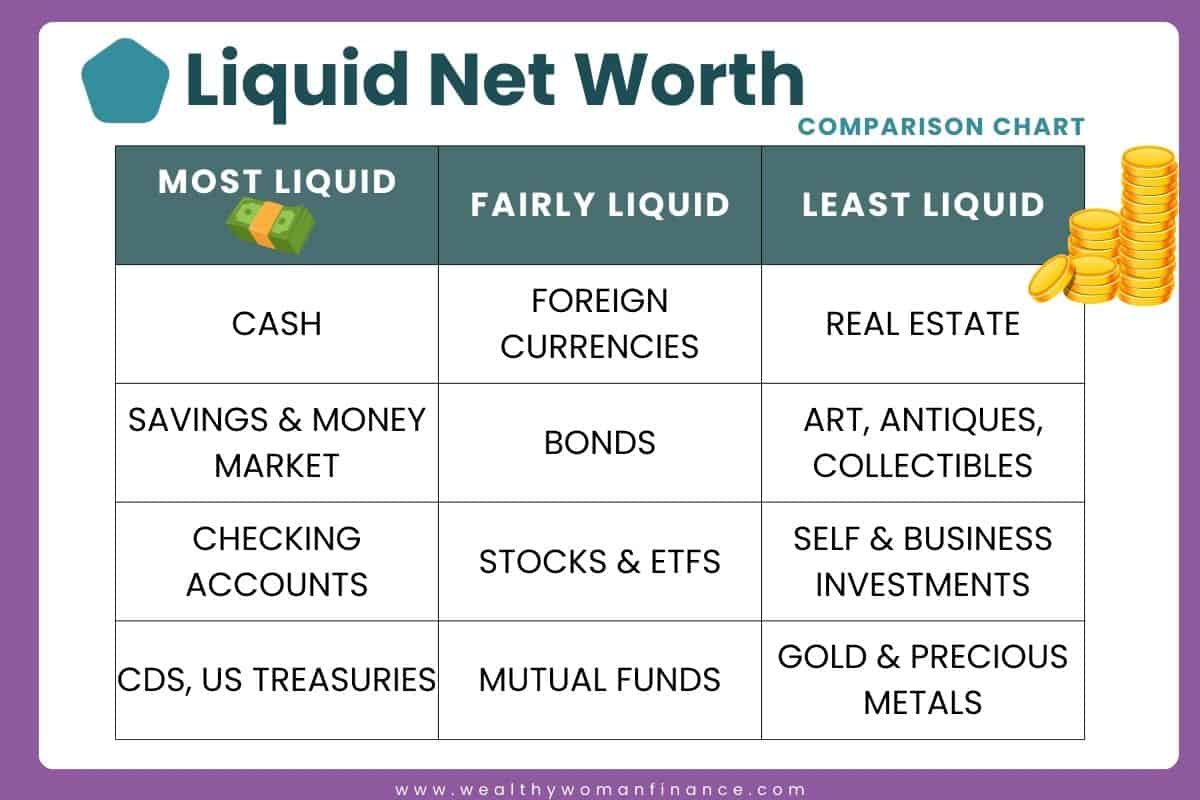
Liquid Assets: These are assets that can be readily converted into cash quickly and without substantial loss of value. They are critical for managing day-to-day expenses, funding short-term goals, and building an emergency fund. Examples include:
- Cash on hand
- Checking and savings accounts
- Money market accounts
- Certificates of Deposit (CDs) with short maturities or no early withdrawal penalties
- Marketable securities like stocks, bonds, mutual funds, and exchange-traded funds (ETFs) held in brokerage accounts, assuming an active market for their sale.
- Short-term government bonds or highly rated corporate bonds.
-
Illiquid Assets: These assets cannot be easily or quickly converted into cash without a significant reduction in value or without incurring substantial penalties, fees, or a lengthy selling process. While often valuable for long-term growth and wealth building, they are not suitable for immediate financial needs. Examples include:
- Real estate (primary residence, investment properties, undeveloped land)
- Private equity investments and venture capital holdings
- Business interests or ownership stakes in privately held companies
- Collectibles (art, antiques, rare coins, classic cars)
- Retirement accounts (e.g., 401(k)s, IRAs) prior to retirement age, due to potential early withdrawal penalties and taxes. While the underlying investments may be liquid, the account structure makes the funds illiquid for immediate, penalty-free use.
- Certain structured notes or limited partnerships.
Calculating and Optimizing Your Liquid Net Worth
Armed with the understanding of liquidity, we can now focus on the calculation and strategic importance of your liquid net worth.
The Liquid Net Worth Formula
The calculation for liquid net worth is a more focused version of the general net worth formula:
Liquid Assets – Current Liabilities = Liquid Net Worth
- Liquid Assets: As defined above, this includes cash, checking/savings, money market, and readily marketable investments.
- Current Liabilities: These are debts or obligations that are due within one year. This could include credit card balances, personal loan payments due in the next 12 months, the current year’s portion of a car loan or mortgage payment, or any other short-term debt. This is distinct from total liabilities, which would include the entire outstanding balance of a long-term mortgage.
This calculation provides a measure of your immediate financial adaptability, showing how much accessible wealth you have after accounting for your short-term financial obligations. It offers a more realistic assessment of your immediate financial maneuverability than your overall net worth, which might be heavily weighted by illiquid assets like real estate.

Importance of Liquid Net Worth
A healthy liquid net worth is a cornerstone of robust personal finance for several critical reasons:
- Emergency Fund Planning: It forms the basis of your emergency fund, providing a crucial safety net for unforeseen expenses such as job loss, medical emergencies, or significant home repairs. Without sufficient liquid funds, unexpected events can force individuals into high-interest debt or compel them to sell long-term assets at an unfavorable time.
- Short-Term Financial Flexibility: A strong liquid net worth allows you to seize short-term opportunities, such as making a strategic investment, funding a down payment, or bridging a temporary income gap, without disrupting your long-term financial plans.
- Debt Repayment Capacity: It provides the means to pay off current liabilities promptly, reducing interest accrual and improving your credit profile.
- Risk Management: In periods of economic uncertainty or market downturns, having ample liquid assets acts as a buffer, allowing you to avoid selling illiquid assets at depressed prices.
Strategies for Increasing Liquid Net Worth
Improving your liquid net worth requires a strategic approach focused on increasing accessible assets and managing short-term debt:
- Build and Maintain an Emergency Fund: Aim for at least 3-6 months’ worth of essential living expenses held in a high-yield savings account or money market fund. This is the bedrock of liquid net worth.
- Optimize Cash Flow: Regularly review your income and expenses to identify areas where you can save more. Directing surplus cash towards liquid savings or investments can significantly boost this metric.
- Invest in Marketable Securities: Allocate a portion of your investment portfolio to easily tradable assets like diversified ETFs, mutual funds, or individual stocks that can be liquidated quickly if needed, without incurring significant penalties.
- Pay Down High-Interest Short-Term Debt: Aggressively tackle credit card balances and other consumer debts. Reducing current liabilities directly improves your liquid net worth.
- Review and Rebalance Periodically: As your life circumstances and market conditions change, reassess your asset allocation to ensure you maintain an appropriate level of liquidity.
- Avoid Unnecessary Depletion: Be mindful of large, non-essential purchases that tie up significant amounts of cash, especially if your liquid net worth is already lean.
Balancing Liquidity with Long-Term Growth
While crucial, liquidity isn’t the sole aim of financial planning. An optimal strategy involves balancing immediate accessibility with the long-term growth potential of less liquid assets.
The Trade-off: Liquidity vs. Return
Generally, there’s an inverse relationship between an asset’s liquidity and its potential for high returns. Highly liquid assets, such as cash in a savings account, typically offer lower returns because they carry minimal risk and are easily accessible. Conversely, illiquid assets, like real estate or private equity, often have the potential for higher returns over the long term, precisely because they require a longer commitment and carry greater risk or less flexibility.
Relying solely on highly liquid assets means you might miss out on wealth-building opportunities that require a longer investment horizon. Conversely, being overly invested in illiquid assets can leave you vulnerable to financial shocks.
Strategic Asset Allocation
The key to effective financial planning is strategic asset allocation — determining the right mix of liquid and illiquid assets based on your individual goals, risk tolerance, time horizon, and life stage.
- Emergency Fund First: Always ensure your immediate liquidity needs (emergency fund) are met before allocating funds to less liquid, higher-growth investments.
- Goal-Based Allocation: Funds needed for short-term goals (e.g., a down payment in two years) should be held in more liquid, lower-risk accounts. Funds for long-term goals (e.g., retirement in 30 years) can be allocated to growth-oriented, potentially less liquid investments.
- Diversification: Diversifying across different asset classes (cash, stocks, bonds, real estate) helps mitigate risk and can provide a more balanced approach to liquidity and growth.
When Too Much Liquidity Can Be a Problem
While crucial, excessive liquidity can also be detrimental to long-term wealth accumulation:
- Inflation Erosion: Holding too much cash for extended periods means its purchasing power can be eroded by inflation, especially in a low-interest-rate environment.
- Missed Investment Opportunities: Capital sitting idle in low-yield accounts instead of being invested in growth-oriented assets means missing out on potential returns that could significantly boost your long-term net worth. It’s about finding the “just right” amount for your specific circumstances.
Practical Applications and Common Misconceptions
Understanding liquid net worth helps in practical financial decision-making and clarifies common misunderstandings.
Emergency Preparedness
Beyond job loss, a robust liquid net worth is critical for handling a range of emergencies:
- Health Crises: Unexpected medical bills or extended periods off work due to illness.
- Home Repairs: Sudden furnace breakdowns, roof leaks, or major appliance failures.
- Vehicle Issues: Car accidents or major mechanical repairs.
Having readily available cash prevents the need to tap into retirement funds prematurely, sell investments at a loss, or rely on high-interest credit cards when these events occur.
Funding Short-Term Goals
Liquid net worth is not just for emergencies. It’s also the fuel for your short-term aspirations:
- Down Payment: Saving for a car, a home down payment, or a substantial investment.
- Significant Purchases: Funding a large home renovation, a child’s education expenses, or a planned sabbatical.
By building liquid net worth, you gain the financial freedom to pursue these goals without resorting to debt or compromising your long-term financial stability.
Misconceptions
Several common misunderstandings often arise regarding liquid net worth:
- Liquid Net Worth is Not Total Net Worth: A high total net worth, especially if heavily concentrated in illiquid assets like a primary residence or a private business, does not guarantee immediate financial security or flexibility. An individual could have a multi-million dollar total net worth but struggle to cover a sudden $20,000 expense if their liquid net worth is low.
- Retirement Accounts Are Not Liquid for Immediate Needs: While your 401(k) or IRA may contain highly liquid investments (stocks, mutual funds), accessing these funds before retirement age typically incurs significant taxes and penalties (often 10% federal penalty plus ordinary income tax). This makes them highly illiquid for short-term, penalty-free use. They are for long-term retirement planning, not emergency funds.
- “Rich on Paper” vs. “Cash Rich”: Someone can be “rich on paper” due to valuable illiquid assets but lack sufficient cash for unexpected expenses, highlighting the critical distinction between overall and liquid net worth.
In conclusion, understanding and actively managing your liquid net worth is not merely an exercise in financial accounting; it’s a vital component of building true financial resilience and freedom. It provides the flexibility to navigate life’s inevitable uncertainties and seize opportunities, ensuring that your wealth is not just theoretical but practically accessible when you need it most.
aViewFromTheCave is a participant in the Amazon Services LLC Associates Program, an affiliate advertising program designed to provide a means for sites to earn advertising fees by advertising and linking to Amazon.com. Amazon, the Amazon logo, AmazonSupply, and the AmazonSupply logo are trademarks of Amazon.com, Inc. or its affiliates. As an Amazon Associate we earn affiliate commissions from qualifying purchases.