
In the hyper-competitive landscape of the tabletop gaming industry, few titles achieve the status of a “household name.” While thousands of new games are launched annually via platforms like Kickstarter or through traditional publishing houses, only a handful survive the first three years of retail. Taboo, the “game of unspeakable fun,” is not merely a survivor; it is a masterclass in brand strategy, corporate identity, and market dominance.
Originally published in 1989 by Parker Brothers (a brand now under the Hasbro umbrella), Taboo has maintained its relevance for over three decades. This article analyzes Taboo not just as a leisure activity, but as a sophisticated brand entity that has successfully navigated changing consumer demographics, digital transformation, and the evolving psychology of social interaction.
The Anatomy of a Powerhouse Brand: Defining the Taboo Identity
To understand what Taboo is from a brand perspective, one must look beyond the physical components of the box—the cards, the timer, and the buzzer. The Taboo brand is built on the concept of “constrained communication.” Its corporate identity is rooted in the tension between the desire to speak and the prohibition of specific language, a psychological hook that serves as its unique selling proposition (USP).
The Core Value Proposition: Simplicity and Social Friction
The brilliance of the Taboo brand lies in its low barrier to entry. In marketing terms, the “product friction” is nearly zero. Unlike complex strategy games that require lengthy tutorials, Taboo’s value proposition is immediate: “Describe a word without saying the most obvious clues.”
This simplicity creates a high “viral coefficient” in social settings. Because the brand is synonymous with quick-witted social interaction, it positions itself as the “glue” for social gatherings. From a branding standpoint, Taboo doesn’t sell a game; it sells the elimination of social awkwardness.
Visual Identity and Auditory Branding: The Power of the Squeaker
One of the most recognizable elements of the Taboo brand is its auditory signature—the buzzer (or “squeaker”). In brand strategy, sensory triggers are vital for long-term recall. Just as the “Intel Bong” or the Netflix “Ta-dum” signals a specific experience, the harsh, jarring sound of the Taboo buzzer is an integral part of its brand equity.
Visually, the brand has maintained a consistent color palette—primarily deep purples and vibrant oranges. This choice is deliberate. Purple is often associated with creativity and mystery, while orange triggers energy and social excitement. By maintaining this visual consistency through decades of packaging redesigns, Hasbro ensures that the brand remains instantly recognizable on a crowded retail shelf.
Market Positioning: How Taboo Carved a Niche in the Party Game Vertical
When analyzing Taboo through a brand strategy lens, its positioning relative to competitors like Pictionary, Scrabble, or Charades is critical. Taboo occupies the “Verbal Agility” quadrant of the market. It targets a demographic that values linguistic intelligence and high-speed cognitive processing.
Differentiation from Legacy Brands
While Scrabble focuses on vocabulary and Pictionary on visual interpretation, Taboo identifies as a “communication challenge.” In the 1990s, the brand’s marketing strategy shifted to emphasize the “adult” nature of the game—not in terms of content, but in terms of sophistication. It was marketed as the sophisticated alternative to the more juvenile “acting out” required by Charades.
By positioning itself as a “smart” game for “quick” people, the brand successfully captured the Yuppie demographic of the late 20th century, a move that solidified its status as a staple in middle-to-upper-class households. This prestige-based positioning allowed the brand to maintain a higher price point than generic trivia games.
Targeting the “Casual Gamer” Segment
Despite its intellectual positioning, the brand has been careful not to alienate the casual consumer. Through the “Big Box” retail strategy (placement in stores like Target and Walmart), Taboo has utilized packaging that emphasizes “fun” and “laughter” over “rules” and “complexity.” This dual-track branding—intellectual yet accessible—is the reason the game remains a top performer in the “Party & Family” category.

Brand Extension and Digital Transformation
A key challenge for any heritage brand is avoiding obsolescence in the digital age. Taboo’s brand evolution demonstrates a savvy approach to digital transformation and intellectual property (IP) extension.
Transitioning from Physical to Digital (The App Ecosystem)
The Taboo brand has successfully migrated to the App Store and Google Play through strategic licensing. By partnering with developers like Marmalade Game Studio, the brand translated the physical “friction” of the game into a digital user interface (UI).
The digital version of Taboo maintains the brand’s core pillars—the timer and the forbidden words—but adds “Live Video” features. This was a strategic pivot during the global pandemic, repositioning the brand from an “in-person party game” to a “remote social connection tool.” This transition preserved the brand’s relevance at a time when physical board game sales were challenged by social distancing.
Seasonal and Thematic Licensing Strategies
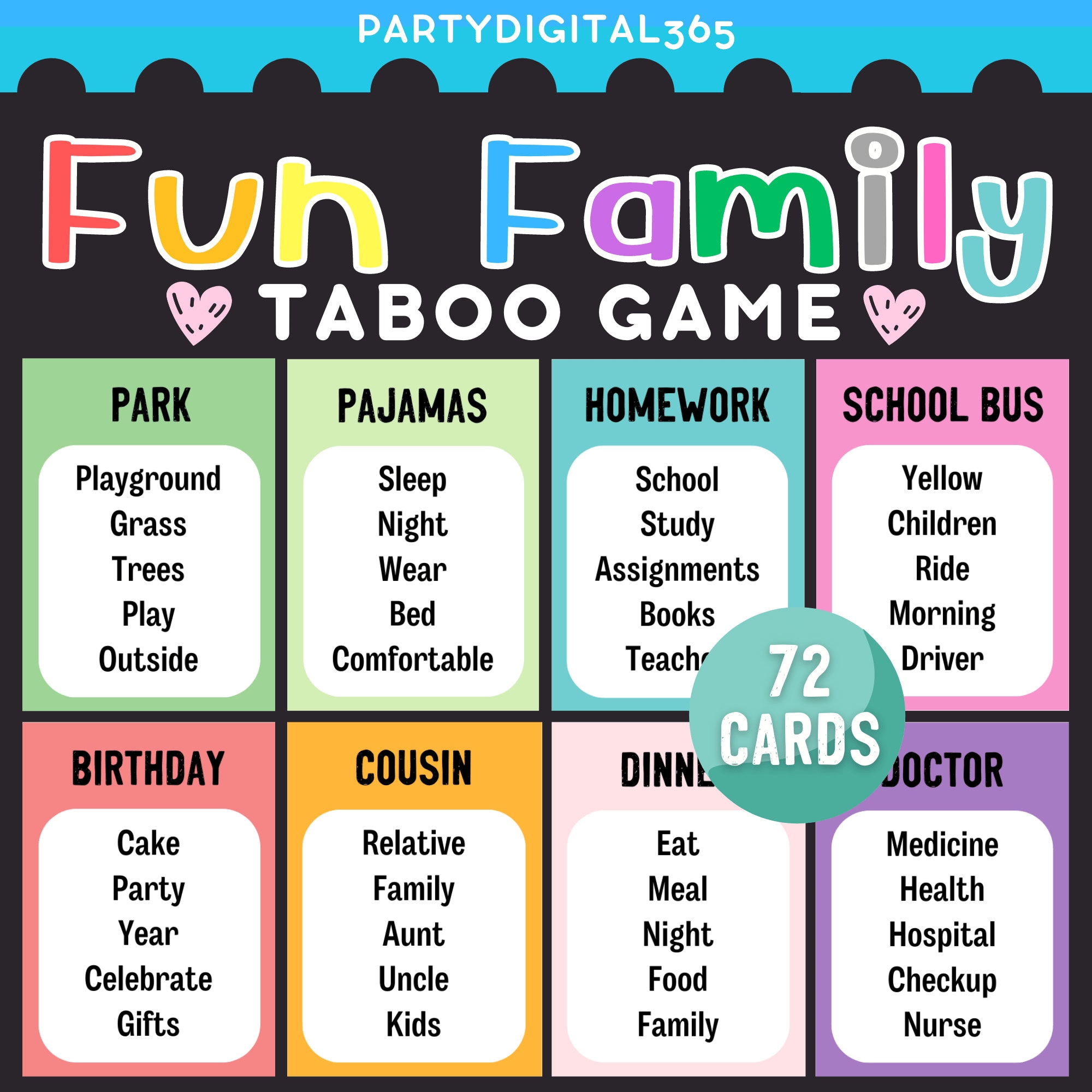
To maintain market share, the Taboo brand has employed a strategy of “Thematic Extension.” This includes versions like Taboo Kids, Taboo Midnight (for adult-themed humor), and various “Decades” editions (e.g., Taboo: The 90s).
These extensions serve two purposes:
- Market Penetration: They allow the brand to enter new demographic segments (children, nostalgia-focused Gen Xers).
- Product Lifecycle Management: By refreshing the “word bank,” the brand prevents the core product from feeling “solved” or outdated. This ensures repeat purchases and maintains the brand’s “shelf-life” in the consumer’s mind.
The Psychology of Social Branding: Why the Game Endures
The ultimate success of the Taboo brand is rooted in its understanding of consumer psychology. It leverages the “In-Group/Out-Group” dynamic that is essential for brand loyalty.
Word-of-Mouth as a Marketing Engine
Taboo is a “low-spend, high-organic” brand. Because the game is inherently social, every play session acts as a live demonstration of the product. This “experiential marketing” is more effective than any television commercial. When a player successfully describes “Bermuda Triangle” without using “island,” “ocean,” or “disappear,” they experience a dopamine hit associated with the brand. This positive reinforcement creates brand advocates who carry the product into new social circles.
Building “Unspoken” Brand Loyalty through Shared Experience
Great brands create memories. Taboo’s brand equity is built on thirty years of “you had to be there” moments. The brand doesn’t just provide a game; it provides a platform for people to showcase their personality and wit.
From a corporate identity perspective, Taboo has successfully associated itself with the concept of “The Game Night.” In the same way that Kleenex is synonymous with tissues, Taboo is often used as a genericized trademark for any word-guessing game. While this can be a legal challenge for trademark protection, it is the ultimate indicator of a brand that has achieved total market saturation.

Conclusion: The Future of the Taboo Brand
As we look toward the future of the tabletop industry, the Taboo brand remains a benchmark for how to balance tradition with innovation. By focusing on its core identity—constrained communication—while embracing digital platforms and thematic expansions, it has avoided the “nostalgia trap” that consumes many 80s-era brands.
What is Taboo? It is more than a game; it is a meticulously managed brand that understands the power of social friction. Through consistent visual and auditory branding, strategic market positioning, and a successful digital pivot, Taboo continues to define the party game category. For brand strategists and marketers, it serves as a reminder that a simple concept, executed with consistency and a deep understanding of human psychology, can create an enduring legacy in an ever-changing marketplace.
aViewFromTheCave is a participant in the Amazon Services LLC Associates Program, an affiliate advertising program designed to provide a means for sites to earn advertising fees by advertising and linking to Amazon.com. Amazon, the Amazon logo, AmazonSupply, and the AmazonSupply logo are trademarks of Amazon.com, Inc. or its affiliates. As an Amazon Associate we earn affiliate commissions from qualifying purchases.