
In the realm of technology, particularly in software development, the ability to organize and manage data efficiently is paramount. C, a foundational programming language, provides powerful mechanisms for achieving this through its concept of “structure.” Understanding structures is not just about syntax; it’s about mastering a fundamental building block for creating robust, scalable, and maintainable software.
This article delves into the essence of structures in C, exploring their significance within the broader technological landscape. We’ll connect this concept to the core pillars of our website: Tech (with a focus on software development and productivity), Brand (highlighting how well-structured code contributes to a developer’s reputation and project reliability), and Money (demonstrating how efficient programming, enabled by structures, can lead to cost savings and better resource utilization).
The Genesis of Structure: Why Organize Data?
At its heart, programming is about manipulating data. Raw data, in its simplest form, is often just a sequence of bits and bytes. However, to build meaningful applications, we need to group related pieces of information together and give them a logical form. This is where the concept of “structure” truly shines.
Imagine you’re building an application to manage a customer database. Each customer has a name, an email address, a phone number, and perhaps a unique customer ID. Without structures, you might end up with a confusing array of individual variables: char customerName1[50], char customerEmail1[100], int customerPhone1, int customerID1, and then repeat this for customerName2, customerEmail2, and so on. This quickly becomes unmanageable, error-prone, and incredibly difficult to work with.
Structures offer a solution by allowing us to define a composite data type that groups together variables of different data types under a single name. This composite type represents a single, logical entity – in our example, a “Customer.” By using structures, we can declare a variable of type Customer, and this single variable encapsulates all the related information for one customer.
Beyond Simple Variables: The Need for Abstraction
The ability to group data is a form of abstraction. It allows us to think about our data at a higher level, focusing on what it represents rather than how it’s stored at the most granular level. This is a fundamental principle in all of technology.
- In Tech: Abstraction is everywhere, from high-level programming languages that hide machine code to complex APIs that simplify interaction with intricate systems. Structures in C are an early and crucial form of data abstraction.
- In Brand: A strong brand relies on clear and consistent messaging. Similarly, well-defined data structures lead to predictable and understandable code, contributing to a project’s perceived quality and a developer’s reputation. A chaotic codebase can damage a brand’s image of professionalism.
- In Money: Efficient resource management is key to financial success. Well-structured data leads to more efficient algorithms, which in turn can reduce processing time, memory usage, and ultimately, operational costs for software.
The Anatomy of a C Structure
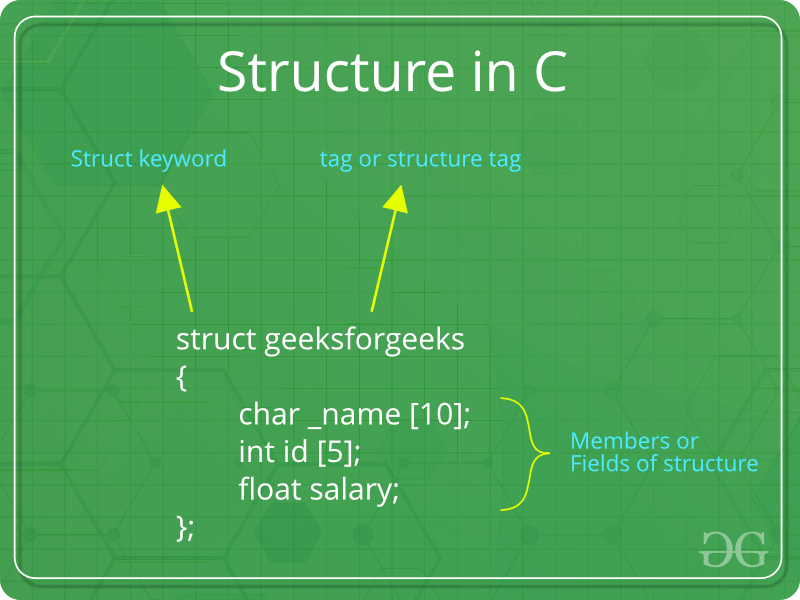
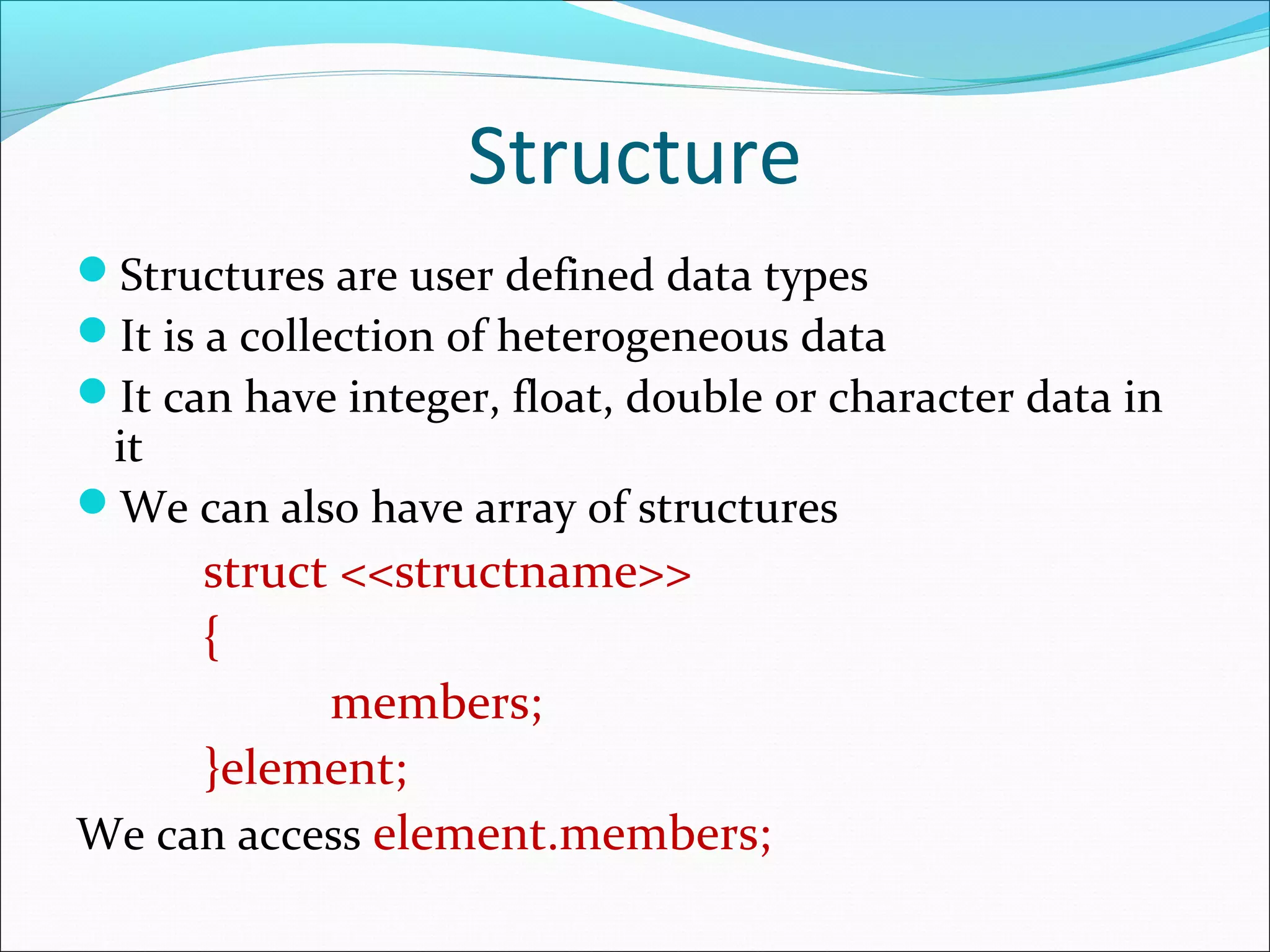
Let’s look at the syntax of a C structure. It begins with the struct keyword, followed by a tag name (optional but recommended for clarity), and then enclosed curly braces containing the member declarations.
struct Person {
    char name[50];
    int age;
    float height;
};
In this example:
struct Persondefines a new data type calledPerson.name,age, andheightare members of thePersonstructure.nameis a character array (string) to store the person’s name.ageis an integer to store their age.heightis a floating-point number to store their height.
Once defined, you can declare variables of this Person type:
struct Person individual1;
struct Person individual2;
To access the members of a structure variable, we use the dot operator (.):
strcpy(individual1.name, "Alice");
individual1.age = 30;
individual1.height = 5.7;

printf("Name: %s, Age: %d, Height: %.1fn", individual1.name, individual1.age, individual1.height);
Structures in Action: Practical Applications and Benefits
The utility of structures extends far beyond simply grouping a few variables. They are the backbone of more complex data management in C.
1. Representing Complex Objects and Records
As seen in the customer or person examples, structures are ideal for representing real-world objects or records that have multiple attributes.
- Employee Records: An
Employeestructure could containemployeeID,firstName,lastName,salary,department, etc. - Geometric Shapes: A
Circlestructure could havecenterX,centerY, andradius. ARectanglestructure could havetopLeftX,topLeftY,width, andheight. - Configuration Settings: A
Configstructure might holdserverAddress,portNumber,timeoutDuration, etc.
2. Enhancing Code Readability and Maintainability
The clarity provided by structures significantly improves the maintainability of code.
- Logical Grouping: Instead of scattered variables, you have a single
structthat clearly defines a concept. This makes it easier for new developers to understand the data being managed. - Reduced Errors: By keeping related data together, you reduce the chances of accidentally using the wrong variable or mixing up data from different entities. This directly contributes to a more reliable software product, bolstering a project’s brand.
- Easier Modifications: If you need to add a new attribute to a customer (e.g.,
phoneNumber), you only need to modify thestructdefinition and then update the parts of your code that create or manipulateCustomerobjects.
3. Facilitating Data Structures
Structures are fundamental building blocks for implementing more advanced data structures in C.
3.1 Linked Lists
A linked list is a linear data structure where elements are not stored at contiguous memory locations. Each element (or “node”) typically contains data and a pointer to the next node in the sequence. A structure is perfect for defining a node:
struct Node {
    int data;          // The data the node holds
    struct Node *next; // Pointer to the next node
};
This structure allows us to create chains of nodes, forming a linked list. Operations like insertion, deletion, and traversal become manageable.
3.2 Trees and Graphs
More complex structures like trees and graphs also heavily rely on structures. A tree node, for instance, might have data and pointers to its children. A graph node might have data and a list of pointers to adjacent nodes.
- Tech Relevance: These data structures are crucial for algorithms in AI (e.g., decision trees), search engines, network routing, and much more.
- Brand Impact: Efficient implementations of these structures lead to faster and more responsive applications, enhancing user experience and brand perception.
- Financial Benefits: Optimizing algorithms that use these structures can significantly reduce computational costs, especially in large-scale applications.
4. Passing Complex Data to Functions
When dealing with multiple related pieces of data, passing them as individual arguments to a function can be cumbersome. Passing a single structure variable is far more elegant and organized.
void displayPersonInfo(struct Person p) {
    printf("Name: %s, Age: %d, Height: %.1fn", p.name, p.age, p.height);
}

// ... in main()
struct Person myPerson;
strcpy(myPerson.name, "Bob");
myPerson.age = 25;
myPerson.height = 6.0;

displayPersonInfo(myPerson); // Passing the entire structure
This makes function signatures cleaner and improves the modularity of your code.
Advanced Concepts and Considerations
While the basic structure definition is straightforward, several advanced aspects are worth noting.
1. Typedef for Convenience
Frequently using struct Person can become repetitive. The typedef keyword allows us to create an alias for a type, making it much shorter and more readable.
typedef struct {
    char name[50];
    int age;
    float height;
} Person; // Now 'Person' is an alias for the struct

// Declare a variable using the alias
Person individual3;
This is a common practice and significantly improves code aesthetics.
2. Pointers to Structures
Just like any other data type, you can have pointers to structures. This is particularly useful when working with dynamic data structures like linked lists or when passing structures to functions to avoid copying the entire structure (which can be memory-intensive for large structures).
struct Person *ptrPerson; // Declare a pointer to a Person structure

ptrPerson = &individual1; // Assign the address of individual1 to ptrPerson

// Access members using the arrow operator (->)
printf("Name: %sn", ptrPerson->name);
printf("Age: %dn", ptrPerson->age);
The arrow operator (->) is shorthand for (*ptrPerson).memberName.
3. Nested Structures
Structures can contain members that are themselves other structures. This allows for hierarchical data organization.
struct Address {
    char street[100];
    char city[50];
    char zipCode[10];
};

struct Employee {
    int employeeID;
    char name[50];
    struct Address homeAddress; // Nested structure
};

struct Employee emp1;
strcpy(emp1.name, "Charlie");
strcpy(emp1.homeAddress.street, "123 Main St");
strcpy(emp1.homeAddress.city, "Anytown");
This is incredibly powerful for modeling complex relationships between data entities.
4. Structures and Memory Management
Understanding how structures are laid out in memory is crucial for performance optimization and avoiding subtle bugs. The compiler may insert padding bytes between members to align them for faster access by the CPU. This is known as structure padding.
- Tech Focus: Awareness of padding helps in writing more memory-efficient code, especially in performance-critical applications or when dealing with embedded systems with limited memory.
- Money Impact: Reducing memory footprint can translate directly to lower hosting costs or the ability to run applications on less powerful (and cheaper) hardware.
Conclusion: Structures as the Foundation of Organized Programming
In the fast-paced world of technology, where data is the new currency, the ability to organize and manage it effectively is a superpower. C structures provide a fundamental and elegant way to do just that. They are more than just syntactic sugar; they are a conceptual leap that enables developers to model complex realities, build robust software, and create efficient systems.
From the simplest grouping of related variables to the intricate architecture of linked lists and trees, structures are indispensable. They contribute to Tech by empowering developers to build sophisticated applications. They enhance a project’s Brand by fostering code clarity, reliability, and maintainability. And they impact Money by enabling efficient resource utilization, leading to cost savings and improved performance.
Mastering structures in C is an investment that pays dividends throughout a developer’s career. It’s a testament to the enduring power of foundational programming concepts in building the technology that shapes our world. By understanding and applying structures effectively, you lay a strong foundation for creating software that is not only functional but also elegant, maintainable, and efficient.
aViewFromTheCave is a participant in the Amazon Services LLC Associates Program, an affiliate advertising program designed to provide a means for sites to earn advertising fees by advertising and linking to Amazon.com. Amazon, the Amazon logo, AmazonSupply, and the AmazonSupply logo are trademarks of Amazon.com, Inc. or its affiliates. As an Amazon Associate we earn affiliate commissions from qualifying purchases.