
In the early days of the internet, integrating a payment system into a website was a labyrinthine process that required months of negotiation with banks, complex security audits, and the manual handling of sensitive credit card data. This friction acted as a massive barrier to entry for digital entrepreneurs. Enter Stripe: a technology company that reimagined payments not as a financial service, but as a layer of code.
Today, Stripe is the “economic infrastructure for the internet.” It is much more than a simple tool to accept credit cards; it is a sophisticated suite of APIs (Application Programming Interfaces) and software tools designed to handle every aspect of the modern transaction lifecycle. For developers and tech-forward businesses, Stripe represents the pinnacle of abstraction, taking the messiness of global finance and distilling it into elegant, scalable software.
1. The Core Architecture: An API-First Ecosystem
At its heart, Stripe is a developer-centric platform. While legacy payment processors focused on sales teams and enterprise relationships, Stripe focused on the “seven lines of code” that could get a business up and running in minutes. This API-first philosophy is what sets its technology apart.
The Power of Abstraction
Stripe operates as an abstraction layer over the fragmented world of global banking. Behind a single Stripe API call lies a massive network of connections to credit card networks (Visa, Mastercard, Amex), local payment methods (Alipay, iDEAL, SEPA), and regulatory frameworks. By using Stripe, developers do not need to build individual integrations for every bank or country. Instead, they interact with a unified interface that standardizes data formats and responses, significantly reducing the “technical debt” associated with financial software.
Cloud-Native Scalability
Built on a distributed cloud architecture, Stripe is designed for 99.999% uptime. For a technology platform, reliability is the primary metric of success. Stripe’s infrastructure is distributed across multiple data centers, ensuring that even during peak traffic events—like Black Friday or a major product launch—the system can handle tens of thousands of requests per second without latency. This scalability ensures that a startup can use the exact same tools as a Fortune 500 company like Amazon or Google, both of which utilize Stripe’s tech stack.
2. Seamless Integration: Simplifying the Developer Workflow
The brilliance of Stripe’s technology lies in its “Elements” and its robust documentation. Integration is no longer about managing raw data; it is about orchestrating a user experience.
Stripe Elements and Pre-built UIs
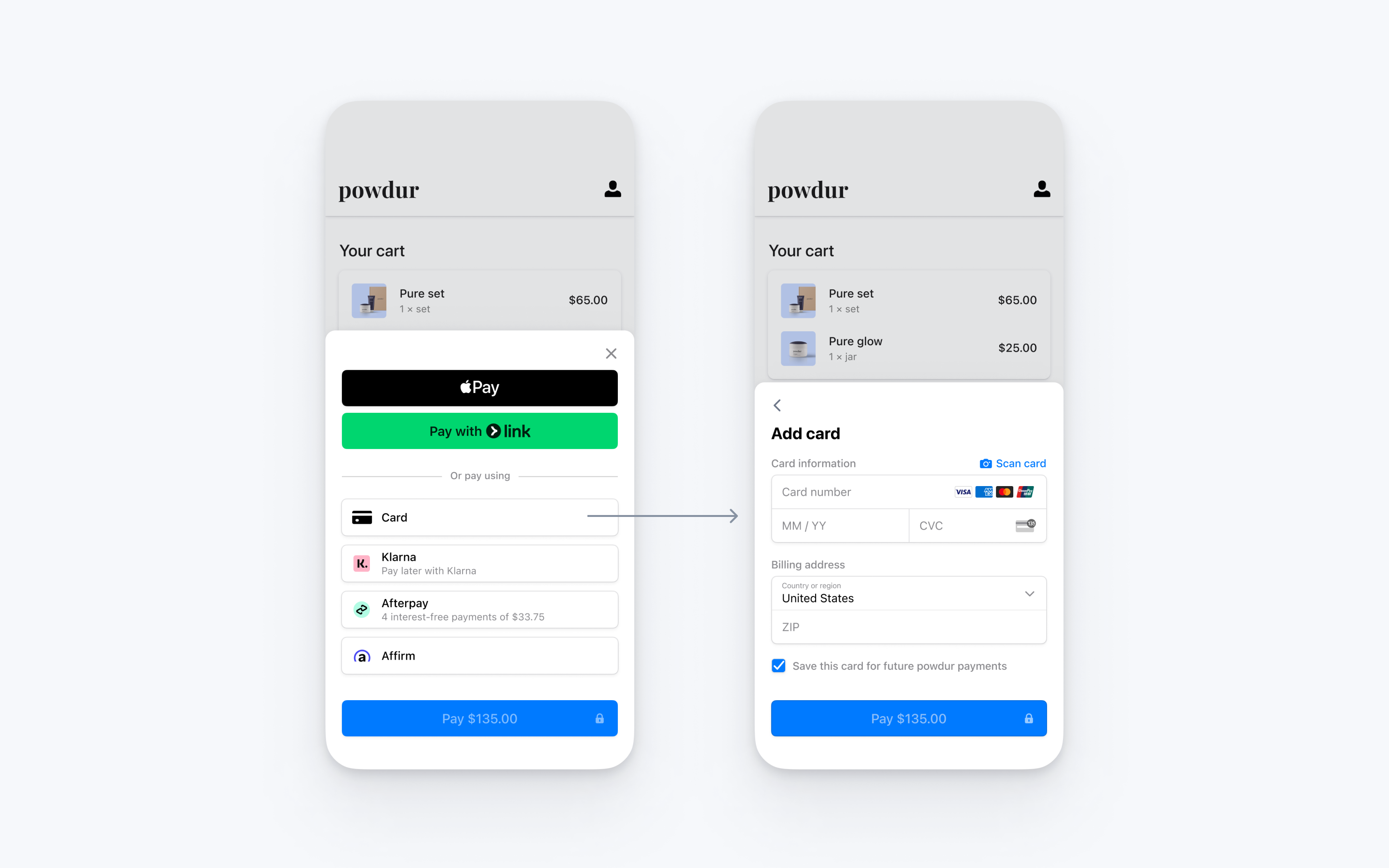
For many years, the biggest challenge in tech was capturing payment information securely without the data ever touching the merchant’s server (to avoid security liabilities). Stripe solved this with Stripe Elements. These are pre-built, PCI-compliant UI components that can be dropped into a website. They look and feel like part of the site but are technically hosted by Stripe. This technology ensures that sensitive data is tokenized instantly at the browser level, meaning the merchant’s server only ever sees a “token” rather than a credit card number. This significantly lowers the barrier for passing security certifications.
Webhooks and Real-Time Event Handling
In the world of modern software, actions happen asynchronously. A customer might start a payment, but the bank might take three seconds to approve it. Stripe utilizes a sophisticated Webhook system to communicate with a merchant’s backend. When a payment is successful, a refund is issued, or a subscription is canceled, Stripe’s servers send a cryptographic notification to the merchant’s server. This allows developers to build automated workflows—such as instantly unlocking a digital download or sending an automated receipt—without the user needing to refresh their page.
API Versioning and Stability
One of the biggest headaches for software engineers is “breaking changes”—when a service updates its code and the merchant’s site stops working. Stripe is famous in the tech community for its rigorous API versioning. They maintain backward compatibility for years, allowing businesses to upgrade their tech stack on their own schedule rather than being forced into urgent, breaking updates.
3. Advanced Security Protocols: The Intelligence Layer
When dealing with billions of dollars in transactions, security cannot be an afterthought. Stripe’s technology stack includes some of the most advanced fraud prevention and encryption tools in the industry.
Tokenization and PCI Compliance
As mentioned, Stripe’s primary security mechanism is tokenization. By replacing sensitive data with non-sensitive algorithmic equivalents (tokens), Stripe removes the merchant from the “PCI Scope.” This is a massive technological advantage, as it eliminates the need for small to mid-sized companies to invest hundreds of thousands of dollars in high-level data security audits. Stripe handles the heavy lifting of data encryption at rest and in transit.
Stripe Radar: Machine Learning in Action
Fraud is one of the most significant challenges in digital commerce. To combat this, Stripe built Radar, a machine learning fraud detection system integrated directly into the payment flow. Because Stripe processes millions of transactions globally, its AI models can detect patterns that a single merchant would never see.
Radar analyzes thousands of signals for every transaction—from the user’s IP address and device fingerprint to the speed at which they typed their name into the checkout form. If the AI detects a high probability of fraud, it can automatically block the transaction or flag it for manual review. This is “invisible tech” at its best; it protects the merchant and the consumer without adding friction to the checkout process.
4. Expanding the Stack: Beyond Simple Payments
As Stripe evolved, it moved from being a “payment gateway” to a comprehensive “Business Operating System.” This expansion into different software niches allows companies to manage their entire lifecycle through a single technological provider.
Stripe Connect: The Marketplace Engine
Building a marketplace (like Uber, Airbnb, or DoorDash) is a monumental technical challenge because you must accept money from a buyer and then distribute it to one or more sellers while taking a platform fee. Stripe Connect is the specialized API designed for this purpose. It handles the complex routing of funds, identity verification (Know Your Customer or KYC), and cross-border payouts. Connect allows developers to build complex financial ecosystems with a fraction of the code previously required.
Stripe Billing: The SaaS Subscription Logic
For software-as-a-service (SaaS) companies, payments are rarely one-time events. They involve recurring billing, free trials, tiered pricing, and tax calculations. Stripe Billing is a specialized engine that sits on top of the core payment layer to manage these state changes. It handles the logic of “proration”—calculating exactly how much to charge a user who upgrades their plan in the middle of a month—a task that is notoriously difficult to code from scratch.
Stripe Issuing and Treasury
Stripe has recently moved into the “Embedded Finance” space. Through Stripe Issuing, companies can use APIs to create physical or virtual credit cards for their employees or users. Meanwhile, Stripe Treasury provides the APIs to embed banking services directly into a platform. This allows a software company to offer its users a bank account-like experience, blurring the lines between a traditional bank and a tech platform.
5. The Future of FinTech: Innovation and Global Connectivity
The trajectory of Stripe suggests a future where the complexities of global commerce are completely invisible. As Stripe continues to innovate, its focus remains on reducing the “GDP of the internet” friction.
Global Interconnectivity
The tech world is no longer centered solely in Silicon Valley. With the rise of the global gig economy, Stripe is heavily investing in localized payment methods. Whether it is supporting the Unified Payments Interface (UPI) in India or mobile wallets in Southeast Asia, Stripe’s goal is to ensure that a developer in Lagos can sell to a customer in London as easily as if they were in the same room. This involves constant updates to their “Localization Engine,” which automatically displays the preferred currency and payment method for any given user.

The Role of AI and Automation
Looking forward, we can expect Stripe to lean even further into automated financial operations. From AI-driven tax compliance (Stripe Tax) to automated revenue recognition, the goal is to use software to replace manual accounting and legal tasks. For the modern CTO, Stripe is not just a way to get paid; it is a foundational piece of the software stack that allows their team to focus on building their own product rather than reinventing the wheel of global finance.
In conclusion, Stripe is the definitive example of how software can transform an archaic industry. By treating payments as a technical problem rather than a financial one, they have created a platform that is robust, developer-friendly, and infinitely scalable. For any business looking to operate in the digital age, understanding Stripe is essential to understanding the very fabric of the modern internet.
aViewFromTheCave is a participant in the Amazon Services LLC Associates Program, an affiliate advertising program designed to provide a means for sites to earn advertising fees by advertising and linking to Amazon.com. Amazon, the Amazon logo, AmazonSupply, and the AmazonSupply logo are trademarks of Amazon.com, Inc. or its affiliates. As an Amazon Associate we earn affiliate commissions from qualifying purchases.