
Choosing to pursue higher education is one of the most significant financial decisions a professional will make. It is an investment in human capital that requires a rigorous analysis of cost, risk, and potential return on investment (ROI). Strayer University, a private, for-profit institution primarily serving working adults, sits at a unique intersection of corporate strategy and personal finance. To understand what Strayer University is from a financial perspective, one must look beyond the curriculum and examine its business model, its tuition structures, and the long-term fiscal impact it has on its graduates.
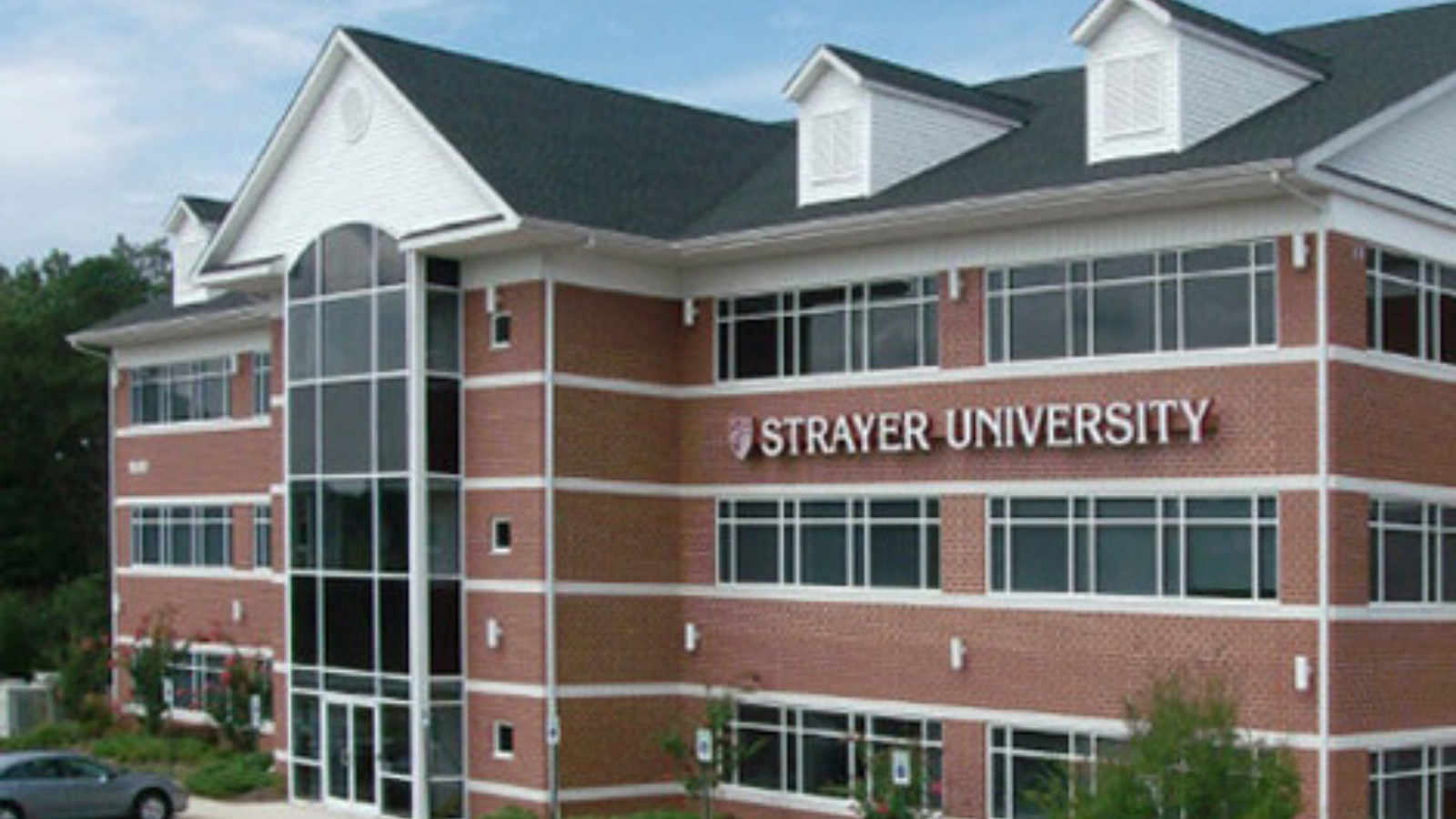
The Business of Education: Understanding Strayer’s Institutional Framework
Strayer University is not a traditional academic institution in the sense of a sprawling, state-funded campus. Instead, it is a subsidiary of Strategic Education, Inc. (NASDAQ: STRA), a publicly traded corporation. This distinction is vital for any prospective student or financial analyst to understand. Unlike non-profit universities that rely on endowments and government subsidies, Strayer operates as a business designed to meet market demand for flexible, career-oriented education.
A For-Profit Educational Model
The for-profit model means that Strayer is highly attuned to market trends and the needs of the modern workforce. From a financial standpoint, this results in a high level of efficiency regarding online delivery and curriculum updates. For the student, the “product” is a degree designed to be an asset in the labor market. The university focuses heavily on business, information technology, and public administration—fields that typically offer a clear path to salary increases and career mobility.
Corporate Partnerships and the “Other People’s Money” Strategy
One of Strayer’s most significant financial differentiators is its aggressive pursuit of corporate partnerships. Through programs like the “Degrees@Work” initiative, Strayer partners with major employers—including Fortune 500 companies like Amazon and Chrysler—to provide tuition-free or subsidized education to employees.
For the individual professional, this represents a peak personal finance strategy: leveraging employer benefits to acquire an expensive asset (a degree) without incurring personal debt. By aligning its business model with corporate talent retention strategies, Strayer positions itself as a tool for corporate finance departments to improve workforce productivity while offering employees a path to increase their lifetime earnings.
Evaluating the Cost: Tuition, Fees, and Financial Strategy
When evaluating Strayer as a financial commitment, the “sticker price” is rarely what the savvy student pays. Understanding the complex landscape of tuition mitigation is essential for maintaining a healthy personal balance sheet while pursuing a degree.
The Graduation Fund and Cost Mitigation
Strayer utilizes an innovative financial incentive known as the “Graduation Fund.” For every three courses a student successfully completes, they earn one “free” course to be used at the end of their program. From a behavioral finance perspective, this serves two purposes: it lowers the effective cost per credit hour and provides a “sunk cost” incentive to finish the degree. For a student planning their long-term budget, this fund can reduce the total cost of a bachelor’s degree by up to 25%, significantly altering the ROI calculation.
Navigating Financial Aid and Private Debt
As an accredited institution (accredited by the Middle States Commission on Higher Education), Strayer students have access to federal financial aid, including Pell Grants and Stafford Loans. However, because for-profit tuition can be higher than in-state public alternatives, students must be disciplined in their borrowing.
A sound financial approach to Strayer involves maximizing federal subsidized loans before even considering private lending. Furthermore, because Strayer caters to working professionals, many students opt for a “pay-as-you-go” model, using their current income to fund one or two classes at a time. This prevents the accumulation of interest on student loans, which can often double the effective cost of a degree over a ten-year repayment period.
The Return on Investment: Career Advancement and Earning Potential

The ultimate question for any financial investment is: what is the yield? In the context of Strayer University, the yield is measured in salary growth, promotions, and expanded job opportunities.
Impact on Personal Finance and Salary Growth
Most Strayer students are “non-traditional,” meaning they are already in the workforce. For these individuals, a degree is often the missing “key” to unlocking a management tier or a specialized technical role. Data from the Bureau of Labor Statistics consistently shows a significant earnings gap between those with an associate degree and those with a bachelor’s or master’s degree.
For a mid-career professional earning $50,000, a degree that facilitates a jump to a $65,000 management role represents a $15,000 annual return. If the degree cost $40,000 to obtain, the “break-even” point is less than three years. In the world of personal finance, a 37% annual return on a $40,000 investment is an exceptional outcome, far outperforming the historical averages of the S&P 500.
Niche Specializations and Marketability
Strayer’s focus on high-demand fields like Cybersecurity, Data Analytics, and Accounting is a calculated move to ensure their “product” remains valuable. In the digital economy, these certifications and degrees act as financial hedges against automation and economic downturns. By specializing in fields with high “moats”—meaning jobs that require specific credentials that are difficult to automate—students are essentially buying career insurance.
Strategic Alternatives and Financial Comparisons
No financial analysis is complete without a comparison to alternatives. When considering Strayer, one must weigh it against traditional public universities and the growing trend of “alternative credentials.”
Comparing Strayer to Traditional State Universities
State universities often offer lower tuition for in-state residents. However, the “hidden cost” of traditional universities often lies in their lack of flexibility. For a working professional, the ability to take classes entirely online and on a schedule that doesn’t require taking time off work is a massive financial benefit.
If attending a cheaper state school requires reducing work hours or losing out on a promotion due to scheduling conflicts, the “cheaper” school actually becomes the more expensive option due to lost wages (opportunity cost). Strayer’s value proposition is centered on minimizing this opportunity cost, allowing the student to maintain their current cash flow while building future earning power.
The Opportunity Cost of Mid-Career Education
Time is the most valuable currency in personal finance. The longer it takes to complete a degree, the longer the student goes without seeing an increase in income. Strayer’s quarterly system and transfer credit policies (which often allow for credit for work experience or prior military service) are designed to accelerate the timeline to graduation.
From a wealth-building perspective, graduating one year earlier means an extra year of “bumped” salary and an extra year for that increased income to be invested in retirement accounts. Compounded over 20 or 30 years, that one-year acceleration can result in hundreds of thousands of dollars in additional net worth.
Final Assessment: Is Strayer a Sound Financial Move?
Strayer University is more than just a school; it is a specialized financial tool designed for a specific demographic. It is not necessarily the right choice for a 18-year-old looking for a “college experience,” but for the working professional focused on the bottom line, it offers a compelling case.
To maximize the financial benefits of a Strayer degree, an individual should:
- Leverage Employer Benefits: Check for existing partnerships that may eliminate the out-of-pocket cost entirely.
- Calculate the ROI: Be realistic about the salary increase expected post-graduation and compare it against the total loan burden.
- Utilize the Graduation Fund: Ensure that the path to graduation is consistent to take advantage of the “free” credits offered.
- Audit Transfer Credits: Minimize costs by transferring as many previous credits as possible, including those from professional certifications.
In the final analysis, Strayer University represents a high-flexibility, high-utility investment in the “Business of You.” When managed with the discipline of a financial planner, the path through Strayer can be a powerful engine for social mobility and long-term wealth creation. As with any investment, the value is not just in the asset itself, but in how efficiently that asset is acquired and utilized to generate future cash flows.
aViewFromTheCave is a participant in the Amazon Services LLC Associates Program, an affiliate advertising program designed to provide a means for sites to earn advertising fees by advertising and linking to Amazon.com. Amazon, the Amazon logo, AmazonSupply, and the AmazonSupply logo are trademarks of Amazon.com, Inc. or its affiliates. As an Amazon Associate we earn affiliate commissions from qualifying purchases.