
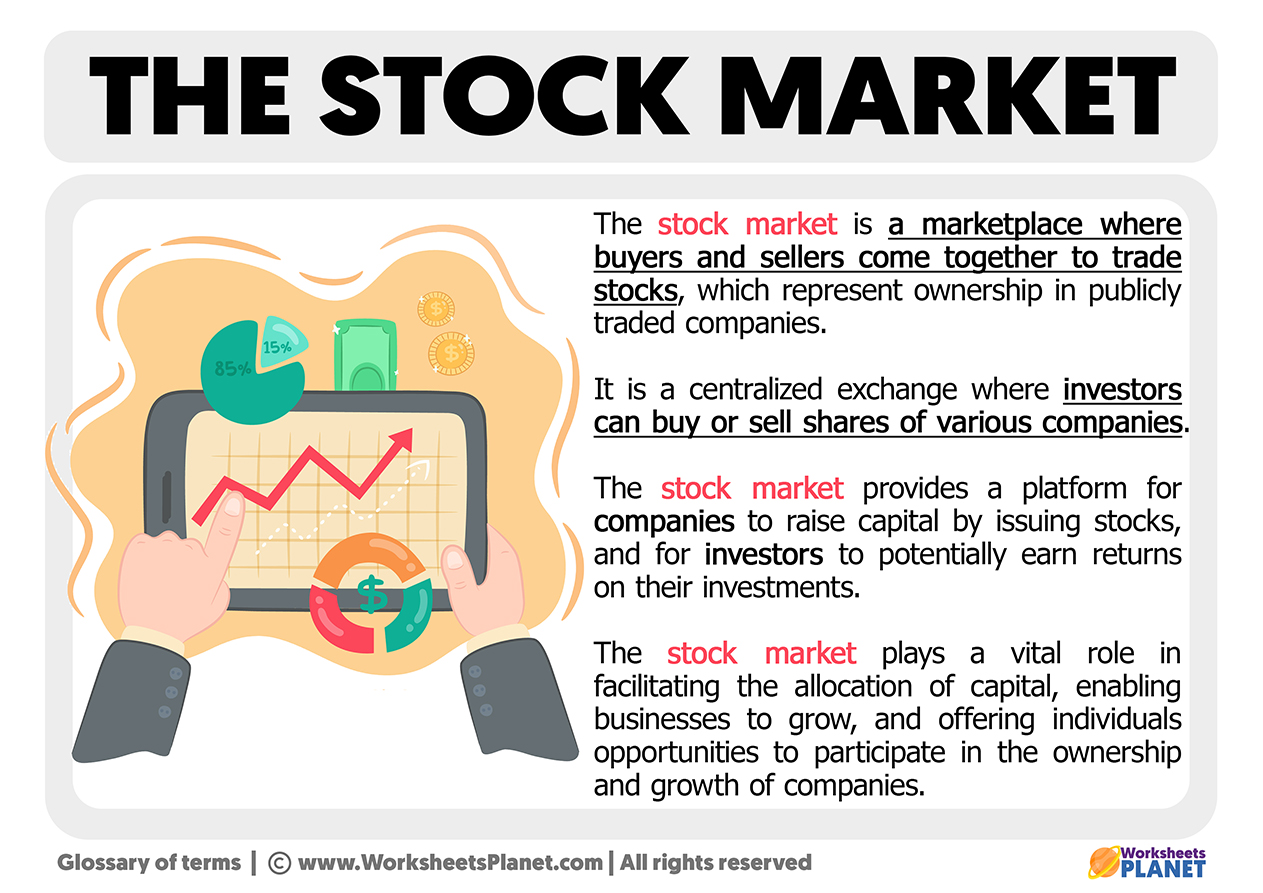
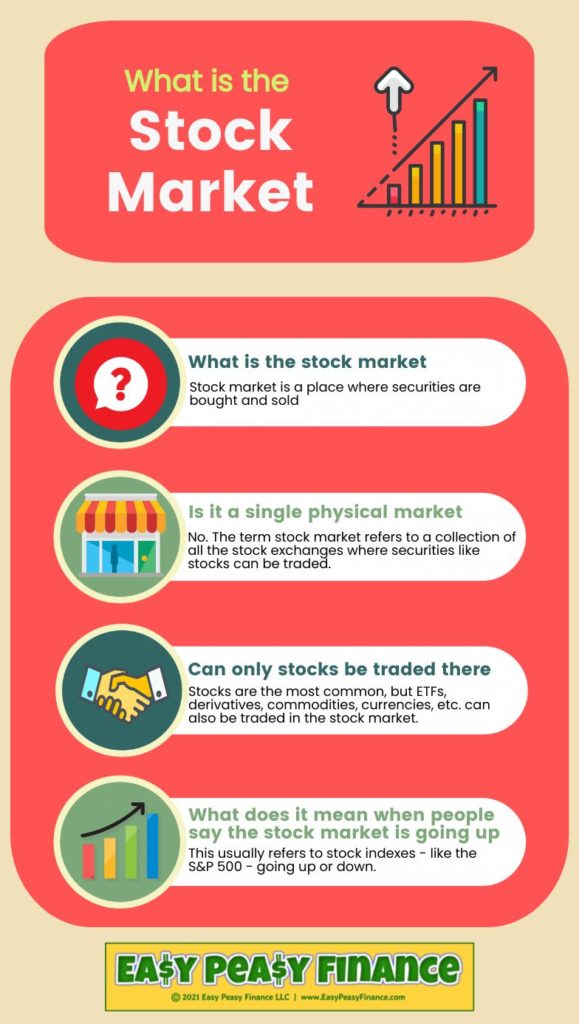
Imagine a bustling marketplace, not for fruits and vegetables, but for tiny pieces of ownership in the world’s most innovative and established companies. This, in essence, is the stock market. It’s a vast, interconnected ecosystem where individuals and institutions can buy and sell shares of publicly traded companies, becoming partial owners in the process. Far from being an exclusive club for the ultra-wealthy or an arcane concept understood only by financial gurus, the stock market is a fundamental pillar of modern finance, offering ordinary people a pathway to build wealth, participate in economic growth, and even support the businesses they believe in.
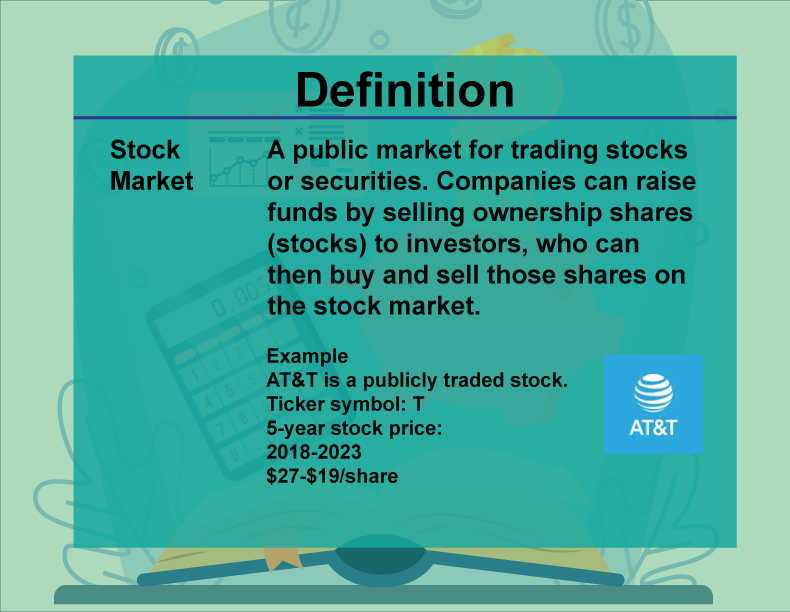
For many, the stock market conjures images of flashing screens, rapid-fire trading, and dramatic fluctuations. While these elements are certainly part of its dynamic nature, its core function is surprisingly straightforward: it’s a mechanism for companies to raise capital to grow their businesses, and for investors to share in those companies’ future success. Understanding this fundamental exchange is the first step toward demystifying what can often seem like an intimidating financial frontier. This article aims to break down the complexities, offering a clear, professional, and insightful explanation of the stock market in simple, accessible terms, allowing you to grasp its essence and consider its potential role in your financial journey.
The Foundation: Understanding Ownership and Companies
Before diving into the mechanics of buying and selling, it’s crucial to understand what you’re actually acquiring when you invest in the stock market: a piece of a company.
What is a Company?
At its heart, a company is an organization that provides goods or services with the aim of making a profit. From the tech giants shaping our digital lives to the local bakery providing morning pastries, companies are the engines of our economy. They employ people, innovate, create value, and drive progress. To grow, expand operations, develop new products, or enter new markets, companies often need substantial amounts of capital. While they can borrow money from banks or private lenders, another powerful way to raise funds is through the stock market.
The Concept of Shares and Ownership
When a company decides to raise capital through the stock market, it divides its ownership into tiny, manageable units called “shares” or “stocks.” Each share represents a fractional piece of ownership in that company. If you buy one share of Company X, you literally own a minuscule part of Company X. While owning a single share doesn’t give you the right to walk into the CEO’s office and demand changes, it does grant you certain rights, most notably the right to vote on certain company matters (like electing the board of directors) and a claim on a portion of the company’s earnings. This claim is often realized through dividends, which are regular payments made to shareholders from the company’s profits.
Why Companies Issue Shares (Going Public)
The primary reason a company “goes public” (i.e., offers its shares for sale to the general public for the first time) is to raise capital. This process is known as an Initial Public Offering (IPO). Instead of relying solely on a small group of private investors or borrowing from banks, an IPO allows a company to tap into a much larger pool of money from millions of investors. The funds raised through an IPO can be used for a variety of purposes:
- Expansion: Building new factories, opening more stores, or entering international markets.
- Research & Development: Funding innovation, creating new products or services.
- Debt Repayment: Paying off existing loans to strengthen the company’s financial position.
- Acquisitions: Buying other companies to gain market share or new technologies.
By issuing shares, a company essentially trades a piece of its future profits and control for the immediate capital it needs to grow.
The Marketplace: Where Shares are Bought and Sold
Once a company has gone public and its shares are available, they need a place to be traded. This is where stock exchanges come into play, forming the heart of the stock market.
Primary vs. Secondary Markets: IPOs and Exchanges
The stock market actually comprises two main types of markets:
- Primary Market: This is where new securities (like shares from an IPO) are sold for the first time directly by the issuing company to investors. Think of it as the “first sale” of a product. The company receives the proceeds from these sales.
- Secondary Market: After the initial sale, shares are then traded among investors on stock exchanges. This is the vast majority of what people typically refer to as the “stock market.” When you buy a share of Apple or Microsoft, you’re buying it from another investor who already owns it, not directly from Apple or Microsoft themselves. The company itself doesn’t receive any money from these secondary market transactions; the money changes hands between buyers and sellers, and the company’s share price simply reflects what investors are willing to pay for its ownership stake.
Major stock exchanges around the world include the New York Stock Exchange (NYSE), Nasdaq, the London Stock Exchange (LSE), and the Tokyo Stock Exchange (TSE). These exchanges provide a regulated and organized environment for buying and selling shares.
Key Players: Investors, Brokers, and Exchanges
Operating within this marketplace are several key participants:
- Investors: These are the individuals, institutions (like mutual funds, pension funds, and hedge funds), and even governments who buy and sell shares. They seek to profit from their investments, either through share price appreciation or dividends.
- Brokers: You can’t just walk onto the floor of the NYSE and buy shares yourself. You need a licensed intermediary called a broker. Brokers execute buy and sell orders on behalf of investors. Today, most individual investors use online brokerage platforms, which offer tools and services to facilitate trading from a computer or smartphone.
- Exchanges: As mentioned, these are the platforms where trades are executed. They provide the infrastructure, rules, and technology to match buyers and sellers efficiently and transparently.
Supply and Demand: How Prices are Determined
The price of a stock at any given moment is fundamentally determined by the basic economic principles of supply and demand.
- High Demand, Low Supply: If many investors want to buy a particular stock (high demand) and few are willing to sell it (low supply), the price of that stock will generally rise.
- Low Demand, High Supply: Conversely, if many investors want to sell a stock (high supply) and few want to buy it (low demand), the price will generally fall.
What influences supply and demand? A multitude of factors, including:
- Company Performance: Strong earnings reports, innovative new products, effective management, and positive future outlooks tend to increase demand.
- Economic Conditions: A robust economy generally boosts investor confidence and stock prices, while recessions can have the opposite effect.
- Industry Trends: Growth in a particular sector (e.g., renewable energy, artificial intelligence) can drive up demand for stocks within that sector.
- News and Events: Geopolitical events, regulatory changes, or even social media sentiment can rapidly impact investor perceptions and stock prices.
- Interest Rates: Higher interest rates can make bonds more attractive, potentially drawing money away from stocks, and also increase a company’s borrowing costs.
It’s a constant, dynamic interplay of these factors that causes stock prices to fluctuate minute by minute.
Why Invest in the Stock Market?
For many, the stock market represents one of the most powerful tools available for building long-term wealth. Its appeal lies in several compelling advantages that other savings or investment vehicles often cannot match.
Potential for Capital Growth
The most straightforward reason to invest in stocks is the potential for “capital growth.” This means the value of your shares increases over time. If you buy a stock at $50 per share and its price rises to $70 per share, you’ve made a capital gain of $20 per share. Historically, the stock market has demonstrated a significant upward trend over long periods, despite short-term fluctuations. This growth is driven by companies innovating, expanding, and becoming more profitable, which in turn makes their ownership more valuable.
Dividends: Sharing Company Profits
Beyond capital growth, many companies share a portion of their profits with shareholders in the form of “dividends.” Not all companies pay dividends (especially younger, high-growth companies that prefer to reinvest all profits back into the business), but established, profitable companies often do. Dividends are typically paid out quarterly, and they can provide a regular stream of income to investors. For long-term investors, reinvesting these dividends by using them to buy more shares can significantly compound returns over time, accelerating wealth accumulation.
Beating Inflation and Building Wealth
One of the silent destroyers of wealth is inflation, the gradual increase in the cost of goods and services over time. If your money isn’t growing at a rate higher than inflation, its purchasing power diminishes. Savings accounts, while safe, often offer interest rates that barely keep pace with, or even fall behind, inflation. Historically, the stock market has provided returns that have outpaced inflation over the long run, making it a crucial tool for preserving and growing your purchasing power and, consequently, building genuine wealth for the future.
Participating in Economic Growth
When you invest in the stock market, you’re not just speculating; you’re investing in the real economy. You become a part-owner of businesses that produce goods, provide services, and employ people. As these companies grow and the economy expands, so too can the value of your investments. It allows you to participate directly in the success and innovation that drives global progress, aligning your financial interests with the broader economic landscape.
Navigating the Market: Risks and Rewards
While the allure of wealth creation is strong, it’s crucial to approach the stock market with a clear understanding of both its potential rewards and inherent risks. A balanced perspective is key to sustainable investing.
The Upside: Growth and Returns
The upside of stock market investing is significant. Over decades, diversified portfolios of stocks have historically generated average annual returns significantly higher than other asset classes like bonds or cash. This long-term growth is driven by the power of compounding, where your earnings themselves start earning returns. For example, a modest initial investment, consistently added to and reinvested over many years, can grow into a substantial sum, enabling retirement, funding education, or achieving other major financial goals. This potential for substantial long-term returns is why the stock market is a cornerstone of many financial plans.
The Downside: Volatility and Losses
However, the stock market is not a straight line upwards. It is inherently volatile, meaning prices can go up and down dramatically over short periods. This “downside” risk means you can lose money, sometimes significantly, especially if you need to sell your investments during a market downturn. Factors like economic recessions, geopolitical crises, company-specific bad news, or even general investor fear can cause widespread sell-offs and declining stock prices. While historical data suggests the market eventually recovers from downturns, there’s no guarantee, and the duration and magnitude of these recoveries can vary.
Diversification: Spreading Your Risk
One of the most powerful strategies to mitigate risk in the stock market is “diversification.” The adage “don’t put all your eggs in one basket” perfectly applies here. Instead of investing all your money in a single company or a single industry, diversification involves spreading your investments across various companies, industries, and even different asset classes (like bonds or real estate). If one company or sector performs poorly, the impact on your overall portfolio is lessened by the stronger performance of others. This strategy doesn’t eliminate risk entirely but helps to manage it more effectively, reducing the impact of any single negative event.
Long-Term vs. Short-Term Investing
The stock market generally favors a long-term perspective. While short-term trading exists (where investors try to profit from rapid price movements), it is highly speculative, complex, and often results in losses for beginners. For most individuals, a long-term investment horizon (e.g., 5, 10, 20+ years) is the more prudent approach. Over longer periods, the market’s historical upward trend tends to smooth out short-term volatility, giving your investments time to recover from downturns and benefit from consistent growth and compounding. Patience and discipline are paramount for long-term success.
Getting Started: Your First Steps into Investing
Embarking on your investment journey doesn’t have to be complicated or require a large sum of money. With a clear understanding and a structured approach, you can begin building your financial future.
Education is Key
Before you invest a single dollar, invest in yourself through education. Read reputable financial books, follow trusted financial news sources, take online courses, and understand the basic concepts. Learn about different types of investments (individual stocks, mutual funds, Exchange Traded Funds or ETFs), understand the risks involved, and grasp fundamental investment principles like diversification and compounding. The more you know, the more confident and informed your decisions will be.
Defining Your Financial Goals
What are you investing for? Retirement? A down payment on a house? Your children’s education? Clearly defining your financial goals is crucial because it will dictate your investment strategy. Your goals will influence how much risk you’re willing to take, how much you need to save, and your investment timeline. A short-term goal might lead to a more conservative approach, while a long-term goal often allows for more aggressive, growth-oriented investments.
Choosing a Brokerage Account
To buy and sell stocks, you’ll need an investment account with a brokerage firm. In today’s digital age, online discount brokerages (like Fidelity, Charles Schwab, Vanguard, E*TRADE, Robinhood, etc.) are popular choices for individual investors. When choosing a broker, consider factors such as:
- Fees: Look for low or zero-commission trades.
- Minimums: Some brokers have minimum deposit requirements to open an account.
- Investment Options: Ensure they offer the types of investments you’re interested in (stocks, ETFs, mutual funds).
- Tools and Resources: Check for educational content, research tools, and user-friendly platforms.
- Customer Service: Good support can be invaluable, especially for beginners.
Starting Small and Consistent Investing
You don’t need a fortune to start investing. Many brokerage firms allow you to start with very small amounts, and some even offer fractional shares, meaning you can buy a portion of a high-priced stock. The most important thing is to start early and invest consistently, even if it’s a small amount each month. This strategy, known as dollar-cost averaging, involves investing a fixed amount regularly, regardless of market fluctuations. It helps smooth out the impact of volatility and builds your portfolio steadily over time. Consistency, combined with the power of compounding, is a formidable force in wealth creation.
In conclusion, the stock market is a dynamic and essential component of the global economy, offering individuals the opportunity to own a piece of profitable businesses and grow their wealth. While it comes with inherent risks like volatility and the potential for losses, a clear understanding of its mechanisms, coupled with a disciplined, long-term approach and appropriate diversification, can transform it from an intimidating concept into a powerful tool for achieving your financial aspirations. It’s not just for the experts; with education and a thoughtful strategy, anyone can participate in the exciting world of investing.
aViewFromTheCave is a participant in the Amazon Services LLC Associates Program, an affiliate advertising program designed to provide a means for sites to earn advertising fees by advertising and linking to Amazon.com. Amazon, the Amazon logo, AmazonSupply, and the AmazonSupply logo are trademarks of Amazon.com, Inc. or its affiliates. As an Amazon Associate we earn affiliate commissions from qualifying purchases.