
A digital key represents a paradigm shift in how we access and control physical and virtual assets, moving beyond traditional mechanical locks and physical tokens. At its core, a digital key is a secure, cryptographic credential stored on a digital device, most commonly a smartphone, smartwatch, or a dedicated key fob, that grants authenticated access to a corresponding digital lock or system. This technology leverages advanced encryption, secure communication protocols, and robust authentication mechanisms to offer unparalleled convenience, flexibility, and security compared to its physical predecessors.
The concept transcends simple remote unlocking; it embodies a sophisticated system where access permissions can be dynamically managed, revoked, and shared with granular control. From unlocking a car or a front door to accessing enterprise data or managing smart home devices, digital keys are rapidly becoming the preferred method for secure, convenient access in an increasingly connected world.
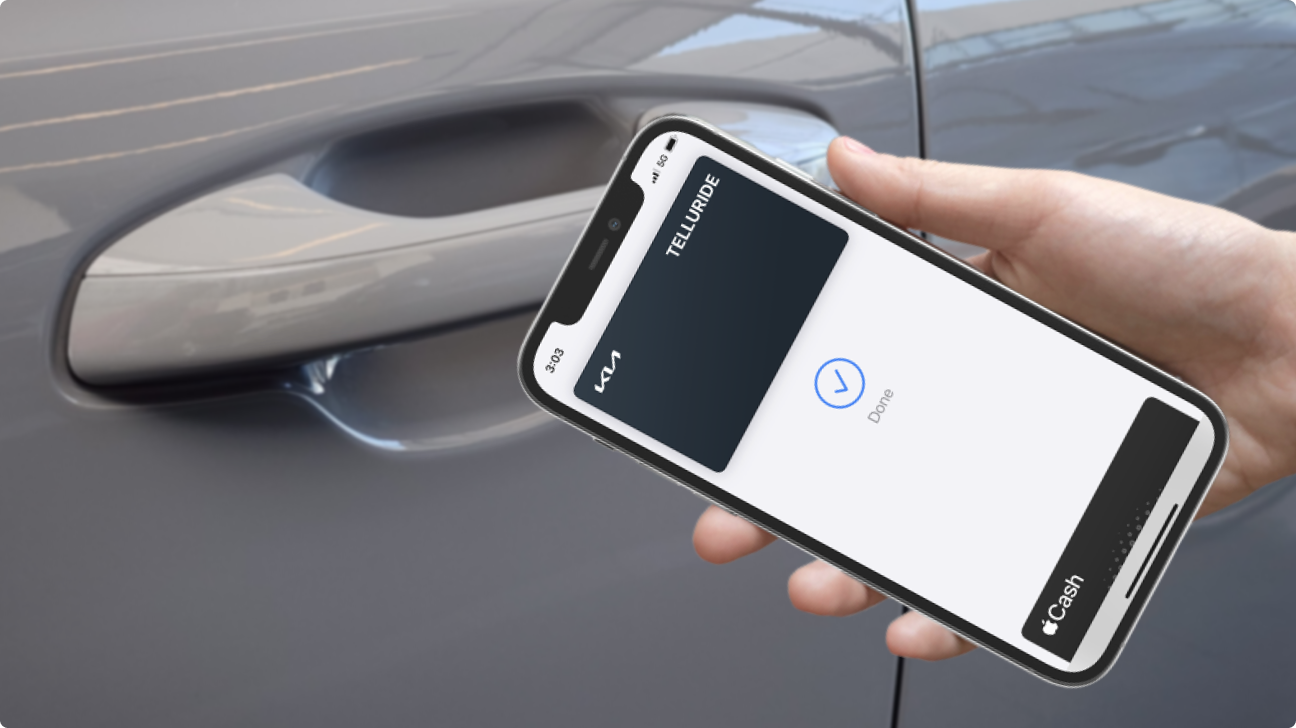
The Evolution Beyond Physical Access
For centuries, access control relied on physical keys – metal objects meticulously cut to fit specific lock mechanisms. While effective for their time, physical keys are inherently limited: they can be lost, stolen, duplicated, and offer no means of remote management or dynamic permission adjustments. The advent of electronic locks, key cards, and PIN codes marked an initial step towards modernization, yet these often still required physical interaction or static credentials.
Digital keys represent the next logical leap, leveraging the omnipresence and processing power of personal smart devices. This evolution isn’t merely about replacing a metal key with a digital representation; it’s about integrating access control into a secure, interconnected ecosystem.
From Mechanical to Cryptographic Access
The fundamental shift lies in moving from mechanical interlock systems to cryptographic authentication. Instead of a key physically manipulating tumblers, a digital key engages in a secure handshake with a digital lock. This handshake involves the exchange and verification of cryptographic proofs, ensuring that only authorized devices holding the correct digital credential can initiate an unlock command. This process relies heavily on asymmetric encryption, where a public key on the lock corresponds to a private key held securely within the digital key-holding device.
Core Principles of Digital Key Technology
Several foundational principles underpin the functionality of digital keys:
- Cryptographic Security: Strong encryption algorithms (like AES-256) protect communication and data exchange, making it incredibly difficult for unauthorized parties to intercept or forge access requests.
- Secure Element Integration: Digital keys are typically stored within a “secure element” – a tamper-resistant hardware component (like a chip on a smartphone or a dedicated security chip in a car) designed to protect cryptographic keys and other sensitive data from unauthorized access or modification.
- Authentication and Authorization: Beyond simply verifying the digital key, the system ensures that the holder of the key is authorized for the specific action (e.g., unlocking a particular door at a specific time). This often involves multi-factor authentication.
- Dynamic Key Management: Permissions associated with digital keys can be managed remotely and in real-time, allowing for the easy granting, revoking, or time-limiting of access without physical intervention.
How Digital Keys Work: Under the Hood
The sophisticated operation of a digital key system involves a complex interplay of hardware, software, and communication protocols. Understanding these components is crucial to appreciating the security and convenience they offer.
Cryptography and Public Key Infrastructure (PKI)
At the heart of any secure digital key system is cryptography, particularly asymmetric key cryptography. When a digital key is provisioned, a unique cryptographic key pair is generated. The private key resides securely within the user’s device (e.g., smartphone’s secure element), never leaving it. The corresponding public key is registered with the locking system or a central server.
When a user attempts to unlock a device, their digital key-enabled device generates a unique cryptographic signature using its private key in response to a challenge from the lock. The lock then verifies this signature using the public key it possesses. If the signature is valid, authentication is successful, and the lock grants access. This PKI model ensures that even if an attacker intercepts the communication, they cannot forge a valid signature without the private key.
Communication Protocols (Bluetooth, NFC, UWB)
Digital keys rely on short-range wireless communication protocols to interact with locks. The choice of protocol often depends on the application’s specific requirements for range, power consumption, and security:
- Near Field Communication (NFC): This protocol requires devices to be in very close proximity (typically a few centimeters). It’s highly secure due to its short range, making it ideal for tap-to-unlock applications where the user physically presents their device to the lock. Many automotive digital key systems use NFC as a primary or fallback method.
- Bluetooth Low Energy (BLE): Offering a longer range (up to tens of meters), BLE enables hands-free access or unlocking from a short distance. It’s widely used in smart home locks and some vehicle systems. While convenient, securing BLE communication requires careful implementation to prevent relay attacks or unauthorized scanning.
- Ultra-Wideband (UWB): This advanced technology provides highly accurate spatial awareness and ranging capabilities, allowing a system to determine the precise location and distance of a digital key with exceptional accuracy. This enables features like “phone-as-key” where a car can detect if the phone is inside the vehicle or approaching from a specific side, enhancing security by preventing relay attacks and enabling seamless passive entry. UWB is increasingly adopted in premium automotive and high-security applications.
The Role of Secure Elements
A secure element (SE) is a specialized, tamper-resistant microchip or a dedicated secure area within a device’s main processor (like Apple’s Secure Enclave or Android’s StrongBox). Its primary function is to protect sensitive cryptographic assets, such as private keys, biometric data, and digital certificates, from software attacks, physical tampering, and other vulnerabilities.
When a digital key is provisioned, its private key is generated and stored within the SE. All cryptographic operations involving this private key, such as signing an authentication request, occur within the SE, meaning the private key never leaves this secure hardware boundary. This architecture significantly enhances the security of digital keys, making them resilient even if the host device’s operating system is compromised.
Applications Across Industries
The versatility of digital key technology has led to its adoption across a wide range of sectors, transforming traditional access methods.
Automotive Access and Management
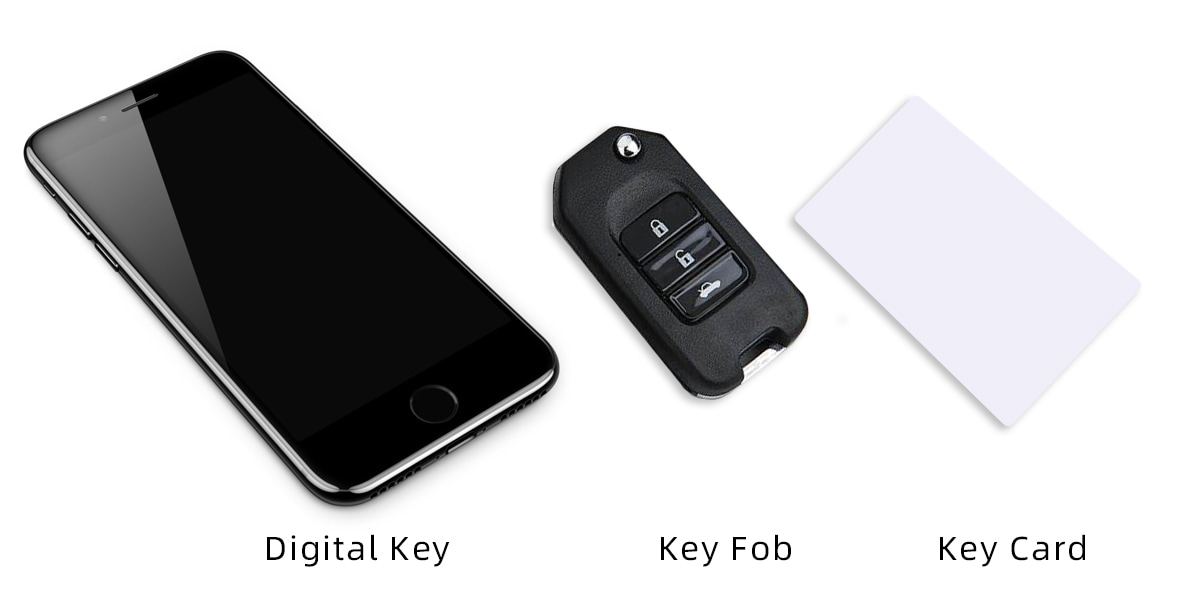
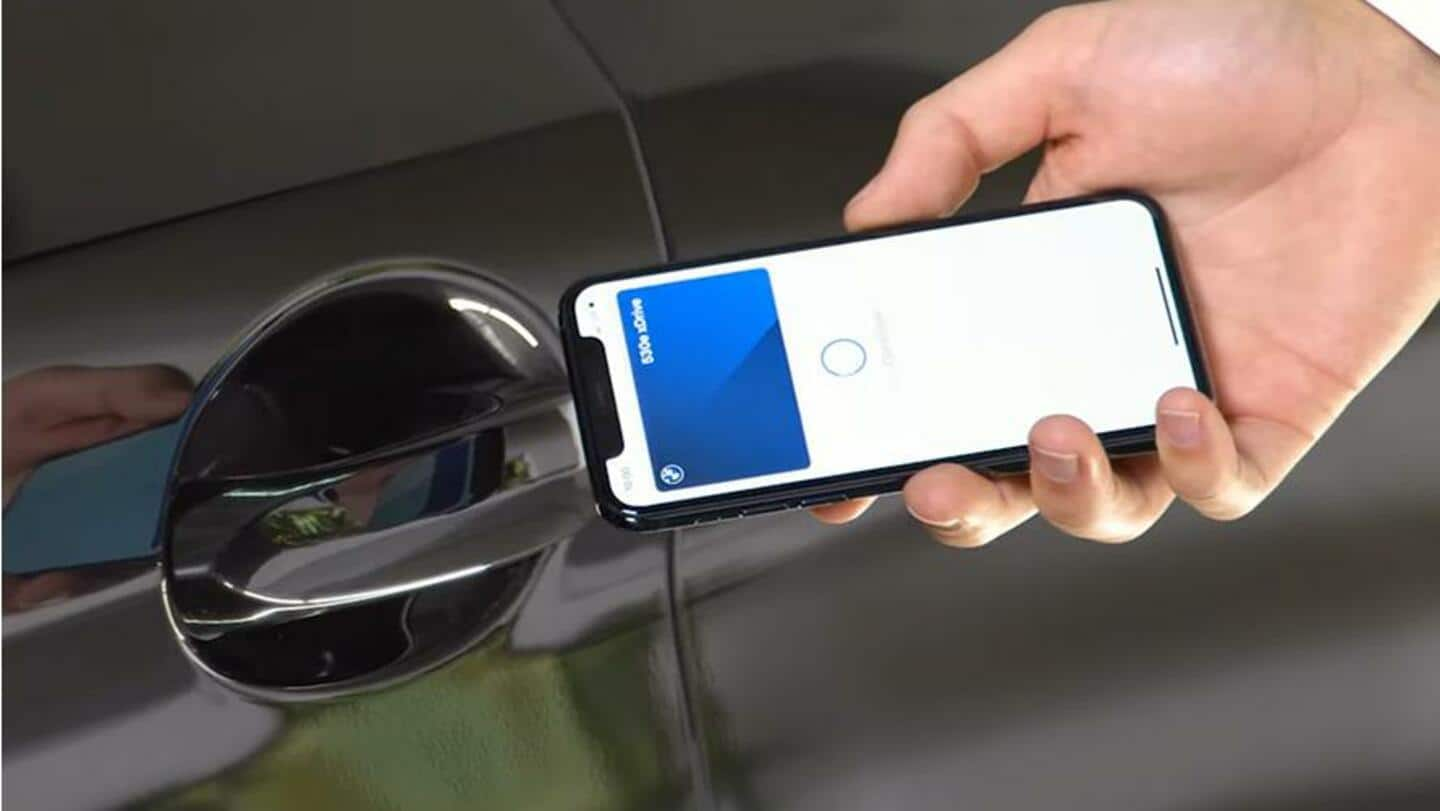
The automotive industry is a frontrunner in digital key adoption. Modern vehicles increasingly offer “phone-as-key” functionality, allowing owners to lock, unlock, and start their cars using their smartphones. This includes features like remote start, trunk opening, and even valet mode, where access can be temporarily granted with restricted capabilities. Digital car keys eliminate the need for physical fobs, simplify car sharing, and enable new business models like car rentals and ride-sharing where vehicles can be accessed and managed entirely digitally.
Smart Home and Building Entry
In residential and commercial buildings, digital keys streamline access control. Smart locks integrated with home automation systems allow residents to unlock doors via their smartphones, grant temporary access to guests or service providers, and monitor entry/exit logs remotely. For commercial properties, digital keys enhance security by offering centralized management of employee access, reducing the costs associated with physical key issuance and replacement, and enabling rapid adjustments to access permissions.
Enterprise Security and IoT Devices
Digital keys extend beyond physical entry to secure access to digital resources and IoT ecosystems. In enterprises, they can be used for secure login to computers, networks, and applications, replacing traditional passwords or smart cards. For the burgeoning IoT landscape, digital keys provide a robust authentication mechanism for devices to securely communicate with each other and with cloud services, ensuring that only authorized devices can send or receive data and execute commands.
Digital Identity and Authentication
Beyond physical access, the underlying technology of digital keys contributes to broader digital identity and authentication solutions. The secure storage and use of cryptographic credentials within a secure element can authenticate a user’s identity for online transactions, digital document signing, and accessing sensitive personal data, offering a higher level of assurance than traditional username/password combinations.
Benefits and Challenges of Digital Key Implementation
While digital keys offer numerous advantages, their successful implementation requires careful consideration of potential challenges and robust mitigation strategies.
Enhanced Convenience and Flexibility
The most immediate benefit is convenience. Users no longer need to carry bulky keychains; their smartphone serves as the universal key. Features like passive entry (where the lock detects the authorized device nearby) and remote unlocking add layers of effortlessness. The ability to share digital keys instantly with temporary access parameters (e.g., guest access for a specific duration) offers unprecedented flexibility for managing access.
Improved Security Posture
When properly implemented, digital keys can offer superior security compared to physical keys. Cryptographic protection makes duplication or picking virtually impossible. Secure elements protect against software exploits. The ability to instantly revoke lost or stolen digital keys (by deactivating the associated credential remotely) mitigates the risk associated with compromised physical keys. Furthermore, audit trails provide a detailed log of access events, enhancing accountability.
Scalability and Management
For organizations, digital keys drastically simplify access management. A central system can provision, manage, and revoke credentials for thousands of users and locks efficiently. This reduces operational overhead, streamlines onboarding/offboarding processes, and provides granular control over who can access what, when. The scalability is a key driver for adoption in large corporate campuses, rental properties, and shared vehicle fleets.
Potential Vulnerabilities and Mitigation
Despite their inherent security, digital key systems are not entirely immune to vulnerabilities. Potential attack vectors include:
- Relay Attacks: For Bluetooth or UWB systems, attackers might use signal boosters to “relay” the digital key’s signal over longer distances, tricking the lock into thinking the authorized device is nearby. UWB’s accurate ranging capabilities are designed to specifically mitigate this.
- Malware/OS Exploits: If the host device’s operating system is compromised by sophisticated malware, there’s a theoretical risk, though the secure element is designed to isolate the private key from such exploits.
- Social Engineering: Users might be tricked into sharing their digital key or enabling unauthorized access.
- Device Loss/Theft: While a lost phone’s digital key can be remotely revoked, the immediate period before revocation could pose a risk if the phone is unlocked and unprotected.
Mitigation strategies include robust cryptographic protocols, mandatory secure element integration, strong authentication (e.g., PIN, biometrics) on the host device, real-time revocation capabilities, and educating users on secure practices.
The Future of Keyless Access
The trajectory of digital key technology points towards even greater integration, intelligence, and interoperability.
Integration with Biometrics and AI
Future digital key systems will increasingly integrate with advanced biometrics (facial recognition, fingerprint, iris scan) not just on the host device but potentially directly on the lock itself, offering seamless, multi-factor authentication. Artificial intelligence and machine learning will play a role in learning user patterns, anticipating access needs, and proactively identifying anomalous behavior to enhance security and convenience further.
Standardisation and Interoperability
Currently, different manufacturers often use proprietary digital key implementations, limiting interoperability. Initiatives like the Car Connectivity Consortium (CCC) Digital Key specification aim to create universal standards, allowing a single digital key credential on a smartphone to work across different car brands and potentially other smart access systems. This push for standardization will unlock the full potential of digital keys, making them a ubiquitous and seamless part of our daily lives, regardless of the devices or systems we interact with. The goal is a world where access is not defined by a physical object, but by a secure, personalized, and universally recognized digital credential.
aViewFromTheCave is a participant in the Amazon Services LLC Associates Program, an affiliate advertising program designed to provide a means for sites to earn advertising fees by advertising and linking to Amazon.com. Amazon, the Amazon logo, AmazonSupply, and the AmazonSupply logo are trademarks of Amazon.com, Inc. or its affiliates. As an Amazon Associate we earn affiliate commissions from qualifying purchases.