
In the dynamic world of finance, investors and traders are constantly seeking sophisticated tools to manage risk, speculate on market movements, and enhance returns. Among these instruments, stock futures stand out as a powerful, albeit complex, derivative product. For those looking to deepen their understanding of advanced trading strategies and financial markets, grasping the intricacies of stock futures is paramount. This comprehensive guide will demystify stock futures, exploring their mechanics, applications, benefits, and inherent risks, all while maintaining a professional and insightful tone suitable for the financially astute.
Understanding the Basics: Demystifying Futures Contracts
At its core, a stock future is a standardized, legally binding agreement to buy or sell a specific underlying stock or stock index at a predetermined price on a specified future date. This definition alone hints at the speculative and hedging capabilities inherent in these contracts. Unlike directly owning the stock, a future contract doesn’t confer ownership; rather, it’s a commitment to a future transaction.
Definition and Core Concept
A stock future contract is a derivative instrument whose value is derived from the price movement of an underlying stock or stock index. When you enter into a futures contract, you’re not buying or selling the actual asset immediately. Instead, you’re agreeing to do so at a future point in time, at a price established today. This “future” price is determined by the current market conditions, including the underlying asset’s spot price, interest rates, and the time remaining until expiration.
The “future date” is the expiration date, and the “predetermined price” is the futures price. The contract specifies the quantity of the underlying asset (e.g., 100 shares per contract) and the delivery month. While historically futures contracts often involved physical delivery, most stock futures today are cash-settled, meaning that at expiration, the difference between the contract price and the market price of the underlying asset is settled in cash.
Futures Contracts vs. Stocks: A Key Distinction
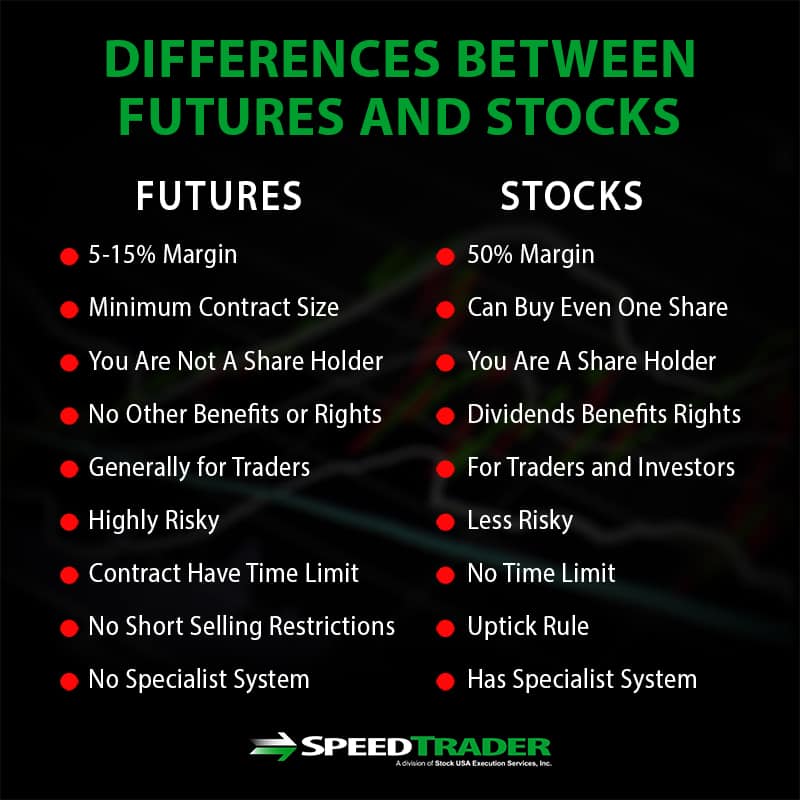
The fundamental difference between trading a stock and trading a stock future lies in ownership and leverage. When you buy a stock, you become a shareholder, entitled to dividends (if any) and voting rights. You own a piece of the company. With a stock future, you own a contract, not the stock itself. This distinction is crucial because it implies different capital requirements, risk profiles, and potential returns.
Stocks require you to pay the full price (or a significant portion if using margin). Futures, however, demand only a fraction of the contract’s total value as initial margin. This leverage amplifies both potential gains and losses, making futures trading a higher-stakes game. Furthermore, futures contracts have a finite life, expiring on a specific date, unlike stocks which can be held indefinitely.
Key Components of a Futures Contract
Every stock futures contract is characterized by several standardized components:
- Underlying Asset: This is the specific stock or stock index (e.g., Apple stock, S&P 500 index) upon which the future’s value is based.
- Contract Size: Defines the quantity of the underlying asset represented by one contract (e.g., 100 shares per contract for single stock futures, or a multiplier for index futures).
- Expiration Date: The date on which the contract ceases to exist. Contracts typically expire on a monthly or quarterly cycle.
- Tick Size/Value: The minimum price fluctuation allowed for the contract and its corresponding monetary value.
- Margin Requirements: The initial capital required to open and maintain a futures position. This is typically a percentage of the contract’s total value.
- Settlement Method: Whether the contract is settled by physical delivery of the underlying asset or by a cash payment at expiration. Stock futures are predominantly cash-settled.
How Stock Futures Work: Leverage, Margin, and Settlement
The operational mechanics of stock futures are central to understanding their appeal and risk. They operate on principles distinct from direct stock ownership, primarily centered around leverage and margin.
The Role of Leverage
Leverage is perhaps the most defining characteristic of futures trading. It allows traders to control a large value of an underlying asset with a relatively small amount of capital. For example, if a futures contract controls $100,000 worth of stock, an investor might only need to deposit $10,000 as initial margin. This 10:1 leverage means that a 1% movement in the underlying stock’s price translates to a 10% gain or loss on the initial capital invested.
While leverage magnifies returns, it equally amplifies losses. A small adverse price movement can quickly erode a significant portion, or even all, of the deposited margin, making risk management a critical component of any futures strategy.
Margin Requirements
Trading stock futures requires depositing two types of margin:
- Initial Margin: The amount of money that must be deposited into your brokerage account before you can open a futures position. This acts as a good faith deposit, ensuring that traders have sufficient capital to cover potential losses. It’s set by the clearinghouse and can vary based on market volatility and the specific contract.
- Maintenance Margin: A lower amount than the initial margin, representing the minimum equity that must be maintained in your account after a position has been opened. If the market moves against your position and your account equity falls below the maintenance margin, you will receive a margin call, requiring you to deposit additional funds to bring your account back up to the initial margin level. Failure to meet a margin call can result in your position being automatically liquidated by your broker.
Settlement and Expiration
As previously mentioned, most stock futures are cash-settled. This means that at expiration, there is no physical exchange of shares. Instead, the contract’s value is settled in cash based on the difference between the futures price and the prevailing market price of the underlying stock or index at the time of expiration.
Traders rarely hold futures contracts until expiration. Most positions are closed out before the expiration date by taking an offsetting position (i.e., selling a contract if you bought one, or buying a contract if you sold one). This allows traders to realize their profits or losses and avoid the complexities of the settlement process.

Primary Uses and Strategies for Stock Futures
Stock futures are versatile financial instruments employed by various market participants for different strategic objectives. Their utility extends beyond mere speculation, encompassing sophisticated risk management techniques.
Hedging Against Price Fluctuations
One of the primary uses of stock futures is hedging. Investors and institutional funds use futures to protect their existing stock portfolios from potential adverse price movements. For example, if a fund manager holds a large portfolio of tech stocks and anticipates a short-term market downturn, they can sell an equivalent value of tech stock index futures. If the market indeed falls, the loss on their stock portfolio would be offset, at least partially, by the profit from their short futures position. This strategy effectively “locks in” a current value, mitigating downside risk.
Speculation and Profit Potential
For active traders, stock futures offer significant opportunities for speculation. Given their inherent leverage, even small movements in the underlying asset’s price can lead to substantial profits (or losses). Traders can take a long position (buy a future) if they expect the underlying stock or index price to rise, or a short position (sell a future) if they anticipate a decline. The ability to easily go short without borrowing shares, as required in traditional stock short-selling, makes futures an attractive tool for profiting from downward market movements.
Portfolio Diversification and Index Exposure
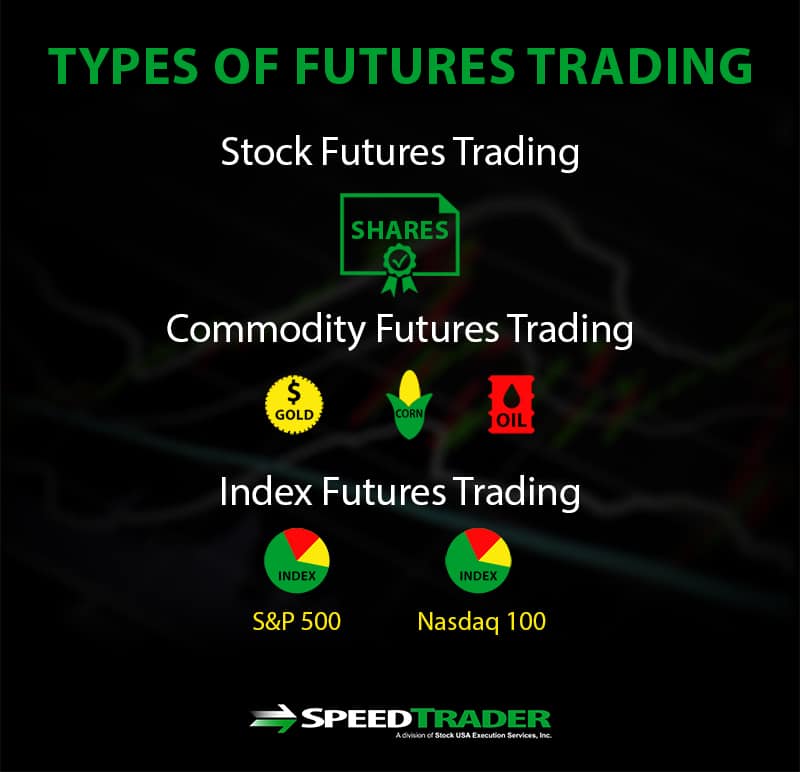
Index futures allow investors to gain exposure to an entire market segment or the broader market without having to buy individual stocks. This can be a cost-effective and efficient way to diversify a portfolio or to express a macro-economic view. For instance, buying S&P 500 futures gives exposure to the performance of 500 large U.S. companies. Furthermore, the high liquidity of major index futures makes them ideal for large institutional investors seeking to adjust their market exposure quickly.
Advantages and Disadvantages of Trading Stock Futures
Like any financial instrument, stock futures come with a unique set of pros and cons that traders and investors must carefully weigh before engaging.
The Upsides: Leverage, Liquidity, and Short-Selling Ease
- High Leverage: As discussed, futures offer significant leverage, enabling traders to control substantial asset values with a relatively small capital outlay, maximizing potential returns on capital.
- High Liquidity: Major stock and index futures contracts are highly liquid, meaning they can be bought and sold quickly without significantly impacting their price. This ensures efficient entry and exit points for traders.
- Ease of Short Selling: Short selling futures is as straightforward as going long. There are no restrictions on borrowing shares, making it an efficient tool for profiting from falling markets.
- Lower Transaction Costs: Futures typically have lower commission rates compared to trading the equivalent value in individual stocks, and there are no stamp duties or exchange fees in many markets.
- 24-Hour Trading: Many futures markets operate almost 24 hours a day, five days a week, allowing traders to react to global news and events outside of traditional market hours.
The Downsides: Significant Risks and Complexity
- Magnified Losses: The leverage that magnifies gains also magnifies losses. A small adverse market move can lead to rapid and substantial capital depletion, potentially exceeding the initial margin deposit.
- Margin Calls: The requirement to maintain maintenance margin means traders can face margin calls if the market moves against them, requiring additional capital injections to keep positions open.
- Volatility: Futures markets can be highly volatile, leading to rapid price swings that can be challenging to manage, especially for novice traders.
- Expiration Risk: Futures contracts have a finite life. As they approach expiration, their pricing dynamics can become more complex, and there’s a risk if a position is not closed or rolled over appropriately.
- Complexity: Understanding the nuances of futures contracts, margin requirements, settlement procedures, and various trading strategies requires significant education and experience.
Navigating the Risks and Considerations
Engaging in stock futures trading demands a robust understanding of its inherent risks and a disciplined approach to risk management. It is not suitable for every investor.
Market Volatility and Margin Calls
The biggest risk in futures trading is the potential for losses to exceed initial investment. High market volatility, particularly during unexpected economic announcements or geopolitical events, can lead to rapid price movements. If these movements are against your position, they can trigger margin calls quickly, forcing you to inject more capital or face liquidation. Traders must always have sufficient capital buffer beyond the initial margin to withstand such adverse moves.
Regulatory Oversight and Exchange Traded
Stock futures are typically traded on regulated exchanges (e.g., CME Group, Eurex). These exchanges provide transparency, standardization, and a clearing mechanism that guarantees the performance of the contracts, reducing counterparty risk. Regulatory bodies like the Commodity Futures Trading Commission (CFTC) in the U.S. oversee these markets to ensure fair and orderly trading. While this oversight provides a layer of security, it does not mitigate market risk or the potential for financial loss.
Is Stock Futures Trading Right for You?
Stock futures are powerful tools for sophisticated investors and traders who understand their mechanics, appreciate the role of leverage, and possess a robust risk management framework. They offer unique opportunities for hedging, speculation, and portfolio management. However, due to their complexity and amplified risk, they are generally not recommended for beginners or those with limited capital.
Before venturing into stock futures, it is crucial to:
- Educate Yourself Thoroughly: Understand contract specifications, margin rules, and trading strategies.
- Develop a Trading Plan: Define your entry/exit points, risk tolerance, and capital allocation.
- Practice with Paper Trading: Use a simulated account to gain experience without risking real capital.
- Manage Risk Diligently: Always use stop-loss orders, manage position sizing, and never risk more than you can afford to lose.
In conclusion, stock futures are sophisticated financial instruments that offer significant advantages for experienced market participants. By understanding their core concepts, operational mechanics, and inherent risks, investors can strategically integrate them into their financial toolkit to pursue diverse investment objectives within the realm of money management.
aViewFromTheCave is a participant in the Amazon Services LLC Associates Program, an affiliate advertising program designed to provide a means for sites to earn advertising fees by advertising and linking to Amazon.com. Amazon, the Amazon logo, AmazonSupply, and the AmazonSupply logo are trademarks of Amazon.com, Inc. or its affiliates. As an Amazon Associate we earn affiliate commissions from qualifying purchases.