
In the digital age, where pixels and high-resolution displays often dominate the conversation around brand identity, the physical touchpoints of a business remain a critical anchor for brand perception. When a client holds a business proposal, a high-end brochure, or a corporate letter, they are interacting with the brand in a tactile way. This is where the technicality of “standard printing paper size” transcends mere office logistics and enters the realm of strategic brand management.
Understanding the nuances of paper dimensions is not just about ensuring a document fits into a printer tray; it is about visual hierarchy, cultural resonance, and the seamless execution of a corporate identity across global markets. For a brand manager or designer, the choice of paper size is the first step in defining the “canvas” upon which the brand’s story will be told.

The Psychology of Dimensions: Why Paper Size Matters for Brand Identity
The dimensions of the materials a brand produces carry unspoken psychological weight. Whether a brand chooses the familiar heft of North American standards or the sleek, mathematical elegance of the international ISO series, these choices communicate stability, attention to detail, and geographic awareness.
Letter vs. A4: Navigating the Geographic Brand Divide
The global marketplace is divided by two primary standards: the North American system (predominantly the US and Canada) and the ISO 216 standard used by the rest of the world. For a brand looking to establish a global presence, ignoring this divide can be a costly mistake in brand perception.
The North American “Letter” size (8.5 x 11 inches) is slightly wider and shorter than the international “A4” (210 x 297 mm). If a European luxury brand sends a proposal to a New York firm on A4 paper, it stands out—but not always in the intended way. It can signal a lack of localization. Conversely, a US firm sending Letter-sized documents to a Tokyo office may find their materials don’t fit into standard Japanese filing systems. Strategic branding requires a commitment to “native” dimensions to show respect for the client’s local standards and to ensure the brand feels integrated into their world.
Tactical Perception: How Size Influences Brand Authority
The physical scale of a printed piece dictates the consumer’s physical interaction with the brand. A larger format, such as an A3 or a Tabloid (11 x 17 inches) sheet, is often associated with transparency, grandiosity, and architectural precision. It demands space and commands attention.
In contrast, smaller standards like A5 or A6 are often utilized for boutique branding, invitations, or “pocket-sized” brand guides. These smaller dimensions suggest intimacy, curated content, and portability. By selecting a standard size that aligns with the brand’s core values—be it the “big picture” authority of a large format or the “personalized detail” of a smaller one—a brand reinforces its identity before a single word is read.
Standardizing Your Corporate Identity: From Business Cards to Brochures
A cohesive brand strategy relies on consistency. When a brand’s visual identity is applied across various paper sizes, the integrity of the design must remain intact. This requires a deep understanding of how standard sizes relate to one another.
The Golden Ratio of Stationery: Choosing the Right Standard
Standardization in printing is the backbone of professional corporate identity. The most common sizes used in brand collateral include:
-
Business Cards: While the US standard is 3.5 x 2 inches, the ISO standard (often referred to as CR80 or credit card size) is slightly different. Branding a high-end tech firm often requires “sleek” variations, but straying too far from the standard can prevent the card from fitting into a wallet, leading to the brand literally being discarded.
-
Letterhead and Envelopes: Consistency between the paper size and the envelope size (such as the DL envelope for A4 or the #10 for Letter) is a hallmark of corporate professionalism.
-
Brochures and Folders: Standard sizes like A4 or Letter are often folded into “Tri-folds.” Understanding the flat size vs. the folded size is essential for maintaining the “Brand Safe Zone” in graphic design, ensuring that logos and taglines don’t disappear into a crease.
Scalability in Design: Maintaining Visual Consistency Across Formats
One of the greatest challenges in brand management is “aspect ratio drift.” When a design is created for a Letter-sized flyer and then stretched to fit an A0 poster, the visual hierarchy can break.
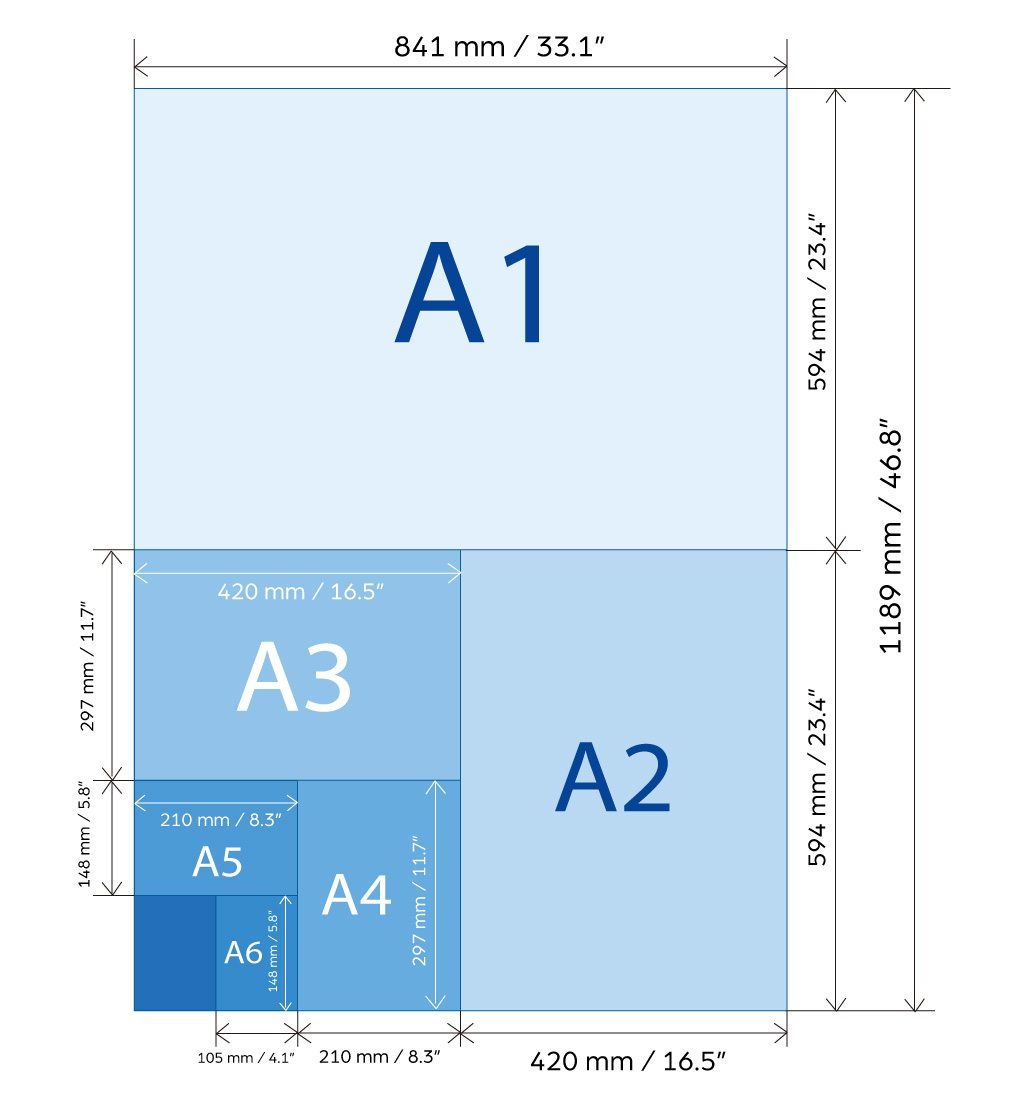
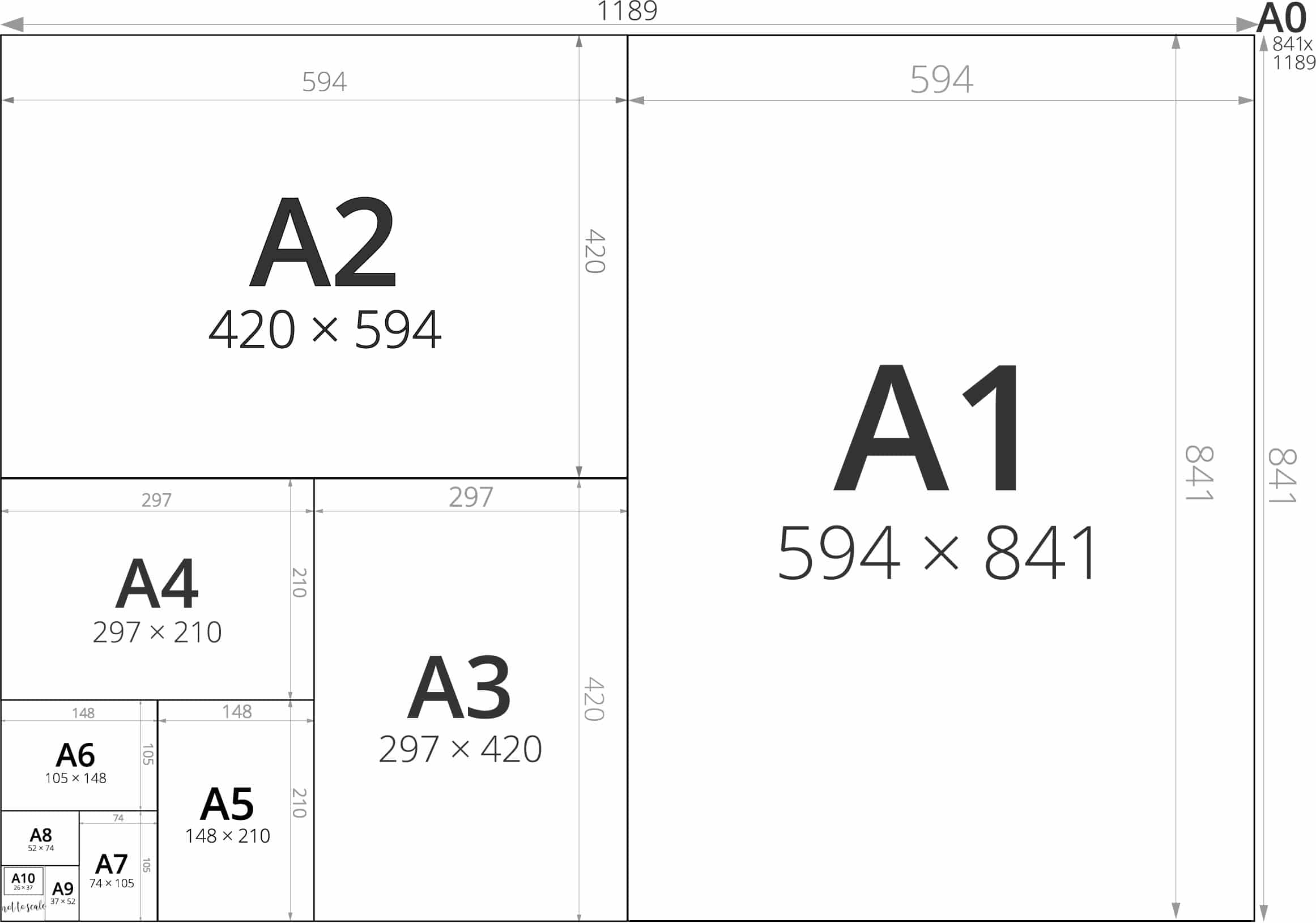
The ISO 216 standard (the A-series) solves this through the “root two” (1:1.4142) aspect ratio. This mathematical brilliance means that if you fold an A4 sheet in half, you get an A5 with the exact same proportions. From a brand strategy perspective, this allows for effortless scalability. A brand’s layout can be scaled up or down across the entire A-series without losing its aesthetic balance, ensuring that the brand looks just as “balanced” on a small flyer as it does on a massive billboard.
Maximizing Marketing Impact with ISO and North American Standards
Beyond the office, marketing materials rely on standardized sizes to ensure distribution efficiency and visual impact. Understanding the “B” and “C” series of the ISO standard, alongside the ANSI standards, provides a brand with a full toolkit for physical marketing.
The ISO 216 Series: International Efficiency for Global Brands
While the A-series is for general documentation, the B-series provides a wider range of sizes specifically designed for posters, books, and larger marketing collateral. For a brand’s marketing department, utilizing B-series paper can provide that “extra bit of space” for bleed and trim that A-series might lack.
The C-series is specifically for envelopes. A brand that understands the relationship between these (an A4 sheet fits into a C4 envelope) presents an image of organized precision. In brand strategy, this “perfection of fit” translates to a perception of a high-functioning, detailed-oriented organization.
ANSI and Architectural Sizes: Niche Branding for Large-Scale Impact
In North America, the ANSI (American National Standards Institute) sizes are the standard for technical and engineering-heavy brands. ANSI B (11 x 17 inches), also known as Ledger or Tabloid, is a favorite for data-heavy brand presentations and restaurant menus.
For brands in the real estate, construction, or design industries, utilizing “Architectural” sizes (Arch A through Arch E) is a move toward industry-specific branding. Using these standards signals that the brand “speaks the language” of the professional sector it inhabits. It isn’t just paper; it is an industry-standard communication tool.
Strategic Implementation: Practical Considerations for Modern Brand Managers
The final stage of integrating paper standards into brand strategy involves the practicalities of production and distribution. A brand’s visual identity is only effective if it can be reproduced reliably and cost-effectively.
Print Logistics and Cost-Effective Brand Distribution
Choosing a “standard” size is a strategic financial decision for a brand. Non-standard, custom-cut paper sizes are significantly more expensive and generate more waste. From a brand strategy standpoint, sustainability is becoming a core pillar of corporate identity. By sticking to standard sizes, a brand minimizes the “off-cuts” or wasted paper generated during the printing process.
Furthermore, standard sizes are optimized for global shipping and mailing. A brochure designed to standard A5 dimensions will fit into standard postal categories, reducing the brand’s overhead and ensuring that marketing budgets are spent on design and reach rather than postage surcharges.
Sustainable Branding: Minimizing Waste through Standardized Sizing
Modern brand strategy is increasingly judged by the company’s environmental footprint. Standardized paper sizes—particularly the ISO A-series—are designed for zero-waste scaling. When a brand chooses to use standard sizes, it can communicate this as part of its “Green Branding” initiative.
Using FSC-certified (Forest Stewardship Council) paper in standard sizes shows that a brand is committed to both professional excellence and environmental stewardship. It allows the brand to tell a story of efficiency; because standard sizes are so ingrained in the manufacturing process, they require less energy to produce, transport, and recycle.
Conclusion: The Sheet as a Brand Asset
What is a standard printing paper size? To a technician, it is a set of measurements in inches or millimeters. To a brand strategist, it is a foundational element of corporate identity. It is the difference between a brand that feels global and one that feels provincial; between a brand that feels meticulous and one that feels disorganized.
By mastering the various standards—from the ubiquitous A4 and Letter to the specialized ANSI and B-series—brand managers can ensure that their physical touchpoints are consistent, professional, and impactful. In a world that is increasingly digital, the tactile experience of a perfectly sized, well-proportioned printed document remains one of the most powerful tools in the brand’s arsenal. Choosing the right paper size is not just a logistical checkbox; it is a deliberate act of brand building.
aViewFromTheCave is a participant in the Amazon Services LLC Associates Program, an affiliate advertising program designed to provide a means for sites to earn advertising fees by advertising and linking to Amazon.com. Amazon, the Amazon logo, AmazonSupply, and the AmazonSupply logo are trademarks of Amazon.com, Inc. or its affiliates. As an Amazon Associate we earn affiliate commissions from qualifying purchases.