
Stand Up Paddleboarding (SUP) is often perceived as a simple leisure activity—a paddler, a board, and a body of water. However, beneath the surface of this global phenomenon lies a complex web of material science, hydrodynamic engineering, and digital integration. What was once a rudimentary form of transportation in ancient Polynesian cultures has been transformed by the technology sector into one of the most sophisticated water sports on the planet. To understand what stand up paddleboarding is today, one must look at it through the lens of modern technological innovation, from the molecular structure of high-pressure drop-stitch fabrics to the integration of wearable IoT devices.
Material Science: From Heavy Wood to Advanced Carbon Composites
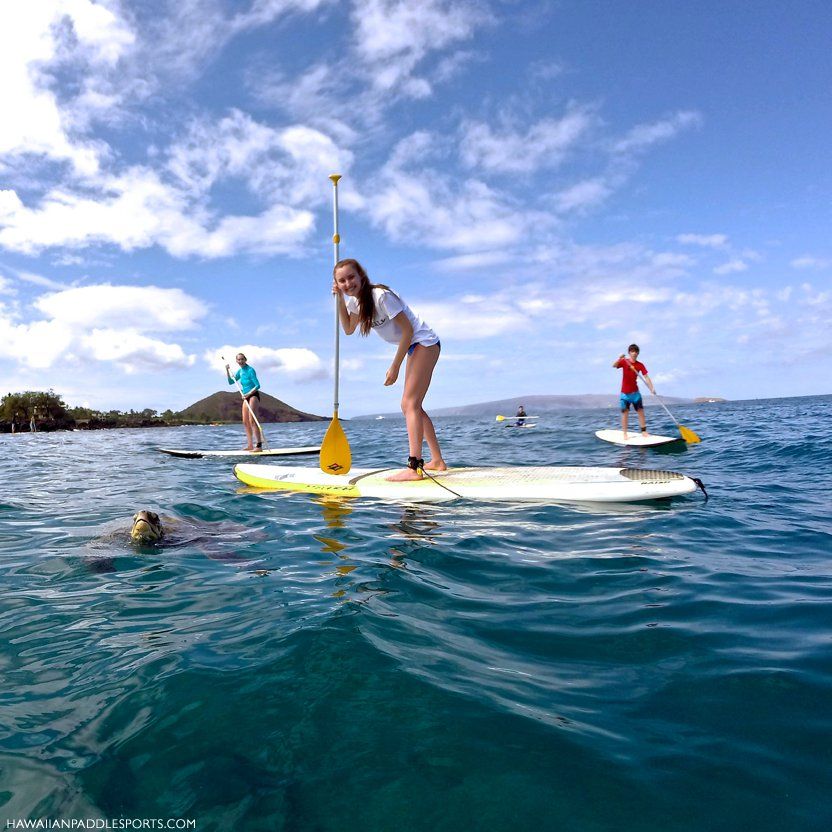
The evolution of the SUP board is a masterclass in material engineering. In its infancy, paddleboards were carved from solid wood, making them incredibly heavy and difficult to maneuver. The modern tech era has replaced these cumbersome designs with high-performance composites that prioritize strength-to-weight ratios.
The Revolution of Drop-Stitch Technology
Perhaps the most significant technological leap in the industry is the development of Inflatable Stand Up Paddleboards (iSUPs). The “tech” behind an iSUP isn’t just rubber and air; it is a complex construction known as drop-stitch technology. This involves two layers of polyester fabric joined by tens of thousands of fine polyester threads. When inflated to high pressures (up to 20 PSI), these internal threads lock tight, creating a surface as rigid as a hardboard.
Recent advancements have introduced “fusion” or “MSL” (Monocoque Structural Laminate) processes. Instead of manually gluing layers together—which adds weight and introduces human error—manufacturers now use a machine-laminating process to fuse the layers. This reduces weight by up to 20% while increasing structural integrity, proving that the modern paddleboard is more of a precision-engineered vessel than a simple inflatable toy.
Carbon Fiber and Epoxy Resin Innovations
For the professional racing and touring circuits, the focus shifts to rigid board technology. Here, engineers borrow heavily from aerospace and Formula 1 tech. Carbon fiber is the gold standard, utilized for its extreme rigidity and lightness. By varying the weave patterns (biaxial vs. unidirectional), designers can control the board’s “flex,” allowing it to absorb energy from chop while maintaining a stiff platform for maximum power transfer.
The resins used to bond these fibers have also seen a technological overhaul. Modern epoxy resins are now engineered for UV resistance and impact durability, and in recent years, “bio-resins” have emerged. These are synthesized from plant-based waste, aligning high-tech performance with ecological sustainability—a growing trend in the marine tech sector.
Hydrodynamic Design and the Physics of Displacement
What defines the performance of a paddleboard is its interaction with water, a field governed by fluid dynamics. Engineers use Computational Fluid Dynamics (CFD) software to simulate how water flows around various hull shapes before a single physical prototype is ever built.
CAD and Computational Fluid Dynamics (CFD)
In the design phase, Computer-Aided Design (CAD) allows for the precision shaping of a board’s rocker (the curve from nose to tail) and rail profile. CFD software then tests these digital models against virtual currents and wave patterns. This tech allows designers to optimize “wetted surface area”—the part of the board touching the water—to minimize drag.
For example, a “displacement hull” (found on touring and racing boards) is designed with a sharp, piercing nose like a needle. This cuts through the water rather than riding on top of it, utilizing the physics of laminar flow to maintain momentum. Conversely, “planing hulls” are engineered using the principles of lift, allowing the board to skip across the surface at high speeds, a design heavily influenced by surfboard tech but scaled for the volume requirements of a standing paddler.
Fin Tech and Tracking Efficiency
The fin is the board’s rudder and stabilizer, and its design has become a sub-sector of marine engineering. Using high-modulus carbon and honeycomb cores, fins are now designed to provide “lift” and reduce “vortex shedding.” Some high-end fins even feature textured surfaces—similar to the dimples on a golf ball or the skin of a shark—to reduce drag and improve tracking efficiency (the ability of the board to go straight). The “US Fin Box” system has become a standard interface, allowing paddlers to swap out different fin geometries depending on the water’s salinity, temperature, and current speed.
The Digital Wave: Wearables and IoT in Paddleboarding
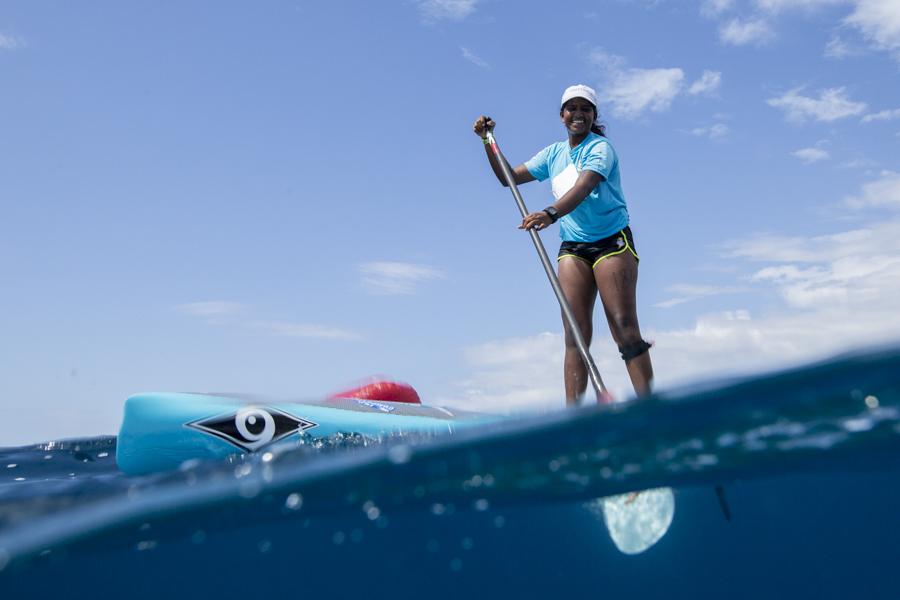
The modern paddler is no longer “disconnected” on the water. The integration of digital technology has turned stand up paddleboarding into a data-driven sport.
GPS Integration and Performance Analytics
The rise of wearable tech, such as Garmin and Apple Watch, has revolutionized how athletes train. Specialized SUP apps utilize high-frequency GPS tracking to measure “stroke rate,” “distance per stroke,” and “heart rate zones.” This data is synchronized to cloud platforms where AI algorithms analyze the paddler’s efficiency.
By layering GPS data over weather and tide APIs, these tools can provide real-time feedback on how wind speed or current direction is affecting performance. For a competitive racer, this tech is essential; it identifies the exact moment fatigue sets in or where a technical flaw in the stroke leads to a loss of velocity.
Smart Safety: Wearable Flotation and Emergency Beacons
Safety tech has also evolved. Traditional bulky life jackets are being replaced by CO2-powered inflatable belt packs that use sensors to detect submersion. For those paddling in remote or open-ocean environments, the integration of PLBs (Personal Locator Beacons) and AIS (Automatic Identification System) technology ensures that a paddler’s position is broadcast to nearby vessels and search-and-rescue satellites in real-time. This level of digital security has expanded the boundaries of where stand up paddleboarding can safely occur.
The Future of SUP: Electric Propulsion and Foil Technology
The most cutting-edge segment of the SUP market involves the transition from purely human-powered craft to hybrid and high-lift systems.
e-SUPs and Integrated Battery Systems
The “e-mobility” trend has reached the water. Electric-assist paddleboards (e-SUPs) feature integrated lithium-ion batteries and waterproof brushless motors hidden within the fin box or the hull itself. These systems use wireless Bluetooth controllers mounted on the paddle to provide a “boost” when fighting headwinds or covering long distances. This is not just about ease of use; it is an accessibility tech that allows older individuals or those with physical limitations to enjoy the sport, effectively democratizing access to the water.
Hydrofoil Advancements: Flying Above the Surface
Perhaps the most visually stunning technological advancement is “SUP Foiling.” By attaching a hydrofoil—a wing-like structure on a long mast—to the bottom of the board, paddlers can lift the entire board out of the water once they reach a certain speed. This eliminates surface tension and hull drag entirely, allowing the board to “fly.”
The tech behind these foils involves intricate carbon layups and specific dihedral angles to ensure stability in the air. Foiling requires a deep understanding of the Bernoulli principle of lift, and the engineering required to make a board stable while balanced on a submerged wing is a feat of modern maritime architecture.
Sustainable Tech: The Shift Toward Circular Engineering
As the tech industry moves toward a circular economy, the SUP world is following suit. The manufacturing of traditional epoxy boards can be chemically intensive, leading to a new wave of “Green Tech” in board construction.
Recent innovations include “Eco-Boards” made from recycled EPS (expanded polystyrene) cores and natural flax fibers instead of fiberglass. Flax fiber offers impressive vibration-damping properties, a tech discovery that provides a smoother ride in choppy water compared to the “jittery” feel of pure carbon. Furthermore, the development of recyclable thermoplastics is beginning to challenge the dominance of thermoset resins, potentially allowing future boards to be ground down and repurposed at the end of their lifecycle.

Conclusion
Stand up paddleboarding is far more than a recreational pastime; it is a burgeoning field of technological application. From the sophisticated material science of the boards and the computational design of their hulls to the digital ecosystem of wearables and the futuristic leap into hydrofoiling, SUP represents a perfect marriage of human effort and high-tech innovation. As we look toward the future, the continued integration of AI, sustainable materials, and electric propulsion will only further refine what it means to stand on water, proving that even the simplest concepts can be elevated through the power of technology.
aViewFromTheCave is a participant in the Amazon Services LLC Associates Program, an affiliate advertising program designed to provide a means for sites to earn advertising fees by advertising and linking to Amazon.com. Amazon, the Amazon logo, AmazonSupply, and the AmazonSupply logo are trademarks of Amazon.com, Inc. or its affiliates. As an Amazon Associate we earn affiliate commissions from qualifying purchases.