
In the world of high-stakes finance and personal wealth management, few terms carry as much weight as the “SPX.” Whether you are listening to a morning financial broadcast, reading a quarterly earnings report, or checking your 401(k) balance, the SPX—the ticker symbol for the S&P 500 Index—is the undisputed heartbeat of the American economy. Often referred to as the “gold standard” of market indicators, the SPX represents the performance of 500 of the largest publicly traded companies in the United States.
To the uninitiated, it may seem like just another fluctuating number on a screen. However, for the seasoned investor, the SPX is a sophisticated tool used to gauge market sentiment, benchmark performance, and build long-term generational wealth. Understanding the mechanics, history, and strategic importance of the SPX is fundamental to navigating the modern financial landscape.

What Exactly is the SPX? Breaking Down the Index Fundamentals
At its core, the SPX (Standard & Poor’s 500 Index) is a stock market index that tracks the share prices of 500 leading companies in the U.S. It is managed by S&P Dow Jones Indices, a joint venture that monitors the eligibility and weighting of the constituent companies. While the Dow Jones Industrial Average was once the primary barometer of the market, the SPX has overtaken it in professional circles due to its broader scope and superior weighting methodology.
Definition and Origin
The S&P 500 as we know it today was introduced in 1957. It was the first computer-weighted stock market index, a technological marvel at the time that allowed for real-time tracking of a broad basket of stocks. The “500” refers to the number of companies included, which represent roughly 80% of the total available market capitalization of the U.S. equity market. Because it covers such a massive portion of the economy, when people say “the market is up today,” they are almost always referring to the movement of the SPX.
The Ticker Symbol Explained: SPX vs. SPY
One common point of confusion for new investors is the difference between the “SPX” and the “SPY.” The SPX is the “cash index.” It is a theoretical value calculated based on the prices of the 500 stocks it contains. You cannot “buy” the SPX directly, just as you cannot buy a “centigrade” temperature.
On the other hand, the SPY is an Exchange-Traded Fund (ETF) designed to track the SPX. If you want to invest your money in the performance of the S&P 500, you buy shares of a product like SPY, VOO, or IVV. The SPX provides the data; the ETFs provide the vehicle for investment.
Inclusion Criteria: How Companies Join the Index
Not every large company makes it into the SPX. To be included, a company must meet rigorous eligibility requirements. As of recent standards, a company must have a market capitalization of at least $15.8 billion, be a U.S. company, have a positive sum of earnings over the previous four quarters, and maintain high liquidity. The S&P Index Committee meets regularly to review these constituents, ensuring that the index accurately reflects the current state of the “blue-chip” American corporate landscape.
How the SPX Works: Weighting, Calculation, and Rebalancing
The power of the SPX lies not just in who is in it, but in how it is calculated. Unlike indices that simply average stock prices, the SPX uses a float-adjusted market capitalization weighting system. This means that larger companies have a more significant impact on the index’s performance than smaller ones.
The Market-Cap Weighting Methodology
In a price-weighted index (like the Dow Jones), a stock with a high share price has more influence than a stock with a low share price, regardless of the company’s actual size. The SPX corrects this by weighting companies based on their total market value (share price multiplied by the number of outstanding shares).
If a company like Apple (AAPL) has a market cap of $3 trillion and a smaller constituent has a market cap of $20 billion, Apple’s price movements will affect the SPX significantly more. This reflects the reality of the economy: a 1% move in a trillion-dollar company represents a much larger shift in capital than a 1% move in a mid-cap company.
The Influence of the “Magnificent Seven”
In recent years, the SPX has become increasingly concentrated in the technology sector. A group of stocks known as the “Magnificent Seven”—including Apple, Microsoft, Alphabet, Amazon, Nvidia, Meta, and Tesla—now accounts for a substantial percentage of the index’s total weight. This concentration means that the SPX is currently a heavy bet on the American tech and AI revolution. While this has led to historic gains, it also means that the index is more sensitive to the volatility of the tech sector than it was twenty years ago.
Quarterly Rebalancing: Maintaining the Gold Standard
The SPX is not a static list. Every quarter, the index undergoes a rebalancing process. This is when the committee adds rising stars that have met the size and profitability requirements and removes companies that have fallen into decline. This “survivorship bias” is actually one of the greatest strengths of the index for long-term investors. By automatically cutting losers and adding winners, the SPX serves as a self-cleansing mechanism that ensures it always represents the vanguard of American business.

The SPX as a Financial Barometer: Why It Matters to Your Portfolio
The SPX is more than just a number; it is the ultimate benchmark for financial success. Professional fund managers, hedge funds, and retail investors all use the S&P 500 as the “hurdle” they must jump over to prove their strategies are effective.
Benchmarking Fund Performance
When an investment advisor claims to have “beaten the market,” they are almost always comparing their returns to the SPX. If the S&P 500 returned 10% in a year and a portfolio manager returned 8%, that manager is considered to have underperformed, even though they made money. For the individual investor, the SPX provides a baseline: if you can’t beat the index through individual stock picking or active funds, the most logical financial move is to simply “buy the index” through a low-cost ETF.
An Indicator of Economic Health
Economists look to the SPX to understand the health of corporate America. Since the index includes companies from all 11 major sectors—including healthcare, energy, financials, and consumer staples—it provides a panoramic view of the economy. When the SPX is in a “Bull Market” (rising prices), it typically signals corporate profitability, high consumer spending, and investor confidence. Conversely, a “Bear Market” in the SPX often precedes or accompanies economic recessions.
Historical Performance and Long-term Growth
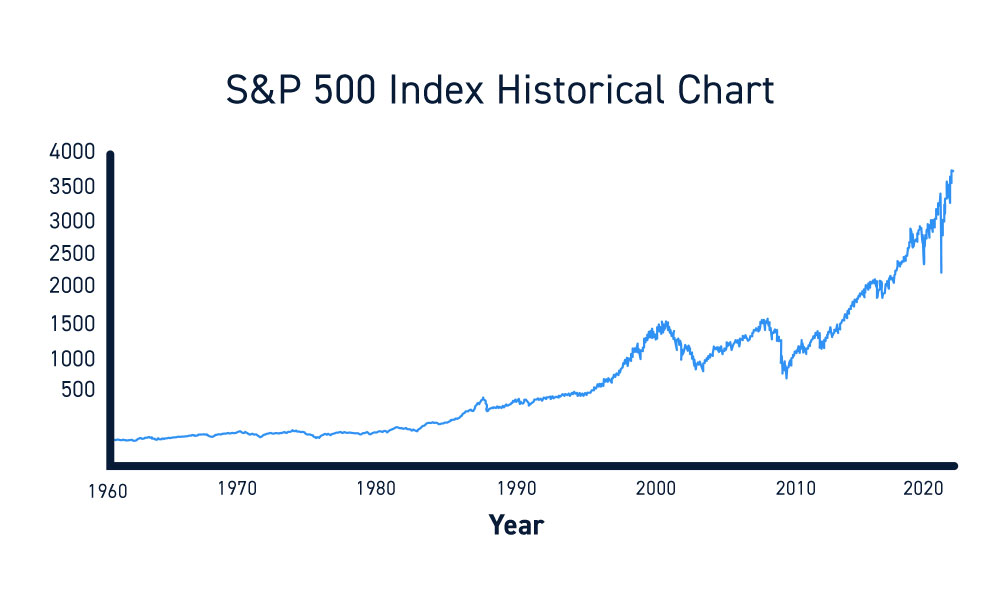
Historically, the SPX has returned an average of approximately 10% annually (before inflation) over long periods. This compounding power is the cornerstone of retirement planning. While the index can experience sharp declines—such as during the 2008 financial crisis or the 2020 pandemic—it has a 100% track record of eventually recovering and reaching new all-time highs. This resilience makes it the primary vehicle for long-term wealth accumulation in personal finance.
How to Invest in the SPX: Tools and Strategies for Wealth Building
Because you cannot buy the SPX cash index directly, the financial industry has created various products that allow investors to capture its returns. Choosing the right tool depends on your goals, risk tolerance, and time horizon.
Index Funds and ETFs (VOO, SPY, IVV)
The most popular way to invest in the SPX is through Exchange-Traded Funds (ETFs). These funds hold all 500 companies in the index in their exact weights.
- SPY: The oldest and most liquid, popular among traders.
- VOO (Vanguard) & IVV (iShares): These often have lower “expense ratios” (fees), making them ideal for long-term “buy and hold” investors.
By investing in these, you achieve instant diversification. You aren’t betting on one company; you are betting on the collective ingenuity of the American workforce.
Derivatives: SPX Options and Futures
For more advanced traders, the SPX offers a robust derivatives market. SPX Options are preferred by institutional investors because they offer “European-style” exercise (meaning they can only be exercised at expiration) and often provide tax advantages under Section 1256 of the tax code. Traders use these to hedge their portfolios against downturns or to generate income through premium selling. Unlike equity options, SPX options are cash-settled, meaning no actual shares change hands—only the cash difference in value.
The Role of the SPX in a Diversified Portfolio
While the SPX is a powerhouse, financial experts often suggest it should be the core of a portfolio, but not necessarily the entirety of it. Diversification might involve pairing an SPX fund with international stocks, small-cap companies, or bonds. However, for many “set it and forget it” investors, a simple, consistent contribution to an S&P 500 index fund has historically outperformed the majority of complex investment strategies.
SPX vs. Other Major Indices: Choosing the Right Exposure
To truly understand the SPX, it is helpful to contrast it with the other “Big Three” indices. Each provides a different lens through which to view the world of money.
SPX vs. The Dow Jones Industrial Average (DJIA)
The Dow is composed of only 30 companies and is price-weighted. This makes it a much narrower and arguably less accurate representation of the economy than the SPX. While the Dow is famous, the SPX is the one the “pros” use to measure real market movement.
SPX vs. The Nasdaq 100
The Nasdaq 100 (tracked by the ticker QQQ) is heavily focused on the technology and growth sectors and excludes financial companies. While the SPX includes tech, it balances it with “boring” but stable sectors like utilities and consumer staples. During a tech boom, the Nasdaq usually outperforms the SPX; during a tech crash, the SPX usually holds its value better due to its broader diversification.
Which Index Should You Follow?
For the average person focused on personal finance and steady growth, the SPX is the most balanced choice. It offers a “best of both worlds” scenario: exposure to the high-growth potential of tech giants, tempered by the stability of the industrial and healthcare sectors. It remains the most important metric for anyone serious about understanding their net worth and the future of their investments.
In conclusion, the SPX index is more than just a list of stocks; it is a monument to American capitalism and a vital tool for personal financial freedom. By understanding how it is built, why it moves, and how to invest in it, you transition from being a passive observer of the economy to an active participant in its growth. Whether through a simple ETF in your retirement account or complex options strategies, the SPX remains the most powerful engine for wealth creation ever devised.
aViewFromTheCave is a participant in the Amazon Services LLC Associates Program, an affiliate advertising program designed to provide a means for sites to earn advertising fees by advertising and linking to Amazon.com. Amazon, the Amazon logo, AmazonSupply, and the AmazonSupply logo are trademarks of Amazon.com, Inc. or its affiliates. As an Amazon Associate we earn affiliate commissions from qualifying purchases.