
In the rapidly evolving landscape of technology, the bridge between a visionary idea and a functional product is built upon a single, critical foundation: the specification. Often referred to simply as “specs,” a specification is a detailed, precise description of the requirements, design, and behavior of a system, piece of software, or hardware component.
In the tech industry, where complexity is the norm and precision is non-negotiable, a specification acts as a “source of truth.” Without it, software engineers, hardware designers, and project managers would be left to navigate a sea of ambiguity, leading to wasted resources, security vulnerabilities, and product failure. This article explores the depth of what specifications entail, their various forms in modern tech, and why they are the unsung heroes of innovation.
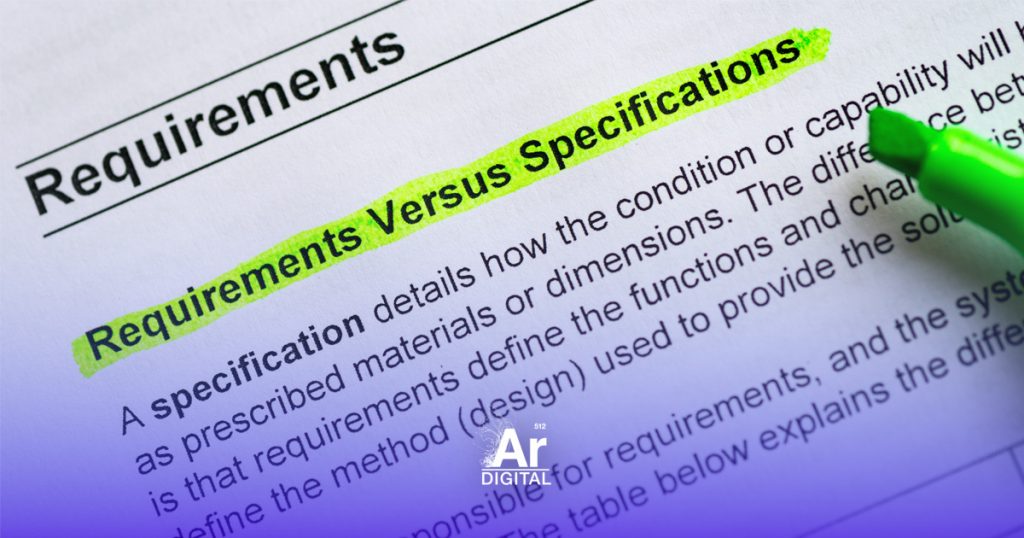
The Pillars of Technical Specifications: Bridging Idea and Execution
At its core, a technical specification is a document or a set of guidelines that outlines how a product should be built and how it should perform. It translates abstract business goals into actionable technical instructions. To understand specifications, we must categorize them into their primary forms.
Functional Specifications: Defining the ‘What’
A functional specification focuses on the user’s perspective. It describes what the system must do. For instance, if a tech company is building a new mobile application, the functional spec will detail the features: “The user must be able to log in via biometric authentication,” or “The app must allow for real-time data synchronization across devices.”
Functional specs are essential because they align the stakeholders (the business side) with the developers. They ensure that the final product meets the intended purpose and provides value to the end-user. This section of the specification often includes user stories, use cases, and workflow diagrams.
Design and Technical Specifications: Defining the ‘How’
While the functional spec defines the output, the technical or design specification defines the underlying mechanics. This includes the choice of programming languages, database architecture, third-party integrations, and infrastructure requirements.
For example, a technical spec might dictate that a backend must be built using a microservices architecture on AWS (Amazon Web Services) to ensure scalability. It specifies data schemas, API endpoints, and encryption standards. This document is the primary tool for developers to understand the internal logic and constraints of the project.
Performance and Quality Specifications
Beyond functionality and design, a robust specification must account for non-functional requirements. These include performance metrics (e.g., “The page must load in under 200 milliseconds”) and quality standards (e.g., “The system must maintain 99.9% uptime”). In the world of high-stakes technology, such as fintech or healthcare systems, these specifications are often governed by Service Level Agreements (SLAs) and are vital for maintaining user trust.
Software Specifications in the Agile and AI Era
As software development has shifted from the traditional “Waterfall” model to “Agile” methodologies, the nature of specifications has also evolved. In the past, specs were massive, static documents created at the beginning of a project. Today, they are “living documents” that adapt as the technology matures.
The Software Requirements Specification (SRS) Document
The SRS remains the gold standard for complex software projects. It is a comprehensive description of the software’s purpose and its intended behavior. A modern SRS document doesn’t just list features; it maps out the entire ecosystem of the software. It includes:
-
External Interface Requirements: How the software interacts with hardware, other software, and human users.
-
System Features: Detailed breakdowns of every functional component.
-
Database Requirements: How data is stored, indexed, and retrieved.
By maintaining a clear SRS, tech teams can avoid “scope creep”—the tendency for a project’s requirements to increase over time without a corresponding increase in resources or budget.
Specifications for Artificial Intelligence and Machine Learning Models
The rise of Artificial Intelligence (AI) has introduced a new layer of complexity to specifications. Specifying an AI model is vastly different from specifying traditional software logic. Instead of hard-coded “if-then” statements, AI specifications focus on data quality, model transparency, and bias mitigation.
In AI development, the specification includes the “Data Specification”—defining the datasets used for training, the parameters for the neural networks, and the expected accuracy thresholds. Furthermore, ethical specifications are becoming mandatory, outlining how the AI should handle edge cases and ensure user privacy.
API Specifications: The Language of Digital Connectivity
In our interconnected digital economy, applications rarely work in isolation. They talk to each other via APIs (Application Programming Interfaces). An API specification, such as the OpenAPI Specification (formerly Swagger), is a formal standard for describing RESTful APIs.
It tells developers exactly how to “call” a specific function, what parameters to send, and what response to expect. Without these rigid specifications, the modern web—from online payments via Stripe to social logins via Google—would cease to function.
Hardware Specifications: Driving Performance and Innovation
While software often dominates the conversation, hardware specifications are the physical constraints that define the limits of what software can achieve. Whether it is a smartphone, a server in a data center, or an IoT (Internet of Things) sensor, hardware specs are the metrics of power.
Processing Power and Architecture
When we look at the specs of a new processor (CPU or GPU), we look at clock speeds, core counts, and thermal design power (TDP). These specifications determine the device’s ability to handle complex tasks like video rendering or AI training. For instance, the transition from x86 architecture to ARM-based chips (like Apple’s M-series) was driven by a shift in specifications focusing on efficiency and performance-per-watt.
Connectivity and Compatibility Standards
Technology thrives on standards. Specifications like USB-C, Wi-Fi 6, and 5G are global technical specifications that ensure different devices from different manufacturers can work together. These “Interface Specifications” are developed by consortiums (like the IEEE or the Wi-Fi Alliance) to ensure that when you plug a device into a port, it works as expected.
The Role of Specifications in IoT and Edge Computing
In the realm of the Internet of Things (IoT), specifications take on a different priority. Here, power consumption and latency specifications are king. A smart sensor in a remote oil rig might need to operate for five years on a single battery. The technical specification for such a device must prioritize low-power wide-area network (LPWAN) protocols over high-speed data transfer.
Why Precision Matters: The Consequences of Underspecification
In the tech world, ambiguity is the enemy of progress. When specifications are vague, incomplete, or non-existent, the results are almost always negative.
Technical Debt and Scope Creep
Underspecification often leads to “technical debt”—the cost of additional rework caused by choosing an easy but limited solution now instead of a better approach that would take longer. If the technical specs for a database are not properly defined early on, the system might crash as the user base grows, requiring a complete and expensive rewrite of the core code.
Security Vulnerabilities and Risk Mitigation
Many of the most famous data breaches in history can be traced back to “specification failures.” If a specification fails to define strict authentication protocols or doesn’t specify how data should be encrypted at rest, developers might leave “backdoors” or use weak security standards by default. A rigorous specification process includes security audits and “threat modeling” as part of the design phase.
Environmental and Economic Impact
Specifications also have a global footprint. By specifying more efficient code or more sustainable hardware materials, tech companies can reduce the carbon footprint of their data centers. Economically, clear specifications allow for better budgeting and resource allocation, ensuring that tech ventures remain viable and profitable.
The Future of Specifications: From Static Documents to Executable Models
As we look toward the future, the way we define specifications is undergoing a digital transformation of its own.
Specification by Example (SbE)
Specification by Example is a collaborative approach to defining requirements based on realistic examples rather than abstract statements. This method uses these examples to create “executable specifications,” which are essentially automated tests that check if the software is doing what it was specified to do. This bridges the gap between the business requirement and the code.
Automated Validation and Low-Code Specs
We are entering an era where AI can assist in writing specifications. Tools are emerging that can scan a specification document and identify contradictions, missing requirements, or potential security flaws before a single line of code is written. Additionally, in the “Low-Code” and “No-Code” movement, the specification effectively becomes the product, as visual models are automatically converted into functional applications.

Conclusion
A specification is far more than a technical manual; it is the strategic blueprint for innovation. In the high-stakes world of technology, it serves as the ultimate guide for clarity, security, and scalability. From the smallest API call to the most complex AI model, specifications provide the structure that allows human creativity to manifest as digital reality. For any tech professional or organization, mastering the art of the specification is not just a procedural necessity—it is the competitive advantage that ensures an idea doesn’t just exist, but excels.
aViewFromTheCave is a participant in the Amazon Services LLC Associates Program, an affiliate advertising program designed to provide a means for sites to earn advertising fees by advertising and linking to Amazon.com. Amazon, the Amazon logo, AmazonSupply, and the AmazonSupply logo are trademarks of Amazon.com, Inc. or its affiliates. As an Amazon Associate we earn affiliate commissions from qualifying purchases.